
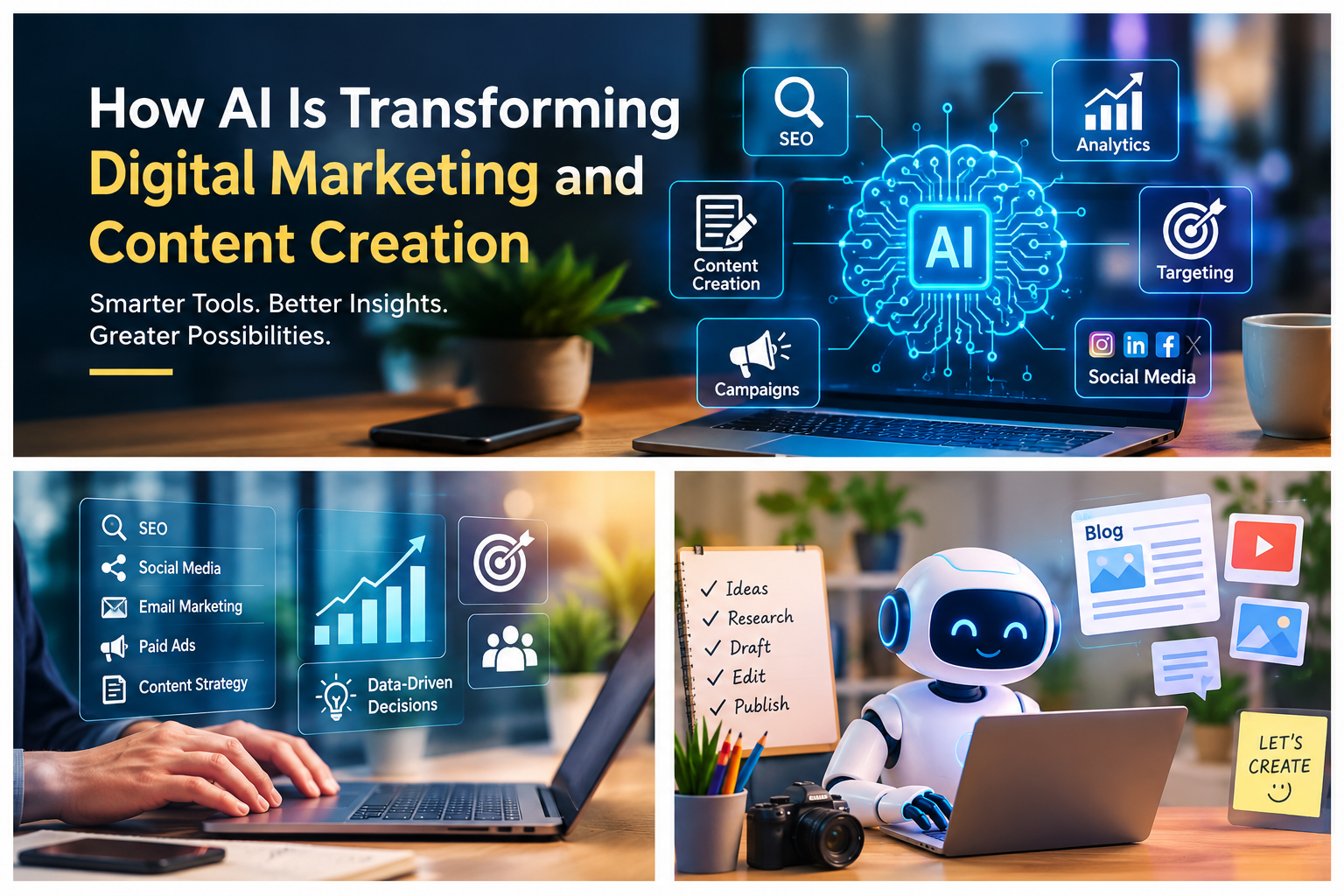
Discover how artificial intelligence is changing digital marketing, SEO, content creation, and campaign management, and learn why human creativity and strategic thinking remain essential.
Digital marketing is changing rapidly, and artificial intelligence (AI) is becoming an important part of this transformation. From understanding customer behavior to creating content and improving search engine visibility, AI is helping businesses work more efficiently and make better marketing decisions.
However, AI is not simply about automating tasks. Its real value lies in helping marketers understand their audiences, identify opportunities, and develop better strategies. The future of digital marketing will depend on how effectively businesses combine technology with human creativity, experience, and judgment.
How AI Is Helping Digital Marketing Today
AI is already influencing several areas of digital marketing. Here are five important ways businesses can benefit from it.
1. Smarter Targeting and Personalization
Understanding customers is essential for successful marketing. AI can analyze customer interactions, browsing behavior, and campaign data to identify patterns and audience preferences.
Businesses can use these insights to deliver more relevant advertisements, personalized recommendations, and targeted email campaigns. When messages match customer interests, marketing becomes more useful and engaging.
2. Better SEO and Search Insights
Search engine optimization requires continuous research, analysis, and improvement. AI-powered tools can help marketers identify keyword opportunities, analyze competitors, understand search intent, and discover content gaps.
AI can also support technical SEO analysis and help organize large amounts of website data. However, good rankings still depend on useful content, a technically sound website, credibility, and a strong understanding of what users are looking for.
3. Faster Content Creation
Content creation is one of the areas where AI has made a noticeable difference. Tools such as ChatGPT, Jasper, and other AI writing assistants can help generate ideas, prepare outlines, draft articles, create social media posts, and develop email campaigns.
AI can also support image creation, video production, and content repurposing. Marketers can spend less time on repetitive work and more time improving the message, checking accuracy, and making content relevant to their audience.
The important point is that AI-generated content still needs human review. Original thinking, real experience, fact-checking, and an understanding of the audience make the difference between ordinary content and genuinely valuable information.
4. Marketing Automation and Productivity
Digital marketing involves many repetitive activities, including scheduling posts, preparing reports, organizing leads, and managing campaign workflows.
AI-assisted automation can reduce manual effort and help teams complete these tasks more consistently. This allows marketing professionals to focus on planning, creative development, customer relationships, and business growth instead of spending most of their time on routine operations.
5. Data-Driven Decisions and Campaign Improvement
Marketing decisions become more effective when they are supported by reliable data. AI can process large datasets, identify trends, compare campaign performance, and help marketers understand where improvements may be needed.
For example, a business can use campaign data to identify which channels generate quality enquiries rather than simply attracting more visitors. Marketers must still validate these insights and consider factors such as budget, customer needs, and business objectives before making decisions.
What Is the Future of Digital Marketing with AI?
The future will likely bring more personalized customer experiences, better predictive analysis, conversational search, and greater integration between marketing platforms. Businesses will increasingly use AI to understand customer needs and deliver relevant information across search engines, websites, email, and social media.
Content creation will also continue to evolve. Producing content may become faster, but originality, trust, and expertise will remain important. Businesses that publish useful information based on genuine knowledge and customer needs will be better positioned to build lasting relationships.
AI will also change the role of digital marketers. Instead of focusing only on individual tasks, professionals will need to think more strategically, evaluate data critically, develop creative ideas, and understand how marketing contributes to revenue and customer satisfaction.
Conclusion
AI is changing digital marketing, but it does not remove the need for human thinking. Technology can help businesses work faster, analyze information, and explore new opportunities, while people bring creativity, judgment, empathy, and practical experience.
For digital marketers, the real opportunity is to use AI wisely rather than depend on it completely. Businesses that combine useful technology with strong marketing fundamentals will be better prepared to adapt, improve performance, and achieve sustainable growth.