
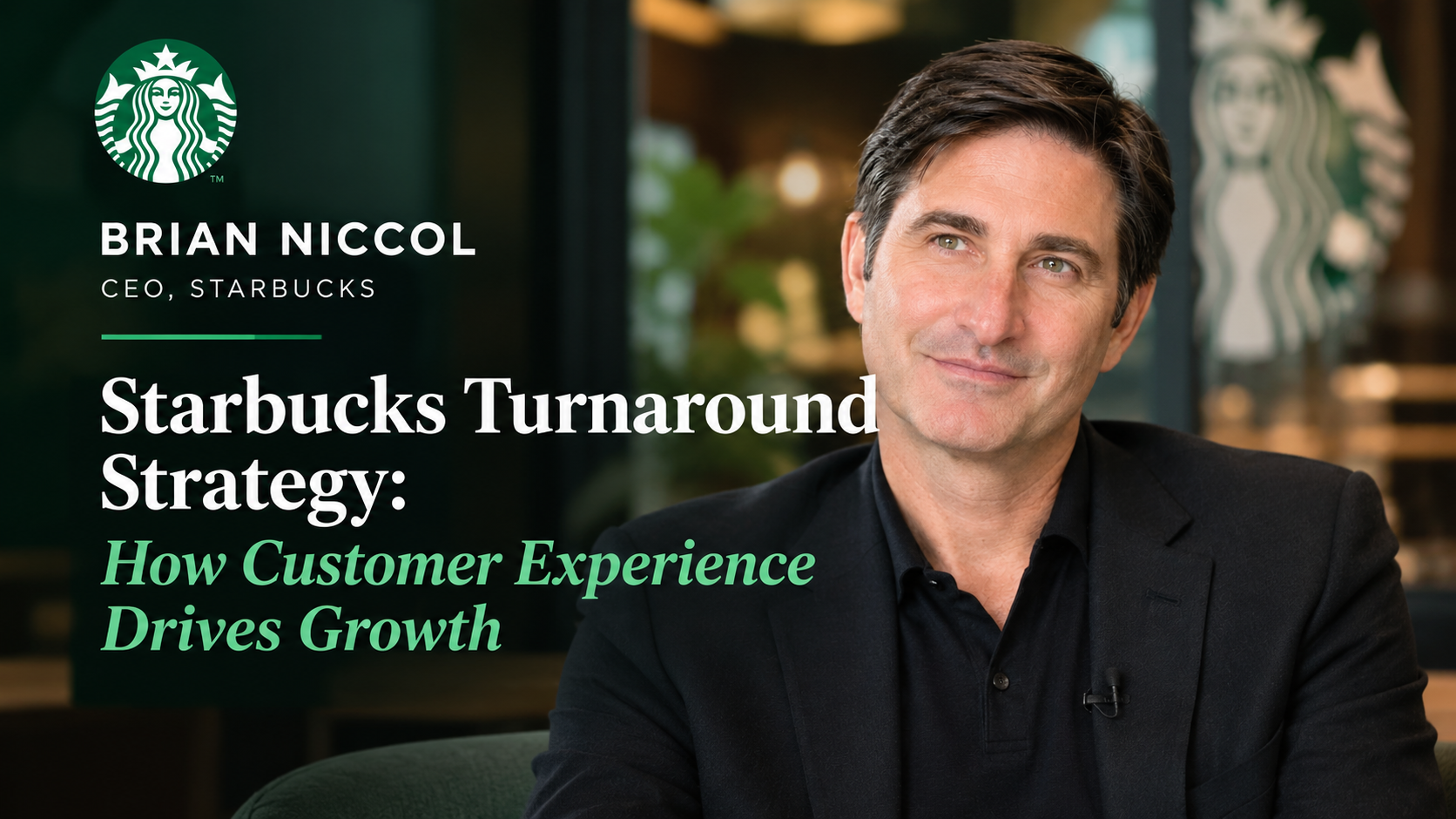
Brian Niccol shares insights into Starbucks' transformation strategy, focusing on customer experience, operational excellence, innovation, and the importance of creating meaningful connections with customers.
The conversation explores how strong leadership and a customer-first approach can help organizations navigate changing market conditions while building sustainable long-term growth.
Core Pillars of Strategy
1. Shift from "Manufacturing Facility" to Hospitality
"We got really focused on trying to be efficient and run it like a manufacturing facility, as opposed to recognizing, no, this is actually a customer service experience, where we do great craft and create great drinks for people on time." — Brian Niccol
-
Diagnosis: Starbucks prioritized speed and mobile throughput at the expense of environment and craft, turning coffeehouses into transactional pickup hubs.
-
Pivot: Restoring the "Third Place" concept—re-engaging store seating, simplifying complex workflows, and putting customer connection ahead of raw efficiency.
2. Simplifying the Store & Menu Operations
"The feedback I heard was, we've made the job more complicated than necessary. We got to get back to focusing on decisions that actually show up in the store." — Brian Niccol
-
Overhauling Over-Complexity: Shrank bloated menus and streamlined mobile ordering systems so baristas could focus on drink quality rather than chaotic handoffs.
-
Front-Line Investment: Directed over $500 million into store staffing and labor to ensure optimal bar staffing and reduce operational friction.
3. Technology as an Enabler, Not a Replacement
"Technologies like AI should enhance—not replace—human connection." — Brian Niccol
-
Introduced back-of-house AI tools (such as Green Dot Assist) to assist baristas with real-time questions and inventory management, allowing employees to spend less time on administration and more time interacting with customers.
4. Leadership & Culture Execution
"If you're waiting for others to give you consent or support, you're going to be waiting for a while, because you're asking people to change—and in change is discomfort. The job of a leader is to take all that information, make a decision, galvanize everybody, and move forward." — Brian Niccol
-
Listening First: Spent his initial weeks visiting stores and speaking with baristas directly to diagnose root causes before deploying changes.
-
Cultural Alignment: Standardized operational expectations around hospitality, emphasizing internal leadership mobility (targeting 90% internal promotion rates).