
About Zerodha
The Spark
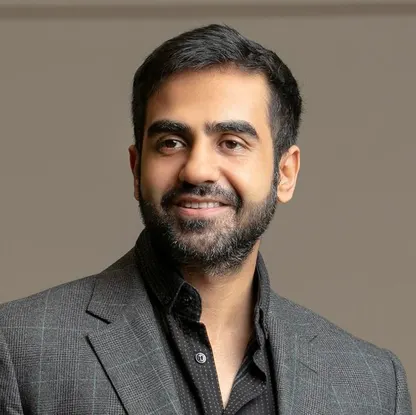
India's financial markets have long presented a challenge for first-time investors: understanding complicated processes, navigating brokerage charges, and accessing reliable trading technology. Nithin Kamath experienced these barriers firsthand during his years as a trader. Rather than treating them as unavoidable features of the industry, he saw an opportunity to simplify the experience.
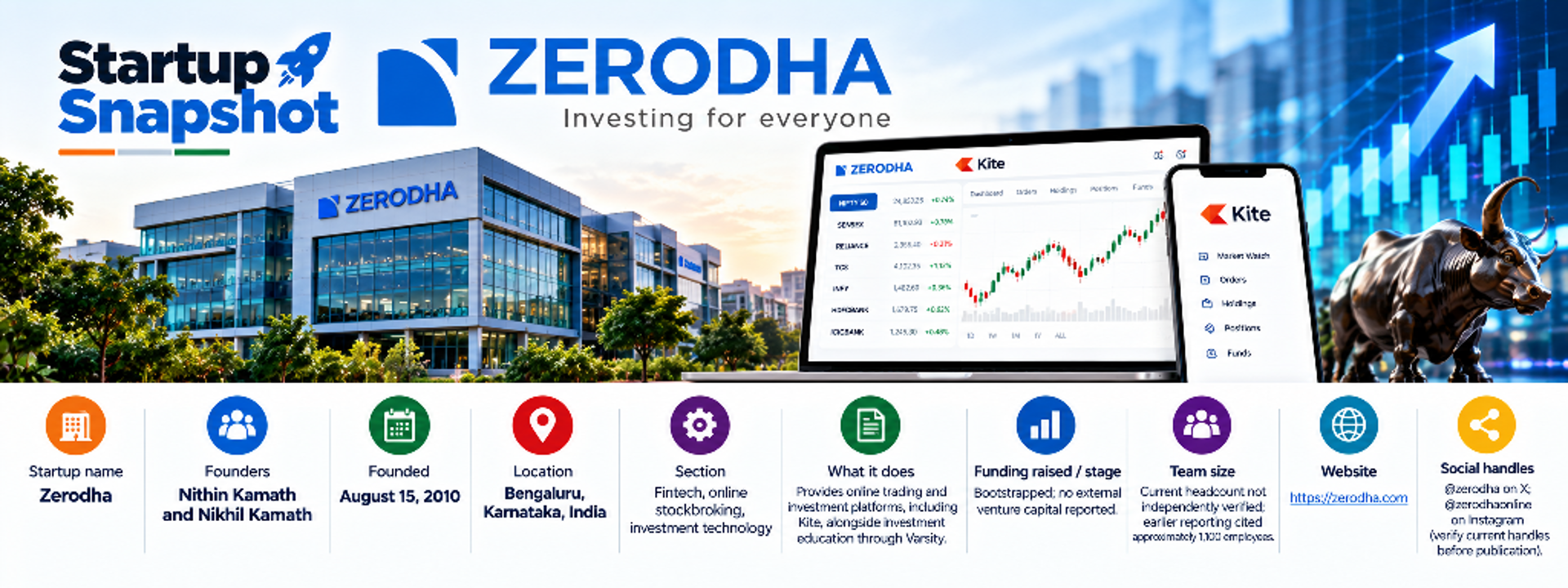
After working in a call centre and building experience in trading and brokerage, Nithin joined forces with his brother, Nikhil Kamath, to launch Zerodha in 2010. Its name combines “Zero” with “Rodha,” a Sanskrit word meaning barrier. The ambition was straightforward: remove barriers to market participation through lower costs, accessible technology, and a simpler customer experience.
The Product
Zerodha offers a digital ecosystem for retail investors and traders. Its Kite platform provides tools to access financial markets, monitor investments, analyse securities, and place trades. The company's discount-broking model made pricing a central part of its value proposition, particularly for customers who wanted to avoid traditional percentage-based brokerage charges.Beyond trading, Zerodha invested in investor education through Varsity, an online learning resource covering financial markets, investing concepts, and trading fundamentals. This extended the company's role beyond transaction processing to helping users develop financial knowledge.
Its broader ecosystem also includes Console for portfolio and account reporting, Coin for direct mutual fund investments, and Rainmatter, an initiative supporting fintech and climate-focused businesses. Together, these offerings create multiple customer touchpoints while reinforcing the company's focus on technology, transparency, and financial participation.
The Journey
Zerodha's growth was not built on a conventional venture-capital playbook. The company started small, prioritised cost discipline, and expanded its capabilities over time. In its early years, it concentrated on serving active traders with competitive pricing and functional trading tools.A significant evolution came as the founders recognised that reaching a wider market required more than inexpensive brokerage. Technology, usability, and education needed to improve together. The company increasingly developed its own products and built a more integrated digital experience.
Its decision to remain bootstrapped also shaped its operating philosophy. Without external investors demanding a particular growth trajectory or exit, Zerodha could emphasise sustainable economics and customer interests. Word-of-mouth referrals, rather than heavy advertising expenditure, became an important growth engine. This approach helped establish a distinctive position in India's increasingly competitive fintech market.
The Traction
Zerodha's official company profile reports more than 1.8 crore clients and says its platforms contribute over 15% of Indian retail trading volumes. These figures illustrate the scale it has achieved in a market where digital participation has expanded significantly. ts growth has also supported initiatives beyond brokerage. Varsity promotes financial literacy, while Rainmatter backs businesses working across financial services and climate-related innovation. These initiatives extend Zerodha's influence into the broader startup ecosystem.
Its bootstrapped model is another notable business milestone: the company has built its scale without reported external venture-capital funding. However, market share and customer counts can change, and brokerage accounts should not be confused with unique active investors. The latest available figures should be checked before publication.
The Challenges
Zerodha operates in a crowded industry where competitors continually improve their apps, pricing, research tools, and customer acquisition strategies. Regulatory changes also affect trading practices, brokerage economics, compliance responsibilities, and investor protection. In 2025, Nithin Kamath publicly reflected that entering the same brokerage market from scratch would be much harder because competition had intensified. That observation highlights a broader startup lesson: an early advantage does not guarantee future leadership.
The company must also balance accessibility with responsible participation in financial markets. Easy-to-use trading tools can attract customers, but they must be accompanied by clear information, reliable systems, and appropriate risk awareness. Sustaining trust while innovating remains an ongoing challenge.
What's Next
Zerodha's long-term opportunity lies in deepening its technology, strengthening investor education, and supporting a healthier financial ecosystem. Continued product improvements, reliable infrastructure, and transparent communication can help it remain relevant as customer expectations evolve.
Its wider initiatives through Rainmatter may also help develop solutions beyond traditional brokerage. Rather than pursuing growth at any cost, the company can continue building around durable customer value, financial sustainability, and responsible market participation.
Pull Quote
“We fought hard to ensure that we don’t enable greed with Zerodha.”
-Nithin Kamath, co-founder and CEO, in a conversation at IIM Bangalore.
Founder Tips: Three Lessons for Entrepreneurs
Solve a real problem: Build around a customer frustration that existing businesses have overlooked.
Keep the economics sustainable: Control costs and understand how the business will generate lasting profits.
Earn trust before chasing attention: Invest in product quality, transparency, and customer support to encourage organic referrals.
Quick Fire
Biggest business lesson? Sustainable growth can be more valuable than growth at any cost.
What differentiated Zerodha? Affordable brokerage combined with technology and education.
Why bootstrap? To retain control over business priorities and avoid external funding obligations.
What should new founders remember? A strong idea needs execution, timing, differentiation, and persistence.
Closing Line and Call to Action
Zerodha's journey shows that a startup does not always need a large funding round to build a substantial business. By addressing customer pain points and maintaining financial discipline, it created a distinctive position in India's fintech industry.