
Global Non-Small Cell Lung Cancer (NSCLC) Market Size to Exceed USD 70.35 Billion by 2035 | CAGR of 8.05%
Global Non-Small Cell Lung Cancer (NSCLC) Market Size to Exceed USD 70.35 Billion by 2035
According to a Research Report Published by Decisions Advisors & Consulting, The Global Non-Small Cell Lung Cancer (NSCLC) Market Size is expected to Grow from USD 30.02 Billion in 2024 to USD 70.35 Billion by 2035, at a CAGR of 8.05% during the forecast period 2025-2035.
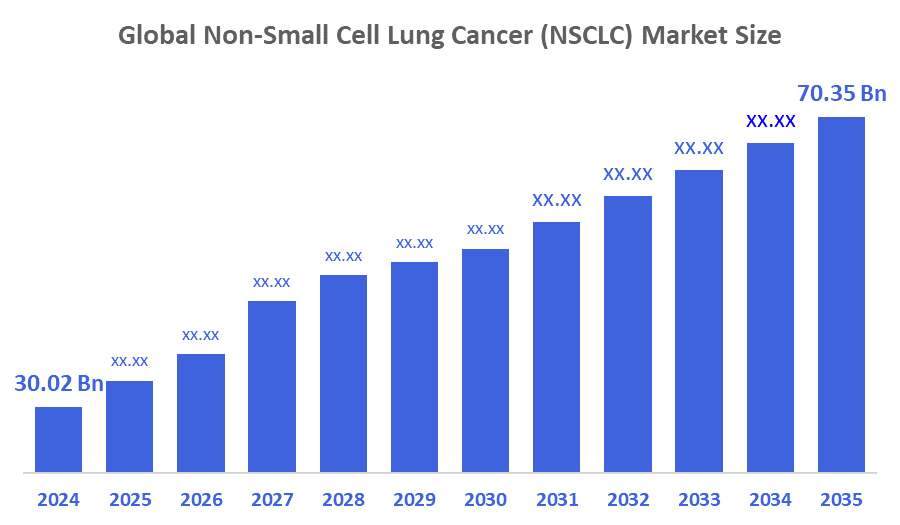
Browse 210 Market Data Tables And 45 Figures Spread Through 190 Pages and In-Depth TOC On the "Global Non-Small Cell Lung Cancer (NSCLC) Market Size, Share, and COVID-19 Impact Analysis, By Type of Therapy (Monotherapies Therapies and Combination Therapies), By Type of Drug Class (Alkylating Agents, Antimetabolites, EGFR Inhibitors, Mitotic Inhibitors, Multi-kinase Inhibitors, and Others), By End User (Hospitals, Homecare, Specialty Clinics, and Others), and By Region (North America, Europe, Asia-Pacific, Latin America, Middle East, and Africa), Analysis and Forecast 2025 – 2035."
Get Detailed Report Description Here: https://www.decisionsadvisors.com/reports/non-small-cell-lung-cancer-nsclc-market
The global ecosystem of goods, services, technologies, and therapeutic methods devoted to the prevention, diagnosis, treatment, and management of non-small cell lung cancer (NSCLC), which accounts for the majority of instances of lung cancer, is referred to as the NSCLC market. Pharmaceutical and biotechnology firms creating combination regimens, immunotherapies, chemotherapeutic drugs, and targeted medicines with the goal of enhancing patient outcomes are included in this market. Additionally, it comprises diagnostic platforms that facilitate early detection and individualized treatment plans, such as molecular profiling, biomarker testing, and imaging technologies. The growing incidence of lung cancer worldwide, especially as a result of aging populations, increased tobacco use, and environmental pollution, is the main factor driving the Non-Small Cell Lung Cancer (NSCLC) market. The need for efficient diagnostic and treatment options is increased by this expanding patient pool. The development of targeted therapies and precision medicine, which enable doctors to customize treatments based on particular genetic alterations like EGFR, ALK, and ROS1, is another important factor. However, restraining factors include high therapy costs, limited biomarker testing access, regulatory hurdles, and treatment-related toxicities.
The combination therapies segment accounted for the largest share in 2024 and is anticipated to grow at a remarkable CAGR during the forecast period.
Based on the type of therapy, the non-small cell lung cancer (NSCLC) market is divided into monotherapies therapies and combination therapies. Among these, the combination therapies segment accounted for the largest share in 2024 and is anticipated to grow at a significant CAGR during the forecast period. The progress in biomarker testing and precision medicine supports the proper choice of combination therapies and the resulting widespread use.
The EGFR inhibitors segment accounted for the largest share in 2024 and is anticipated to grow at a remarkable CAGR during the forecast period.
Based on the type of drug class, the non-small cell lung cancer (NSCLC) market is divided into alkylating agents, antimetabolites, EGFR inhibitors, mitotic inhibitors, multi-kinase inhibitors, and others. Among these, the EGFR inhibitors segment accounted for the largest share in 2024 and is anticipated to grow at a significant CAGR during the forecast period. Personalized treatment approaches are supported by the ongoing development of next-generation EGFR inhibitors with improved efficacy and decreased resistance, as well as the growing use of companion diagnostics and biomarker testing, which solidifies EGFR inhibitors' position as a top therapeutic option for non-small cell lung cancer.
The hospitals segment accounted for the highest market revenue in 2024 and is anticipated to grow at a significant CAGR during the forecast period.
Based on the end user, the non-small cell lung cancer (NSCLC) market is divided into hospitals, home care, specialty clinics, and others. Among these, the hospitals segment accounted for the highest market revenue in 2024 and is anticipated to grow at a significant CAGR during the forecast period. The hospitals are usually introducing new therapies and treatments as they are engaged in clinical trials, and thus driving the innovation of treatment.
North America is expected to hold the majority share of the global non-small cell lung cancer (NSCLC) market during the forecast period.
North America is expected to hold the majority share of the global non-small cell lung cancer (NSCLC) market during the forecast period. North America is positioned owing to robust healthcare funding, creative therapy pipelines, and extensive patient access initiatives. Better disease management and better patient outcomes are made possible by the availability of cutting-edge therapeutic alternatives such as immunotherapies, targeted treatments, and companion diagnostics.
Asia Pacific is anticipated to grow at the fastest pace in the global non-small cell lung cancer (NSCLC) market during the forecast period. Increased use of cutting-edge diagnostic tools, such as next-generation sequencing, molecular profiling, and biomarker testing, is speeding up customized treatment plans in the area. Additionally, increasing the availability of immunotherapies and targeted therapies, backed by government healthcare programs and regulatory clearances, improves patient access to cutting-edge treatments.
Major vendors in the global non-small cell lung cancer (NSCLC) market are AbbVie, AstraZeneca, BieGene, Boehringer Ingelheim, Daiichi Sankyo, Eli Lilly and Company, Gilead Sciences, GSK, Johnson & Johnson Innovative Medicine, Merck, Moderna Therapeutics, Nuvation Bio, Pfizer, Roche, and Others.
Key Target Audience
- Market Players
- Investors
- End-users
- Government Authorities
- Consulting and Research Firm
- Venture capitalists
- Value-Added Resellers (VARs)
Recent Development
- In September 2025, to develop novel immunotherapy treatments for patients with resectable Stage III Non-Small Cell Lung Cancer (NSCLC), Glenmark Pharmaceuticals initiated a multi-country Phase 3 clinical trial of Envafolimab, a first-in-class subcutaneous PD-L1 inhibitor.
Market Segment
This study forecasts revenue at global, regional, and country levels from 2020 to 2035. Decisions Advisors has segmented the non-small cell lung cancer (NSCLC) market based on the below-mentioned segments:
Global Non-Small Cell Lung Cancer (NSCLC) Market, By Type of Therapy
- Monotherapies Therapies
- Combination Therapies
Global Non-Small Cell Lung Cancer (NSCLC) Market, By Type of Drug Class
- Alkylating Agents
- Antimetabolites
- EGFR Inhibitors
- Mitotic Inhibitors
- Multi-kinase Inhibitors
- Others
Global Non-Small Cell Lung Cancer (NSCLC) Market, By End User
- Hospitals
- Homecare
- Specialty Clinics
- Others
Global Non-Small Cell Lung Cancer (NSCLC) Market, By Regional Analysis
- North America
- US
- Canada
- Mexico
- Europe
- Germany
- UK
- France
- Italy
- Spain
- Russia
- Rest of Europe
- Asia Pacific
- China
- Japan
- India
- South Korea
- Australia
- Rest of Asia Pacific
- South America
- Brazil
- Argentina
- Rest of South America
- Middle East & Africa
- UAE
- Saudi Arabia
- Qatar
- South Africa
- Rest of the Middle East & Africa
Company Profile
| Decisions Advisors | |
|---|---|
| Industry | Healthcare |
| Website | https://www.decisionsadvisors.com/ |
| Date | January 2026 |
Connect with us
- USA - +1 303 800 4326
- APAC - +91 9028926100
- [email protected]