
Global Ankylosing Spondylitis Market
 |
Pages:
240
|
Pages:
240
Global Ankylosing Spondylitis Market Size, Share, By Drug Type (Nonsteroidal Anti-Inflammatory Drugs, Disease-Modifying Anti-Rheumatic Drugs, TNF Inhibitors, Corticosteroids, and Others), By Route of Administration (Oral and Parenteral), By Distribution Channel (Hospital Pharmacies, Retail Pharmacies, and Online Pharmacies), and By Region (North America, Europe, Asia-Pacific, Latin America, Middle East, and Africa), Analysis and Forecast 2025-2035
REPORT COVERAGE
Global
Market Snapshot
- Market Size (2025): USD 6.38 Billion
- Projected Market Size (2035): USD 12.4 Billion
- Compound Annual Growth Rate (CAGR): 6.87%
- Largest Regional Market: North America
- Fastest Growing Region: Asia Pacific
- 2nd Largest Region: Europe
- Base Year: 2025
- Historical Period: 2021–2024
- Forecast Period: 2025–2035
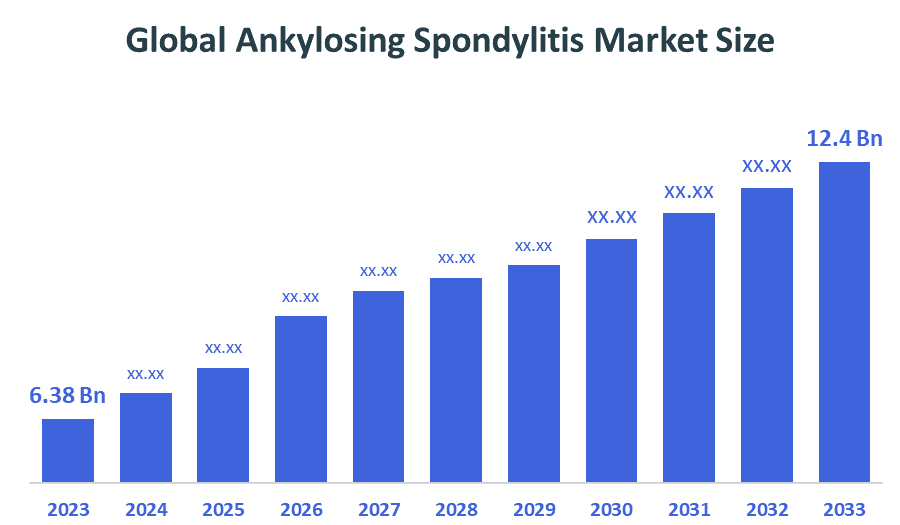
According to Decision Advisors, the Global Ankylosing Spondylitis Market Size is expected to grow from USD 6.38 billion in 2025 to USD 12.4 billion by 2035, at a CAGR of 6.87% during the forecast period 2025-2035. The global ankylosing spondylitis market is driven by the rising prevalence of inflammatory diseases and greater diagnostic awareness among healthcare providers. Rising prevalence of inflammatory diseases and greater diagnostic awareness among healthcare providers.
Market Overview
The ankylosing spondylitis market refers to the global industry focused on the development, production, and commercialization of therapies, diagnostics, and supportive care for ankylosing spondylitis, a chronic inflammatory autoimmune disease that primarily affects the spine and sacroiliac joints. The market comprises biologic drugs and nonsteroidal anti-inflammatory drugs (NSAIDs), physical therapy solutions, and diagnostic tools, which include imaging and laboratory tests. The organization conducts activities for research and development, regulatory approvals, and healthcare services that work to enhance patient outcomes through better disease management and symptom relief and improved quality of life. activities designed to enhance patient outcomes through better disease management, symptom relief and improved quality of life. The organization conducts research and development activities together with regulatory approval processes for healthcare services, which improve patient outcomes through better disease management practices, symptom relief methods and enhanced life quality.
The market provides substantial expansion prospects because more people now understand autoimmune diseases, which are becoming more common. The development of biologic and targeted therapy innovations has produced superior treatment solutions. The Asia-Pacific region and its emerging markets, better healthcare systems and wider access to biologics will drive market expansion. The rising use of biosimilars is decreasing medical expenses while making treatment more accessible to patients. The ankylosing spondylitis market will experience strong growth potential through research investment, and personalized medicine development, and digital health technology implementation.
- Pfizer, Inc. offers Xeljanz / Xeljanz XR for treating adult patients with active Ankylosing Spondylitis (AS), with revenue of $63.6 billion.
Notable Insights: -
- North America holds the largest regional market share, approximately 57.32% in the global ankylosing spondylitis market.
- Asia Pacific is the fastest-growing region in the global ankylosing spondylitis market.
- By drug type, the TNF inhibitors segment held a dominant position in market share in 2025.
- By distribution channel, the hospital pharmacies segment is the dominating one in global market share in 2025.
- The compound annual growth rate of the global ankylosing spondylitis market is 6.87%.
- The market is likely to achieve a valuation of USD 12.4 billion by 2035.
What is the role of technology in grooming the market?
Technology plays a significant role in advancing the Ankylosing Spondylitis market by improving diagnosis, treatment, and patient management. MRI and other advanced imaging methods can identify both inflammation and structural body changes, which enable medical professionals to perform their treatments at the correct time. Biotechnological innovations created biologic therapies that target specific diseases through the development of TNF and IL-17 inhibitors. Digital health technologies, which include telemedicine and wearable devices, enable doctors to observe patient symptoms and track disease development while improving patient compliance with their treatment plans. The field of drug discovery research now employs artificial intelligence (AI) and data analytics technologies to enhance its operations for finding new drugs, managing clinical trials and developing customized treatment plans. Healthcare professionals can establish more effective communication through the use of electronic health records (EHRs). The use of technology for precision medicine creates better treatment results while making healthcare more available to patients, which leads to market expansion and innovation in the ankylosing spondylitis industry.
Market Drivers
The ankylosing spondylitis market is driven by the increasing occurrence of chronic inflammatory diseases, with greater public understanding and enhanced biologic therapies that include TNF and IL-17 inhibitors, drives market growth. The market expansion receives support from rising healthcare costs combined with better diagnostic methods. The introduction of biosimilars, with next-generation biologics, increases treatment options for patients while decreasing treatment costs. The pharmaceutical industry launches new therapies that offer better treatment results and safer patient outcomes, which leads to faster market adoption. The research pipelines, with regulatory approvals, create consistent market expansion, while market access in developing countries presents new prospects for global industry expansion.
Restrain
The ankylosing spondylitis market is hindered due to the expensive nature of biologic treatments, which include TNF and IL-17 inhibitors creates barriers for patients in developing countries. The lack of knowledge, with the slow identification of medical conditions, prevents people from receiving timely medical treatment. Patients tend to stop taking their medications because they fear potential side effects and safety issues that emerge from prolonged biologic therapy. The development of new treatments gets delayed because of stringent regulatory guidelines and extended time periods needed for drug approval.
Competitive Analysis:
The report offers the appropriate analysis of the key organizations/companies involved within the ankylosing spondylitis market, along with a comparative evaluation primarily based on their product of offering, business overviews, geographic presence, enterprise strategies, segment market share, and SWOT analysis. The report also provides an elaborative analysis focusing on the current news and developments of the companies, which includes product development, innovations, joint ventures, partnerships, mergers & acquisitions, strategic alliances, and others. This allows for the evaluation of the overall competition within the market.
Top Companies in Global Ankylosing Spondylitis Market
- AbbVie Inc.
- Amgen Inc.
- Pfizer Inc.
- Johnson & Johnson
- Novartis AG
- UCB Pharma
- Eli Lilly and Company
- Merck & Co., Inc.
- Zydus Lifesciences Ltd.
- Izana Bioscience
Government Initiatives
|
Country |
Key Government Initiatives |
|
UK |
The UK promotes market growth through public healthcare funding and research grants. Organizations like the National Institute for Health and Care Research (NIHR) provide funding for ankylosing spondylitis studies, improving diagnosis and treatment access. Increased adoption of biosimilars also helps reduce treatment costs and expand patient access. |
|
India |
India is gradually advancing through increased healthcare investments, awareness programs, and support for autoimmune disease management. Government efforts to improve access to affordable medicines and expand healthcare infrastructure are contributing to market growth, although challenges like cost and limited awareness still persist. |
|
China |
China is strengthening its approach through initiatives such as the Ankylosing Spondylitis Standardized Medical Center (ASSC) program, which improves diagnosis, treatment, and patient management. Expansion of hospital networks and focus on early diagnosis are enhancing disease management and boosting market growth. |
Market Segmentation
The ankylosing spondylitis market share is classified into drug type, route of administration, and distribution channel.
- The TNF inhibitors segment dominated the market in 2025, and is projected to grow at a substantial CAGR during the forecast period.
Based on drug type, the ankylosing spondylitis market is divided into nonsteroidal anti-inflammatory drugs, disease-modifying anti-rheumatic drugs, TNF inhibitors, corticosteroids, and others. Among these,the TNF inhibitors segment dominated the market in 2025 and is projected to grow at a substantial CAGR during the forecast period. The growth of the segment is driven by its high efficacy in reducing inflammation and its ability to slow disease progression and enhance life quality show better results than NSAIDs and standard DMARD treatment. The worldwide market dominance of these products results from increasing physician preference for biologics, their strong clinical outcomes and their use in moderate-to-severe cases.
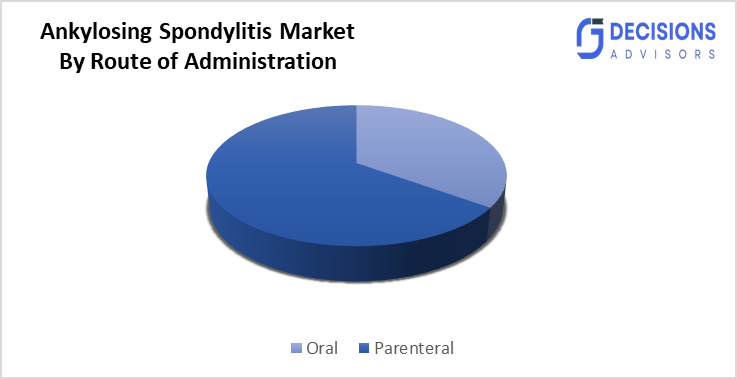
- The parenteral segment accounted for the largest share in 2025, and is anticipated to grow at a significant CAGR during the forecast period.
Based on the route of administration, the ankylosing spondylitis market is divided into oral and parenteral. Among these, the parenteral segment accounted for the largest share in 2025 and is anticipated to grow at a significant CAGR during the forecast period. This dominance is primarily due to the clinical application of biologic therapies through injection and infusion delivery systems for TNF inhibitors and IL-17 inhibitors has become standard practice. The treatments demonstrate superior effectiveness in both managing inflammation and reducing disease advancement when compared to standard oral medications. The medical community prefers to use parenteral biologics for patients with moderate to severe conditions, which results in increased usage of these treatments.
- The hospitals pharmacies segment dominated the market in 2025, and is projected to grow at a substantial CAGR during the forecast period.
Based on the distribution channel, the ankylosing spondylitis market is divided into hospitals pharmacies, retail pharmacies, and online pharmacies. Among these, the hospitals segment dominated the market in 2025 and is projected to grow at a substantial CAGR during the forecast period. The segmental growth is driven by the administration of advanced therapies, which include biologics requires both clinical supervision and controlled storage conditions for their implementation. Hospitals function as essential locations for both diagnosing medical conditions, starting treatment and providing specialist medical services, which leads patients to depend more on hospital pharmacy operations
Regional Segment Analysis of the Ankylosing Spondylitis Market
- North America (U.S., Canada, Mexico)
- Europe (Germany, France, U.K., Italy, Spain, Rest of Europe)
- Asia-Pacific (China, Japan, India, Rest of APAC)
- South America (Brazil and the Rest of South America)
- The Middle East and Africa (UAE, South Africa, Rest of MEA)
North America is anticipated to hold the largest share of the Ankylosing Spondylitis market over the predicted timeframe.
North America is anticipated to hold the largest share of the Ankylosing Spondylitis market over the predicted timeframe. North America held the largest share of the ankylosing spondylitis market in 2024, accounting for 57.32% of global revenue. The region experiences high demand for targeted therapies because of its widespread distribution of advanced biologics and biosimilars. Pharmaceutical companies achieve strong business performance because they operate extensive distribution systems. Specialists who treat chronic arthritis continue to use TNF and IL-17 inhibitors as their primary treatment option. Patients who have high disease awareness will diagnose their condition early and follow their treatment plan. North America leads this market because of its innovative products, which remain accessible to customers.
Asia Pacific is expected to grow at a rapid CAGR in the Ankylosing Spondylitis market during the forecast period. The ankylosing spondylitis market in the Asia Pacific is expected to register the fastest CAGR of 8.6% over the forecast period, due to a rapidly expanding patient base. The growing ability to identify inflammatory back pain results in more accurate diagnosis numbers across different regions. The healthcare infrastructure development in countries enables patients to access biologics and biosimilars which are life-saving medications used to treat various diseases. Pharmaceutical companies expand their operations by forming partnerships and conducting clinical research activities. The combination of increasing urban populations and health issues linked to modern living results in more cases of ankylosing spondylitis. The Asia Pacific region emerges as the fastest expanding market because of these factors.
Europe is the 2nd largest region to grow in the Ankylosing Spondylitis market during the period. The region shows a strong clinical preference for TNF inhibitors, which remain the standard of care in several countries. IL-17 inhibitors have also gained traction as alternative therapeutic options. Increasing patient participation in disease awareness programs has enhanced diagnosis rates. Pharmaceutical companies benefit from established healthcare networks for distribution. Europe remains a critical growth contributor through innovation and competitive pricing strategies.
Strategies to Implement for Growth of the Market in Non-Leading Regions
To drive growth of the ankylosing spondylitis market in non-leading regions, companies need to develop educational programs for healthcare professionals, which will help them learn about diseases and improve their capacity to identify diseases at earlier stages. The healthcare system requires additional treatment options, which should include affordable biosimilar products that need to be introduced to potential patients. The healthcare system can expand treatment options for distant locations through better development of healthcare facilities and distribution systems. The establishment of strategic partnerships with local governments and health providers will help organizations develop their reimbursement systems and build their policy frameworks. The organization will achieve long-term growth and increased market share through its commitment to local clinical trial research and its use of digital health technologies for remote patient monitoring.
Future Market Trends in Global Ankylosing Spondylitis Market: -
1. Growth of Biologic and Targeted Therapies
The market is increasingly driven by biologic drugs such as TNF inhibitors and IL-17 inhibitors, which dominate treatment due to high efficacy. Continuous approvals of advanced biologics and next-generation therapies are expanding treatment options and improving patient outcomes.
2. Rising Adoption of Biosimilars
Biosimilars are gaining traction as cost-effective alternatives to expensive biologics. Their increasing availability is improving affordability and access, especially in developing regions, thereby expanding the patient base and accelerating market growth globally.
3. Increasing Role of Digital Health & Telemedicine
Digital platforms and telemedicine are improving patient monitoring, adherence, and remote care, especially for chronic conditions like ankylosing spondylitis. These technologies enhance long-term disease management and support market expansion.
Recent Development
In July 2025, Biocon Limited announced that its biosimilar arm, Biocon Biologics Ltd (BBL), had officially launched Nepexto, a biosimilar to the widely used autoimmune therapy Enbrel (Etanercept), in the Australian market
How is Recent Developments Helping the Market?
The ankylosing spondylitis market experiences substantial growth through recent treatment advancements and expanded patient treatment options. Advanced biologic treatments, which include TNF inhibitors, IL-17 inhibitors and JAK inhibitors, have revolutionized disease treatment by providing patients with superior symptom management and better life quality. The combination of new clinical guidelines together with more research work is speeding up the process of drug development and approval. Early detection and treatment have now become possible because of advanced diagnostic techniques, which include MRI and genetic information. Biosimilars are being adopted more widely, which leads to lower treatment expenses and better treatment access worldwide. The combination of these advancements leads to better patient results and increased treatment uptake, which drives substantial market expansion.
Market Segment
This study forecasts revenue at global, regional, and country levels from 2020 to 2035. Decision Advisors has segmented the ankylosing spondylitis market based on the below-mentioned segments:
Global Ankylosing Spondylitis Market, By Drug Type
- Nonsteroidal Anti-Inflammatory Drugs
- Disease-Modifying Anti-Rheumatic Drugs
- TNF Inhibitors
- Corticosteroids
- Others
Global Ankylosing Spondylitis Market, By Route of Administration
- Oral
- Parenteral
Global Ankylosing Spondylitis Market, By Distribution Channel
- Hospitals Pharmacies
- Retail Pharmacies
- Online Pharmacies
Global Ankylosing Spondylitis Market, By Regional Analysis
- North America
- US
- Canada
- Mexico
- Europe
- Germany
- UK
- France
- Italy
- Spain
- Russia
- Rest of Europe
- Asia Pacific
- China
- Japan
- India
- South Korea
- Australia
- Rest of Asia Pacific
- South America
- Brazil
- Argentina
- Rest of South America
- Middle East & Africa
- UAE
- Saudi Arabia
- Qatar
- South Africa
- Rest of the Middle East & Africa
Frequently Asked Questions (FAQ)
Q: What opportunities exist in the market?
A: Opportunities include expansion of biosimilars, development of new targeted therapies, and growth in emerging markets. Increasing adoption of digital health tools and personalized medicine also presents potential for innovation, improving treatment outcomes and expanding access to care globally.
Q: How do government initiatives impact the market?
A: Government initiatives support the market through research funding, healthcare policies, and improved reimbursement systems. Programs promoting early diagnosis and access to biologics enhance patient care. Countries like the US, UK, China, and India are focusing on strengthening healthcare infrastructure and expanding treatment accessibility.
Q: What role do biologics play in the ankylosing spondylitis market?
A: Biologics play a central role by targeting specific immune pathways responsible for inflammation. TNF inhibitors and IL-17 inhibitors significantly reduce symptoms and slow disease progression. Their high efficacy has made them the preferred treatment option, driving market growth despite higher costs compared to conventional therapies.
Q: What is the future outlook of the ankylosing spondylitis market?
A: The market is expected to grow steadily due to advancements in biologics, increasing adoption of biosimilars, and rising awareness. Emerging markets will play a key role, while ongoing research and development, along with digital health integration, will continue to drive innovation and improve long-term disease management.
Check Licence
Choose the plan that fits you best: Single User, Multi-User, or Enterprise solutions tailored for your needs.
We Have You Covered
- 24/7 Analyst Support
- Clients Across the Globe
- Tailored Insights
- Technology Tracking
- Competitive Intelligence
- Custom Research
- Syndicated Market Studies
- Market Overview
- Market Segmentation
- Growth Drivers
- Market Opportunities
- Regulatory Insights
- Innovation & Sustainability
Report Details
| Scope | Global |
| Pages | 240 |
| Delivery | PDF & Excel via Email |
| Language | English |
| Release | Apr 2026 |
| Access | Download from this page |