
Global Anti-Inflammatory Therapeutics Market
 |
Author:
David J
|
Pages:
210
|
Author:
David J
|
Pages:
210
Global Anti-Inflammatory Therapeutics Market Size, Share, By Drug Class (Non-Steroidal Anti-Inflammatory Drugs, Corticosteroids, Disease-Modifying Anti-Rheumatic Drugs, Biologics), By Indication (Arthritis, Pain Management, Inflammatory Bowel Disease, Allergic Rhinitis), By Patient Type (Adults, Pediatrics, Geriatrics), and By Region (North America, Europe, Asia-Pacific, Latin America, Middle East & Africa), Analysis and Forecast 2026?2035
CAGR
5.29%
REVENUE 2025
USD Billion 115.41
FORECAST 2035
USD Billion 193.31
REPORT COVERAGE
Global
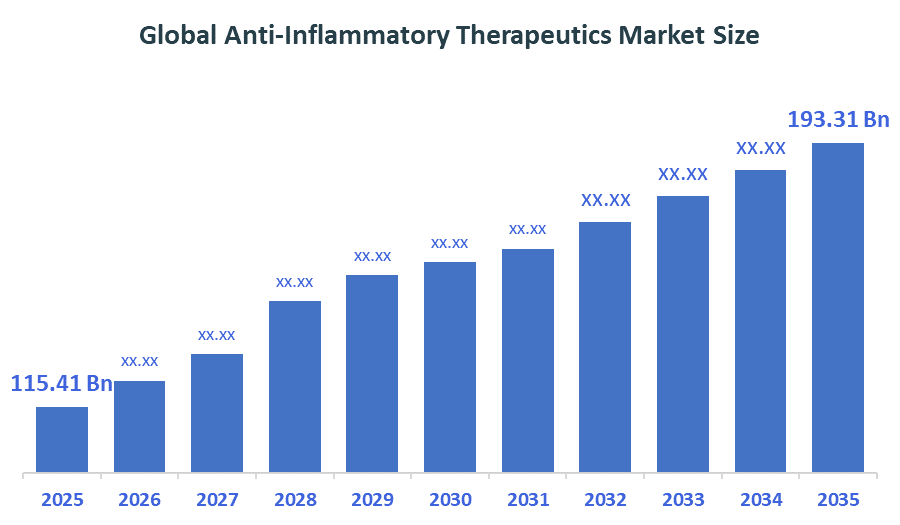
The Global Anti-Inflammatory Therapeutics Market size is forecast to grow from USD 115.41 Billion in 2025 to approximately USD 193.31 Billion by 2035. According to Decision Advisors, a detailed research report on the anti-inflammatory therapeutics market indicates that the increasing adoption of biologics dominates the market, accounting for approximately 75.5% of the total share globally. AbbVie Inc. leads the market with an estimated 20-25% global market share. The company reported a 2025 revenue of approximately USD 25 Billion, making it one of the most influential forces shaping industry trends and overall market growth.
Market Snapshot
- Global Anti-Inflammatory Therapeutics Market Size (2025): USD 115.41 Billion
- Projected Global Anti-Inflammatory Therapeutics Market Size (2035): USD 193.31 Billion
- Global Anti-Inflammatory Therapeutics Market Compound Annual Growth Rate (CAGR): 5.29%
- Largest Regional Market: North America
- Fastest Growing Region: Asia-Pacific
- Market 3rd Largest Region: Europe
- Base Year: 2025
- Historical Period: 2021–2024
- Forecast Period: 2026–2035
Market Overview/ Introduction
The Global Anti-Inflammatory Therapeutics Market refers to the market responsible for developing, manufacturing, and distributing medications that provide relief from inflammatory conditions that result from both acute and chronic medical conditions. The three main categories of anti-inflammatory medications include corticosteroids and non-steroidal anti-inflammatory drugs (NSAIDs), and biologics, which all work to reduce swelling and pain and control immune system reactions. The market experiences expansion because increasing numbers of people develop chronic illnesses while the population ages and medical services become more accessible. Biologic therapies and personalized medicine, together with advanced drug delivery systems, will create new possibilities during upcoming times. The current developments result from continuous research efforts together with technological advancements and increasing worldwide requirements for effective and targeted medical treatments that provide safe outcomes.
- The 2025 Biotech Act and the major reform of the EU Pharmaceutical Legislation (agreed Dec 2025) aim to fast-track cutting-edge therapies using AI and real-world data. The PRIME scheme has been expanded to provide intensified support for "PRIority MEdicines" that address unmet needs in chronic inflammatory and rare diseases.
- The NIAMS is a key U.S. government initiative supporting research into inflammatory diseases such as arthritis, skin, and musculoskeletal disorders. It funds drug development, clinical trials, and training programs to improve anti-inflammatory therapeutics. The institute focuses on prevention, diagnosis, and innovative treatments, strengthening the global pipeline for advanced anti-inflammatory drugs.
Notable Insights: -
- North America is anticipated to hold the largest share of approximately 41% in the anti-inflammatory therapeutics market over the forecast period.
- Asia Pacific is expected to grow at a rapid CAGR of approximately 6.8% in the anti-inflammatory therapeutics market during the forecast period.
- The biologics acid segment dominated the market in 2025, approximately 42%, and is projected to grow at a substantial CAGR during the forecast period.
- The arthritis segment dominated the market in 2025, approximately 38%, and is projected to grow at a substantial CAGR during the forecast period.
- The adult segment dominated the market in 2025, approximately 75%, and is projected to grow at a substantial CAGR during the forecast period.
- The compound annual growth rate of the Global Anti-Inflammatory Therapeutics Market is 5.29%.
- The market is likely to achieve a valuation of USD 193.31Billion by 2035.
What is role of technology in grooming the market?
Technology plays a pivotal role in shaping the growth of the global anti-inflammatory therapeutics market by enhancing drug discovery, development, and patient outcomes. Advanced tools such as AI-driven drug discovery and bioinformatics enable faster identification of novel anti-inflammatory targets and molecules. Companies like Roche Holding AG and Novartis AG are leveraging digital platforms and data analytics to streamline clinical trials and improve success rates. Biotechnology innovations, including monoclonal antibodies and gene-based therapies, are transforming treatment approaches. Additionally, wearable devices and telemedicine support continuous patient monitoring and personalized care. Automation in manufacturing ensures scalability and quality, while digital health ecosystems improve treatment adherence, collectively accelerating market growth and improving accessibility worldwide.
Market Drivers
The global market for anti-inflammatory drugs is expanding because rising numbers of people develop chronic inflammatory conditions and autoimmune diseases, which include asthma, arthritis, and inflammatory bowel disease. The expanding population of elderly individuals, together with increasing cases of lifestyle-related diseases, creates an urgent demand for effective medical solutions. Pfizer Inc. and Novartis AG allocate substantial resources to research and development (R&D) projects that focus on developing better treatment results through new biologics and targeted therapy methods. The emerging markets experience development because of healthcare awareness and diagnostic tool improvements, and healthcare service accessibility progress together. The market expansion throughout the world receives acceleration from two factors, which include developed regions providing favorable reimbursement policies and the increasing adoption of personalized medicine.
.
Restrain
The global anti-inflammatory therapeutics market faces restraints due to high costs of biologics, limiting patient access in price-sensitive regions. Stringent regulatory approvals delay product launches, while side effects of long-term use reduce patient adherence. Additionally, patent expirations and competition from generics and biosimilars pressure revenues of key players like AbbVie Inc.
Competitive Analysis:
The report offers the appropriate analysis of the key organizations/companies involved within the global anti-inflammatory therapeutics market, along with a comparative evaluation primarily based on their product offerings, business overviews, geographic presence, enterprise strategies, segment market share, and SWOT analysis. The report also provides an elaborative analysis focusing on the current news and developments of the companies, which includes product development, innovations, joint ventures, partnerships, mergers & acquisitions, strategic alliances, and others. This allows for the evaluation of the overall competition within the market.
Top Companies in Global Anti-Inflammatory Therapeutics Market
- Johnson & Johnson
- Pfizer Inc.
- AbbVie Inc.
- F. Hoffmann-La Roche AG
- AstraZeneca PLC
- Amgen Inc.
- Novartis AG
- Merck & Co., Inc.
- Sanofi S.A.
- GlaxoSmithKline plc
- Bristol-Myers Squibb Company
- Eli Lilly and Company
Government Initiatives
|
Country |
Key Government Initiatives |
|
USA |
The FDA continues to prioritize biologics and biosimilars, approving 18 biosimilars in 2024 to increase competition and lower costs. Key 2025 initiatives include the approval of novel anti-inflammatory therapies like Exdensur (depemokimab-ulaa) for severe eosinophilic asthma and Journavx (suzetrigine), a non-opioid NaV1.8 inhibitor for acute pain. |
|
India |
The government is leveraging the Production Linked Incentive (PLI) Scheme 2.0 to boost the domestic manufacturing of high-value products, including autoimmune and biopharmaceutical drugs. As of late 2025, the scheme has enabled the first-time domestic manufacturing of 191 bulk drugs, significantly reducing import dependence for critical anti-inflammatory ingredients. |
|
China |
Under the Regulation for the Implementation of the Drug Administration Law (revised Dec 2025), China is accelerating the review of innovative "Class 1" drugs and fostering R&D in biologics. New pilot programs in 2024 allow for segmented production of biological products, such as antibody-drug conjugates (ADCs) and GLP-1 receptor agonists, to modernize manufacturing. |
Study on the Supply, Demand, Distribution, and Market Environment of the Anti-Inflammatory Therapeutics Market
The global anti-inflammatory therapeutics market demonstrates a well-structured ecosystem shaped by strong supply capabilities, rising demand, evolving distribution channels, and a dynamic macro environment. On the supply side, pharmaceutical companies maintain robust pipelines driven by biologics, NSAIDs, and corticosteroids, supported by advanced R&D and manufacturing networks. Innovation in targeted therapies ensures continuous product availability. On the demand side, the increasing prevalence of chronic inflammatory diseases such as arthritis and autoimmune disorders, along with aging populations, is driving sustained consumption globally. In terms of distribution, hospital pharmacies dominate due to the need for specialist-administered biologics, while retail and online pharmacies are expanding due to accessibility and convenience. The market environment is influenced by regulatory policies, pricing pressures, reimbursement systems, and rapid technological advancements such as precision medicine and digital healthcare, all of which collectively shape competitive dynamics and future growth potential.
Price Analysis and Consumer Behaviour Analysis
The global anti-inflammatory therapeutics market exhibits a wide pricing spectrum due to the presence of both low-cost generics and high-value biologics. Traditional drugs such as NSAIDs are inexpensive and widely accessible, while advanced biologics and targeted therapies are priced significantly higher due to complex development and manufacturing processes. Companies like AbbVie Inc. and Amgen Inc. command premium pricing for innovative treatments, particularly monoclonal antibodies. Pricing is also influenced by patent protection, regulatory frameworks, and reimbursement policies. In emerging markets, cost sensitivity drives demand for biosimilars and generics, encouraging competitive pricing strategies and tiered pricing models to expand patient access. Consumer behavior in this market is driven by disease severity, treatment efficacy, cost considerations, and physician recommendations. Patients with chronic inflammatory conditions increasingly prefer targeted therapies due to better long-term outcomes, despite higher costs. However, affordability remains a key concern, especially in developing regions, leading to higher adoption of generics and biosimilars. Trust in established pharmaceutical brands such as Pfizer Inc. influences purchasing decisions. Additionally, rising health awareness, improved diagnosis rates, and demand for convenient administration (e.g., oral therapies over injectables) are shaping consumer preferences, pushing companies to align offerings with patient-centric needs.
Market Segmentation
The Anti-Inflammatory Therapeutics Market share is classified into drug class, indication, and patient type.
- The biologics segment dominated the market in 2025, approximately 42%, and is projected to grow at a substantial CAGR during the forecast period.
Based on the drug class, the anti-inflammatory therapeutics market is divided into non-steroidal anti-inflammatory drugs, corticosteroids, disease-modifying anti-rheumatic drugs, and biologics. Among these, the biologics segment dominated the market in 2025, approximately 42%, and is projected to grow at a substantial CAGR during the forecast period. The growth of the biologics segment is growing due to high efficacy in treating chronic inflammatory and autoimmune conditions such as rheumatoid arthritis and psoriasis. These therapies target specific immune pathways, offering superior outcomes compared to conventional drugs, which has increased adoption despite their higher cost.
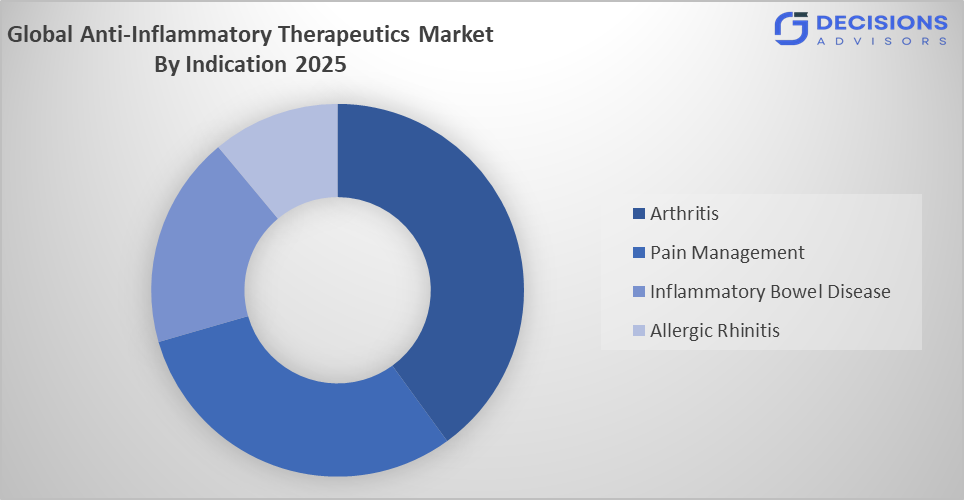
- The arthritis segment dominated the market in 2025, approximately 38%, and is projected to grow at a substantial CAGR during the forecast period.
Based on the indication, the anti-inflammatory therapeutics market is divided into arthritis, pain management, inflammatory bowel disease, and allergic rhinitis. Among these, the arthritis segment dominated the market in 2025, approximately 38%, and is projected to grow at a substantial CAGR during the forecast period. The arthritis segment dominated due to the high prevalence of osteoarthritis and rheumatoid arthritis globally. The chronic nature of these diseases requires long-term treatment using NSAIDs, corticosteroids, and biologics, thereby sustaining consistent demand and making arthritis the leading revenue-generating indication segment.
- The adult segment dominated the market in 2025, approximately 75%, and is projected to grow at a substantial CAGR during the forecast period.
Based on the patient type, the anti-inflammatory therapeutics market is divided into adults, pediatrics, and geriatrics. Among these, the adult segment dominated the market in 2025, approximately 75%, and is projected to grow at a substantial CAGR during the forecast period. The growth of the adult segment is due to the higher incidence of inflammatory and autoimmune disorders in the adult population, along with lifestyle-related risk factors and aging. Greater access to diagnosis and advanced therapies further strengthens the dominance of adults in the global anti-inflammatory therapeutics market.
Strategies to Implement for Growth of the Market in Non-Leading Regions
To drive growth in non-leading regions, companies in the global anti-inflammatory therapeutics market should prioritize affordability, access, and localized innovation. Expanding partnerships with regional healthcare providers and governments can improve distribution and patient reach. Firms like Novartis AG and Johnson & Johnson are increasingly investing in emerging markets through joint ventures and local manufacturing to reduce costs. Strengthening regulatory pathways and fast-tracking approvals can accelerate product availability. Additionally, increasing awareness through education campaigns and improving diagnostic infrastructure will support early disease detection. Companies should also focus on biosimilars and cost-effective therapies to address pricing barriers. Leveraging telemedicine and digital health platforms can further enhance accessibility in remote areas, ensuring sustained market penetration and long-term growth.
Regional Segment Analysis of the Anti-Inflammatory Therapeutics Market
- North America (U.S., Canada, Mexico)
- Europe (Germany, France, U.K., Italy, Spain, Rest of Europe)
- Asia-Pacific (China, Japan, India, Rest of APAC)
- South America (Brazil and the Rest of South America)
- The Middle East and Africa (UAE, South Africa, Rest of MEA)
North America is anticipated to hold the largest share of approximately 41% the anti-inflammatory therapeutics market over the forecast period.
North America is anticipated to hold the largest share of approximately 41% the anti-inflammatory therapeutics market over the forecast period. The dominance of this region is primarily driven by a high prevalence of chronic inflammatory diseases, strong healthcare infrastructure, and widespread access to advanced biologic therapies. Additionally, favorable reimbursement policies, continuous innovation by major pharmaceutical companies, and early adoption of novel treatments significantly support regional market growth and dominance.
Asia Pacific is expected to grow at a rapid CAGR of approximately 6.8% in the anti-inflammatory therapeutics market during the forecast period.
Asia Pacific is expected to grow at a rapid CAGR of approximately 6.8% in the anti-inflammatory therapeutics market during the forecast period. This growth is driven by rising healthcare expenditure, increasing awareness of inflammatory diseases, and a large patient population. Improving healthcare infrastructure, expanding access to biologics, and growing pharmaceutical investments in countries like China and India further accelerate market expansion in this region.
Europe is the 3rd largest region to grow in the anti-inflammatory therapeutics market during the period.
Europe ranks as the third-largest region in the global anti-inflammatory therapeutics market due to its well-established healthcare systems, rising prevalence of chronic inflammatory diseases, and strong adoption of advanced therapies such as biologics. However, comparatively slower growth is influenced by strict regulatory frameworks, pricing pressures, and cost-containment policies, which limit rapid market expansion despite ongoing research, innovation, and increasing demand for effective treatments.
Future Market Trends in Global Anti-Inflammatory Therapeutics Market: -
1. Expansion of Precision Medicine and Biomarker-Based Therapies
The future of the anti-inflammatory therapeutics market will be shaped by precision medicine, where treatments are tailored based on genetic and biomarker profiling. Companies like Roche Holding AG are investing in targeted therapies to improve efficacy and reduce adverse effects. This approach enhances patient outcomes, minimizes trial-and-error prescribing, and supports long-term disease management, driving higher adoption globally.
2. Rising Dominance of Oral Small-Molecule Therapies (JAK Inhibitors)
Oral small-molecule drugs, especially JAK inhibitors, are expected to gain traction due to their convenience compared to injectable biologics. Firms such as Pfizer Inc. are expanding their portfolios in this segment. These therapies offer rapid action, ease of administration, and strong patient compliance, making them increasingly preferred for chronic inflammatory conditions.
3. Growth in Biosimilars and Cost-Effective Treatment Options
The increasing demand for affordable therapies is driving the growth of biosimilars as patents for major biologics expire. Companies like Amgen Inc. are focusing on biosimilar development to capture market share. Lower costs improve accessibility in emerging markets, reduce healthcare burden, and encourage wider adoption of advanced anti-inflammatory treatments.
Recent Development
- In March 2026, Johnson & Johnson received approval from the U.S. Food and Drug Administration for Icotyde (icotrokinra), an oral IL-23 receptor inhibitor indicated for moderate-to-severe plaque psoriasis. The therapy marked the first targeted oral peptide in this class, offering a convenient alternative to injectable biologics.
- In March 2026, Bristol Myers Squibb received U.S. Food and Drug Administration approval for Sotyktu (deucravacitinib) to treat adults with active psoriatic arthritis. The oral TYK2 inhibitor became the first therapy of its class approved for this indication, expanding treatment options and strengthening innovation.
- In March 2026, GlaxoSmithKline received U.S. FDA approval for its drug Lynavoy (linerixibat) to treat cholestatic pruritus in adults with primary biliary cholangitis. The therapy was reported as the first approved treatment specifically targeting this debilitating itch condition, marking a notable advancement in autoimmune and inflammatory-related liver disease management.
- In January 2026, Boehringer Ingelheim and Simcere Pharmaceutical Group announced a licensing and collaboration deal valued at up to $1.26 billion to develop a pre-clinical bispecific antibody (SIM0709) for inflammatory bowel disease. The therapy was designed to target TL1A and IL-23 pathways, key drivers of inflammation, marking a strategic move to strengthen their immunology pipelines.
How is Recent Developments Helping the Market?
Recent developments are significantly accelerating growth in the global anti-inflammatory therapeutics market through innovation, regulatory progress, and expanded treatment access. Leading companies such as AbbVie Inc. and Pfizer Inc. are advancing next-generation biologics and small-molecule drugs with improved safety and long-term efficacy. Increased approvals of targeted therapies, including JAK inhibitors and monoclonal antibodies, are enhancing treatment outcomes for chronic inflammatory diseases. Strategic collaborations, mergers, and strong R&D investments are speeding up drug discovery pipelines. Additionally, the integration of precision medicine and biomarker-based therapies is enabling personalized treatment approaches. Expanding clinical trials in emerging markets and improved healthcare infrastructure are further boosting accessibility, collectively driving market expansion and strengthening the competitive landscape globally.
Market Segment
This study forecasts revenue at global, regional, and country levels from 2020 to 2035. Decision Advisors has segmented the Anti-Inflammatory Therapeutics Market based on the below-mentioned segments:
Global Anti-Inflammatory Therapeutics Market, By Drug Class
- Non-Steroidal Anti-Inflammatory Drugs
- Corticosteroids
- Disease-Modifying Anti-Rheumatic Drugs
- Biologics
Global Anti-Inflammatory Therapeutics Market, By Indication
- Arthritis
- Pain Management
- Inflammatory Bowel Disease
- Allergic Rhinitis
Global Anti-Inflammatory Therapeutics Market, By Patient Type
- Adults
- Pediatrics
- Geriatrics
Global Anti-Inflammatory Therapeutics Market, By Regional Analysis
- North America
- US
- Canada
- Mexico
- Europe
- Germany
- UK
- France
- Italy
- Spain
- Russia
- Rest of Europe
- Asia Pacific
- China
- Japan
- India
- South Korea
- Australia
- Rest of Asia Pacific
- South America
- Brazil
- Argentina
- Rest of South America
- Middle East & Africa
- UAE
- Saudi Arabia
- Qatar
- South Africa
- Rest of the Middle East & Africa
Frequently Asked Questions (FAQ)
Q. How is the shift toward outpatient and home-based care influencing the anti-inflammatory therapeutics market?
A. The shift toward outpatient and home-based care is increasing demand for convenient and self-administered therapies such as oral drugs and pre-filled injectables. This trend reduces hospital dependency, lowers treatment costs, and improves patient adherence. Pharmaceutical companies are focusing on developing user-friendly formulations and delivery systems to support this transition, thereby expanding market reach and improving long-term treatment outcomes.
Q. What impact do biosimilars have on competition in the anti-inflammatory therapeutics market?
A. Biosimilars are intensifying market competition by offering cost-effective alternatives to expensive biologics. They enable broader patient access, particularly in emerging economies, while pressuring original drug manufacturers to adopt competitive pricing and innovation strategies. This leads to increased market penetration, improved affordability, and a more dynamic competitive landscape across global regions.
Q. How are environmental and lifestyle factors contributing to market demand?
A. Environmental pollution, sedentary lifestyles, poor dietary habits, and rising stress levels are increasing the incidence of inflammatory and autoimmune conditions. These factors contribute to chronic diseases such as arthritis and respiratory inflammation, thereby driving consistent demand for anti-inflammatory therapeutics and supporting long-term market growth.
Q. What role do digital health platforms play in improving treatment outcomes?
A. Digital health platforms, including mobile health apps and remote monitoring tools, enhance patient engagement and treatment adherence. They enable real-time tracking of symptoms, medication usage, and disease progression. This data-driven approach allows healthcare providers to optimize therapies, reduce complications, and deliver personalized care, ultimately improving clinical outcomes and supporting market expansion.
Check Licence
Choose the plan that fits you best: Single User, Multi-User, or Enterprise solutions tailored for your needs.
We Have You Covered
- 24/7 Analyst Support
- Clients Across the Globe
- Tailored Insights
- Technology Tracking
- Competitive Intelligence
- Custom Research
- Syndicated Market Studies
- Market Overview
- Market Segmentation
- Growth Drivers
- Market Opportunities
- Regulatory Insights
- Innovation & Sustainability
Report Details
| Scope | Global |
| Pages | 210 |
| Delivery | PDF & Excel via Email |
| Language | English |
| Release | Apr 2026 |
| Access | Download from this page |