
Global Antifibrinolytic Drugs Market
 |
Author:
David J
|
Pages:
240
|
Author:
David J
|
Pages:
240
Global Antifibrinolytic Drugs Market Size, Share, By Type (Aminocaproic Acid, Aprotinin, Tranexamic Acid), By Application (Cardiac Surgery, Dental Procedures, Obstetric Procedures, Surgical Procedures, Trauma Care), By End User (Hospitals, Ambulatory Surgical Centers, Clinics, Outpatient Clinics, Trauma Centers), and By Region (North America, Europe, Asia-Pacific, Latin America, Middle East & Africa), Analysis and Forecast 2026-2035
CAGR
4.58%
REVENUE 2025
USD Million 17120.42
FORECAST 2035
USD Million 26799.5
REPORT COVERAGE
Global
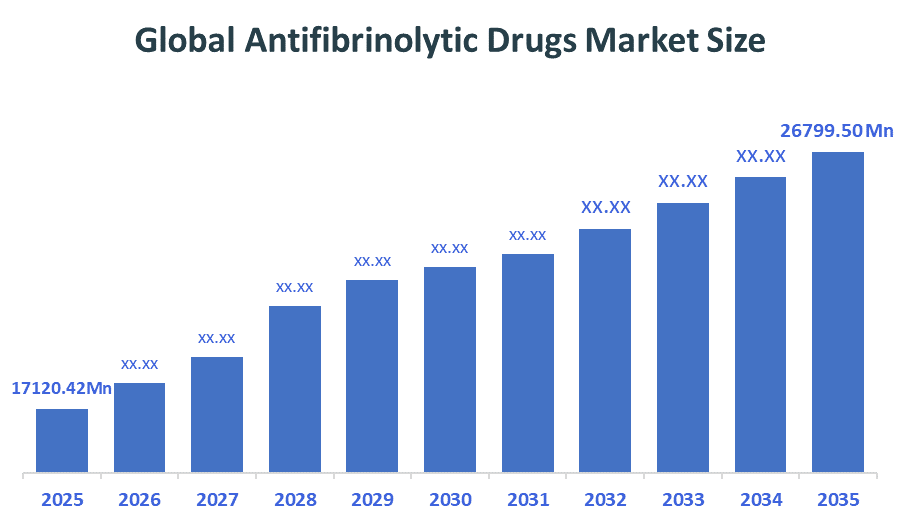
The Global Antifibrinolytic Drugs Market size is forecast to grow from USD 17,120.42Million in 2025 to approximately USD 26,799.50Million by 2035. According to Decision Advisors, a detailed research report on the antifibrinolytic drugs market indicates that the increasing adoption of tranexamic acid (TXA) trend dominates the market, accounting for approximately 60-70% of the total share globally. Pfizer Inc. leads the market with an estimated 15-20% global market share. The company reported a 2025 revenue of approximately USD 58-60 Billion, making it one of the most influential forces shaping industry trends and overall market growth.
Market Snapshot
- Global Antifibrinolytic Drugs Market Size (2025): USD 17,120.42 Million
- Projected Global Antifibrinolytic Drugs Market Size (2035): USD 26,799.50 Million
- Global Antifibrinolytic Drugs Market Compound Annual Growth Rate (CAGR): 4.58%
- Largest Regional Market: North America
- Fastest Growing Region: Asia-Pacific
- Market 3rd Largest Region: Europe
- Base Year: 2025
- Historical Period: 2021–2024
- Forecast Period: 2026–2035
Market Overview/ Introduction
The global antifibrinolytic drugs market refers to the industry that makes, sells, and distributes medicines that stop excessive bleeding by stopping fibrinolysis. Tranexamic acid and other antifibrinolytic drugs stop blood clots from breaking down, which makes them essential for use in surgery, the treatment of trauma, and the management of bleeding disorders. The two sectors will develop through two paths, which involve the growth of minimally invasive surgical techniques and the expansion of healthcare access into new regions. The market is growing because more people are getting surgeries, more people are learning about blood management, and there is a need for cheap generics. Improvements in drug delivery systems and helpful clinical guidelines are speeding up adoption even more, which will keep the market growing globally.
- In September 2025, the WHO Model List of Essential Medicines (EML), updated, continues to include TXA as a priority treatment for postpartum hemorrhage and trauma. Over 150 countries utilize this list to guide national procurement and insurance reimbursement policies.
- The National Health Service, guided by the National Institute for Health and Care Excellence (NICE), mandates early TXA use in trauma patients within three hours of injury. Government-backed funding and policy updates have significantly increased TXA adoption across emergency services, reinforcing antifibrinolytics as standard care in national trauma systems.
Notable Insights: -
- North America is anticipated to hold the largest share of approximately 40% in the antifibrinolytic drugs market over the forecast period.
- Asia Pacific is expected to grow at a rapid CAGR of approximately 7.5% in the antifibrinolytic drugs market during the forecast period.
- The tranexamic acid segment dominated the market in 2025, approximately 65%, and is projected to grow at a substantial CAGR during the forecast period.
- The surgical procedures segment dominated the market in 2025, approximately 40%, and is projected to grow at a substantial CAGR during the forecast period.
- The hospitals segment dominated the market in 2025, approximately 55%, and is projected to grow at a substantial CAGR during the forecast period.
- The compound annual growth rate of the Global Antifibrinolytic Drugs Market is 4.58%.
- The market is likely to achieve a valuation of USD 26,799.50 Million by 2035.
What is role of technology in grooming the market?
Technology plays a crucial role in shaping the growth of the global antifibrinolytic drugs market by enhancing drug development, delivery, and clinical outcomes. Advanced manufacturing technologies enable high-quality, cost-effective production of drugs like Tranexamic acid, improving global accessibility. Innovations in drug delivery systems, such as pre-filled syringes and optimized intravenous formulations, ensure precise dosing and faster administration in emergency and surgical settings. Additionally, digital health technologies and clinical decision support systems help physicians adopt evidence-based blood management protocols more effectively. Data analytics and AI-driven research are accelerating clinical trials and identifying new therapeutic applications. These technological advancements collectively improve treatment efficiency, patient safety, and market expansion.
Market Drivers
The global market for antifibrinolytic drugs is mostly driven by the fact that patients are having surgeries, getting hurt, and having bleeding disorders. Medical professionals frequently use tranexamic acid and similar medications to control bleeding while decreasing the requirement for blood transfusions. This makes them more popular in hospitals and emergency rooms. The number of people trained to manage blood has increased because better clinical guidelines now enable more individuals to accomplish this task. The market is expanding at a quicker rate because the availability of low-cost generic medications has increased, and healthcare systems have improved, and more people in developing countries now receive medical care. The ongoing research activities, together with the development of new products, will create sustained worldwide demand throughout all markets.
Restrain
The global antifibrinolytic drugs market faces restraints due to potential side effects such as thrombosis risks associated with drugs like Tranexamic acid, limiting widespread use in high-risk patients. Additionally, lack of awareness in developing regions, regulatory hurdles, and dependence on hospital settings for administration can restrict market growth and broader adoption.
Competitive Analysis:
The report offers the appropriate analysis of the key organizations/companies involved within the global antifibrinolytic drugs market, along with a comparative evaluation primarily based on their product offerings, business overviews, geographic presence, enterprise strategies, segment market share, and SWOT analysis. The report also provides an elaborative analysis focusing on the current news and developments of the companies, which includes product development, innovations, joint ventures, partnerships, mergers & acquisitions, strategic alliances, and others. This allows for the evaluation of the overall competition within the market.
Top Companies in Global Antifibrinolytic Drugs Market
- Pfizer Inc.
- Novartis AG
- Takeda Pharmaceutical Company Limited
- Bayer AG
- Ferring Pharmaceuticals
- Baxter International Inc.
- Viatris Inc.
- Teva Pharmaceutical Industries Ltd.
- Aurobindo Pharma Limited
- Sun Pharmaceutical Industries Ltd.
- Cipla Limited
- Dr. Reddy’s Laboratories Ltd.
Government Initiatives
|
Country |
Key Government Initiatives |
|
USA |
The FDA has approved several new generic formulations of Tranexamic Acid (TXA) to improve affordability and address hospital supply shortages. Additionally, BARDA awarded a contract up to $186 million in 2025 to develop a novel intramuscular TXA formulation for rapid, prehospital treatment of uncontrolled bleeding. |
|
India |
The government is implementing the Biopharma SHAKTI initiative with an outlay of ?10,000 crore ($1.2B) to position India as a global manufacturing hub. To enhance affordability, essential antifibrinolytics are being distributed through the Jan Aushadhi network of generic pharmacies. |
|
China |
The NMPA implemented new administrative provisions in 2026 to streamline the inspection and export certification process for pharmaceutical manufacturers. New regulations also aim to reduce the "drug lag" by accepting overseas clinical data for products addressing urgent medical needs. |
Study on the Supply, Demand, Distribution, and Market Environment of the Antifibrinolytic Drugs Market
The global antifibrinolytic drugs market demonstrates a well-structured interplay between supply, demand, distribution, and the broader market environment. On the supply side, the market is largely supported by widespread generic manufacturing of key drugs such as tranexamic acid, enabling consistent production and improved affordability across regions. Demand is primarily driven by rising surgical procedures, trauma cases, and bleeding disorders, with hospitals being the dominant end-users due to the critical need for rapid bleeding control. In terms of distribution, hospital pharmacies and institutional procurement systems account for the majority share, supported by centralized purchasing and clinical protocols. The market environment is moderately competitive, characterized by a mix of established pharmaceutical companies and generic manufacturers, with growth influenced by healthcare infrastructure, regulatory frameworks, and increasing awareness of blood management practices globally.
Price Analysis and Consumer Behaviour Analysis
Price analysis and consumer behavior in the global antifibrinolytic drugs market are closely influenced by cost sensitivity, generic competition, and clinical necessity. Prices of widely used drugs like tranexamic acid vary significantly based on formulation, region, and procurement scale, with bulk manufacturing and generic availability reducing costs over time. However, treatment expenses can still be high due to hospital administration and repeated dosing requirements, especially in surgical and trauma care settings . From a consumer behavior perspective, demand is largely driven by clinical outcomes rather than brand preference, with hospitals prioritizing cost-effective generics and evidence-based therapies. Increased awareness of bleeding management, rising surgical procedures, and improved healthcare access are encouraging higher adoption, particularly in emerging markets where affordability and availability strongly shape purchasing decisions.
Market Segmentation
The Antifibrinolytic Drugs Market share is classified into type, application, and end user.
- The tranexamic acid segment dominated the market in 2025, approximately 65%, and is projected to grow at a substantial CAGR during the forecast period.
Based on the type, the antifibrinolytic drugs market is divided into aminocaproic acid, aprotinin, and tranexamic acid. Among these, the tranexamic acid segment dominated the market in 2025, approximately 65%, and is projected to grow at a substantial CAGR during the forecast period. The growth of the tranexamic acid segment is growing due to high efficacy, affordability, and wide clinical acceptance across surgeries, trauma, and obstetric care. Strong inclusion in international treatment guidelines and availability in oral and injectable forms further support its extensive global usage.
- The surgical procedures segment dominated the market in 2025, approximately 40%, and is projected to grow at a substantial CAGR during the forecast period.
Based on the application, the antifibrinolytic drugs market is divided into cardiac surgery, dental procedures, obstetric procedures, surgical procedures, and trauma care. Among these, the surgical procedures segment dominated the market in 2025, approximately 40%, and is projected to grow at a substantial CAGR during the forecast period. The surgical procedures segment dominated due to the routine use of antifibrinolytic drugs in minimizing perioperative blood loss. Increasing volumes of orthopedic, cardiac, and general surgeries globally, along with the need to reduce blood transfusions and complications, continue to drive strong demand in this segment.
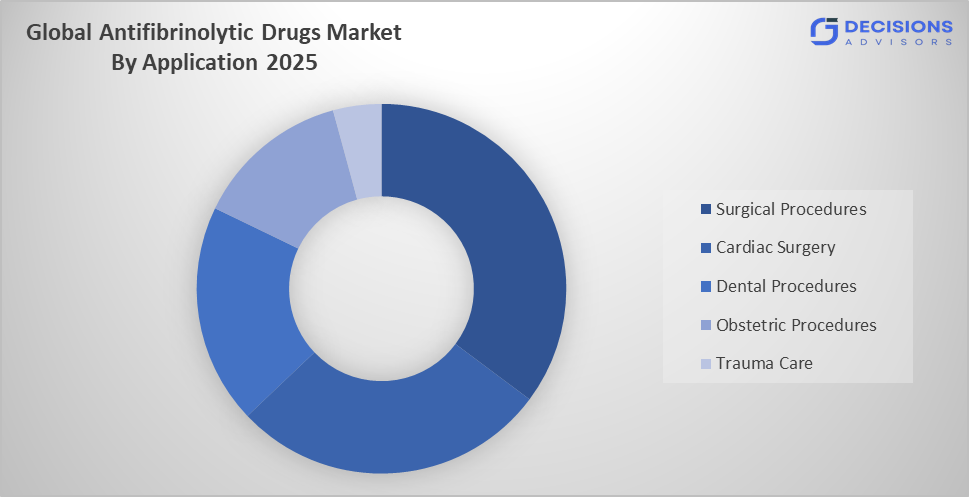
- The hospitals segment dominated the market in 2025, approximately 55%, and is projected to grow at a substantial CAGR during the forecast period.
Based on the end user, the antifibrinolytic drugs market is divided into the hospitals, ambulatory surgical centers, clinics, outpatient clinics, and trauma centers. Among these, the hospitals segment dominated the market in 2025, approximately 55%, and is projected to grow at a substantial CAGR during the forecast period. The growth of the hospitals segment is due to the primary settings for surgeries, trauma care, and emergency treatments. Their advanced infrastructure, skilled healthcare professionals, and standardized blood management protocols ensure consistent and high-volume use of antifibrinolytic drugs, making them the leading end-user segment worldwide.
Strategies to Implement for Growth of the Market in Non-Leading Regions
Growth in non-leading regions of the global antifibrinolytic drugs market can be accelerated through a combination of affordability, awareness, and infrastructure strategies. Expanding access to cost-effective generics such as Tranexamic acid and Aminocaproic acid is essential to address price sensitivity in emerging economies. Strengthening healthcare infrastructure, particularly in rural and semi-urban areas, will improve timely administration in trauma and surgical settings. Partnerships with governments and organizations like World Health Organization can support inclusion in essential medicine lists and national treatment guidelines. Additionally, investing in physician training and awareness programs about blood management protocols can drive adoption. Pharmaceutical companies should also focus on localized manufacturing and distribution networks to reduce supply chain costs, while regulatory harmonization can further accelerate product approvals and market entry.
Regional Segment Analysis of the Antifibrinolytic Drugs Market
- North America (U.S., Canada, Mexico)
- Europe (Germany, France, U.K., Italy, Spain, Rest of Europe)
- Asia-Pacific (China, Japan, India, Rest of APAC)
- South America (Brazil and the Rest of South America)
- The Middle East and Africa (UAE, South Africa, Rest of MEA)
North America is anticipated to hold the largest share of approximately 40% the antifibrinolytic drugs market over the forecast period.
North America is anticipated to hold the largest share of approximately 40% the antifibrinolytic drugs market over the forecast period. The dominance of this region is primarily driven by advanced healthcare infrastructure, high surgical volumes, and strong adoption of blood management protocols. Widespread use of drugs like Tranexamic acid, favorable reimbursement systems, and the presence of leading pharmaceutical companies further strengthen regional market leadership.
Asia Pacific is expected to grow at a rapid CAGR of approximately 7.5% in the antifibrinolytic drugs market during the forecast period.
Asia Pacific is expected to grow at a rapid CAGR of approximately 7.5% in the antifibrinolytic drugs market during the forecast period. This growth is driven by improving healthcare infrastructure, rising surgical procedures, and increasing awareness of bleeding management. Expanding access to affordable generics like Tranexamic acid, along with government healthcare initiatives, is accelerating market expansion across emerging economies.
Europe is the 3rd largest region to grow in the antifibrinolytic drugs market during the period.
Europe is the third-largest region in the global antifibrinolytic drugs market, showing steady growth due to advanced healthcare systems and rising surgical volumes. The widespread use of Tranexamic acid in hospitals supports demand. Additionally, an aging population, strong clinical guidelines, and increasing focus on patient safety continue to drive consistent market expansion across the region.
Future Market Trends in Global Antifibrinolytic Drugs Market: -
1. Expansion of Generic and Cost-Effective Drugs
The future market will be strongly driven by the increasing availability of generic antifibrinolytic drugs, especially formulations like tranexamic acid. These generics reduce treatment costs and improve accessibility across developing regions, enabling wider adoption in hospitals and trauma care settings. This affordability factor will significantly boost volume demand globally.
2. Rising Adoption in Surgical and Trauma Care
Growing volumes of surgeries, including orthopedic, cardiovascular, and emergency trauma procedures, will continue to increase reliance on antifibrinolytics. These drugs are becoming integral to blood management protocols as they reduce transfusion needs and improve patient safety, making them standard in modern surgical practices.
3. Innovation in Drug Formulations and Delivery Systems
Future trends include the development of advanced formulations such as pre-filled syringes, oral rinses, and improved IV drugs for easier administration. These innovations enhance convenience, compliance, and efficacy, expanding applications across outpatient and emergency care while supporting faster adoption of antifibrinolytic therapies globally.
Recent Development
- In November 2025, Rafa Laboratories secured a major contract from the Biomedical Advanced Research and Development Authority (BARDA) to advance the development of a novel intramuscular formulation of tranexamic acid (TXA) for rapid prehospital trauma care. The agreement, valued at up to $186 million, aimed to support formulation development, clinical trials, and potential regulatory approval of a fast, easy-to-administer treatment for uncontrolled bleeding.
- In June 2024, Avenacy launched Tranexamic Acid Injection, USP in the U.S. market as a generic equivalent to Cyklokapron. The product was indicated for short-term use in hemophilia patients to reduce or prevent hemorrhage during and after tooth extraction.
- In April 2024, Nexus Pharmaceuticals received U.S. FDA approval for its Tranexamic Acid in 0.7% Sodium Chloride Injection, expanding its portfolio of ready-to-use generic injectable therapies. The intravenous antifibrinolytic product was indicated for short-term use in hemophilia patients to reduce bleeding and support clot stability following procedures.
- In February 2024, Hyloris Pharmaceuticals continued the development of XTRAZA, its proprietary tranexamic acid oral rinse, and enrolled the first patient in a Phase 3 clinical trial targeting bleeding control in dental and minor surgical procedures. The product was designed as a localized antifibrinolytic solution to help patients on anticoagulants manage procedure-related bleeding.
How is Recent Developments Helping the Market?
Recent developments are significantly accelerating growth in the global antifibrinolytic drugs market by improving efficacy, accessibility, and clinical adoption. Advances in formulations of key drugs such as Tranexamic acid and Aminocaproic acid have enhanced safety profiles and expanded their use across trauma care, surgeries, and obstetrics. Increasing integration of these drugs into standardized treatment protocols, especially for managing hemorrhage and reducing perioperative blood loss, has strengthened demand. Regulatory approvals and updated clinical guidelines are further supporting widespread utilization. Additionally, growing awareness of blood conservation strategies and the rising number of surgical procedures globally are contributing to market expansion. Pharmaceutical companies are also investing in research to develop novel delivery systems and combination therapies, ensuring better patient outcomes and driving sustained market growth.
Market Segment
This study forecasts revenue at global, regional, and country levels from 2020 to 2035. Decision Advisors has segmented the Antifibrinolytic Drugs Market based on the below-mentioned segments:
Global Antifibrinolytic Drugs Market, By Type
- Aminocaproic Acid
- Aprotinin
- Tranexamic Acid
Global Antifibrinolytic Drugs Market, By Application
- Cardiac Surgery
- Dental Procedures
- Obstetric Procedures
- Surgical Procedures
- Trauma Care
Global Antifibrinolytic Drugs Market, By End User
- Hospitals
- Ambulatory Surgical Centers
- Clinics
- Outpatient Clinics
- Trauma Centers
Global Antifibrinolytic Drugs Market, By Regional Analysis
- North America
- US
- Canada
- Mexico
- Europe
- Germany
- UK
- France
- Italy
- Spain
- Russia
- Rest of Europe
- Asia Pacific
- China
- Japan
- India
- South Korea
- Australia
- Rest of Asia Pacific
- South America
- Brazil
- Argentina
- Rest of South America
- Middle East & Africa
- UAE
- Saudi Arabia
- Qatar
- South Africa
- Rest of the Middle East & Africa
Frequently Asked Questions (FAQ)
Q. What factors are driving the demand for antifibrinolytic drugs in emerging economies?
A. Demand in emerging economies is increasing due to rising healthcare investments, expanding hospital infrastructure, and growing access to essential medicines. Additionally, increasing awareness about hemorrhage management, higher rates of road accidents and trauma cases, and government initiatives to improve surgical care are significantly boosting the adoption of antifibrinolytic drugs in these regions.
Q. How do antifibrinolytic drugs contribute to reducing healthcare costs?
A. Antifibrinolytic drugs help reduce healthcare costs by minimizing blood loss during surgeries and trauma care, which lowers the need for expensive blood transfusions and related complications. Shorter hospital stays, reduced post-operative risks, and improved patient outcomes further contribute to overall cost savings for both healthcare providers and patients.
Q. What role do clinical guidelines play in the antifibrinolytic drugs market?
A. Clinical guidelines play a crucial role by standardizing the use of antifibrinolytic drugs across medical procedures. Recommendations from global health organizations encourage the use of drugs like tranexamic acid in surgeries and trauma care, improving physician confidence and increasing adoption rates, thereby supporting consistent market growth worldwide.
Q. What challenges do manufacturers face in the antifibrinolytic drugs market?
A. Manufacturers face challenges such as strict regulatory requirements, pricing pressure due to generic competition, and safety concerns related to potential thrombotic risks. Additionally, limited differentiation between products and dependency on hospital-based usage can restrict profitability and slow innovation in the market.
Check Licence
Choose the plan that fits you best: Single User, Multi-User, or Enterprise solutions tailored for your needs.
We Have You Covered
- 24/7 Analyst Support
- Clients Across the Globe
- Tailored Insights
- Technology Tracking
- Competitive Intelligence
- Custom Research
- Syndicated Market Studies
- Market Overview
- Market Segmentation
- Growth Drivers
- Market Opportunities
- Regulatory Insights
- Innovation & Sustainability
Report Details
| Scope | Global |
| Pages | 240 |
| Delivery | PDF & Excel via Email |
| Language | English |
| Release | Apr 2026 |
| Access | Download from this page |