
Global Area Sensor Market
 |
Author:
Achal E
|
Pages:
240
|
Author:
Achal E
|
Pages:
240
Global Area Sensor Market Size, Share By Type (General Purpose Area Sensors, Cross-beam Area Sensors), Sensing Range (Less than 1 Meter, 1 Meter - 3 Meters, 3 Meters - 5 Meters, More than 5 Meters), Application (Object Detection, Picking Systems, Positioning and Examination, Personnel Safety, Equipment Protection, Others) and By Region (North America, Europe, Asia-Pacific, Latin America, Middle East & Africa), Analysis and Forecast 2026-2035.
CAGR
12.6%
REVENUE 2025
USD Billion 7.4
FORECAST 2035
USD Billion 24.24
REPORT COVERAGE
Global
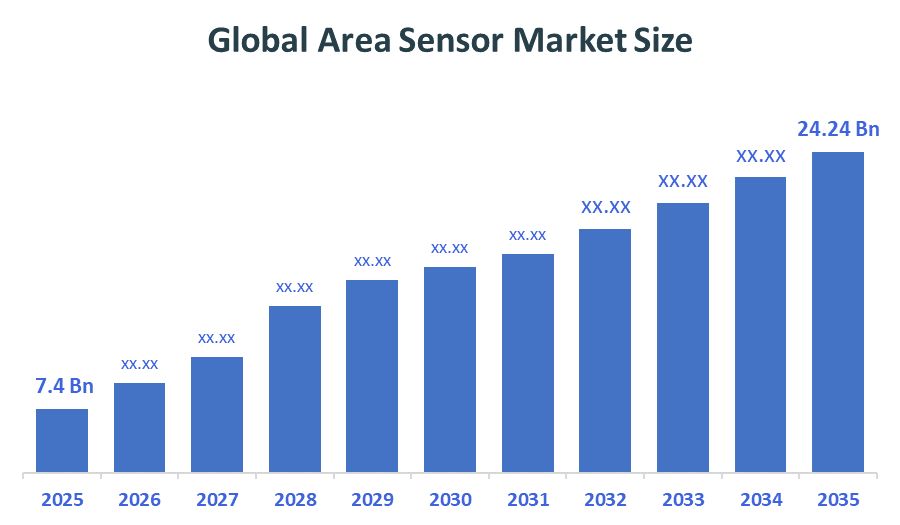
The Global Area Sensor Market Size is predicted to grow from USD 7.4 Billion in 2025 and is likely to reach around USD 24.24 Billion by 2035 with a CAGR of 12.6%. According to Decision Advisors, a detailed research report on the market reflects that the automotive electrification trend dominates the global absolute pressure sensor market, accounting for approximately 40% of the total share worldwide. Honeywell International Inc. leads the market with approximately annual revenue of USD 1.65 billion and approx 35-37% global market share, making it the leading contributor to global market development and growth dynamics.
Market Snapshot
- Global Area Sensor Market Size (2025): USD 7.4 Billion
- Projected Global Area Sensor Market Size (2035): USD 24.24 Billion
- Global Area Sensor Market Compound Annual Growth Rate (CAGR): 12.6%
- Largest Regional Market: Asia Pacific
- 2nd Largest Region: North America
- Fastest Growing Region: Europe
- Base Year: 2025
- Historical Period: 2021-2024
- Market Forecast Period: 2026-2035
Market Overview/ Introduction
The Global Area Sensor Market includes imaging sensors that capture two-dimensional data across a defined surface area, widely used in machine vision, surveillance, medical imaging, and consumer electronics. These sensors enable high-speed image acquisition and processing, making them essential in automation and quality inspection systems. Market growth is driven by rising adoption of AI-powered vision systems, increasing industrial automation, and demand for high-resolution cameras. Technological advancements such as CMOS innovation, miniaturization, and integration with AI and IoT platforms have significantly enhanced performance, efficiency, and application scope.
Notable Insights: -
- Asia Pacific is anticipated to hold approximately 39% share of the global area sensor market over the predicted timeframe.
- North America is expected to grow at a rapid CAGR in the global area sensor market by holding approximately 28% of the share during the forecast period.
- By product type, the general purpose area sensors segment dominated the market and holds approximately 59% share in 2025 and is projected to grow at a substantial CAGR during the forecast period.
- By application, the object segment dominated the market and holds approximately 37% share in 2025 and is projected to grow at a substantial CAGR during the forecast period.
- The compound annual growth rate of the global area sensor market is 12.6%.
- The market is likely to achieve a valuation of USD 24.24 Billion by 2035.
What is the role of technology in grooming the market?
Technology plays a vital role by enhancing resolution, speed, and sensitivity of area sensors. CMOS technology offers low power consumption, high integration capability, and faster processing speeds. AI-enabled image processing improves object recognition and defect detection accuracy. Integration with IoT enables real-time monitoring and remote diagnostics. Advanced pixel architectures and back-illuminated sensors enhance low-light performance. These advancements support applications in robotics, smart surveillance, healthcare imaging, and autonomous systems, accelerating market growth.
Market Drivers
The market is primarily driven by growing adoption of machine vision systems in industrial automation and quality inspection. Increasing demand for high-resolution imaging in smartphones, surveillance systems, and medical devices further boosts growth. Expansion of autonomous vehicles and advanced driver-assistance systems (ADAS) is increasing reliance on imaging sensors. Rising investments in smart manufacturing and Industry 4.0 initiatives are strengthening demand. Continuous advancements in CMOS technology are improving efficiency, cost-effectiveness, and scalability across multiple applications.
Restrain
The market is primarily driven by growing adoption of machine vision systems in industrial automation and quality inspection. Increasing demand for high-resolution imaging in smartphones, surveillance systems, and medical devices further boosts growth. Expansion of autonomous vehicles and advanced driver-assistance systems (ADAS) is increasing reliance on imaging sensors. Rising investments in smart manufacturing and Industry 4.0 initiatives are strengthening demand. Continuous advancements in CMOS technology are improving efficiency, cost-effectiveness, and scalability across multiple applications.
Competitive Analysis:
The report offers the appropriate analysis of the key organizations/companies involved within the global area sensor market, along with a comparative evaluation primarily based on their product offerings, business overviews, geographic presence, enterprise strategies, segment market share, and SWOT analysis. The report also provides an elaborative analysis focusing on the current news and developments of the companies, which includes product development, innovations, joint ventures, partnerships, mergers & acquisitions, strategic alliances, and others. This allows for the evaluation of the overall competition within the market.
Top Companies in the Global Area Sensor Market
- Sony Corporation
- Canon Inc.
- Samsung Electronics Co., Ltd.
- ON Semiconductor Corporation
- OmniVision Technologies Inc.
- Panasonic Corporation
- STMicroelectronics N.V.
- Teledyne Technologies Incorporated
- Hamamatsu Photonics K.K.
- Sharp Corporation
Government Initiatives
|
Country |
Key Government Initiatives |
||
|
US |
Focus on automotive safety regulations and industrial efficiency standards promoting advanced sensor adoption. |
||
|
Europe |
|
||
|
China |
Industrial modernization programs supporting semiconductor and sensor manufacturing growth. |
Study on the Supply, Demand, Distribution, and Market Environment of the Global Area Sensor Market
Demand is driven by consumer electronics, industrial automation, and automotive sectors requiring advanced imaging solutions. Supply is supported by advancements in semiconductor fabrication and sensor technologies. Distribution channels include OEM partnerships, direct sales, and online platforms. Regulatory policies promoting automation and digital transformation further support adoption. Growing demand for AI-enabled imaging systems enhances overall market expansion.
Price Analysis and Consumer Behaviour Analysis
Mid-range area sensors dominate demand, accounting for approximately 52% of user preference due to their optimal balance between cost efficiency and performance accuracy. These sensors are widely adopted across industrial and commercial applications where reliable imaging is required without significantly increasing operational costs. Consumer electronics contribute nearly 45% of total consumption, driven by growing demand for high-resolution cameras in smartphones, tablets, and smart devices. CMOS area sensors are increasingly preferred due to their low power consumption, compact size, and faster processing capabilities. Rising deployment in surveillance systems, industrial inspection, and automation further strengthens demand. Additionally, integration with artificial intelligence and smart manufacturing systems is influencing purchasing decisions, as businesses prioritize real-time data processing, enhanced image quality, and improved operational efficiency across applications.
Market Segmentation
The Global Area Sensor Market share is classified into product type, application and end-user.
- The general purpose area sensors segment dominated the market and holds approximately 59% share in 2025 and is projected to grow at a substantial CAGR during the forecast period.
Based on type, the Global Area Sensor Market is divided into General Purpose Area Sensors and Cross-beam Area Sensors. Among these, the general purpose area sensors segment dominates due to its wide applicability across industrial automation, packaging, and material handling systems. These sensors offer flexibility, ease of installation, and reliable detection performance, making them suitable for diverse operational environments and supporting efficient workflow management.
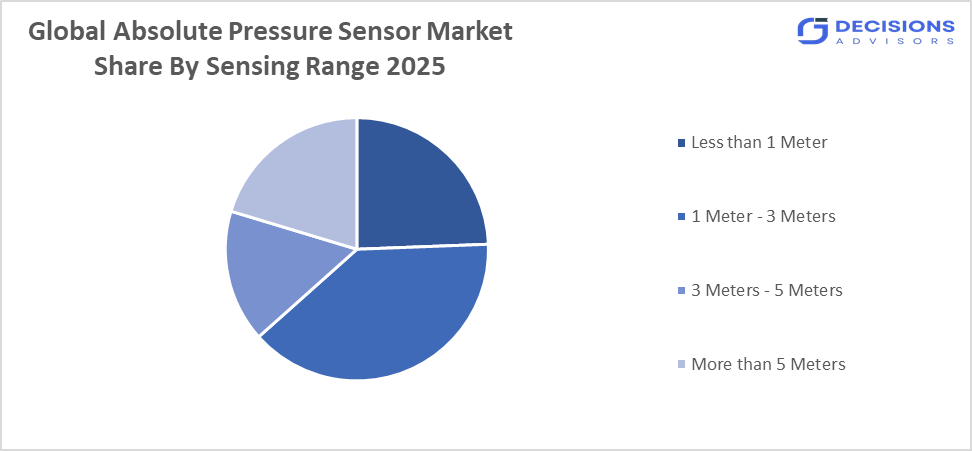
- The 1 Meter – 3 Meters segment accounted for the largest share of approximately 43% in 2025 and is anticipated to grow at a significant CAGR during the forecast period.
Based on sensing range, the Global Area Sensor Market is divided into Less than 1 Meter, 1 Meter – 3 Meters, 3 Meters – 5 Meters, and More than 5 Meters. Among these, the 1 Meter – 3 Meters segment leads the market due to its optimal range for factory automation, conveyor systems, and object detection tasks. It provides a balance between coverage and accuracy, making it highly suitable for medium-range industrial applications requiring precise sensing capabilities.
- The Object Detection segment accounted for the largest share of approximately 37% in 2025 and is anticipated to grow at a significant CAGR during the forecast period.
Based on application, the Global Area Sensor Market is divided into Object Detection, Picking Systems, Positioning and Examination, Personnel Safety, Equipment Protection, and Others. Among these, Object Detection dominates due to its critical role in automation, robotics, and quality control processes. Area sensors enable accurate identification and tracking of objects, improving operational efficiency, reducing errors, and supporting advanced manufacturing and logistics systems globally.
Strategies to Implement for Growth of the Market in Non-Leading Regions
Companies should prioritize cost-effective area sensor solutions tailored for price-sensitive markets to enhance adoption. Establishing localized manufacturing and assembly units can reduce costs and improve supply efficiency. Expanding distribution networks through regional partnerships will strengthen market reach and accessibility. Increasing awareness via technical training programs and industry workshops can accelerate adoption across end-users. Customizing products to meet specific industrial requirements will improve relevance in diverse applications. Additionally, leveraging digital sales channels and e-commerce platforms can broaden customer access. Strategic collaboration with government bodies can further support regulatory compliance, infrastructure development, and long-term market expansion in emerging regions.
Regional Segment Analysis of the Global Area Sensor Market
- North America (U.S., Canada, Mexico)?
- Europe (Germany, France, U.K., Italy, Spain, Rest of Europe)
- Asia-Pacific (China, Japan, India, Rest of APAC)
- South America (Brazil and the Rest of South America)?
- The Middle East and Africa (UAE, South Africa, Rest of MEA)
Asia Pacific is anticipated to hold approximately 39% share of the Global Area Sensor Market over the predicted timeframe.
Asia Pacific holds approximately 39% share of the global area sensor market and remains the leading regional contributor during the forecast period. This dominance is driven by strong electronics manufacturing capabilities, rapid industrial automation, and significant investments in semiconductor production across countries such as China, Japan, and India. Increasing adoption of machine vision systems, robotics, and smart manufacturing technologies further accelerates demand. Additionally, growing automotive production and expansion of consumer electronics industries support market growth. Government initiatives promoting digitalization, Industry 4.0, and infrastructure development also enhance adoption of advanced sensing technologies, strengthening the region’s position in the global market.
North America is expected to grow at a rapid CAGR in the global area sensor market, holding approximately 28% of the share during the forecast period
North America accounts for approximately 28% share of the global area sensor market and is expected to grow at a steady CAGR during the forecast period. The region’s growth is driven by strong adoption of advanced automation technologies, well-established industrial infrastructure, and early implementation of machine vision systems across manufacturing sectors. The presence of major technology providers and continuous investments in research and development further strengthen market expansion. Increasing demand from automotive, healthcare, and logistics industries is also supporting growth. Additionally, rising focus on smart factories, robotics, and AI-enabled imaging solutions is accelerating the adoption of area sensors across various industrial and commercial applications.
Europe is the fastest-growing region in the global area sensor market during the period, holding approximately 27% share.
Europe accounts for approximately 27% share of the global area sensor market and is the fastest-growing region during the forecast period. Growth is driven by strong adoption of industrial automation, advanced manufacturing technologies, and strict regulatory standards promoting workplace safety and efficiency. Countries such as Germany, France, and the United Kingdom play a key role due to their established automotive and industrial sectors. Increasing investments in smart factories, robotics, and AI-enabled vision systems further accelerate demand for area sensors across diverse applications.
Future Market Trends in Global Area Sensor Market: -
1. AI-integrated vision systems
AI-integrated vision systems enhance real-time image processing by enabling accurate object detection, classification, and anomaly identification. These systems support predictive maintenance, reduce operational errors, and improve decision-making efficiency, driving adoption across industrial automation, surveillance, and smart manufacturing environments globally.
2. Growth of high-resolution imaging sensors
High-resolution imaging sensors are gaining traction due to increasing demand for ultra-clear image quality in surveillance, healthcare diagnostics, and consumer electronics. These sensors enable detailed image capture, improved accuracy, and enhanced performance in low-light conditions, supporting advanced imaging applications and technological innovation.???????
3. Expansion of smart manufacturing
The rise of Industry 4.0 is accelerating the adoption of smart manufacturing, where area sensors play a key role in machine vision, quality inspection, and process automation. These sensors improve productivity, reduce defects, and enable real-time monitoring across advanced industrial systems.???????
4. Rising use in autonomous vehicles
Area sensors are increasingly used in autonomous vehicles for navigation, object detection, and environmental mapping. They enhance vehicle safety, enable precise decision-making, and support advanced driver-assistance systems, contributing to the growth of intelligent and self-driving mobility solutions worldwide.
Recent Development
- In June 2025, Bosch Sensortec introduced the BMV080, the world’s smallest particulate matter sensor, measuring 4.4 × 3 × 3 mm, designed for compact air-quality monitoring and IoT-based environmental applications.
- In December 2024, SICK AG introduced the RMS2000 2D radar sensor utilizing FMCW technology, designed for harsh environments, offering a detection range of up to 200 meters with a wide 120° field.
- In July 2024, STMicroelectronics introduced the VL53L4ED Time-of-Flight (ToF) sensor, designed for precise proximity detection, offering reliable performance across extreme temperatures ranging from -40°C to 105°C for industrial and automotive applications.
How is Recent Developments Helping the Market?
Recent innovations have significantly enhanced the performance of area sensors by improving resolution, speed, and energy efficiency. Integration of artificial intelligence enables advanced image processing, real-time analytics, and accurate object recognition across applications. Advancements in semiconductor fabrication technologies have increased reliability while reducing production costs, making sensors more accessible. These developments are expanding the scope of applications in automotive, healthcare, industrial automation, and consumer electronics. Additionally, improved low-light performance and compact sensor designs are supporting wider adoption. Overall, continuous technological progress is accelerating market growth by enabling efficient, scalable, and high-performance imaging solutions across diverse industries globally.
Market Segment
This study forecasts revenue at global, regional, and country levels from 2020 to 2035. Decision Advisors has segmented the global area sensor market based on the below-mentioned segments:
Global Area Sensor Market, By Type
- General Purpose Area Sensors
- Cross-beam Area Sensors
Global Area Sensor Market, By Sensing Range
- Less than 1 Meter
- 1 Meter - 3 Meters
- 3 Meters - 5 Meters
- More than 5 Meters
Global Area Sensor Market, By Application
- Object Detection
- Picking Systems
- Positioning and Examination
- Personnel Safety
- Equipment Protection
- Others
Global Area Sensor Market, By Regional Analysis
- North America
- US
- Canada
- Mexico
- Europe
- Germany
- UK
- France
- Italy
- Spain
- Russia
- Rest of Europe
- Asia Pacific
- China
- Japan
- India
- South Korea
- Australia
- Rest of Asia Pacific
- South America
- Brazil
- Argentina
- Rest of South America
- Middle East & Africa
- UAE
- Saudi Arabia
- Qatar
- South Africa
- Rest of the Middle East & Africa
Frequently Asked Questions (FAQ)
Q. How do area sensors contribute to energy efficiency in industrial operations?
Area sensors optimize energy usage by enabling precise monitoring of processes, reducing unnecessary machine operation, and minimizing waste. Their integration with automation systems ensures efficient resource utilization and lower operational costs.
Q. What challenges are associated with integrating area sensors into legacy systems?
Integration into legacy systems can be complex due to compatibility issues, lack of standardized interfaces, and limited processing capabilities. Additional hardware or software upgrades are often required to ensure seamless functionality.
Q. How do environmental factors impact the performance of area sensors?
Factors such as dust, humidity, vibration, and extreme lighting conditions can affect sensor accuracy and reliability. Advanced designs with protective housings and adaptive algorithms help mitigate these challenges.
Q. What role do area sensors play in enhancing workplace safety?
Area sensors are widely used for personnel detection and hazard prevention by monitoring restricted zones. They trigger alerts or shutdown systems when unauthorized access is detected, ensuring safer working environments.
Check Licence
Choose the plan that fits you best: Single User, Multi-User, or Enterprise solutions tailored for your needs.
We Have You Covered
- 24/7 Analyst Support
- Clients Across the Globe
- Tailored Insights
- Technology Tracking
- Competitive Intelligence
- Custom Research
- Syndicated Market Studies
- Market Overview
- Market Segmentation
- Growth Drivers
- Market Opportunities
- Regulatory Insights
- Innovation & Sustainability
Report Details
| Scope | Global |
| Pages | 240 |
| Delivery | PDF & Excel via Email |
| Language | English |
| Release | Apr 2026 |
| Access | Download from this page |