
Global Attic and Exhaust Fans Market
 |
Author:
Disha B
|
Pages:
210
|
Author:
Disha B
|
Pages:
210
Global Attic and Exhaust Fans Market Size, Share, By Product Type (Attic Fans, Exhaust Fans, Roof-Mounted Ventilation Fans, Wall-Mounted Exhaust Fans, Inline Duct Fans), By Technology (Conventional Fans, Smart/IoT-Enabled Fans, Solar-Powered Fans, Energy-Efficient BLDC Motor Fans), By End Use (Residential, Commercial, Industrial, Institutional), and By Region (North America, Europe, Asia-Pacific, Latin America, Middle East, and Africa), Analysis and Forecast 2026 - 2035
CAGR
3.83%
REVENUE 2025
USD Billion 7.14
FORECAST 2035
USD Billion 6.43
REPORT COVERAGE
Global
Market Snapshot
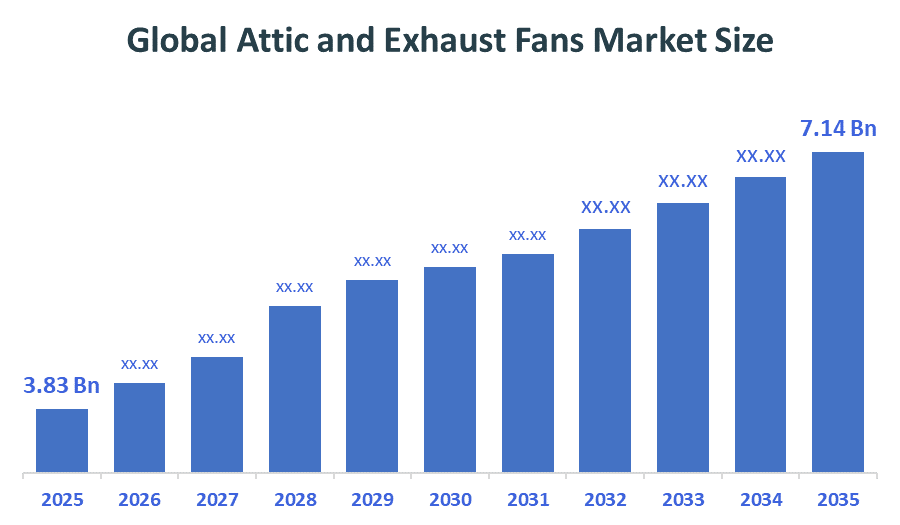
- Market Size (2025): USD 3.83 Billion
- Projected Market Size (2035): USD 7.14 Billion
- Compound Annual Growth Rate (CAGR): 6.43%
- Largest Regional Market: North America
- Fastest Growing Region: Asia-Pacific
- 3rd Largest Region: Europe
- Base Year: 2025
- Historical Period: 2021–2024
- Forecast Period: 2025–2035
Market Overview/ Introduction
The Global Attic and Exhaust Fans Market refer to the industry dedicated to developing mechanical ventilation systems which remove hot air and moisture and odors and pollutants from enclosed areas including attics and kitchens and bathrooms and industrial buildings and commercial buildings. The systems enhance indoor air movement while they decrease cooling requirements and improve energy performance throughout the building. Modern attic and exhaust fans now use smart thermostats and humidity sensors together with energy-efficient brushless motors as their main design components. Current trends show that approximately 30 to 35 percent of newly installed ventilation systems now incorporate smart automation features which allow users to operate the system remotely through mobile apps and building management systems. The rising need for green building standards together with energy conservation requirements like LEED certification has accelerated worldwide adoption.
- In September 2024, Panasonic Corporation launched the Whisper Mighty LED exhaust fan, featuring ultra-quiet performance, ENERGY STAR-certified efficiency, and advanced ventilation capabilities to improve indoor air quality by reducing humidity, mold, and airborne pollutants in residential spaces.
- Make in India / Atmanirbhar Bharat + PLI Schemes, boost domestic manufacturing of HVAC/fan components, reducing costs and supporting local attic/exhaust fan production.
Notable Insights: -
- North America holds the largest regional market share approximately 34% in Global Attic and Exhaust Fans Market.
- Asia Pacific is the fastest growing region in the Global Attic and Exhaust Fans Market with a CAGR of approximately 8%.
- By product type, the attic fans segment held a dominant position with approximately 8% in terms of market share in 2025.
- By technology, conventional fans segment is the dominating accounting for over 6% of the global market share in 2025.
- The compound annual growth rate of the Global Attic and Exhaust Fans Market is 6.43%.
- The market is likely to achieve a valuation of USD 7.14billion by 2035.
What is role of technology in grooming the market?
Technology creates a fundamental change in the attic and exhaust fans market by replacing traditional mechanical systems with modern intelligent energy-efficient systems. IoT-enabled fans enable users to track temperature and airflow conditions in real time. The smart thermostatic controls of the system automatically manage fan operations through optimization. The energy-efficient BLDC motors of the device achieve power savings between 25 to 40%. Residential areas have seen an increasing demand for solar-powered attic fans. The implementation of noise reduction technology has created significant improvements in user comfort. The ventilation industry has undergone digital transformation because 35 percent of new products now include smart connectivity with automated controls.
Market Drivers
The global attic and exhaust fans market is driven by several key factors: The demand for energy-efficient ventilation systems keeps rising in residential and commercial buildings. The increasing global temperatures together with heatwave conditions create higher demands for attic ventilation systems. The construction of smart homes and green buildings together with rapid urbanization creates new demands for building ventilation systems. People today understand indoor air quality (IAQ) together with moisture control better than before. The installation of HVAC systems has expanded across residential, offices, and industrial facilities. Government energy-efficiency regulations promote the use of low-power ventilation systems for building ventilation needs. The residential sector accounts for approximately 55–60% of total demand because people commonly use bathroom and kitchen and attic cooling systems.
Restrain
The market experiences strong growth yet encounters multiple obstacles which need to be addressed. The advanced smart ventilation systems face two main financial challenges which include their installation expenses and their ongoing maintenance requirements. The operation of high-speed exhaust fans results in two main problems which include their excessive noise production. Rural areas and underdeveloped regions lack proper understanding about this particular technology. The business depends on customer demand which occurs during the summer season and throughout hot weather periods. HVAC systems compete with alternative cooling and ventilation technologies to establish their market presence.
Competitive Analysis:
The report offers the appropriate analysis of the key organizations/companies involved within the Global Attic and Exhaust Fans Market, along with a comparative evaluation primarily based on their product of offering, business overviews, geographic presence, enterprise strategies, segment market share, and SWOT analysis. The report also provides an elaborative analysis focusing on the current news and developments of the companies, which includes product development, innovations, joint ventures, partnerships, mergers & acquisitions, strategic alliances, and others. This allows for the evaluation of the overall competition within the market.
Top Companies in the Global Attic and Exhaust Fans Market
- Broan-NuTone LLC
- Honeywell International Inc.
- Panasonic Corporation
- Systemair AB
- Greenheck Fan Corporation
- Delta Electronics Inc.
- Vents (Vents Group)
- Vent-Axia
- ZIEHL-ABEGG SE
- LG Electronics
Government Initiatives
|
Country |
Key Government Initiatives |
|
Europe |
In European Union, Energy efficiency incentives such as tax rebates, grants, and subsidies support adoption of efficient ventilation systems, while EU Ecodesign directives and LEED certification frameworks promote high-performance exhaust systems in sustainable building construction. |
|
US |
In United States, building codes and IAQ standards such as ASHRAE 62.2 and the International Building Code mandate mechanical ventilation in bathrooms, kitchens, garages, and attics, while ENERGY STAR and EPA Indoor airPLUS promote efficient exhaust systems |
|
India
|
In India, Policies support energy-efficient ventilation through the Bureau of Energy Efficiency (BEE) and Ministry of Power programs. While mandatory BEE Star Rating applies mainly to ceiling fans under IS 374:2019, exhaust fans benefit indirectly via cooling initiatives. |
Study on the Supply, Demand, Distribution, and Market Environment Global Attic and Exhaust Fans Market
The Global Attic and Exhaust Fans Market of 2025-2026 has an estimated value range between USD 5.0 billion and USD 5.3 billion, and it is projected to reach approximately USD 9.3 billion by 2035, representing a compound annual growth rate between 6.2% and 7.0%. The market is experiencing strong growth due to rising demand for energy-efficient ventilation systems, increasing construction of smart homes and green buildings, and growing awareness of indoor air quality and thermal comfort. Global manufacturers based in North America, Europe, and Asia-Pacific dominate supply, while residential construction remains the primary demand driver, accounting for approximately 55-60% of total market consumption. Online distribution channels are rapidly expanding, contributing nearly 35-40% of total sales, with a growth rate of around 8-10% CAGR, driven by e-commerce penetration and DIY home improvement trends. The market is evolving into a technology-driven ventilation industry supported by IoT-enabled smart fans, solar integration, and energy-efficient motor systems, creating strong opportunities for global expansion.
Price Analysis and Healthcare Facilities Behaviour Analysis
The global attic and exhaust fans market shows a wide price range depending on product type and technology. Basic residential exhaust fans typically cost between USD 30-120 per unit, while advanced smart IoT-enabled attic ventilation systems can range from USD 150-500 per unit, and solar-powered attic fans can exceed USD 200-600 per unit depending on capacity and features. Commercial-grade ventilation systems used in large buildings and industrial facilities can cost significantly higher due to installation and integration requirements. High upfront installation costs and electrical fitting requirements often influence consumer purchasing decisions, especially in price-sensitive regions. However, long-term energy savings of up to 25-40% in cooling costs are encouraging adoption in residential and commercial buildings. Building facilities increasingly prefer automated ventilation systems in modern construction projects, particularly in green-certified buildings and smart homes, where demand for intelligent airflow control systems has increased by nearly 30% post-2020. After COVID-19, there has been a noticeable shift toward improved indoor air circulation systems, with many residential and commercial buildings prioritizing permanent ventilation solutions to enhance comfort, reduce moisture buildup, and improve overall indoor air quality
Market Segmentation
The Global Attic and Exhaust Fans Market share is classified into solution product type, technology, and End Use
- The attic fans segment dominated the market in 2025, and is projected to grow at a substantial CAGR of approximately 8% during the forecast period.
Based on the product type, the global attic and exhaust fans market is divided into attic fans, exhaust fans, roof-mounted ventilation fans, wall-mounted exhaust fans, inline duct fans. Among these, the attic fans segment dominated the market in 2025, and is projected to grow at a substantial CAGR of approximately 8% during the forecast period. Attic fans dominate due to high residential usage, reducing cooling costs by 20–30%, and easy installation. Rising temperatures, energy efficiency demand, and growth of solar and smart variants further drive adoption, supporting strong CAGR growth of around 7–8% globally.
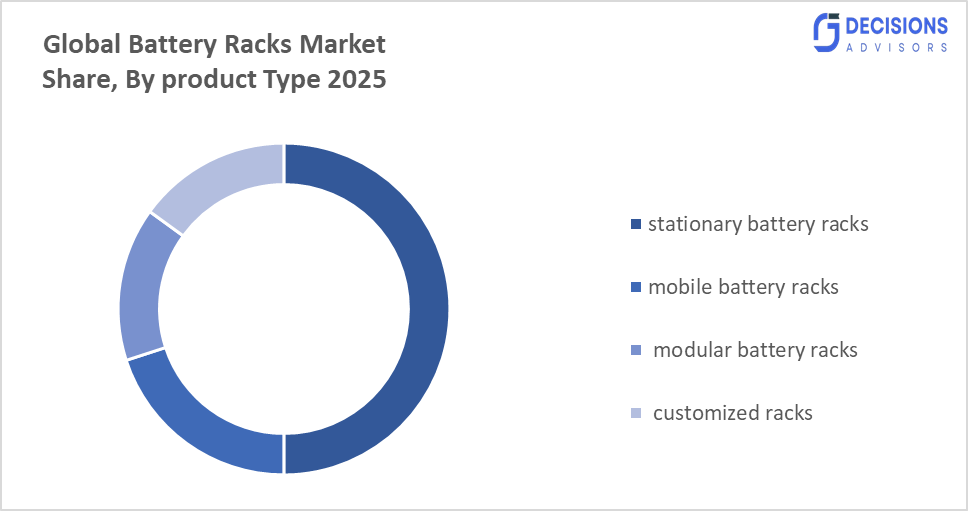
- The conventional fans segment accounted for the largest share in 2025, and is anticipated to grow at a significant CAGR of approximately 6% during the forecast period.
Based on the technology, the global attic and exhaust fans market is divided into conventional fans, smart/IOT-enabled fans, solar-powered fans, energy-efficient BLDC motor fans. Among these, the conventional fans segment accounted for the largest share in 2025, and is anticipated to grow at a significant CAGR of approximately 6% during the forecast period. The conventional fans segment dominates due to their affordability, widespread availability, and simple installation, making them highly preferred in price-sensitive markets. They account for a large installed base, especially in developing regions. Additionally, low maintenance requirements and easy replacement support steady demand, driving consistent growth of around 5–6% CAGR.
- The residential segment dominated the market at a CAGR of approximately 7% in 2025, and is projected to grow at a substantial CAGR during the forecast period.
Based on the End Use, the global attic and exhaust fans market is divided into residential, commercial, industrial, institutional. Among these, the residential segment dominated the market at a CAGR of approximately 7% in 2025, and is projected to grow at a substantial CAGR during the forecast period. The residential segment dominates due to high demand for attic and exhaust fans in homes for heat reduction, moisture control, and improved indoor air quality. Rapid urbanization, rising smart home adoption, and increasing residential construction accounting for nearly 55–60% of total demand drive its strong growth.
Strategies to Implement for Growth of the Market in Non-Leading Regions
The attic and exhaust fans market can achieve strong expansion in non-leading regions such as Latin America, the Middle East & Africa, and parts of South Asia by focusing on affordability, localization, and awareness-driven adoption strategies. Governments in developing economies are increasing infrastructure and housing investments by nearly 8–12% annually, creating significant opportunities for low-cost and energy-efficient ventilation solutions. Establishing local manufacturing and assembly units can reduce product costs by approximately 20–30%, making advanced ventilation systems more accessible to middle-income consumers. Partnerships with regional HVAC distributors, real estate developers, and construction firms can improve market penetration, especially in regions where over 45% of residential buildings still rely on natural or non-mechanical ventilation systems. Increasing awareness of indoor air quality (IAQ), energy efficiency, and moisture control can drive demand growth by nearly 25–35% in urban residential segments, particularly in rapidly expanding cities. Offering affordable smart ventilation models with basic IoT features and flexible financing options can significantly improve adoption rates among price-sensitive consumers. Additionally, government-led green building initiatives and energy efficiency regulations are expected to play a key role in accelerating market expansion, with incentive programs potentially boosting adoption of energy-efficient ventilation systems by 15–20% over the forecast period. Demonstration projects in smart homes, residential, and commercial complexes can further build consumer trust and encourage large-scale deployment in emerging markets.
Regional Segment Analysis of the Cardiac AI monitoring and diagnostics Market
- North America (U.S., Canada, Mexico)
- Europe (Germany, France, U.K., Italy, Spain, Rest of Europe)
- Asia-Pacific (China, Japan, India, Rest of APAC)
- South America (Brazil and the Rest of South America)
- The Middle East and Africa (UAE, South Africa, Rest of MEA)
North America is anticipated to hold the largest share approximately 34% of the Global Attic and Exhaust Fans Market over the predicted timeframe. North America holds the largest market share at approximately 34%, driven by strong HVAC adoption, extreme summer temperatures, and high awareness of energy-efficient home systems. The region benefits from widespread use of attic ventilation in residential housing, where nearly 60–65% of single-family homes utilize some form of mechanical ventilation system. Demand is further supported by strict building codes and Energy Star efficiency standards, which have increased adoption of energy-efficient fans by nearly 25–30% over the past decade. The U.S. accounts for the majority share due to large-scale residential renovation activity and rising smart home penetration, where over 40% of households are now adopting connected home devices, including smart ventilation systems.
Asia Pacific is expected to grow at a rapid CAGR approximately 8% in the Global Attic and Exhaust Fans Market during the forecast period Asia-Pacific is the fastest-growing region with an estimated CAGR of 8%, supported by rapid urbanization, construction expansion, and rising adoption of smart home technologies in countries like China and India. The region accounts for nearly 45–50% of global new residential construction activity, significantly boosting demand for ventilation systems. Increasing air pollution levels in major cities have also accelerated adoption, with indoor air quality awareness growing by over 35% in urban populations. Additionally, rising disposable income and government-backed smart city initiatives are driving installation of energy-efficient ventilation systems, while smart and IoT-enabled fan adoption is expected to grow at over 10% CAGR in the region.
Europe is the 3rd largest region to grow in the Global Attic and Exhaust Fans Market during the region.
Europe ranks third due to strong energy efficiency regulations and widespread adoption of green building standards. Demand is particularly high in Germany, the UK, and France, where nearly 30–35% of residential buildings are already compliant with advanced energy-efficiency norms. The region benefits from strict EU directives promoting low-energy HVAC systems and carbon reduction targets under green building initiatives. Cold climate conditions in Northern and Western Europe also drive steady demand for attic ventilation to prevent moisture buildup and improve insulation efficiency. Energy-efficient and low-noise ventilation systems account for nearly 40% of new installations, reflecting strong consumer preference for sustainable and quiet home solutions.
Future Market Trends Global Attic and Exhaust Fans Market: -
1. Smart Ventilation Systems Growth
IoT-based attic and exhaust fans are gaining popularity, accounting for nearly 30–40% of new installations, driven by rising smart home adoption and building automation trends. These systems enable real-time monitoring of temperature, humidity, and airflow, improving operational efficiency by up to 25–30%. Integration with smart home ecosystems such as Alexa and Google Home is further accelerating adoption, with demand expected to grow at around 8–10% CAGR in residential applications. Commercial buildings and modern housing projects are increasingly deploying smart ventilation systems to comply with energy efficiency standards and green building certifications.
2. Rising Demand for Energy Efficiency
Energy-efficient fans with BLDC motors are growing at 7–8% CAGR, supported by increasing electricity cost concerns and sustainability regulations. These systems reduce energy consumption by 25–40% compared to conventional AC motor-based fans, making them highly suitable for residential and commercial use. Nearly 35–45% of new HVAC ventilation products now include energy-saving technologies, while government initiatives promoting low-energy appliances are further boosting adoption. The shift toward net-zero buildings and LEED-certified infrastructure is expected to significantly increase demand over the forecast period.
3. Solar-Powered Ventilation Systems
Solar attic fans are gaining traction in residential roofing applications, especially in hot climates and off-grid areas, accounting for approximately 18–25% of the renewable ventilation segment. These systems can reduce electricity costs by up to 60–70% annually in high-temperature regions by lowering attic heat buildup and reducing HVAC load. Solar-powered systems are growing at an estimated 7–9% CAGR, supported by increasing rooftop solar installations and government incentives for renewable energy adoption. Their use is particularly strong in North America, Australia, and parts of Asia-Pacific where high solar exposure drives efficiency benefits.
Recent Development
- In March 2025, several HVAC manufacturers launched IoT-enabled exhaust fans with automated humidity detection and app-based control systems.
- In September 2024, solar-powered attic ventilation systems gained strong adoption in residential roofing projects across North America.
- In June 2025, smart BLDC motor-based exhaust fans were introduced focusing on ultra-low noise and high energy efficiency, aligned with HVAC energy-saving trends.
- In January 2025, major HVAC companies expanded their product lines targeting green building certification compliance, aligning with LEED and energy-efficiency standards.
How is Recent Developments Helping the Market?
Recent innovations are transforming attic and exhaust fans through better energy efficiency and improved automated systems and enhanced user experience. Smart sensors enable automatic airflow control based on temperature and humidity levels, which leads to energy savings that reach 30%, while advanced IoT systems now make up 32% of all residential ventilation systems that have been installed this year. Solar-powered systems are decreasing their reliance on grid power while they experience a 7% annual growth rate throughout the residential roofing market which operates in warm-weather areas. Noise-reduction technologies have produced operational sound level reductions that reach 25% when compared to conventional models, which has led to higher adoption rates among urban housing projects. The introduction of BLDC motor-based fans has brought about a 36% efficiency boost which makes these fans the preferred option for contemporary HVAC system upgrades. Smart home systems now support about 35% of newly launched products through their capability to control devices via voice commands and mobile applications. The rising trend of energy-efficient building codes and green certifications is also accelerating market penetration, with smart and solar-enabled fans expected to represent nearly 43% of total market installations.
Market Segment
This study forecasts revenue at global, regional, and country levels from 2020 to 2035. Decision Advisor has segmented the global attic and exhaust fans market based on the below-mentioned segments:
Global Attic and Exhaust Fans Market, By product type
- Attic Fans
- Exhaust Fans
- Roof-Mounted Ventilation Fans
- Wall-Mounted Exhaust Fans
- Inline Duct Fans
Global Attic and Exhaust Fans Market, By Technology
- Conventional Fans
- Smart/IoT-Enabled Fans
- Solar-Powered Fans
- Energy-Efficient BLDC Motor Fans
Global Attic and Exhaust Fans Market, By End Use
- Residential
- Commercial
- Industrial
- Institutional
Global Attic and Exhaust Fans Market, By Regional Analysis
- North America
- US
- Canada
- Mexico
- Europe
- Germany
- UK
- France
- Italy
- Spain
- Russia
- Rest of Europe
- Asia Pacific
- China
- Japan
- India
- South Korea
- Australia
- Rest of Asia Pacific
- South America
- Brazil
- Argentina
- Rest of South America
- Middle East & Africa
- UAE
- Saudi Arabia
- Qatar
- South Africa
- Rest of the Middle East & Africa
Frequently Asked Questions (FAQ)
1. What is driving the growth of the attic and exhaust fans market?
Growth is driven by rising demand for energy-efficient ventilation, increasing construction activities, and growing awareness of indoor air quality.
2. Which segment dominates the market?
Attic fans dominate due to their effectiveness in temperature regulation and energy savings in residential buildings.
3. Which region leads the market?
North America leads due to strong HVAC adoption and extreme climate conditions.
4. Why is Asia-Pacific growing fastest?
Rapid urbanization, construction growth, and rising smart home adoption are driving demand.
5. How is technology impacting the market?
IoT integration, smart sensors, and energy-efficient motors are transforming traditional fans into intelligent systems.
6. What is the future trend in this market?
Solar-powered and smart IoT-enabled ventilation systems are expected to dominate future installations.
Check Licence
Choose the plan that fits you best: Single User, Multi-User, or Enterprise solutions tailored for your needs.
We Have You Covered
- 24/7 Analyst Support
- Clients Across the Globe
- Tailored Insights
- Technology Tracking
- Competitive Intelligence
- Custom Research
- Syndicated Market Studies
- Market Overview
- Market Segmentation
- Growth Drivers
- Market Opportunities
- Regulatory Insights
- Innovation & Sustainability
Report Details
| Scope | Global |
| Pages | 210 |
| Delivery | PDF & Excel via Email |
| Language | English |
| Release | Apr 2026 |
| Access | Download from this page |