
Global Baby Strollers Market
 |
Pages:
210
|
Pages:
210
Global Baby Strollers Market Size, Share, By Type (Standard, Lightweight/Compact, All-Terrain, and More), By Distribution Channel (Offline Retail Stores and Online Retail Stores), By Price Range (Economy, Mid-Range, and Premium), End User (Infants and Toddlers), By Region (North America, Europe, Asia-Pacific, Latin America, Middle East, and Africa), Analysis and Forecast 2025-2035.
REPORT COVERAGE
Global
Market Snapshot
- Market Size (2025): USD 2.86 Billion
- Projected Market Size (2035): USD 5.115 Billion
- Compound Annual Growth Rate (CAGR): 5.99%
- Largest Regional Market: North America
- Fastest Regional Market: Asia Pacific
- 3rd Largest Region: Europe
- Base Year: 2025
- Historical Period: 2021–2024
- Forecast Period: 2026–2035
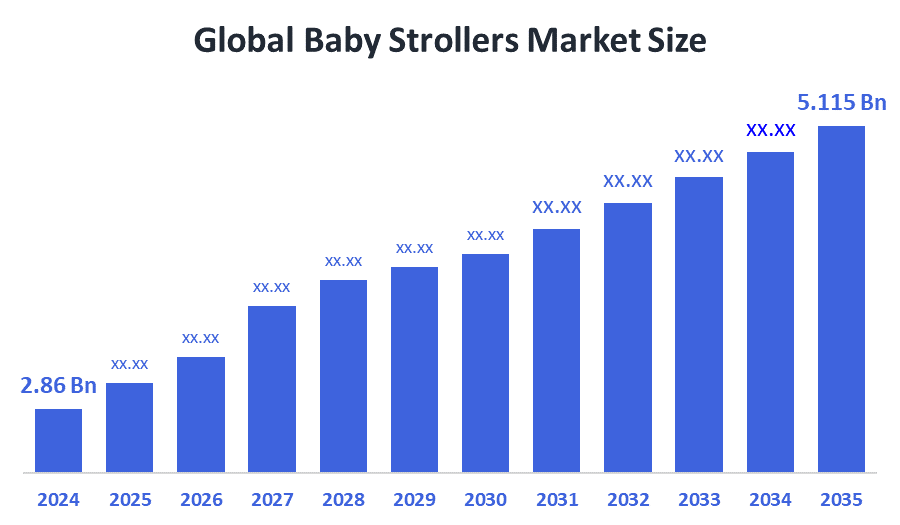
According to Decision Advisors, the Global baby strollers Market Size is expected to grow from USD 2.86 billion in 2024 to USD 5.115 billion by 2035, at a CAGR of 5.99% during the forecast period 2025-2035. Global baby stroller market is projected to grow significantly over the next decade due to rising urbanization, increasing dual-income households, growing demand for lightweight/multi-functional travel systems, rising disposable income, and product innovation & sustainability. This market is taking up rise because of the increasing birth rates, growing awareness of child safety, product innovations, and expanding e-commerce availability worldwide.
Market Overview/ Introduction
The global baby strollers market refers to highly diverse international market, involving all aspects of manufacturing, distribution and retail sales of wheeled mobility products for infants and toddlers. A baby stroller serves as a wheeled device which enables safe transportation of infants and young children while providing comfort through its reclining seats, adjustable handles, harnesses, suspension system, and foldable frame. Baby strollers market size is growing because of increasing urbanization, busy lifestyles, increasing disposable income, product innovations in lightweight and smart strollers, new channels for e-commerce to purchase products, and improved awareness about infant safety, comfort, and certified designed baby accessories among parents. Government initiatives include implementing safety regulations and product standards through organizations like the World Health Organization and national consumer safety authorities to ensure the production and availability of safer baby products. The 2-in-1 convertible design of the baby origin stroller comes under product innovation and technological advancements in the baby stroller’s market. The baby strollers market presents growth opportunities through smart, connected strollers with sensors and automated brakes, eco-friendly materials, new markets in Asia and Latin America, premium customized products, and a rise in direct-to-consumer brands selling online and providing an opportunity for global reach and extra customer interaction.
- The enhanced Singapore Baby Bonus Scheme offers up to $11,000–$13,000 in cash gifts and CDA grants, boosting affordability for premium strollers, though CDA funds are limited to approved institutions.
- In March 2026, Evenflo launched a new multi-mode baby stroller travel system featuring nine configurations, smart safety alerts, calming lights and sounds, eco-friendly materials, all-terrain wheels, and expanded storage.
- BIS Certification, managed by the Bureau of Indian Standards under the Ministry of Consumer Affairs, Food & Public Distribution, ensures baby products meet strict quality and safety standards, boosting consumer confidence.
Notable Insights: -
- Asia-Pacific holds the largest regional market share approximately 36% in the Global baby strollers Market
- Asia Pacific is the fastest growing region in the Global baby strollers Market
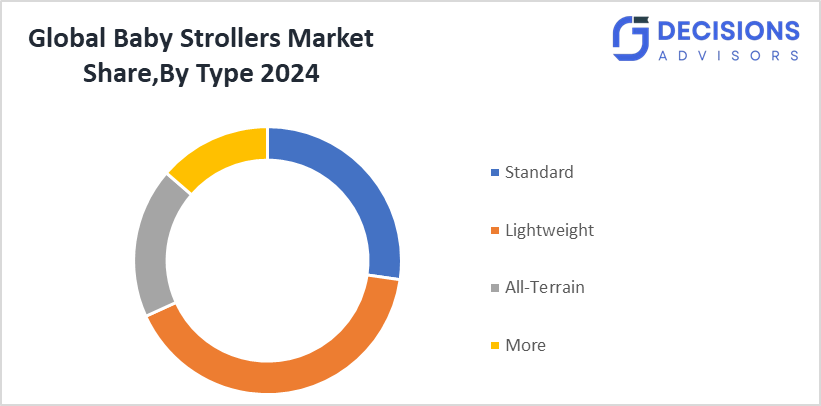
- By type, the lightweight/compact segment held a dominant position with 38 % in terms of market share in 2025.
- By distribution channel, offline retail stores segment is the dominating accounting for over 57% of the global market share in 2025.
- The compound annual growth rate of the Global baby strollers Market is 5.99%.
- The market is likely to achieve a valuation of USD 5.115 billion by 2035.
What is role of technology in grooming the market?
Technology plays a crucial role in grooming the global baby stroller’s market by enhancing safety, design, and user convenience. Manufacturers are introducing smart strollers with features such as sensors, GPS tracking, automatic braking systems, and smartphone connectivity, improving monitoring and control for parents. Technological advancements have also enabled the use of lightweight materials like aluminium frames, compact folding mechanisms, and improved suspension systems, making strollers easier to carry and suitable for urban lifestyles. In addition, digital platforms and e-commerce technologies allow brands to reach a wider customer base and offer product comparisons and customization options. According to market estimates, the global baby stroller’s market was valued at around USD 2.8 billion in 2024 and is expected to grow at a CAGR of about 6% during the forecast period, partly driven by continuous product innovation and technology integration in stroller designs.
How is Recent Developments Helping the Market?
Recent developments are helping the global baby stroller market grow through innovation, product launches, and advanced technology. Manufacturers are introducing smart and lightweight strollers with improved safety systems, ergonomic seating, and compact folding mechanisms to meet modern parenting needs. In March 2026, Bombi Bebee launched the V3, an upgraded version of its popular lightweight stroller, enhancing portability and user convenience. Meanwhile, Silver Cross introduced the limited-edition Reef AL Arancio in collaboration with Automobili Lamborghini, producing only 500 units. This luxury, all-terrain stroller features supercar-inspired design, including an orange Arancio colour scheme, Alcantara upholstery, and automotive-style braking, priced at over $5,000 USD, highlighting the growing trend of premium and designer baby mobility products. These launches reflect the market’s focus on innovation, luxury, and advanced design, catering to both tech-savvy and high-end consumers while driving brand differentiation globally.
Market Drivers
The global baby strollers market driven by urbanization and the hectic lifestyle of many people are driving a significant part of the global baby stroller market. In urban areas, over 60% of parents choose portable and maneuverable strollers for their everyday transportation needs and leisure activities through outdoor recreation. Further, the increasing disposable income of many families has helped fuel the growth of high-end, multifunctional strollers, almost 42% of middle-class families are purchasing premium baby mobility products. Continued attention to the safety and comfort of infants is resulting in parents buying strollers that are certified and ergonomic, safety is important to almost 38% of consumers when purchasing this item. Also, another major driving force is attracting attention for new innovations in baby strollers (smart strollers with remote sensors, GPS, light-weight designs, etc.). Another element contributing to the increase in baby stroller sales is the continued growth of e-commerce platforms, especially in Asia Pacific, which holds almost 39% of the overall global market share due to continued rising birth rates and urbanization.
Restrain
The baby strollers market faces restraints due to high product costs, especially for premium and smart models, which limits affordability for price-sensitive consumers. Strict safety regulations and compliance standards increase manufacturing costs. Additionally, availability of counterfeit or low-quality products in emerging markets, along with changing consumer preferences toward alternative baby mobility solutions, can hinder overall market growth.
Competitive Analysis:
The report offers the appropriate analysis of the key organization involved within the baby stroller market, along with a comparative evaluation primarily based on their product of offering, business overviews, geographic presence, enterprise strategies, segment market share, and SWOT analysis. The report also provides an elaborative analysis focusing on the current news and developments of the companies, which includes product development, innovations, joint ventures, partnerships, mergers & acquisitions, strategic alliances, and others. This allows for the evaluation of the overall competition within the market.
Top Companies in Global Baby Strollers Market
- Artsana
- Newell Brands
- Brevi Milano
- Dorel Industries
- Cybex
- Baby Trend
- Britax Child Safety
- Bugaboo International B.V.
- UPPAbaby
- Peg Perego
- Evenflo
- Stokke AS
- Inglesina
- Silver Cross
- Babyzen
Government Initiatives
|
Country |
Key Government Initiatives |
|
US |
The U.S. Consumer Product Safety Commission (CPSC) enforces strict safety standards for carriages and strollers, ensuring stability, durability, and safety, which influences manufacturer design. |
|
Tokyo |
The Tokyo Metropolitan Government is actively supporting, for instance, by installing "Babycal" baby stroller rental services at stations like Ueno-Okachimachi to improve mobility for families. |
|
China |
China is a dominant force in the Asia-Pacific stroller market, with significant production and domestic consumption. The market is increasingly defined by a high-value band (RMB 3,000–5,000) for premium products. |
Market Segmentation
The Baby Strollers market share is classified into type, distribution channel, price range, and end user
- The lightweight/compact segment dominated the market in 2024, and is projected to grow at a substantial CAGR of approximately 6.7% during the forecast period.
Based on the type, the baby stroller market is divided into standard, lightweight/compact, all-terrain, jogging, travel system, and double strollers. Among these, lightweight strollers for infants lead the stroller marketplace, capturing 38.0% of total revenues in 2024 largely due to urbanization, limited space, and a desire for ease of motion. They provide easy use, fast folding, low cost and new technologies (such as durable fabric, improved suspension systems and adjustable seat positions). Conversely, Travel System Strollers are anticipated to grow at the fastest pace with approximately 6.7% CAGR.
- The offline retail Stores segment accounted for the largest share in 2024, and is anticipated to grow at a significant CAGR of approximately 64.78 % during the forecast period.
Based on the distribution channel, the baby stroller market is divided into offline retail stores and online retail stores. Among these, Parents prefer offline stores for baby strollers to physically inspect weight, quality, and durability, test functionality, maneuverability, and safety features. As a high-involvement purchase, in-store experience is prioritized. Offline sales held 64.78% market share in 2025, while online sales are projected to grow at approximately 7.83% CAGR from 2026–2031, reflecting increasing digital adoption.
- The mid-range segment dominated the market in 2024, and is projected to grow at a substantial CAGR during the forecast period.
Based on the price range, the baby stroller market is divided into economy, mid-range, and premium. Among these, mid-range baby strollers offer value for money with features like one-hand folding, multi-position recline, and durable frames, plus advanced safety systems and versatile travel options. Leading brands like Graco, Chicco, and Evenflo dominate this segment. Mass-market models accounted for 68.52% of volume in 2025, while premium strollers are growing at approximately 6.48% CAGR through 2031. more sought after by consumers.
- The end-user segment dominated the market in 2024, and is projected to grow at a substantial CAGR during the forecast period.
Based on the end user, the baby stroller market is divided into infants and toddler. Among these, infant segment currently dominates the baby stroller market, accounting for roughly 62% of the market share, Parents prioritize safety and comfort, with over 60% favouring strollers with five-point harnesses and shock-absorbing wheels. Infants require strollers from birth, as around 140 million babies are born globally each year. The demand for strollers comes from travel systems which make up more than 30% of the market, while developing countries show increasing consumer spending on infant products.
What is the Reason of the Region Dominance?
The dominance of certain regions in the global baby stroller market is primarily driven by high disposable income, demand for premium/safe products, and strong brand presence. The North American market controls 36.1% of the worldwide baby stroller market during 2024, which results from high disposable income levels and consumer interest in safe premium products. The sales increase because of strong safety awareness and strict standards and the presence of major brands. The combination of established retail and e-commerce systems with jogging and urban mobility lifestyle trends has resulted in higher stroller usage.
Strategies to Implement for Growth of the Market in Non-Leading Regions
Companies looking to grow the market volume of baby strollers off the beaten path should build stronger channels of distribution through partnerships of regional retailers, e-commerce outlets and healthcare institutions, (i.e., maternity clinics) and develop local assembly or manufacturing facilities to reduce costs and increase product availability. Another way to accomplish this is to provide lower-priced models and multifunctional strollers that fit the socio-economic levels and lifestyle needs of the target market. Furthermore, taking advantage of existing Federal Government/Maternal Child Welfare programs and developing excellent post-sale support will enable organizations to determine trends in customer demand as well as foster long-term sustainable growth in emerging markets through ongoing market research.
Regional Segment Analysis of the Baby Strollers Market
- North America (U.S., Canada, Mexico)
- Europe (Germany, France, U.K., Italy, Spain, Rest of Europe)
- Asia-Pacific (China, Japan, India, Rest of APAC)
- South America (Brazil and the Rest of South America)
- The Middle East and Africa (UAE, South Africa, Rest of MEA)
Asia Pacific is anticipated to hold the largest share of the baby stroller market over the predicted timeframe.
The Asia Pacific region will account for approximately 35% of the worldwide baby stroller market in early 2026 while experiencing the fastest growth because of strong Chinese market demand and emerging Indian market potential. The combination of urban growth and rising consumer spending power drives people to buy high-quality strollers which offer both safety features and multiple uses. The market shows increasing demand for travel systems while urban areas benefit from the advantages of lightweight compact stroller designs. The growing e-commerce platforms enable businesses to expand their market presence while urban areas see increased stroller use among infants who are 6 to 12 months old.
North America is expected to grow at a rapid CAGR in the baby stroller market during the forecast period. The baby stroller market in North America will experience strong growth during the forecast period because demand for high-end smart strollers continues to rise. About 65% of parents choose safety-based stroller designs while more than 60% of households with dual incomes make stroller purchases. E-commerce platforms now account for more than 30% of stroller sales within the region. The market grows because companies keep developing new products which include jogging strollers and eco-friendly strollers and because U.S. parents spend approximately $12,000 each year on childcare products for their children.
Europe is the 3rd largest region to grow in the baby stroller market during the region. In the baby stroller market, Europe is the third largest region and it has a major portion of the global market. The share of the global market attributed to this region is estimated to be approximately 23-28%, with an estimated value of USD 5.0 billion by 2025. Furthermore, Europe will continue to have significant growth throughout the forecast period with a compound annual growth rate (CAGR) of roughly 5.3%. This growth is due to the presence of strong safety regulations pertaining to baby strollers, the demand for high quality and premium products, and high levels of expenditure on quality baby mobility products.
Future Market Trends in Global Baby Strollers Market: -
- Growth of Smart and Technology-Integrated Strollers
Manufacturers are introducing smart strollers with features such as sensors, connectivity, GPS tracking, and electronic assistance, improving safety and convenience. This innovation trend is gaining traction in premium markets and is expected to boost overall demand.
- Rising Demand for Lightweight, Compact, and Travel System Strollers
Urban lifestyles and mobility needs are increasing demand for lightweight and foldable models. Travel system strollers are projected to record one of the fastest growth rates, reflecting parents’ preference for multifunctional and convenient baby transport solutions.
- Sustainability and Eco-Friendly Product Development
Consumers are increasingly favouring strollers made from sustainable materials and environmentally responsible manufacturing processes. Brands are adopting eco-friendly designs and materials to meet growing environmental awareness among parents and differentiate their products in the market.
Recent Development
- In March 2026, leading stroller brands such as Bugaboo, Mockingbird, and UPPAbaby highlighted modular, convertible strollers gaining popularity, as families increasingly prefer adaptable single-to-double systems for long-term use and convenience.
- In February 2026, compact and travel strollers gained strong market attention, with brands such as Joolz, Bugaboo, Silver Cross, and Evenflo introducing lightweight models with quick-fold designs, airline-friendly portability, and improved convenience for urban parents and frequent travellers worldwide.
- In September 2025, Silver Cross partnered with Lamborghini to launch the limited-edition Reef AL Arancio stroller, with about 500 units released, highlighting rising demand for luxury baby strollers. Luxury influence from brands like Mercedes-Benz is also expanding the premium stroller segment.
- In April 2024, brands such as Thule and BOB Gear highlighted new all-terrain and jogging stroller updates, including the Urban Glide 3 and advanced BOB models, targeting active parents seeking durable, high-performance baby strollers for outdoor lifestyles.
Market Segment
This study forecasts revenue at global, regional, and country levels from 2020 to 2035. Spherical Insights has segmented the baby strollers market based on the below-mentioned segments:
Global Baby Strollers Market, By Type
- Standard
- Lightweight/compact
- All-terrain
- Jogging
- Travel system
- Double strollers
Global Baby Strollers Market, By Distribution Channel
- Offline retail stores
- Online retail stores
Global Baby Strollers Market, By Price Range
- Economy
- Mid-range
- Premium
Global Baby Strollers Market, By End User
- Infants
- Toddler
Global Baby Strollers Market, By Regional Analysis
- North America
- US
- Canada
- Mexico
- Europe
- Germany
- UK
- France
- Italy
- Spain
- Russia
- Rest of Europe
- Asia Pacific
- China
- Japan
- India
- South Korea
- Australia
- Rest of Asia Pacific
- Latin America
- Brazil
- Argentina
- Maxico
- Middle East & Africa
- UAE
- Saudi Arabia
- Qatar
- South Africa
- Rest of the Middle East & Africa
Frequently Asked Questions (FAQ)
1. What factors are influencing consumer purchasing decisions in the baby stroller market?
A: Consumer purchasing decisions are influenced by product safety certifications, stroller durability, portability, ease of folding, brand reputation, and compatibility with car seats. Parents also consider storage capacity, comfort features, and long-term usability when selecting suitable baby stroller products.
2. How are emerging markets contributing to the expansion of the baby stroller industry?
A: Emerging markets are contributing to industry growth through increasing urban populations, rising middle-class income levels, and improved access to organized retail and online marketplaces, which collectively enhance product availability and adoption.
3. What role do retail partnerships play in the growth of stroller manufacturers?
A: Retail partnerships help stroller manufacturers expand distribution networks, strengthen brand visibility, and improve customer engagement through in-store demonstrations, promotional campaigns, and strategic placement in specialty baby product stores.
4. How is product customization impacting the baby stroller market?
A: Product customization allows manufacturers to offer adjustable designs, color options, and modular accessories that meet diverse consumer preferences, thereby improving customer satisfaction and strengthening brand differentiation in competitive markets.
5. What challenges do new entrants face in the global baby stroller market?
A: New entrants often face challenges such as high initial investment, strict safety and compliance requirements, strong competition from established brands, and the need to build consumer trust through quality assurance and effective marketing strategies.
Check Licence
Choose the plan that fits you best: Single User, Multi-User, or Enterprise solutions tailored for your needs.
We Have You Covered
- 24/7 Analyst Support
- Clients Across the Globe
- Tailored Insights
- Technology Tracking
- Competitive Intelligence
- Custom Research
- Syndicated Market Studies
- Market Overview
- Market Segmentation
- Growth Drivers
- Market Opportunities
- Regulatory Insights
- Innovation & Sustainability
Report Details
| Scope | Global |
| Pages | 210 |
| Delivery | PDF & Excel via Email |
| Language | English |
| Release | Apr 2026 |
| Access | Download from this page |