
Global Bacterial Vaginosis Market
 |
Pages:
230
|
Pages:
230
Global Bacterial Vaginosis Market Size, Share, and COVID-19 Impact Analysis, By Treatment Type (Antibiotics, Probiotics, and Over-the-Counter Treatments), By Route of Administration (Oral, Topical, and Intravaginal), By Patient Demographics (Adults, Adolescents, and Elderly), and By Region (North America, Europe, Asia-Pacific, Latin America, Middle East, and Africa), Analysis and Forecast 2025 - 2035By Drug Class (Nitroimidazoles, Lincosamides, and Others) and By Region (North America, Europe, Asia-Pacific, Latin America, Middle East, and Africa), Analysis and Forecast 2025-2035
REPORT COVERAGE
Global
Global Bacterial Vaginosis Market Size Insights Forecasts to 2035
- The Global Bacterial Vaginosis Market Size Was Estimated at USD 815.33 Million in 2024
- The Market Size is Expected to Grow at a CAGR of around 5.22 % from 2025 to 2035
- The Worldwide Bacterial Vaginosis Market Size is Expected to Reach USD 1426.42 Million by 2035
- Europe is expected to grow the fastest during the forecast period.
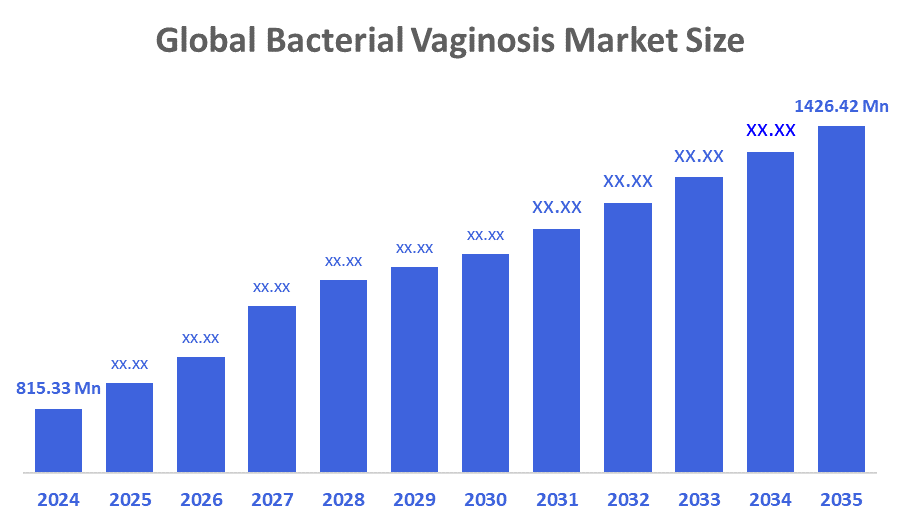
According to a research report published by Decisions Advisors and Consulting, The Global Bacterial Vaginosis Market Size Was Worth Around USD 815.33 Million In 2024 And Is Predicted To Grow To Around USD 1426.42 Million By 2035 With A Compound Annual Growth Rate (CAGR) Of 5.22 % From 2025 To 2035. The market for treating bacterial vaginosis is seeing a rise in the use of cutting-edge technologies in treatment approaches. Better health outcomes may result from innovations like telemedicine and digital health tools that increase patient engagement and adherence to treatment plans.
Market Overview
Bacterial vaginosis is a vaginal infection that occurs when the normal bacteria in the vagina grow excessively. The disease develops when hydrogen peroxide-producing lactobacilli (beneficial bacteria) decrease, and anaerobic (harmful) bacteria increase. The vaginal bacterial imbalance results in a situation that increases the risk of sexually transmitted infections for patients. Many women with bacterial vaginosis have no signs or symptoms. The common signs of the disease show themselves through thin vaginal discharge that appears grey-green or white, through a fishy vaginal odour, through itching and irritation and through a burning sensation during urination. The diagnosis of this illness typically requires a combination of the underlying symptoms, medical history, and a physical test. The healthcare professional may perform a pelvic exam to determine the characteristics of the vaginal discharge and to rule out other possible causes. The diagnostic procedures that medical professionals commonly use include Gram staining vaginal secretions, examining wet mounts for clue cells, and conducting the whiff test.
According to WHO, BV prevalence varies across countries and population groups, but a recent systematic review and meta-analysis of the global BV prevalence among women of reproductive age range from 23–29. BV increases the risk of acquiring HIV, the acquisition and transmission of other STIs, and, if left untreated, can lead to adverse effects of pregnancy.
A key study led by researchers at Monash University and Alfred Health revealed that bacterial vaginosis (BV), a condition affecting nearly 1 in 3 women worldwide, should be classified as a sexually transmitted infection (STI).
A Swedish biotech start-up, Gedea Biotech, raised €1.3 million (14 MSEK) to advance development of its innovative antibiotic-free vaginal infection treatment called pHyph. This funding supports the push toward non-antibiotic therapies, which could reduce recurrence rates and help combat antimicrobial resistance, a major global health challenge.
Case Western Reserve University been awarded $1.5 million in funding to study the role of vaginal bacteria in women’s health, particularly how imbalances in the vaginal microbiome are linked to serious health risks. By better understanding the bacterial ecosystems involved, this research could pave the way for precision medicine approaches moving beyond broad-spectrum antibiotics to more tailored, microbiome-friendly treatments.
Report Coverage
This research report categorizes the bacterial vaginosis market based on various segments and regions, forecasts revenue growth, and analyses trends in each submarket. The report analyses the key growth drivers, opportunities, and challenges influencing the bacterial vaginosis market. Recent market developments and competitive strategies, including expansion, product launches, development, partnerships, mergers, and acquisitions, have been incorporated to illustrate the competitive landscape in the market. The report strategically identifies and profiles the key market players and analyses their core competencies in each sub-segment of the bacterial vaginosis market.
Driving Factors
The bacterial vaginosis market experiences growth because women increasingly use vaginal douches and feminine hygiene products, which disrupt the natural vaginal bacterial community. The market develops through rising health hazards, which occur when people have multiple sexual partners, engage in unprotected sex and smoke cigarettes and use intrauterine devices. The widespread use of nitroimidazole antimicrobials and lincosamide antibiotics, which eliminate or prevent bacterial growth that causes this medical condition, serves as a major factor driving market expansion. The market develops positively through increased use of lactobacillus colonisation therapy, which helps patients restore their vaginal bacterial balance by increasing their beneficial vaginal bacterial population. The bacterial vaginosis market will expand in the upcoming years due to the development of intravaginal anti-infective boric acid with ethylenediaminetetraacetic acid (EDTA), which enhances antibacterial power against harmful bacteria while safeguarding beneficial lactobacilli.
Freya Biosciences has secured new investment to advance its work on microbial immunotherapies for bacterial vaginosis (BV), a condition that affects millions of women worldwide and is often recurrent and difficult to treat. This investment highlights the growing momentum in women’s health biotech, where companies are shifting from symptom management to microbiome-driven therapies that address root causes. Freya’s approach could represent a paradigm shift in BV treatment, moving away from antibiotics toward precision microbial medicine.
Restraining Factors
Global market growth is hampered by a lack of knowledge about bacterial vaginosis and how to treat it, as well as the high expense of treatments. Financial obstacles limit patient access and adherence to care, while inadequate information results in inappropriate therapy.
Market Segmentation
The bacterial vaginosis market share is classified into treatment type, route of administration, and patient demographics.
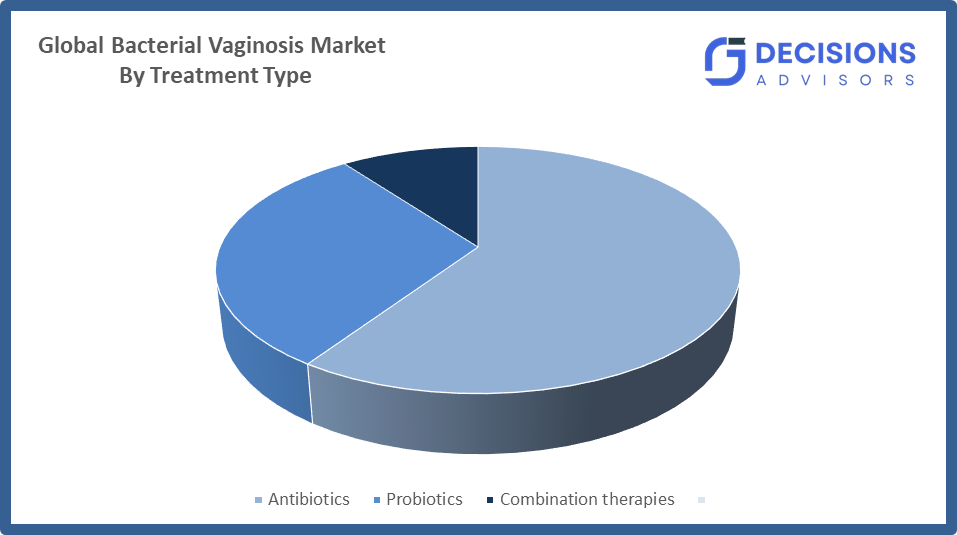
- The antibiotics segment accounted for the largest share in 2024 and is anticipated to grow at a significant CAGR during the forecast period.
Based on the treatment type, the bacterial vaginosis market is divided into antibiotics, probiotics, and over-the-counter treatments. Among these, the antibiotics segment accounted for the largest share in 2024 and is anticipated to grow at a significant CAGR during the forecast period. Their widespread clinical use and prescription-based methodology. Moreover, their demonstrated ability to eradicate the offending bacteria that cause the symptoms of bacterial vaginosis, medical providers usually recommend these products.
For instance, A recent study published in the Journal of Applied Microbiology explores narrow-spectrum drug repurposing to target Gardnerella vaginalis biofilms, which are strongly associated with bacterial vaginosis (BV).
- The intravaginal segment accounted for the largest share in 2024 and is anticipated to grow at a significant CAGR during the forecast period.
Based on the route of administration, the bacterial vaginosis market is differentiated into oral, topical, and intravaginal. Among these, the intravaginal segment accounted for the largest share in 2024 and is anticipated to grow at a significant CAGR during the forecast period. They are the most popular option in the market because of their quick symptom relief and localised effect. Intravaginal options continue to hold a sizable lead as patients and healthcare professionals place a high value on effectiveness and focused treatments.
For instance, Merck KGaA entered into a strategic collaboration with UK-based medtech company Calla Lily Clinical Care to advance a new intravaginal drug delivery system. This collaboration reflects a paradigm shift in women’s health therapeutics delivery: moving from cumbersome pessaries to precision-engineered, patient-friendly devices.
- The adults segment accounted for the highest market revenue in 2024 and is anticipated to grow at a significant CAGR during the forecast period.
Based on the patient demographics, the bacterial vaginosis market is segmented into adults, adolescents, and the elderly. Among these, the adult segment accounted for the highest market revenue in 2024 and is anticipated to grow at a significant CAGR during the forecast period. This is due to proactive health-seeking practices and greater incidence rates. This demographic is more likely to seek therapy because they often have better access to healthcare facilities and are more knowledgeable about sexual health issues.
Regional Segment Analysis of the Bacterial Vaginosis Market
- North America (U.S., Canada, Mexico)
- Europe (Germany, France, U.K., Italy, Spain, Rest of Europe)
- Asia-Pacific (China, Japan, India, Rest of APAC)
- South America (Brazil and the Rest of South America)
- The Middle East and Africa (UAE, South Africa, Rest of MEA)
Asia Pacific is anticipated to hold the largest share of the bacterial vaginosis market over the predicted timeframe.
Asia Pacific is anticipated to hold the largest share of the bacterial vaginosis market over the predicted timeframe. Bacterial Vaginosis (BV) is a widespread vaginal infection in women of reproductive age, and its prevalence in the Asia Pacific region stems from multiple factors that interconnect with each other. Limited healthcare access in rural and low-resource areas leads to underdiagnosis and untreated cases. Women avoid medical treatment because cultural stigma makes it difficult for them to access reproductive health services. Further, sexual health education, together with urban population growth and socioeconomic gaps, faces higher health risks, while pregnancy-related hormonal changes lead to vaginal microbiota imbalance. The driving factors of BV create a clinical problem, which transforms into a public health emergency that needs awareness campaigns together with better diagnostic capabilities and community interventions for healthcare improvement throughout the Asia Pacific region.
Nestlé has publicly identified women’s health as a new strategic growth platform, signalling its intent to expand beyond traditional nutrition into specialised health solutions. Nestlé’s entry into women’s health could accelerate mainstream adoption of microbiome-driven therapies and nutraceuticals, bridging the gap between consumer nutrition and clinical women’s health solutions.
Europe is expected to grow at a rapid CAGR in the bacterial vaginosis market during the forecast period. Bacterial Vaginosis (BV) is a common vaginal infection among women of reproductive age in Europe, with its prevalence determined by multiple factors that drive its occurrence. The risk of sexually transmitted infections increases through urbanisation and lifestyle changes, which include both multiple sexual partner relationships and inconsistent condom usage. The combination of reproductive health stigma and limited awareness among people leads to treatment delays, which happen despite advanced healthcare systems being present in some areas. The combination of migrant populations and socioeconomic disparities creates uneven access to preventive care and educational resources, which increases vulnerability to various health challenges. The use of antibiotics that occurs throughout the population leads to vaginal microbiota disruptions, which result in increased vulnerability to Bacterial Vaginosis.
Recent research has provided new insights into bacteria linked to vaginal infections, which could pave the way for improved prevention strategies. For instance, Utrecht University researchers, led by Celia Segui-Perez and Karin Strijbis, have uncovered new bacterial insights that may help prevent bacterial vaginosis (BV). Their study, published in mBio, highlights the role of a lesser-known bacterium, Prevotella timonensis, in disrupting vaginal health.
Competitive Analysis:
The report offers the appropriate analysis of the key organisations/companies involved within the bacterial vaginosis market, along with a comparative evaluation primarily based on their product offering, business overviews, geographic presence, enterprise strategies, segment market share, and SWOT analysis. The report also provides an elaborate analysis focusing on the current news and developments of the companies, which includes product development, innovations, joint ventures, partnerships, mergers & acquisitions, strategic alliances, and others. This allows for the evaluation of the overall competition within the market.
List of Key Companies
- AbbVie Inc.
- Aurobindo Pharma
- Bayer AG
- Bristol-Myers Squibb Company
- GlaxoSmithKline plc.
- Hikma Pharmaceuticals plc
- Lupin
- Melinta Therapeutics, Inc
- Mission Pharmacal Company
- Mylan N.V.
- Novartis AG
- Pfizer Inc
- Others
Key Target Audience
- Market Players
- Investors
- End-users
- Government Authorities
- Consulting and Research Firm
- Venture capitalists
- Value-Added Resellers (VARs)
Recent Development
- In December 2025, Roche announced the launch of its new PCR-based diagnostic test for vaginitis, following receipt of the CE Mark in Europe. Vaginitis is one of the most common gynaecological conditions worldwide, but its overlapping symptoms often lead to incorrect or delayed treatment. Roche’s PCR test offers a molecular-level diagnostic approach, which could improve patient outcomes and reduce unnecessary prescriptions.
- In October 2025, the American College of Obstetricians and Gynaecologists (ACOG) recommended concurrent sexual partner treatment in cases of recurrent bacterial vaginosis (BV). This marks a paradigm shift in women’s health care: moving from a patient-only treatment model to a couple-based approach for recurrent BV. It reflects growing recognition of the role of sexual partners in the persistence of vaginal microbiome imbalances.
Market Segment
This study forecasts revenue at global, regional, and country levels from 2020 to 2035. Decisions Advisors has segmented the bacterial vaginosis market based on the below-mentioned segments:
Global Bacterial Vaginosis Market, By Treatment Type
- Antibiotics
- Probiotics
- Over-the-Counter Treatments
Global Bacterial Vaginosis Market, By Route of Administration
- Oral
- Topical
- Intravaginal
Global Bacterial Vaginosis Market, By Patient Demographics
- Adults
- Adolescents
- Elderly
Global Bacterial Vaginosis Market, By Regional Analysis
- North America
- US
- Canada
- Mexico
- Europe
- Germany
- UK
- France
- Italy
- Spain
- Russia
- Rest of Europe
- Asia Pacific
- China
- Japan
- India
- South Korea
- Australia
- Rest of Asia Pacific
- South America
- Brazil
- Argentina
- Rest of South America
- Middle East & Africa
- UAE
- Saudi Arabia
- Qatar
- South Africa
- Rest of the Middle East & Africa
Frequently Asked Questions (FAQ)
1. How is the recurrence rate of bacterial vaginosis influencing long-term market demand?
High recurrence rates of bacterial vaginosis significantly increase repeat prescriptions and long-term therapy adoption. This has encouraged pharmaceutical companies to invest in sustained-release formulations, microbiome-based therapeutics, and adjunct probiotic therapies, thereby expanding overall market value.
2. What role does antimicrobial resistance play in shaping the future of the bacterial vaginosis market?
Growing concerns over antimicrobial resistance (AMR) are driving research toward non-antibiotic treatment alternatives, including microbiome restoration therapies, bacteriophage treatments, and targeted immunotherapies. This shift is expected to diversify product pipelines and reshape competitive dynamics in the market.
3. How are digital health platforms impacting bacterial vaginosis diagnosis and treatment?
Telehealth services, AI-based symptom assessment tools, and at-home diagnostic kits are improving early detection and treatment adherence. These digital solutions are expanding access in underserved regions and creating new revenue channels beyond traditional clinical settings.
4. What regulatory trends are influencing product approvals in the BV market?
Regulatory agencies are increasingly emphasising microbiome safety, long-term efficacy data, and reduced recurrence rates when evaluating new BV therapies. Accelerated pathways for innovative women’s health treatments may further support faster commercialisation of advanced therapies.
5. How does rising awareness of women’s reproductive health affect market penetration?
Educational campaigns and improved sexual health awareness programs are reducing stigma associated with vaginal infections. As awareness improves, diagnosis rates increase, which directly contributes to higher prescription volumes and market expansion.
6. What investment opportunities exist for venture capitalists in the BV market?
Venture capital interest is rising in early-stage biotech companies developing microbiome-based therapeutics, rapid molecular diagnostics, and precision medicine approaches. These segments offer high growth potential due to unmet clinical needs and recurring treatment demand.
7. How might partnerships between pharmaceutical companies and nutraceutical firms influence future growth?
Collaborations between pharma companies and nutraceutical manufacturers could accelerate the development of combination therapies that integrate probiotics with conventional antibiotics. Such partnerships may open hybrid therapeutic categories blending clinical treatment with preventive care.
Check Licence
Choose the plan that fits you best: Single User, Multi-User, or Enterprise solutions tailored for your needs.
We Have You Covered
- 24/7 Analyst Support
- Clients Across the Globe
- Tailored Insights
- Technology Tracking
- Competitive Intelligence
- Custom Research
- Syndicated Market Studies
- Market Overview
- Market Segmentation
- Growth Drivers
- Market Opportunities
- Regulatory Insights
- Innovation & Sustainability
Report Details
| Scope | Global |
| Pages | 230 |
| Delivery | PDF & Excel via Email |
| Language | English |
| Release | Feb 2026 |
| Access | Download from this page |