
Global Bioremediation Market
 |
Pages:
210
|
Pages:
210
Global Bioremediation Market Size, Share, By Product Type (In Situ Bioremediation, Ex Situ Bioremediation), By Pollutant Type (Organic Pollutants, Inorganic Pollutants, Heavy Metals, Oil Spills), By Technology (Phytoremediation, Bioventing, Bioaugmentation, Biostimulation, Land-Based Treatments, Others), By Application (Soil Remediation, Groundwater Remediation, Wastewater Treatment, Oil Spill Remediation, Industrial Waste Treatment, Others), By End-Use (Industrial, Municipal, Commercial, Residential, Others), and By Region (North America, Europe, Asia-Pacific, Latin America, Middle East & Africa), Analysis and Forecast 2025?2035
REPORT COVERAGE
Global
Market Snapshot
- Market Size (2025): USD 18.82 Billion
- Projected Market Size (2035): USD 51.45 Billion
- Compound Annual Growth Rate (CAGR): 10.58%
- Largest Regional Market: North America
- Fastest Growing Region: Asia-Pacific
- 3rd Largest Region: Europe
- Base Year: 2025
- Historical Period: 2021–2024
- Forecast Period: 2026–2035
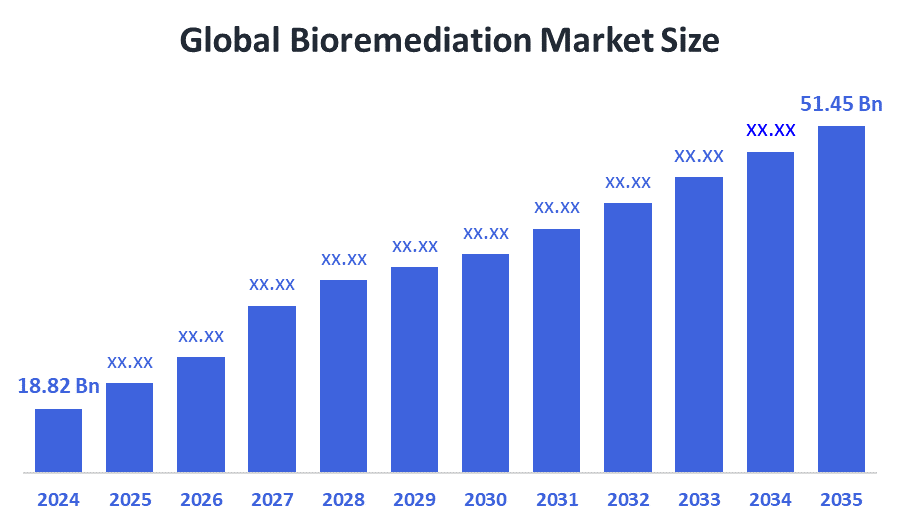
According to Decision Advisors, the Global Bioremediation Market Size is expected to grow from USD 18.82 billion in 2024 to USD 51.45 billion by 2035, at a CAGR of 10.58% during the forecast period 2025-2035. The global bioremediation market is projected to grow significantly over the next decade due to stringent environmental regulations, cost-effectiveness & efficiency, industrial pollution & oil spills, technological advancement & R&D, and rising environmental awareness.
Market Overview/ Introduction
The global bioremediation market refers to all technologies and services together with all biological agents, which include microorganisms, fungi, and plants that work to clean contaminated soil, groundwater, surface water, and sediment by breaking down or eliminating pollutants from those environments. Bioremediation functions as an environmentally friendly and budget-friendly method of waste management, which employs microorganisms together with plants and their enzymes to transform environmental toxins from oil spills and pesticides, and heavy metals into safe substances that exist in contaminated soil, water, and air. The bioremediation market is evolving rapidly as environmental sustainability gains global urgency. Our report presents a regional capital investment trendline that shows how funding patterns affect technology adoption. A comprehensive government funding and incentives chart shows all fiscal policies that create market momentum in different countries. The timeline of regulatory norms shows strict environmental laws that have driven bioremediation development throughout history. The market maturity assessment requires analysis of consumer awareness because it shows growing trust in biological solutions. The research investigates post-treatment monitoring techniques by showing how innovative solutions protect long-term remediation outcomes. These exclusive insights use data to show how policy investment and technology together create the future of the bioremediation market.
- The PM-PRANAM Scheme promotes the use of bio-fertilizers and organic alternatives instead of chemical inputs, supporting preventive bioremediation and improving soil health. This initiative encourages sustainable agricultural practices, reduces environmental pollution, and strengthens demand for eco-friendly solutions, contributing positively to the growth of the bioremediation market in the long term.
- New environmental regulations on construction waste, e-waste, and contaminated sites mandate proper collection, segregation, monitoring, and reporting by local bodies. Strong enforcement, compliance mechanisms, and coordination with pollution control boards enhance waste management efficiency and support the adoption of sustainable remediation practices across regions.
- The Union Cabinet approved the BioE3 Policy to promote biotechnology-driven biomanufacturing, alongside launching the Vigyan Dhara scheme with significant funding. These initiatives aim to strengthen research, innovation, and sustainable technologies, supporting environmental solutions and boosting growth opportunities in the bioremediation market.
Notable Insights: -
- North America is anticipated to hold the largest share of approximately 41% the bioremediation market over the forecast period.
- Asia Pacific is expected to grow at a rapid CAGR of approximately 13.70% in the bioremediation market during the forecast period.
- The in situ bioremediation segment dominated the market in 2025 and is projected to grow approximately 61% market share during the forecast period.
- The organic pollutants segment accounted for the largest share in 2025, and it's anticipated to grow at a significant CAGR of approximately 7.5% during the forecast period.
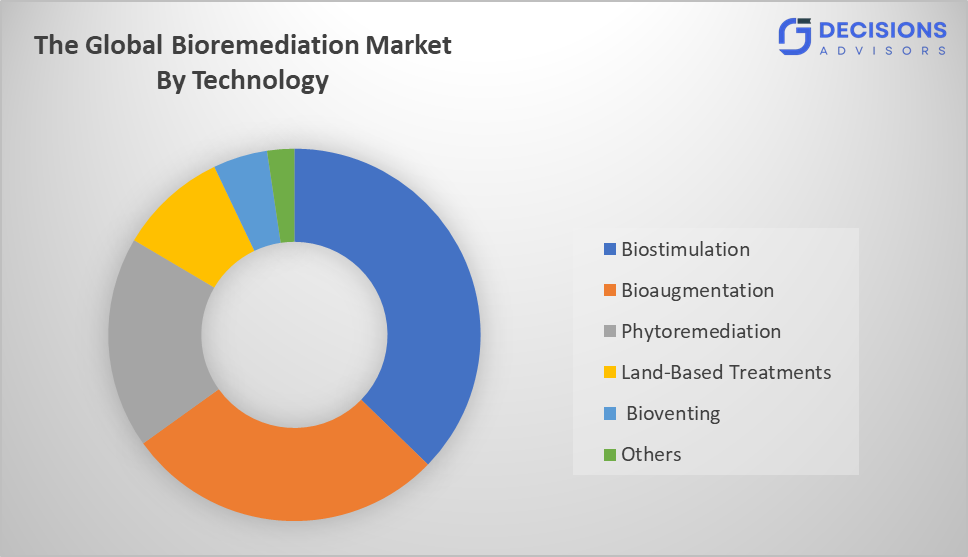
- The biostimulation segment dominated the market in 2025 and is projected to grow at a substantial CAGR of approximately 8.5% during the forecast period.
- The soil remediation segment dominated the market in 2025 and is projected to grow at a substantial CAGR of approximately 7.1% during the forecast period.
- The compound annual growth rate of the Global bioremediation market is 10.58%.
- The market is likely to achieve a valuation of USD 51.45 billion by 2035.
What is role of technology in grooming the market?
Technology plays a crucial role in shaping the global bioremediation market by improving the efficiency, accuracy, and scalability of environmental cleanup processes. Advanced techniques in biotechnology enable the use of engineered microorganisms to break down complex pollutants more effectively. Innovations in Genetic Engineering enhance microbial performance under diverse environmental conditions. Additionally, digital monitoring tools, sensors, and data analytics support real-time tracking of remediation progress, ensuring better control and optimization. Emerging nanotechnology applications further improve contaminant removal efficiency. These technological developments expand the scope of bioremediation across soil and water treatment, reduce operational limitations, and encourage wider adoption, thereby driving the market’s overall growth globally.
Market Drivers
The global bioremediation market is driven by stringent government regulations on hazardous waste disposal and site decontamination, encouraging industries to adopt bio-based solutions. Bioremediation offers a cost-effective and environmental friendly alternative to conventional methods by degrading pollutants rather than transferring them. Rising industrial activities have increased oil spills, chemical leaks, and waste generation, boosting demand for effective treatment, especially for petroleum hydrocarbons. Advancements in biotechnology, including genetically engineered microbes, have enhanced efficiency and expanded application areas. Additionally, growing awareness of sustainability and the health impacts of pollution is accelerating the adoption of eco-friendly remediation solutions globally.
Restrain
The global bioremediation market faces restraints due to limited effectiveness in treating complex or heavily contaminated sites and longer treatment durations compared to conventional methods. Variability in environmental conditions, lack of standardized protocols, and high monitoring costs further hinder adoption, especially in regions with limited technical expertise and regulatory support.
Competitive Analysis:
The report offers the appropriate analysis of the key organizations/companies involved within the global bioremediation market, along with a comparative evaluation primarily based on their product of offering, business overviews, geographic presence, enterprise strategies, segment market share, and SWOT analysis. The report also provides an elaborative analysis focusing on the current news and developments of the companies, which includes product development, innovations, joint ventures, partnerships, mergers & acquisitions, strategic alliances, and others. This allows for the evaluation of the overall competition within the market.
Top Companies in Global Bioremediation Market
- Xylem Inc.
- Aquatech International LLC
- Newterra Ltd.
- Regenesis Corporation
- Drylet Inc.
- Envirogen Technologies Inc.
- Probiosphere Inc.
- Sumas Remediation Services Inc.
- MicroGen Biotech Ltd.
- Oil Spill Eater International Inc.
- Ivey International Inc.
- InSitu Remediation Services Limited
Government Initiatives
|
Country |
Key Government Initiatives |
|
UK |
The UK Green Building Council framework promotes a nature-positive built environment by guiding industries to restore ecosystems and reduce environmental harm. It encourages the adoption of sustainable solutions like bioremediation, creating growth opportunities for eco-friendly soil and water treatment technologies. |
|
US |
The U.S. EPA is expanding the Superfund program with 2025-26 mandates targeting PFAS "forever chemicals", significantly increasing federal grants for "in-situ" bioremediation and incentivizing private sector R&D through the Advanced Research Projects Agency-Energy (ARPA-E) |
|
India |
Environmental governance in India has strengthened over the past year, enforcing stricter pollution norms on industries. While regulatory improvements have been notable, significant gaps remain. Continued efforts are needed to enhance compliance, monitoring, and sustainable practices to effectively address environmental challenges. |
Market Segmentation
The bioremediation market share is classified into product type, pollutant type, technology, application, and end-user
- The in situ bioremediation segment dominated the market in 2025 and is projected to grow approximately 61% market share during the forecast period.
Based on the product type, the bioremediation market is divided into in situ bioremediation and ex situ bioremediation. Among these, the in situ bioremediation segment dominated the market in 2025 and is projected to grow approximately 61% market share during the forecast period. Due to its cost-effectiveness, minimal site disturbance, and eco-friendly approach. Increasing environmental regulations, rising contamination concerns, and advancements in microbial technologies are driving its adoption, supporting strong growth during the forecast period.
- The organic pollutants segment accounted for the largest share in 2025 and is anticipated to grow at a significant CAGR of approximately 7.5% during the forecast period.
Based on the pollutant type, the bioremediation market is divided into organic pollutants, inorganic pollutants, heavy metals, and oil spills. Among these, the organic pollutants segment accounted for the largest share in 2025, and it's anticipated to grow at a significant CAGR of approximately 7.5% during the forecast period. Due to the high occurrence of contaminants such as petroleum hydrocarbons, pesticides, and industrial solvents. These compounds are more easily broken down by microorganisms, making bioremediation highly efficient. Increasing industrialization, frequent oil spills, and strict environmental regulations further drive demand for effective organic pollutant treatment solutions globally.
- The biostimulation segment dominated the market in 2025 and is projected to grow at a substantial CAGR of approximately 8.5% during the forecast period.
Based on the technology, the bioremediation market is divided into phytoremediation, bioventing, bioaugmentation, biostimulation, land-based treatments, and others. Among these, the biostimulation segment dominated the market in 2025 and is projected to grow at a substantial CAGR of approximately 8.5% during the forecast period. Fueled by increasing demand for cost-effective and eco-friendly remediation methods, biostimulation enhances the activity of native microorganisms through nutrient and oxygen addition. Its widespread use in soil and groundwater treatment, along with supportive environmental regulations and advancements in microbial technologies, is driving its strong adoption and sustained market growth.
- The soil remediation segment dominated the market in 2025 and is projected to grow at a substantial CAGR of approximately 7.1% during the forecast period.
Based on the application, the bioremediation market is divided into soil remediation, groundwater remediation, wastewater treatment, oil spill remediation, industrial waste treatment, and others. Among these, the soil remediation segment dominated the market in 2025 and is projected to grow at a substantial CAGR of approximately 7.1% during the forecast period. The growth of the soil remediation segment is driven by increasing land contamination from industrial activities, agriculture, and waste disposal. Rising environmental regulations and government initiatives for land restoration are boosting demand. Additionally, advancements in bioremediation technologies and growing awareness of sustainable clean-up methods are supporting the segment’s steady expansion globally.
- The industrial segment dominated the market in 2025 and is projected to grow at a substantial CAGR of approximately 7.5% during the forecast period.
Based on the end-user, the bioremediation market is divided into industrial, municipal, commercial, residential, and other. Among these, the soil remediation segment dominated the market in 2025 and is projected to grow at a substantial CAGR of approximately 7.5% during the forecast period. The growth of the industrial segment is driven by the high level of contamination generated from industries such as oil & gas, chemicals, mining, and manufacturing. Strict environmental regulations and the need for effective waste management and site remediation are driving significant adoption of bioremediation solutions across industrial applications.
Strategies to Implement for Growth of the Market in Non-Leading Regions
To drive growth of the global bioremediation market in non-leading regions, stakeholders should focus on strengthening environmental infrastructure and promoting awareness of sustainable remediation methods. Governments can introduce supportive policies, incentives, and funding programs to encourage adoption. Expanding access to advanced solutions developed through Biotechnology will enhance treatment efficiency. Building technical expertise through training and collaboration with international organizations is essential. Public–private partnerships can accelerate project implementation and technology transfer. Additionally, integrating innovations from Genetic Engineering can improve effectiveness in diverse conditions. These strategies collectively support wider adoption, improve environmental outcomes, and strengthen market expansion in emerging regions.
Regional Segment Analysis of the Bioremediation Market
- North America (U.S., Canada, Mexico)
- Europe (Germany, France, U.K., Italy, Spain, Rest of Europe)
- Asia-Pacific (China, Japan, India, Rest of APAC)
- South America (Brazil and the Rest of South America)
- The Middle East and Africa (UAE, South Africa, Rest of MEA)
North America is anticipated to hold the largest share of approximately 41% the bioremediation market over the forecast period.
North America is anticipated to hold the largest share of approximately 41% the bioremediation market over the forecast period. The dominance of this region is primarily driven by the stringent environmental regulations, strong government support, and high awareness of sustainable waste management practices. Advanced technological infrastructure, significant investments in research and development, and the presence of key market players further accelerate adoption across industrial, municipal, and oil spill remediation applications.
Asia Pacific is expected to grow at a rapid CAGR of approximately 13.70% in the bioremediation market during the forecast period.
Asia Pacific is expected to grow at a rapid CAGR of approximately 13.70% in the bioremediation market during the forecast period. This growth is driven by rising industrialization and urbanization, leading to increased environmental pollution. Governments are promoting sustainable remediation practices, while investments in eco-friendly technologies are expanding. Growing awareness, supportive regulations, and demand for cost-effective cleanup solutions are accelerating the adoption of bioremediation across the region.
Europe is the 3rd largest region to grow in the bioremediation market during the period. Europe ranks as the third-largest region in the bioremediation market due to stringent environmental regulations, strong focus on sustainability, and increasing investments in green technologies. Government initiatives for soil and water remediation, along with rising industrial pollution concerns and adoption of eco-friendly treatment methods, are driving demand across municipal and industrial sectors in the region.
Future Market Trends in Global Bioremediation Market: -
- Rising Utilization of Advanced Microbial and Enzyme-Based Technologies
The rising utilization of advanced microbial and enzyme-based technologies in the global bioremediation market is driven by their ability to efficiently degrade complex pollutants into less harmful substances. Innovations in Biotechnology enable tailored solutions for site-specific contamination. These approaches offer faster treatment, improved adaptability to diverse environmental conditions, and reduced ecological impact, making them highly effective and widely adopted across soil and water remediation applications.
- Transition toward In-Situ and Environmentally Sustainable Remediation Approaches
The transition toward in-situ and environmentally sustainable remediation approaches in the global bioremediation market is driven by the need for cost-effective and less disruptive cleanup methods. These techniques treat contaminants directly at the site, reducing excavation and transportation requirements. Supported by advancements in Biotechnology, they minimize environmental impact while improving efficiency and long-term sustainability of remediation processes.
- Adoption of Real-Time Monitoring and Data-Driven Technologies
The adoption of real-time monitoring and data-driven technologies in the global bioremediation market is driven by the need for accurate and continuous assessment of remediation processes. Advanced sensors and analytics enable better tracking of contaminant levels and treatment performance. Integration with Data Science improves decision-making, optimizes efficiency, and ensures regulatory compliance, supporting more effective and reliable environmental cleanup operations.
Recent Development
- In March 2026, the study reflected on bio-based PET and plastic waste management using a responsible research and innovation approach. It emphasized sustainable material development and encouraged biological degradation methods, which supported eco-friendly waste treatment and advanced bioremediation practices across environmental applications.
- In December 2025, the explanation highlighted India’s need for bioremediation to address pollution sustainably. It emphasized the use of biological systems for cleaning contaminated land and water, which increased awareness, encouraged adoption, and supported demand for eco-friendly remediation solutions across the country.
- In September 2025, the study described bioremediation methods such as composting and bioaugmentation. It highlighted how microorganisms degraded pollutants into less harmful compounds and emphasized microbial consortia. The research focused on hydrocarbons and wastewater pollution, demonstrating bioremediation’s potential for sustainable environmental clean-up.
- In July 2025, a senior BMC official stated that ReSustainability had prior experience in waste management. Authorities planned to remediate Deonar landfill over three years, after which the cleared land would be used for housing under the Dharavi Redevelopment Project led by Adani Group.
How is Recent Developments Helping the Market?
Recent developments in the global bioremediation market are significantly improving efficiency, scalability, and environmental outcomes. Innovations in Biotechnology have enabled the development of more effective microbial and enzyme-based solutions for complex pollutant degradation. Advancements in Genetic Engineering enhance the adaptability of organisms to diverse environments. Additionally, the integration of real-time monitoring systems and data analytics allows better tracking and optimization of remediation processes. These developments support faster project execution, reduce operational risks, and improve overall treatment performance, thereby encouraging wider adoption across industries and government environmental initiatives globally.
Market Segment
This study forecasts revenue at global, regional, and country levels from 2020 to 2035. Decision Advisors has segmented the Bioremediation Market based on the below-mentioned segments:
Global Bioremediation Market, By Product Type
- In Situ Bioremediation
- Ex Situ Bioremediation
Global Bioremediation Market, By Pollutant Type
- Organic Pollutants
- Inorganic Pollutants
- Heavy Metals
- Oil Spills
Global Bioremediation Market, By Technology
- Phytoremediation
- Bioventing
- Bioaugmentation
- Biostimulation
- Land-Based Treatments
- Others
Global Bioremediation Market, By Application
- Soil Remediation
- Groundwater Remediation
- Wastewater Treatment
- Oil Spill Remediation
- Industrial Waste Treatment
- Others
Global Bioremediation Market, By End-Use
- Industrial
- Municipal
- Commercial
- Residential
- Others
Global Bioremediation Market, By Regional Analysis
- North America
- US
- Canada
- Mexico
- Europe
- Germany
- UK
- France
- Italy
- Spain
- Russia
- Rest of Europe
- Asia Pacific
- China
- Japan
- India
- South Korea
- Australia
- Rest of Asia Pacific
- South America
- Brazil
- Argentina
- Rest of South America
- Middle East & Africa
- UAE
- Saudi Arabia
- Qatar
- South Africa
- Rest of the Middle East & Africa
Frequently Asked Questions (FAQ)
Q How does climate change influence the demand for bioremediation solutions?
A. Climate change increases the frequency of environmental contamination events such as floods, oil spills, and soil degradation. This drives the need for sustainable clean-up technologies, making bioremediation a preferred solution due to its eco-friendly and adaptive nature in diverse environmental conditions.
Q. What role do public-private partnerships play in the bioremediation market?
A. Public-private partnerships accelerate project execution by combining government funding with private sector expertise. These collaborations enhance technology deployment, improve infrastructure, and promote large-scale remediation projects, especially in emerging economies with limited technical capabilities.
Q. How does bioremediation contribute to circular economy initiatives?
A. Bioremediation supports the circular economy by converting waste into less harmful or reusable by-products. It promotes resource recovery, reduces environmental impact, and aligns with sustainability goals by minimizing waste and encouraging the reuse of treated land and water resources.
Q. What challenges do companies face in commercializing bioremediation technologies?
A. Companies face challenges such as regulatory approvals, variability in site conditions, high initial investment in R&D, and limited awareness in developing regions. These factors can slow down commercialization despite the long-term environmental and economic benefits of bioremediation solutions.
Check Licence
Choose the plan that fits you best: Single User, Multi-User, or Enterprise solutions tailored for your needs.
We Have You Covered
- 24/7 Analyst Support
- Clients Across the Globe
- Tailored Insights
- Technology Tracking
- Competitive Intelligence
- Custom Research
- Syndicated Market Studies
- Market Overview
- Market Segmentation
- Growth Drivers
- Market Opportunities
- Regulatory Insights
- Innovation & Sustainability
Report Details
| Scope | Global |
| Pages | 210 |
| Delivery | PDF & Excel via Email |
| Language | English |
| Release | Apr 2026 |
| Access | Download from this page |