
Global BK virus (BKV) Infection Market
 |
Pages:
220
|
Pages:
220
Global BK virus (BKV) Infection Market Size, Share, By Treatment (RNA Interference-based Therapy, Givosiran, Symptomatic Treatment), By Distribution Channel (Hospital Pharmacies, Online Pharmacies, Retail Pharmacies), By Application (Organ Transplants, Immunocompromised Patients), and By Region (North America, Europe, Asia-Pacific, Latin America, Middle East, and Africa), Analysis and Forecast 2025 ? 2035.
REPORT COVERAGE
Global
Market Snapshot
- Market Size (2025): USD 49.2 Million
- Projected Market Size (2035): USD 1693.6 Million
- Compound Annual Growth Rate (CAGR): 42.46%
- Largest Regional Market: North America
- Fastest Growing Region: Asia-Pacific
- 3rd Largest Region: Middle East
- Base Year: 2025
- Historical Period: 2021–2024
- Forecast Period: 2025–2035
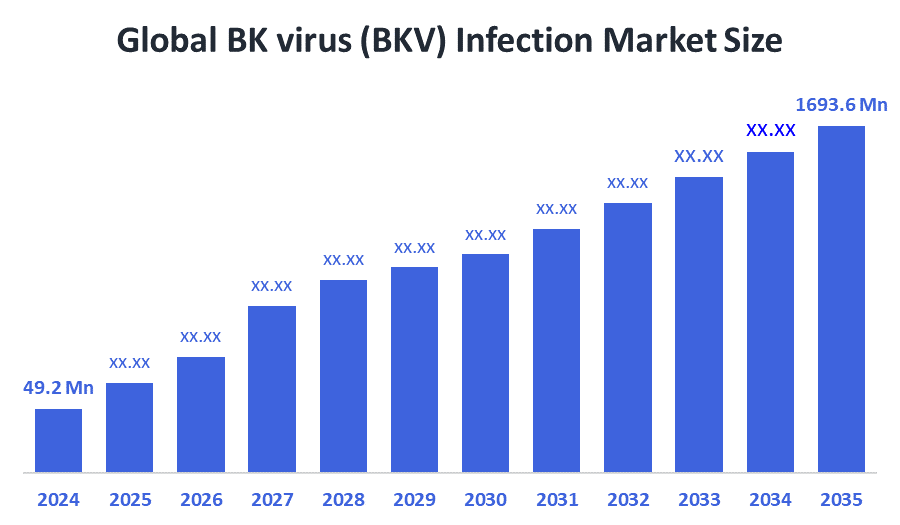
According to Decision Advisors, the Global BK virus (BKV) Infection Market Size is expected to grow from USD 49.2 million in 2025 to USD 1693.6 million by 2035, at a CAGR of 42.46% during the forecast period 2025-2035. It is fueled by the rising number of kidney and hematopoietic stem cell transplants, rising transplant procedures, advancements in diagnostic tools, targeted therapy development, growing immunocompromised populations, and improved healthcare infrastructure.
Market Overview/ Introduction
BKV is a widely prevalent polyomavirus that remains dormant and infects the majority of individuals during their childhood. In individuals with compromised immune systems, especially those who have undergone kidney (RTR) or hematopoietic stem cell (HSCT) transplants, it can reactivate and lead to serious complications such as BK virus-associated nephropathy (BKVAN) and hemorrhagic cystitis. At present, there are no drugs specifically for BKV that have received FDA approval, resulting in a "white space" market. Strategies include lowering immunosuppression or using cidofovir, leflunomide, and fluoroquinolones off-label. Antivirals aimed at specifically blocking BK virus replication are under development, in order to tackle the absence of approved therapies and enhance treatment results. At the same time, adoptive T-cell therapies provide hopeful immunotherapeutic strategies that boost the immune response to address persistent infections in patients with weakened immune systems.
- In July 2024, Professor Alan Salama of University College London received a £170,000 research award, co-funded by the Moross Family, to explore innovative approaches for treating BK virus infections in transplant recipients, supporting long-term advancements.
- In 2025, Dr. Peter Wing from the University of Oxford received a £100,000 PhD studentship to investigate BK virus treatment through oxygen level manipulation in kidney cells, highlighting innovative early-stage research supporting future advancements.
Notable Insights: -
- North America holds the largest regional market share in the BK virus (BKV) Infection.
- Asia Pacific is the fastest growing region in the BK virus (BKV) Infection market.
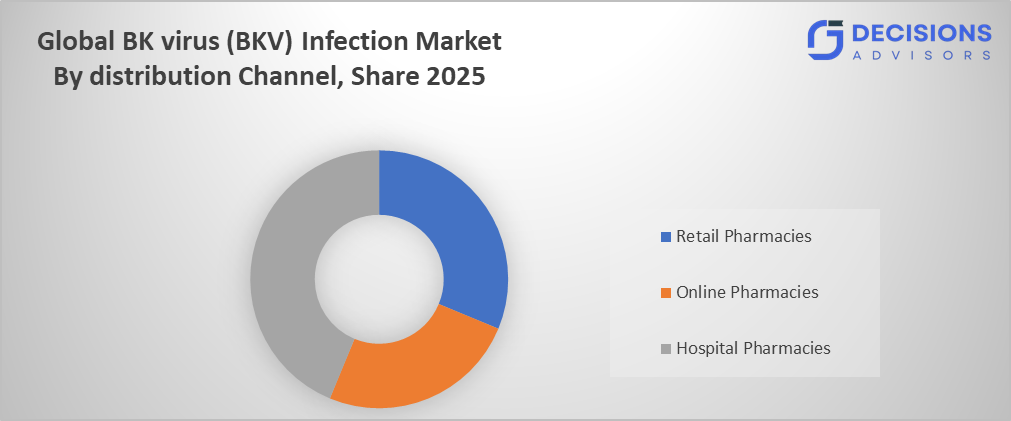
- By distribution Channel, hospital pharmacies segment is the dominating accounting for over 48% of the global market share in 2025.
- The compound annual growth rate of the BK virus (BKV) Infection is 42.46%.
- The market is likely to achieve a valuation of USD 1693.6 million by 2035.
What is role of technology in grooming the market?
Technology is crucial in transforming and promoting the global BK virus (BKV) infection market through improvements in diagnosis, treatment, and patient monitoring. Early and precise detection is made possible by advanced molecular diagnostics like PCR-based viral load testing, with research demonstrating that sensitivity in recognizing BKV reactivation among transplant patients exceeds 90%. Clinical decision-making is enhanced by real-time monitoring and risk prediction supported by AI-driven analytics and digital health tools. Next-generation sequencing (NGS) assists in comprehending viral mutations and patterns of resistance. Telemedicine platforms increase access to specialist care, particularly for patients with compromised immune systems. Furthermore, advances in immunotherapy and targeted antiviral research are hastening the creation of more effective and personalized treatment methods, thereby enhancing overall disease management results.
How is Recent Developments Helping the Market?
Recent advancements are vital to bolstering the global BK virus (BKV) infection market through enhancements in early detection, patient outcomes, and treatment approaches. With the implementation of routine PCR-based screening programs, early diagnosis has risen substantially. Research indicates that among kidney transplant recipients who undergo regular monitoring, the incidence of BKV DNAemia is approximately 20%. Improved surveillance protocols have contributed to earlier detection of infections, thereby decreasing complications like BKV-associated nephropathy, which impacts around 10% of transplant patients. Recent clinical advancements such as the optimization of immunosuppressant management and enhanced diagnostic accuracy, with PCR sensitivity nearing 87-95%, have significantly contributed to treatment success. Furthermore, research aimed at developing targeted antivirals, cell-based therapies, and precision medicine is driving innovation and enhancing graft survival rates as well as long-term disease management outcomes.
Market Drivers
The growth of the global BK virus (BKV) infection market is driven by several key market factors, mainly associated with the increasing number of transplant procedures and the rising burden of disease. BKV infection exhibits high prevalence, as more than 81% of the global population has been exposed to the virus, which remains latent and can reactivate in those with weakened immune systems. A key factor is the increasing number of kidney transplants, as 20% of those who receive transplants develop BKV DNAemia and up to 10% may advance to BKV-associated nephropathy. Moreover, 49% of untreated viremic patients are at risk of disease progression, heightening the necessity for effective monitoring and treatment. The market is experiencing increased research investments and demand for innovative treatment solutions due to advancements in diagnostic technologies, heightened awareness, and the absence of specific antiviral therapies.
Restrain
The market for global BK virus (BKV) infection is limited by the absence of approved targeted antiviral therapies and a shortage of treatment options. Despite advances in PCR, diagnosis continues to be expensive. In addition, low awareness in developing regions, inconsistent screening practices, and the risk of graft rejection when reducing immunosuppression complicate adoption. Growth is also hindered by limited clinical guidelines and a sluggish drug development process.
Competitive Analysis:
The report offers the appropriate analysis of the key organizations/companies involved within the BK virus (BKV) Infection market, along with a comparative evaluation primarily based on their product of offering, business overviews, geographic presence, enterprise strategies, segment market share, and SWOT analysis. The report also provides an elaborative analysis focusing on the current news and developments of the companies, which includes product development, innovations, joint ventures, partnerships, mergers & acquisitions, strategic alliances, and others. This allows for the evaluation of the overall competition within the market.
Top Companies in Global BK virus (BKV) Infection Market
- Abbott Laboratories
- AlloVir
- Vera Therapeutics
- SL VAXiGEN
- Memo Therapeutics AG
- SymBio Pharmaceuticals
- AiCuris
- Hybridize Therapeutics
- Amplyx Pharmaceuticals
- Chimerix
- Astellas Pharma
- Thermo Fisher Scientific
- QIAGEN
- bioMérieux
Government Initiatives
|
Country |
Key Government Initiatives |
|
UK |
In 2025, Dr. Simon Baker at the University of York received an £83,000 PhD studentship funded by Kidney Research UK to identify new therapeutic targets for BK virus, supporting early-stage innovation and long-term growth in the global BKV infection treatment market. |
|
US |
The U.S. government supports BK virus research through ClinicalTrials.gov, a public registry enabling academic and industry-led clinical trials, including studies like NCT02758288 investigating antiviral combinations, thereby advancing treatment development and supporting growth in the global BKV infection treatment market. |
|
Japan |
In Japan, government healthcare systems emphasize post-transplant surveillance and patient management for BK virus due to the lack of approved targeted therapies, focusing on early detection, viral monitoring, and graft protection while highlighting unmet needs in the global BKV infection treatment market. |
Market Segmentation
The BK virus (BKV) Infection market share is classified into treatment, distribution channel, and application.
- The symptomatic treatment segment dominated the market in 2025, and is projected to grow at a substantial CAGR during the forecast period.
Based on the treatment the BK virus (BKV) infection market is divided into RNA interference-based therapy, givosiran, symptomatic treatment. Among these, the symptomatic treatment segment dominated the market in 2025, and is projected to grow at a substantial CAGR during the forecast period. The main strategy for treating BKV-associated nephropathy (BKVAN) and viremia is to lower the dosage of immunosuppressive drugs (such as tacrolimus and mycophenolate mofetil), which is used most often and has the greatest prevalence. The clinician enables the patient's immune system (T-cells) to fight the viral infection by reducing immunosuppression, which often successfully clears viremia.
- The hospital pharmacies segment accounted for the largest share in 2025, and is anticipated to grow at a significant CAGR of approximately 48% during the forecast period.
Based on the distribution channel, the BK virus (BKV) infection market is divided into hospital pharmacies, online pharmacies, retail pharmacies. Among these, the hospital pharmacies segment accounted for the largest share in 2025, and is anticipated to grow at a significant CAGR of approximately 48 % during the forecast period. BKV infections mainly impact patients with weakened immune systems, especially those receiving kidney or bone marrow transplants. Patients like these obtain their care, screenings, and treatment in hospital environments. In cases of severe BKV, including nephropathy or hemorrhagic cystitis, patients require hospitalization, monitoring, and intravenous antiviral therapies (such as cidofovir or immunoglobulin). Pharmacies within hospitals are prepared to manage these specialized therapies.
- The organ transplants segment dominated the market in 2025, and is projected to grow at a substantial CAGR during the forecast period.
Based on the application, the BK virus (BKV) infection market is divided into organ transplants, immunocompromised patients. Among these, the organ transplants segment dominated the market in 2025, and is projected to grow at a substantial CAGR during the forecast period. Due to the strong immunosuppression involved, BK virus reactivation occurs in 10-25% of kidney transplant recipients, with some research indicating that viruria is present in as many as 50% of cases. Transplant centers implement rigorous routine monitoring (screening) for all kidney transplant recipients, as BKVN is a primary contributor to allograft dysfunction
Strategies to Implement for Growth of the Market in Non-Leading Regions
Accelerating growth of the global BK virus (BKV) infection market in non-leading regions demands a strategically layered approach centered on accessibility, capability building, and innovation diffusion. Strengthening laboratory ecosystems with cost-efficient molecular diagnostics is critical, particularly as BKV reactivation affects nearly 11–21% of transplant recipients. Institutionalizing standardized screening frameworks and clinician training can significantly elevate early detection rates and clinical outcomes. Public–private partnerships should be leveraged to expand reimbursement coverage and subsidize post-transplant surveillance. Furthermore, integrating digital health infrastructure, including remote monitoring and data-driven risk stratification, can bridge specialist gaps in underserved areas. Encouraging region-specific clinical research and localized manufacturing of diagnostics and therapeutics will enhance affordability, resilience, and long-term market sustainability.
Regional Segment Analysis of the BK virus (BKV) Infection Market
- North America (U.S., Canada, Mexico)
- Europe (Germany, France, U.K., Italy, Spain, Rest of Europe)
- Asia-Pacific (China, Japan, India, Rest of APAC
- South America (Brazil and the Rest of South America)
- The Middle East and Africa (UAE, South Africa, Rest of MEA)
North America is anticipated to hold the largest share of the BK virus (BKV) infection market over the predicted timeframe. The region is propelled because of its advanced healthcare infrastructure, North America allows for the frequent and extensive monitoring of BK viral loads via cutting-edge quantitative PCR techniques that are deemed the gold standard. The growing incidence of kidney diseases like diabetes and hypertension has led to a rise in renal transplants, with more than 21,000 performed each year in the U.S. alone. BKV is a major opportunistic infection impacting around 15% of kidney transplant recipients within the first year, resulting in a considerable market for its management.
Asia Pacific is expected to grow at a rapid CAGR in the BK virus (BKV) infection market during the forecast period. The Asia Pacific region is experiencing a notable rise in kidney and bone marrow transplant operations. In 11% to 21% of renal transplant recipients, BK virus reactivation takes place, resulting in BK virus-associated nephropathy (BKVAN) in 1% to 12% of these instances. The increase in transplants results in a larger patient population vulnerable to this infection, which frequently remains inactive until immunosuppressive treatment is administered to avert organ rejection. Hospitals throughout Asia are rapidly adopting advanced, quantitative PCR-based screening (which detects 10,000+ copies/ml for presumptive diagnosis), enabling earlier identification than traditional, less sensitive methods.
Middle East is the 3rd largest region to grow in the BK virus (BKV) infection market during the region. In the Middle East, studies have demonstrated that BKV-associated nephropathy (BKVAN) and viremia pose significant challenges for renal transplant recipients, with prevalence rates estimated at around 35.7%. In certain studies, as many as 2.9% of individuals who received kidney transplants developed BK nephropathy. Increasing demand for organ transplants, especially kidney transplants, due to chronic renal failure, creates a larger pool of patients at risk for BKV reactivation.
Future Market Trends in BK virus (BKV) Infection Market: -
- Surge in Therapeutic Pipeline:
The market is undergoing a shift from symptom management through immunosuppressant dose reduction to the use of targeted antivirals and cutting-edge treatments such as adoptive T-cell therapy.
- High-Growth Potential in Transplant Care:
As the number of cases among immunocompromised patients (especially kidney transplant recipients) increases, the market is shifting toward earlier and more sensitive diagnostic tools to avert graft failure.
- Personalized Medicine and Biomarkers:
A notable trend is the use of biomarkers to track viral load and patient risk profiles, enabling customized management strategies.
- Promising Therapeutic Candidates:
Firms are putting money into research and development for the creation of new antivirals and examining immunotherapy options. Key research priorities include tackling BK virus-related hemorrhagic cystitis among stem cell transplant patients.
Recent Development
- In October 2024, AiCuris initiated a Phase 1 clinical trial for AIC468, an antisense oligonucleotide targeting BK virus infections, particularly in kidney transplant recipients, highlighting innovation and growing pipeline activity in the global BKV infection treatment market.
- In June 2023, Memo Therapeutics’ Potravitug, a human-derived neutralizing antibody targeting BK virus infections, received U.S. FDA Fast Track designation and is currently in Phase II trials, with topline data expected by mid-2025, supporting growth in the global BKV treatment market.
Market Segment
This study forecasts revenue at global, regional, and country levels from 2020 to 2035. Decision Advisor has segmented the BK virus (BKV) Infection market based on the below-mentioned segments:
Global BK virus (BKV) Infection Market, By Treatment
- RNA Interference-based Therapy
- Givosiran
- Symptomatic Treatment
Global BK virus (BKV) Infection Market, By Distribution Channel
- Hospital Pharmacies
- Online Pharmacies
- Retail Pharmacies
Global BK virus (BKV) Infection Market, By Application
- Organ Transplants
- Immunocompromised Patients
Global BK virus (BKV) Infection Market, By Regional Analysis
- North America
- US
- Canada
- Mexico
- Europe
- Germany
- UK
- France
- Italy
- Spain
- Russia
- Rest of Europe
- Asia Pacific
- China
- Japan
- India
- South Korea
- Australia
- Rest of Asia Pacific
- South America
- Brazil
- Argentina
- Rest of South America
- Middle East & Africa
- UAE
- Saudi Arabia
- Qatar
- South Africa
- Rest of the Middle East & Africa
Frequently Asked Questions (FAQ)
1. How does the absence of FDA-approved therapies reshape competitive dynamics in the BKV infection market?
The lack of approved targeted therapies creates a high-entry innovation landscape, where companies differentiate through pipeline strength, novel mechanisms (e.g., RNA interference, antisense oligonucleotides), and immunotherapy approaches. This “white space” fosters strategic collaborations, accelerates clinical trials, and positions early innovators for significant first-mover advantage.
2. What role does transplant epidemiology play in defining long-term demand patterns for BKV management solutions?
Transplant epidemiology is central to demand generation, as BKV reactivation correlates strongly with immunosuppression intensity. With 10–25% of kidney transplant recipients experiencing reactivation, increasing transplant volumes directly expand the addressable patient pool, ensuring sustained long-term demand for diagnostics and therapeutics.
3. How are emerging therapeutic modalities expected to disrupt conventional BKV treatment paradigms?
Emerging modalities such as adoptive T-cell therapies and antisense-based treatments are shifting the paradigm from indirect viral control (via immunosuppression reduction) to targeted viral suppression. These approaches aim to improve efficacy while minimizing graft rejection risks, potentially redefining standard-of-care protocols over the next decade.
4. In what ways do diagnostic advancements influence clinical outcomes and market penetration?
High-sensitivity PCR and next-generation sequencing technologies enable early detection with up to 90%+ sensitivity, allowing preemptive intervention before nephropathy onset. This not only improves graft survival rates but also drives higher adoption of routine screening, expanding diagnostic market penetration globally.
5. How do regional disparities in healthcare infrastructure impact market scalability?
Regions with advanced transplant ecosystems and routine viral monitoring (e.g., North America) exhibit higher adoption rates. In contrast, emerging markets face barriers such as limited diagnostic access and low awareness, though rapid infrastructure upgrades and digital health integration are unlocking new growth opportunities.
Check Licence
Choose the plan that fits you best: Single User, Multi-User, or Enterprise solutions tailored for your needs.
We Have You Covered
- 24/7 Analyst Support
- Clients Across the Globe
- Tailored Insights
- Technology Tracking
- Competitive Intelligence
- Custom Research
- Syndicated Market Studies
- Market Overview
- Market Segmentation
- Growth Drivers
- Market Opportunities
- Regulatory Insights
- Innovation & Sustainability
Report Details
| Scope | Global |
| Pages | 220 |
| Delivery | PDF & Excel via Email |
| Language | English |
| Release | Mar 2026 |
| Access | Download from this page |