
Global Brain Cancer Market
 |
Pages:
230
|
Pages:
230
Global Brain Cancer Market Size, Share, By Product Type (Therapeutic Treatments, Diagnostic Imaging, Surgical Devices, Supportive Care Products), By Surgical Treatment (Tumor Resection, Minimally Invasive Surgery, Stereotactic Surgery), By Diagnosis (Imaging Techniques, Biopsy, Molecular Testing, Genetic Testing), By Supportive Care (Rehabilitation, Palliative Care, Counseling, Follow-Up Care), By End User (Hospitals, Specialty Clinics, Research Institutes) and By Region (North America, Europe, Asia-Pacific, Latin America, Middle East, and Africa), Analysis and Forecast 2025 ? 2035.
REPORT COVERAGE
Global
Market Snapshot
- Market Size (2025): USD 3.65 Billion
- Projected Market Size (2035): USD 7.35 Billion
- Compound Annual Growth Rate (CAGR): 7.25%
- Largest Regional Market: North America
- Fastest Growing Region: Asia-Pacific
- 3rd Largest Region: Europe
- Base Year: 2025
- Historical Period: 2021–2024
- Forecast Period: 2025–2035
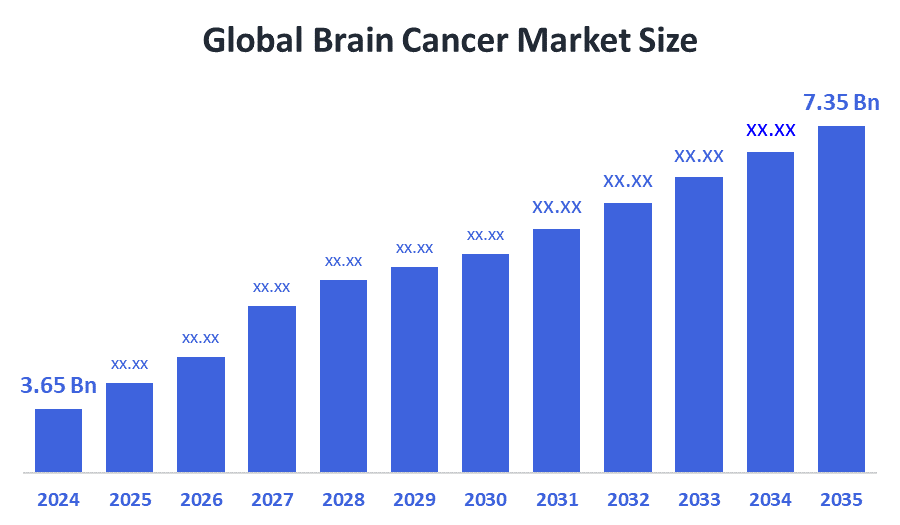
According to Decision Advisors, the Global Brain Cancer Market Size is expected to grow from USD 3.65 billion in 2025 to USD 7.35 billion by 2035, at a CAGR of 7.25% during the forecast period 2025-2035. The global brain cancer market is projected to grow significantly over the next decade due to rising disease incidence, aging global population, precision medicine & biomarkers, advancements in drug delivery, accelerated regulatory pathways, and AI-enhanced diagnostics.
Market Overview/ Introduction
The brain cancer market refers to all activities related to diagnosing brain tumors, which are abnormal brain growths that cause neurological problems. The market encompasses every treatment for brain cancer, which includes surgical procedures, chemotherapy, immunotherapy, and targeted treatment methods, alongside diagnostic imaging and all clinical support products and services for brain cancer patients. The market advances through two main factors, which include the rising occurrence of brain tumors and the enhanced detection capabilities of advanced imaging and molecular profiling techniques, and the growing public understanding of neurological cancers, which drives demand for diagnostic and treatment solutions. The global market expansion receives support from the rising elderly population and the development of better healthcare facilities. Government and nonprofit initiatives, such as advocacy and funding programs led by organizations like the National Brain Tumor Society in the United States, support research, increase federal funding for brain cancer studies, and promote access to care, which further bolsters market development and innovation in treatment approaches.
- The Biopharma SHAKTI scheme is a major government initiative announced in India’s Union Budget 2026?27 with a ?10,000 crore outlay to strengthen the domestic ecosystem for biologics and biosimilars, including expanding clinical trials and biologic drug manufacturing. The initiative focuses on diseases like cancer (broadly), diabetes, and autoimmune disorders, where biologic therapies play a critical role in treatment.
- The National Cancer Institute (NCI) served as the primary source of federal funding for brain tumor research and clinical trials. Over the past years, it supported numerous preclinical studies and clinical investigations, enabling the development of novel therapies, advancing neuro-oncology knowledge, and fostering innovation in brain cancer treatment and patient care.
Notable Insights: -
- North America holds the largest regional market share in the global brain cancer market.
- Asia Pacific is the fastest-growing region in the global brain cancer market.
- By product type, the therapeutic treatments segment held a dominant position in terms of market share in 2025.
- By surgical treatment, tumor resection was the most lucrative segment, dominating the global market share in 2025.
- The compound annual growth rate of the global brain cancer market is 7.25%.
- The market is likely to achieve a valuation of USD 7.35 billion by 2035.
What is role of technology in grooming the market?
Technology plays a crucial role in advancing the brain cancer market by enabling earlier diagnosis, more precise treatments, and improved patient outcomes. Innovations in imaging technologies, such as MRI and PET scans, allow for better tumor detection and monitoring. Advanced surgical tools, including robotic-assisted and stereotactic systems, increase surgical accuracy while minimizing damage to healthy tissue. Additionally, developments in targeted therapies, immunotherapies, and personalized medicine harness genetic and molecular data to tailor treatments. Digital health platforms, telemedicine, and AI-driven analytics enhance patient management and clinical trial efficiency. Together, these technological advancements drive market growth by expanding treatment options and improving the quality of care.
Market Drivers
The brain cancer market is driven by various robust factors, which is the rising incidence of primary and metastatic brain cancers, especially high-grade gliomas like glioblastoma. One of the main risk factors for brain cancer is advanced age, and the number of diagnoses is increasing as the world's population ages. Biomarker-matched small molecules are the fastest-growing class of therapeutics due to the acceleration of the shift from generic treatments to therapies targeted to specific genetic profiles. New therapeutic options are being made possible by advancements in the utilization of nanotechnology, focused ultrasound (FUS), and convection-enhanced delivery (CED) to overcome the blood-brain barrier (BBB). The time it takes for new treatments to hit the market has decreased thanks to increased usage of FDA breakthrough therapy and fast track designations, as well as orphan drug incentives. The time it takes for new treatments to hit the market has decreased thanks to increased usage of FDA breakthrough therapy and fast track designations, as well as orphan drug incentives.
Restrain
The brain cancer market faces restraints, including high treatment costs, limited access to advanced therapies in low-income regions, and complex regulatory approvals. Additionally, the blood-brain barrier restricts drug delivery, while the rarity and heterogeneity of brain tumors complicate clinical trials, slowing the development and widespread adoption of new treatments.
Competitive Analysis:
The report offers the appropriate analysis of the key organizations/companies involved within the Brain Cancer Market, along with a comparative evaluation primarily based on their product of offering, business overviews, geographic presence, enterprise strategies, segment market share, and SWOT analysis. The report also provides an elaborative analysis focusing on the current news and developments of the companies, which includes product development, innovations, joint ventures, partnerships, mergers & acquisitions, strategic alliances, and others. This allows for the evaluation of the overall competition within the market.
Top Companies in Global Brain Cancer Market
- F. Hoffmann-La Roche Ltd
- Merck & Co. Inc.
- Pfizer Inc.
- Amgen Inc.
- Teva Pharmaceutical Industries Ltd.
- Sun Pharmaceutical Industries Ltd.
- Novartis AG
- Bristol Myers Squibb Company
- AstraZeneca PLC
- Johnson & Johnson
- Eli Lilly and Company
- Teva Pharmaceutical Industries Ltd.
Government Initiatives
|
Country |
Key Government Initiatives |
|
|
UK |
The UK government, through the National Institute for Health and Care Research (NIHR), launched a £13.7 million investment into brain tumour research to establish the NIHR Brain Tumour Research Consortium, uniting hospitals, universities, cancer centres, and charities to accelerate clinical trials and therapy development for brain tumours. |
|
|
US |
The National Cancer Institute (NCI) — part of the U.S. federal government — is the leading source of funding for brain tumour research and clinical studies, supporting programs that improve diagnosis, treatment, clinical trials, and survivorship for brain and spinal cord cancers. |
|
|
India |
|
Market Segmentation
The brain cancer market share is classified into product type and surgical treatment
- The therapeutic treatments segment dominated the market in 2025 and is projected to grow at a substantial CAGR during the forecast period.
Based on the product type, the therapeutic treatments segment dominated the global brain cancer market, due to chemotherapy, radiotherapy, targeted therapy, immunotherapy, and precision medicine, all of which are crucial for effectively managing brain tumors. The high prevalence of aggressive brain cancers, particularly glioblastoma, drives sustained demand for these therapies, as patients often require multiple cycles and long-term management. While diagnostic imaging and surgical devices play essential roles in detecting and removing tumors, they are generally considered supporting segments. In contrast, therapeutic interventions generate the largest revenue share because of the recurring nature of treatment, high costs of advanced drugs and biologics, and growing adoption of novel therapies such as targeted and immune-based treatments. This trend positions therapeutic treatments as the dominant segment in the global brain cancer market.
- The tumor resection segment accounted for the largest share in 2025 and is anticipated to grow at a significant CAGR during the forecast period.
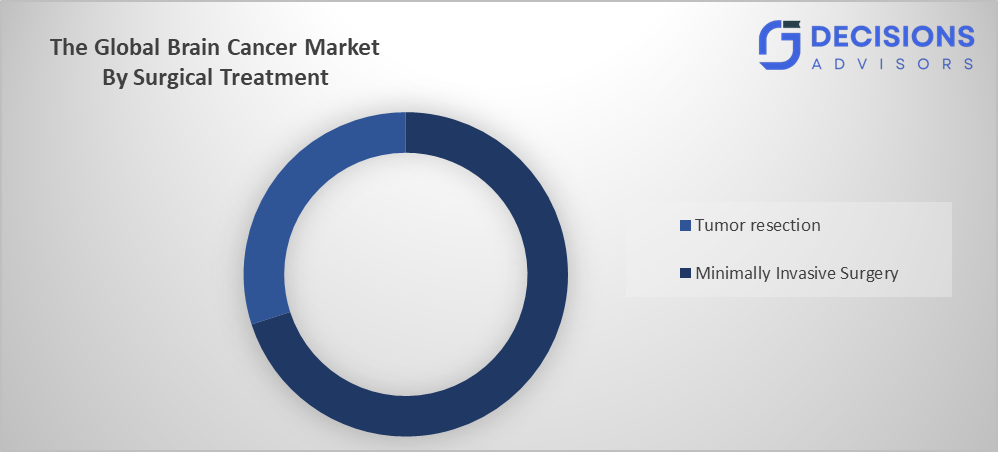
Based on the surgical treatment, the market for brain cancer market is still dominated by tumor resection because tumor resection is the most common and established surgical procedure for brain tumors, involving the removal of as much tumor mass as safely possible. It serves as the first-line intervention for most malignant and benign tumors, particularly gliomas and meningiomas, before adjuvant therapies like chemotherapy or radiotherapy. Stereotactic surgery, a precise, image-guided technique for deep-seated or critical tumors, has the second-largest share due to its accuracy, minimally invasive approach, and reduced recovery time. Minimally invasive surgery holds a smaller share, as it is typically used for small or hard-to-reach lesions. Advanced imaging and intraoperative guidance enhance adoption and outcomes, driving the surgical segment’s market growth.
Strategies to Implement for Growth of the Market in Non-Leading Regions
To boost growth in non-leading regions of the brain cancer market, improving healthcare infrastructure is essential, including expanding access to advanced diagnostic tools and treatment facilities. Governments and private sectors should collaborate to subsidize high treatment costs and enhance reimbursement policies, making therapies more affordable. Training healthcare professionals in neuro-oncology and raising public awareness about early detection can increase timely diagnosis and care. Additionally, fostering partnerships with global research organizations can facilitate clinical trials and technology transfer. Emphasizing telemedicine and mobile health solutions will improve patient reach in remote areas, collectively driving market expansion in underserved regions.
Regional Segment Analysis of the Brain Cancer Market
- North America (U.S., Canada, Mexico)
- Europe (Germany, France, U.K., Italy, Spain, Rest of Europe)
- Asia-Pacific (China, Japan, India, Rest of APAC)
- South America (Brazil and the Rest of South America)
- The Middle East and Africa (UAE, South Africa, Rest of MEA)
North America is anticipated to hold the largest share of the brain cancer market over the predicted timeframe.
North America is expected to dominate the brain cancer market due to its highly advanced healthcare ecosystem, strong research infrastructure, and high adoption of innovative therapies. The region accounts for a significant share of the global market, supported by widespread access to advanced diagnostic tools such as MRI and PET scans, along with strong reimbursement systems. Additionally, high healthcare expenditure and early adoption of novel treatments like targeted therapy and immunotherapy further drive market growth. The presence of major pharmaceutical and biotechnology companies, along with extensive clinical trials and government funding, also accelerates innovation and treatment availability.
Asia Pacific is expected to grow at a rapid CAGR in the brain cancer market during the forecast period. Asia Pacific is expected to grow at a rapid CAGR in the brain cancer market due to a combination of demographic, economic, and healthcare advancements. The region has a large and aging population, particularly in countries like China, India, and Japan, leading to a rising incidence of brain tumors. Improving healthcare infrastructure, increasing investments in oncology care, and expanding access to advanced diagnostic technologies are enhancing early detection and treatment rates. Additionally, government initiatives and growing health insurance coverage are making therapies more accessible. The presence of local pharmaceutical manufacturers and increasing participation in global clinical trials further support market expansion, while raising awareness about cancer care continues to drive demand across the region.
Europe is the 3rd largest region to grow in the brain cancer market during the region.
Europe is the third-largest region in the brain cancer market due to its well-established healthcare systems, strong research capabilities, and supportive regulatory environment. Countries such as Germany, France, and United Kingdom contribute significantly through advanced oncology infrastructure and widespread access to diagnostic and treatment services. The region benefits from government-backed healthcare coverage and funding from organizations like the European Medicines Agency, which facilitates faster approval of innovative therapies. Additionally, increasing adoption of precision medicine, rising clinical trial activity, and collaborations between academic institutions and pharmaceutical companies drive steady market growth.
Future Market Trends in Global Brain Cancer Market: -
- Growth in Targeted and Precision Therapies
The brain cancer market is moving toward targeted and precision medicine, including therapies that act on specific genetic mutations (e.g., IDH, BRAF). These treatments offer improved effectiveness with fewer side effects and are increasingly supported by clinical trial success and regulatory approvals. Precision therapies enhance patient outcomes and expand treatment options, especially for tumors resistant to conventional chemotherapy and radiation.
- Expansion of Immunotherapy and Combination Treatments
Immunotherapy is evolving rapidly in brain cancer care, with approaches such as checkpoint inhibitors, oncolytic viruses, and engineered immune cells entering clinical trials. Combination strategies that pair immunotherapy with chemotherapy or targeted agents are also gaining momentum. These innovations aim to overcome tumors’ immune resistance and improve long?term survival, driving market growth and investment in immune?based solutions.
- Advancements in Drug Delivery Technologies
Innovative drug delivery methods such as blood?brain barrier bypass techniques, nasal delivery systems, focused ultrasound, and nanoparticle carriers are improving therapeutic access to brain tumors. These technologies enhance drug penetration, reduce systemic toxicity, and enable more effective treatment regimens. Improved delivery systems support the adoption of emerging therapies and open new possibilities for previously hard?to?treat gliomas, bolstering market expansion.
Recent Development
In March 2026, researchers from Mass General Brigham and Dana-Farber Cancer Institute reported that a single dose of an oncolytic virus successfully drew immune cells deep into glioblastoma tumors. This breakthrough improved immune response within the tumor environment and significantly enhanced patient survival outcomes, marking progress in next-generation immunotherapy for brain cancer.
In March 2026, Patients with glioblastoma had not benefited from immunotherapies effective in cancers like melanoma because the tumor remained “cold,” with limited immune cell infiltration. However, findings from a clinical trial and mechanistic study showed it became feasible to bring cancer-fighting immune cells into glioblastoma, indicating progress in immunotherapy treatment approaches.
In August 2025, the FDA approved Modeyso (dordaviprone) as the first systemic therapy for recurrent H3K27M-mutant diffuse midline glioma, a rare and aggressive brain tumor. Clinical data from 50 patients showed a 22% overall response rate and a median response duration of 10.3 months, marking a major breakthrough in neuro-oncology.
How is Recent Developments Helping the Market?
Recent advancements in brain cancer research and therapy are significantly strengthening the market by expanding treatment options, improving clinical outcomes, and increasing patient access. FDA approvals of novel drugs like Modeyso (dordaviprone) for diffuse midline glioma and precision therapies for pediatric gliomas have introduced the first systemic treatments for previously untreatable tumors. Innovations in immunotherapy, including oncolytic viruses that enhance immune cell infiltration into glioblastomas, and non-invasive drug delivery methods like nasal drops, have improved treatment efficacy and patient convenience. Additionally, ongoing clinical trials and combination therapies accelerate pipeline growth, fostering innovation and boosting demand for brain cancer therapies.
Market Segment
This study forecasts revenue at global, regional, and country levels from 2020 to 2035. Decision Advisor has segmented the brain cancer market based on the below-mentioned segments:
Global Brain Cancer Market, By Product Type
- Therapeutic Treatments
- Diagnostic Imaging
- Surgical Devices
- Supportive Care Products
Global Brain Cancer Market, By Surgical Treatment
- Tumor Resection
- Minimally Invasive Surgery
- Stereotactic Surgery
Global Brain Cancer Market, By Diagnosis
- Imaging Techniques
- Biopsy
- Molecular Testing
- Genetic Testing
Global Brain Cancer Market, By Supportive Care
- Rehabilitation
- Palliative Care
- Counseling
- Follow-Up Care
Global Brain Cancer Market, By End-User
- Hospitals
- Specialty Clinics
- Research Institutes
Global Brain Cancer Market, By Regional Analysis
- North America
- US
- Canada
- Mexico
- Europe
- Germany
- UK
- France
- Italy
- Spain
- Russia
- Rest of Europe
- Asia Pacific
- China
- Japan
- India
- South Korea
- Australia
- Rest of Asia Pacific
- South America
- Brazil
- Argentina
- Rest of South America
- Middle East & Africa
- UAE
- Saudi Arabia
- Qatar
- South Africa
- Rest of the Middle East & Africa
Frequently Asked Questions (FAQ)
Q. How is the blood–brain barrier (BBB) shaping competitive dynamics in the brain cancer market?
A. The blood–brain barrier (BBB) is one of the most critical challenges influencing competition in the brain cancer market. Companies that successfully develop technologies to bypass or penetrate the BBB gain a significant competitive advantage. Novel approaches such as nanoparticle carriers, focused ultrasound, and intrathecal drug delivery are enabling better drug concentration at tumor sites. This has shifted competition from traditional chemotherapy providers toward innovators specializing in advanced drug delivery platforms, making BBB-focused R&D a key differentiator in pipeline success and commercialization.
Q. What role do orphan drug designations play in the brain cancer market?
A. Orphan drug designation plays a crucial role in accelerating innovation in the brain cancer market due to the relatively low incidence of specific tumor types. Regulatory agencies like the U.S. Food and Drug Administration and the European Medicines Agency provide incentives such as market exclusivity, tax credits, and reduced approval timelines. These benefits attract both large pharmaceutical companies and smaller biotech firms to invest in rare brain tumor therapies, ultimately expanding treatment options and speeding up drug approvals.
Q. How are strategic collaborations influencing innovation in brain cancer treatment?
A. Strategic collaborations between pharmaceutical companies, research institutions, and biotech startups are significantly driving innovation. Partnerships enable shared expertise in genomics, immunotherapy, and clinical trial execution. For example, collaborations with institutions like the Dana-Farber Cancer Institute and the Mass General Brigham help accelerate translational research from lab to clinic. These alliances reduce development risks, improve trial success rates, and facilitate faster access to breakthrough therapies.
Q. How is patient stratification impacting treatment outcomes and market growth?
A. Patient stratification, grouping patients based on genetic, molecular, and clinical characteristics, is transforming treatment approaches in brain cancer. By identifying biomarkers such as IDH mutations or MGMT methylation status, clinicians can tailor therapies to individual patients. This improves treatment efficacy, reduces unnecessary side effects, and increases the success rates of clinical trials. For the market, it leads to higher adoption of precision therapies and supports premium pricing models, thereby contributing to revenue growth and long-term market sustainability.
Check Licence
Choose the plan that fits you best: Single User, Multi-User, or Enterprise solutions tailored for your needs.
We Have You Covered
- 24/7 Analyst Support
- Clients Across the Globe
- Tailored Insights
- Technology Tracking
- Competitive Intelligence
- Custom Research
- Syndicated Market Studies
- Market Overview
- Market Segmentation
- Growth Drivers
- Market Opportunities
- Regulatory Insights
- Innovation & Sustainability
Report Details
| Scope | Global |
| Pages | 230 |
| Delivery | PDF & Excel via Email |
| Language | English |
| Release | Mar 2026 |
| Access | Download from this page |