
Brazil Automotive Adaptive Lighting System Market
 |
Author:
Atul K
|
Pages:
207
|
Author:
Atul K
|
Pages:
207
Brazil Automotive Adaptive Lighting System Market Size, Share, By Vehicle Type (Mid-Segment Passenger Vehicles, Sports Cars, Premium Vehicles), By Application Type (Front, Rear), and By Sales Channel Type (OEM, and Aftermarket), Brazil Automotive Adaptive Lighting System Market Insights, Industry Trend, Forecasts to 2035
CAGR
5.9%
REVENUE 2025
USD Billion/Million 35.15
FORECAST 2035
USD Billion/Million 66.1
REPORT COVERAGE
Country
Brazil Automotive Adaptive Lighting System Market Insights Forecasts to 2035
- Brazil Automotive Adaptive Lighting System Market Size 2024: USD 35.15 Mn
- Brazil Automotive Adaptive Lighting System Market Size 2035: USD 66.10 Mn
- Brazil Automotive Adaptive Lighting System Market CAGR 2024: 5.9%
- Brazil Automotive Adaptive Lighting System Market Segments: Vehicle Type, Application Type, Sales Channel.
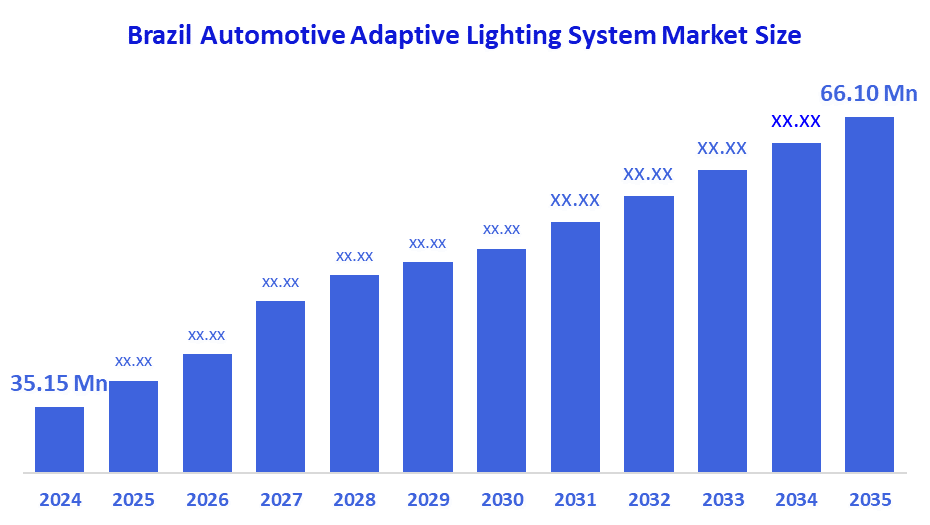
An automotive adaptive lighting system is an advanced vehicle lighting technology that automatically adjusts the direction, intensity, and range of headlights based on driving conditions, speed, steering angle, and surrounding traffic. It enhances visibility, improves road safety, reduces glare for other drivers, and adapts to curves, intersections, and varying weather, ensuring optimal illumination at all times. Furthermore, The Brazil automotive adaptive lighting system market is growing due to increasing vehicle safety awareness, rising demand for luxury and premium cars, stricter traffic regulations, and technological advancements in smart lighting systems, boosting adoption across passenger and commercial vehicles.
The key emerging trend in the Brazil automotive adaptive lighting system market is the integration of advanced sensors and AI technologies including cameras, LiDAR, and artificial intelligence—to enable real-time, data-driven lighting adjustments that respond more accurately and efficiently to road conditions, traffic, and pedestrians. Adaptive systems are evolving toward dynamic beam shaping, improved connectivity with ADAS, and enhanced communication with other vehicle systems, particularly in connected and autonomous vehicles. Additionally, laser and OLED lighting technologies are gaining traction for higher efficiency, precision, and improved safety features.
A significant new technology in the Brazil automotive adaptive lighting system market is the integration of AI, IoT, and advanced sensors, including cameras and LiDAR, enabling real-time, data-driven lighting adjustments based on road conditions, traffic, and pedestrian movement. Dynamic beam shaping and adaptive matrix LED systems allow precise light distribution, reducing glare for oncoming drivers. Additionally, laser and OLED lighting technologies are emerging, offering higher efficiency, longer lifespan, and enhanced brightness control. These innovations support connected, autonomous, and electric vehicles, improving safety, energy efficiency, and overall driving experience.
Market Dynamics of the Brazil Automotive Adaptive Lighting System Market:
The Brazil automotive adaptive lighting system market is driven by the growing automotive sector and rising demand for advanced safety features. Increasing urbanization and a larger middle-class population are boosting the adoption of luxury and premium vehicles with adaptive lighting. The shift toward electric and hybrid vehicles, rapid technological advancements in LED, laser, and AI-integrated lighting, and stringent government safety regulations further propel growth. Additionally, the rise of autonomous and connected vehicles enhances market expansion by improving nighttime visibility and reducing accidents.
The Brazil automotive adaptive lighting system market faces restraints due to high installation and maintenance costs, which limit adoption in mid-range and budget vehicles. Complex technology integration with existing vehicle systems and limited aftermarket availability pose additional challenges. Moreover, the need for skilled technicians and concerns over repair and replacement expenses can slow market growth despite increasing demand for advanced lighting solutions.
The Brazil automotive adaptive lighting system market presents significant opportunities driven by the growing demand for advanced safety features and luxury vehicle adoption. The rise of electric, hybrid, and autonomous vehicles offers potential for integrating intelligent lighting systems with AI, IoT, and sensor technologies. Increasing government safety regulations encourage manufacturers to implement advanced lighting solutions. Additionally, technological advancementsin LED, laser, and OLED lighting create opportunities for energy-efficient, high-performance systems. Expanding aftermarket servicesand foreign investments in local automotive manufacturing further strengthen market prospects.
Market Segmentation
The Brazil Automotive Adaptive Lighting System Market share is classified into vehicle type, application type, and sales channel.
By Vehicle Type:
The Brazil Automotive Adaptive Lighting System market is divided by vehicle type into mid-segment passenger vehicles, sports cars, and premium vehicles. Among these, the premium vehicles segment dominated the share in 2024 and is anticipated to grow at a remarkable CAGR during the forecast period. The dominance of premium vehicles in the Brazil Automotive Adaptive Lighting System market is driven by their focus on advanced safety, comfort, and technological features. Adaptive lighting systems are high-cost and sophisticated, making them more suitable for luxury and high-end vehicles. Consumers of premium vehicles increasingly demand enhanced nighttime visibility, dynamic beam shaping, and integration with ADAS and connected vehicle technologies. This segment has higher purchasing power and prioritizes innovation, leading to widespread adoption of AALS compared to mid-segment or sports cars.
By Application Type:
The Brazil Automotive Adaptive Lighting System market is divided by application type into front and rear. Among these, the front segment dominated the share in 2024 and is anticipated to grow at a remarkable CAGR during the forecast period. The front lighting segment dominates because it plays a critical role in enhancing road safety and driving visibility, especially at night and in adverse weather conditions. Adaptive front lighting systems, such as adaptive headlights and automatic beam control, are widely adopted due to rising accident concerns and stricter vehicle safety regulations. Automakers prioritize front adaptive lighting as it directly improves driver awareness and integrates easily with ADAS technologies. In contrast, rear adaptive lighting has limited functional importance, resulting in lower adoption and market share.
By Sales Channel:
The Brazil Automotive Adaptive Lighting System market is divided by sales channel into OEM and aftermarket. Among these, the OEM segment dominated the share in 2024 and is anticipated to grow at a remarkable CAGR during the forecast period. The OEM segment dominates because adaptive lighting technologies are complex and are best integrated during vehicle manufacturing. Automakers increasingly install these systems as standard or optional safety features to meet regulations and enhance vehicle value. OEM-installed systems ensure better compatibility, reliability, and performance compared to aftermarket solutions. In contrast, the aftermarket segment is limited due to high costs, technical installation challenges, and lower consumer demand for retrofitting advanced lighting systems in existing vehicles.
Competitive Analysis:
The report offers the appropriate analysis of the key organisations/companies involved within the Brazil automotive adaptive lighting system market, along with a comparative evaluation primarily based on their product offering, business overviews, geographic presence, enterprise strategies, segment market share, and SWOT analysis. The report also provides an elaborative analysis focusing on the current news and developments of the companies, which includes product development, innovations, joint ventures, partnerships, mergers & acquisitions, strategic alliances, and others. This allows for the evaluation of the overall competition within the market.
Top Key Companies in Brazil Automotive Adaptive Lighting System Market:
- Hella GmbH & Co. KGaA
- Valeo Group
- Koito Manufacturing Co., Ltd.
- Stanley Electric Co., Ltd.
- Osram Licht AG
- Koninklijke Philips N.V.
- Hyundai Mobis
- Denso Corporation
- Magneti Marelli S.p.A.
- Others
Recent News in Brazil Automotive Adaptive Lighting System Market:
In July 2022, A new vehicle lighting plant was opened in China by Hella KGaA Hueck & Co., a provider of electronics and automotive lighting components. The facility will concentrate on creating cutting-edge front vehicle lighting solutions.
In February 2022, Hyundai Mobis said that it had secured a contract worth USD 830 million for automotive lighting systems for a number of OEMs worldwide. By using unique approaches and cutting-edge product introductions, the company hopes to become a leader in the automotive lighting industry.
Key Target Audience
- Market Players
- Investors
- End-users
- Government Authorities
- Consulting and Research Firm
- Venture capitalists
- Value-Added Resellers (VARs)
Market Segment
This study forecasts revenue at the Brazil, regional, and country levels from 2020 to 2035. Decisions Advisors has segmented the Brazil automotive adaptive lighting system market based on the below-mentioned segments:
Brazil Automotive Adaptive Lighting System Market, By Vehicle Type
- Mid-Segment Passenger Vehicles
- Sports Cars
- Premium Vehicles
Brazil Automotive Adaptive Lighting System Market, By Application Type
- Front
- Rear
Brazil Automotive Adaptive Lighting System Market, By Sales Channel Type
- OEM
- Aftermarket
FAQ
1. How do adaptive lighting systems benefit Brazilian driving conditions?
- They improve visibility on poorly lit roads, highways, and during heavy rain or fog, which are common driving challenges in many regions of Brazil.
2. Are adaptive lighting systems mandatory in Brazil?
- They are not mandatory, but growing safety norms and consumer preferences are encouraging automakers to include them, especially in mid-range and premium vehicles.
3. Which vehicle segment adopts these systems the most?
- Passenger vehicles, particularly SUVs and sedans, show higher adoption due to demand for comfort and advanced safety features.
4. What technologies are commonly used in adaptive lighting systems?
- LED, matrix LED, and laser-based lighting technologies are commonly used for better energy efficiency and performance.
5. What limits wider adoption in Brazil?
- High system cost, limited penetration in low-cost vehicles, and dependence on OEM installation restrict faster market expansion.
Check Licence
Choose the plan that fits you best: Single User, Multi-User, or Enterprise solutions tailored for your needs.
We Have You Covered
- 24/7 Analyst Support
- Clients Across the Globe
- Tailored Insights
- Technology Tracking
- Competitive Intelligence
- Custom Research
- Syndicated Market Studies
- Market Overview
- Market Segmentation
- Growth Drivers
- Market Opportunities
- Regulatory Insights
- Innovation & Sustainability
Report Details
| Scope | Country |
| Pages | 207 |
| Delivery | PDF & Excel via Email |
| Language | English |
| Release | Dec 2025 |
| Access | Download from this page |