
Brazil C4ISR Market
 |
Author:
Atul K
|
Pages:
225
|
Author:
Atul K
|
Pages:
225
Brazil C4ISR Market Size, Share, and COVID-19 Impact Analysis, By Platform (Airborne, Land, Naval, Space), By Solution (Hardware, Application Software, Services), and Brazil C4ISR Market Insights, Industry Trend, Forecasts to 2035
CAGR
2.15%
REVENUE 2025
Million 424.5
FORECAST 2035
Million 536.5
REPORT COVERAGE
Country
Brazil C4ISR Market Insights Forecasts to 2035
- The Brazil C4ISR Market Size Was Estimated at USD 424.5 Million in 2024
- The Market Size is Expected to Grow at a CAGR of Around 2.15% from 2025 to 2035
- The Brazil C4ISR Market Size is Expected to Reach USD 536.50 Million by 2035
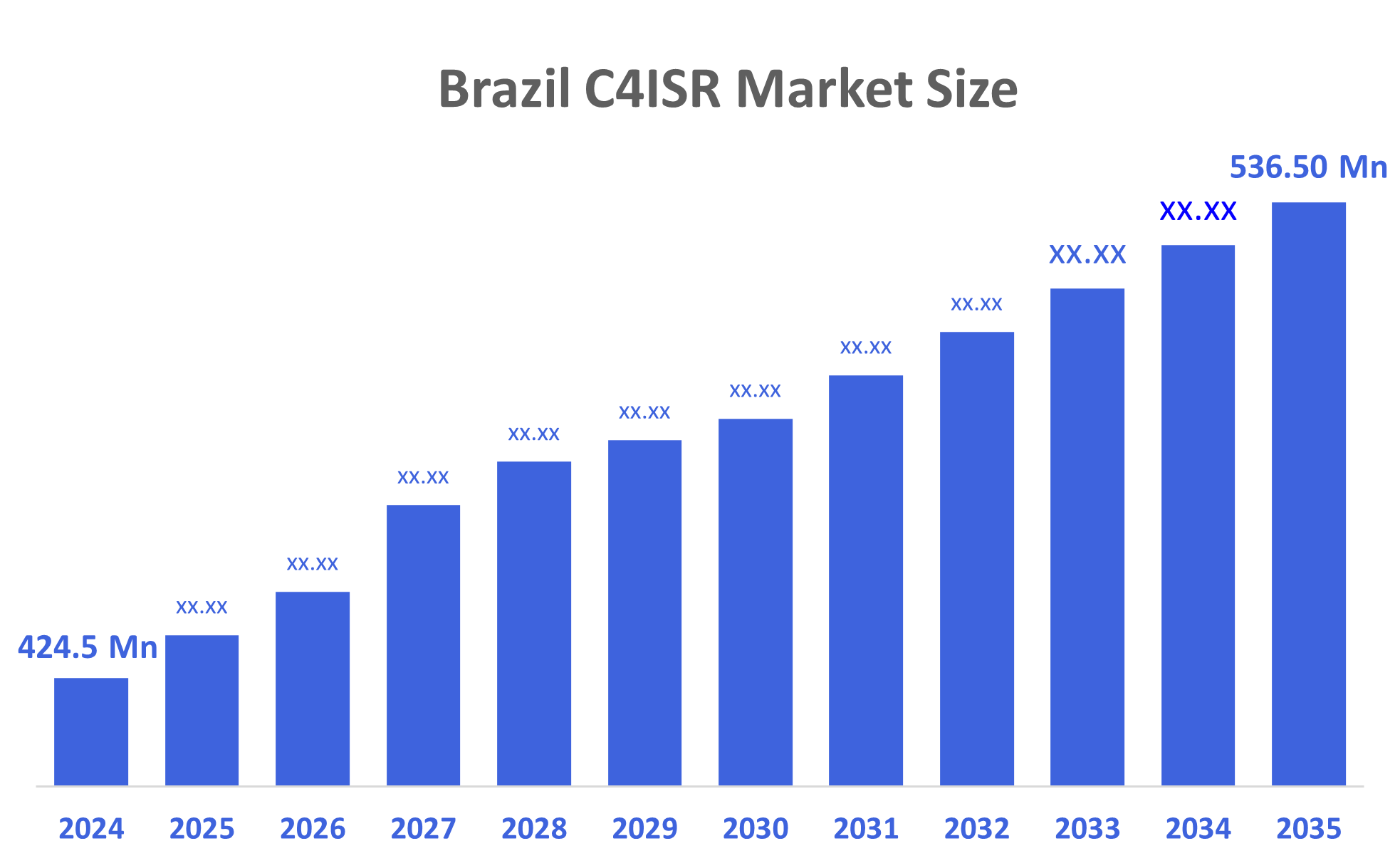
According to a research report published by Decisions Advisors, The Brazil C4ISR Market Size is Anticipated to Reach USD 536.50 Million by 2035, Growing at a CAGR of 2.15% from 2025 to 2035. The Brazil C4ISR market is driven by increasing defense modernization programs, rising security threats, and government initiatives to strengthen surveillance, communication, and intelligence capabilities. Growing investments in advanced technologies like radar, command systems, and real-time data integration further boost demand, supporting enhanced situational awareness and military operational efficiency.
Market Overview
C4ISR systems are integrated technological platforms used by defense and security organizations to enhance operational capabilities, and these systems are critical for modern military and defense operations, enabling comprehensive situational awareness and strategic decision-making. Additionally, the growing demand for asymmetric warfare and new technologies such as network-centric battle management and unmanned vehicles are expected to drive C4ISR industry growth over the forecast period. To improve military troop effectiveness and situational awareness, there is a growing emphasis on increasing spending on integrating cutting-edge technology, such as machine learning and artificial intelligence, into C4ISR solutions. This is also expected to fuel market expansion in the coming years. Furthermore, the implementation of modern technologies such as artificial intelligence, big data analytics, and integrated communication networks has been critical. These advances are part of Brazil's effort to improve military decision-making and operational efficiency.
The quest for AI-enabled decision-support systems follows the global trend toward automated and cognitive C4ISR platforms, emphasizing Brazil's desire to remain technologically competitive with leading nations and the use of UAVs for surveillance and reconnaissance is a growing trend in Brazil's C4ISR market, particularly for monitoring borders and vast remote areas like the Amazon. UAVs provide real-time data and improve operational efficiency, reducing the need for staffed patrols in challenging environments. Brazil’s military and police forces are increasingly relying on UAVs for both surveillance and intelligence gathering.
Report Coverage
This research report categorizes the market for the Brazil C4ISR market based on various segments and regions, and forecasts revenue growth and analyses trends in each submarket. The report analyses the key growth drivers, opportunities, and challenges influencing the Brazil C4ISR market. Recent market developments and competitive strategies, such as expansion, product launch, development, partnership, merger, and acquisition, have been included to draw the competitive landscape in the market. The report strategically identifies and profiles the key market players and analyses their core competencies in each sub-segment of the Brazil C4ISR market.
Driving Factors
The Brazil C4ISR market is primarily driven by the country’s focus on modernizing its defense infrastructure to address evolving security threats. Increasing geopolitical tensions and the need for robust border surveillance are prompting higher investments in advanced command, control, communications, computers, intelligence, surveillance, and reconnaissance systems. Adoption of cutting-edge technologies like radar, sensors, satellite communication, and real-time data analytics enhances operational efficiency. Additionally, government initiatives supporting domestic defense manufacturing, strategic collaborations with global defense firms, and rising demand for integrated battlefield management systems collectively propel market growth across the military and security sectors.
Restraining Factors
The Brazil C4ISR market faces restraints from high system and maintenance costs, which limit large-scale adoption. Complex integration of advanced technologies and a shortage of skilled personnel pose operational challenges. Additionally, lengthy procurement processes, strict regulatory requirements, and budget constraints in defense spending slow down market expansion, restricting the rapid deployment of sophisticated C4ISR solutions across the country.
Market Segmentation
The Brazil C4ISR market share is categorized by platform and solution.
- The land segment accounted for the largest revenue market share in 2024 and is expected to grow at a significant CAGR during the forecast period.
The Brazil C4ISR market is segmented by platform into airborne, land, naval, and space. Among these, the land segment accounted for the largest revenue market share in 2024 and is expected to grow at a significant CAGR during the forecast period. The segmental growth is driven by the country’s need to secure extensive borders, critical infrastructure, and urban centers. Land-based systems, such as mobile command centers, radar stations, and reconnaissance vehicles, offer greater flexibility, rapid deployment, and cost-efficiency compared to airborne, naval, or space platforms. They are easier to maintain and integrate with existing military networks. Additionally, Brazil’s focus on internal security, border surveillance, and disaster response operations increases reliance on terrestrial C4ISR solutions, making the land segment the most significant contributor to market growth.
- The hardware segment dominated the market in 2024 and is projected to grow at a substantial CAGR during the forecast period.
The Brazil C4ISR market is segmented by solution into hardware, application software, and services. Among these, the hardware segment accounted for the largest revenue share in 2024 and is expected to grow at a significant CAGR during the forecast period. The growth of the segment is due to the critical role of physical equipment in defense and surveillance operations. Investments focus heavily on acquiring advanced radars, sensors, communication systems, and command-and-control infrastructure, which form the backbone of C4ISR capabilities. Hardware is essential for real-time monitoring, intelligence gathering, and operational execution across land, naval, airborne, and space domains. High costs, technological sophistication, and long lifecycle requirements make hardware the largest revenue-generating segment, while software and services, though important for integration and functionality, contribute comparatively less to overall market value.
Competitive Analysis:
The report offers the appropriate analysis of the key organizations/companies involved within the Brazil C4ISR market, along with a comparative evaluation primarily based on their product offering, business overviews, geographic presence, enterprise strategies, segment market share, and SWOT analysis. The report also provides an elaborate analysis focusing on the current news and developments of the companies, which includes product development, innovations, joint ventures, partnerships, mergers & acquisitions, strategic alliances, and others. This allows for the evaluation of the overall competition within the market.
List of Key Companies
- Lockheed Martin Corporation
- Elbit Systems / AEL Sistemas S.A.
- Embraer S.A. (Defense & Security division)
- Saab AB / Saab Sensores e Serviços Brasil
- Northrop Grumman Corporation
- Raytheon Technologies Corporation
- BAE Systems plc
- General Dynamics Corporation
- Thales Group
- Other
Key Target Audience
- Market Players
- Investors
- End-users
- Government Authorities
- Consulting and Research Firm
- Venture capitalists
- Value-Added Resellers (VARs)
Recent Developments
In December 2021, the Brazilian Army selected Collins Aerospace to provide its high-frequency (HF) cellular communications system as part of the Brazilian Army Border Surveillance and Monitoring Strategic Program (SISFRON) to enhance communications capabilities for forces operating in the Amazon region.
Market Segment
This study forecasts revenue at the Brazil, regional, and country levels from 2020 to 2035. Decisions Advisors has segmented the Brazil C4ISR Market based on the below-mentioned segments:
Brazil C4ISR Market, By Platform
- Airborne
- Land
- Naval
- Space
Brazil C4ISR Market, By Solution
- Hardware
- Application Software
- Services
Check Licence
Choose the plan that fits you best: Single User, Multi-User, or Enterprise solutions tailored for your needs.
We Have You Covered
- 24/7 Analyst Support
- Clients Across the Globe
- Tailored Insights
- Technology Tracking
- Competitive Intelligence
- Custom Research
- Syndicated Market Studies
- Market Overview
- Market Segmentation
- Growth Drivers
- Market Opportunities
- Regulatory Insights
- Innovation & Sustainability
Report Details
| Scope | Country |
| Pages | 225 |
| Delivery | PDF & Excel via Email |
| Language | English |
| Release | Dec 2025 |
| Access | Download from this page |