
Brazil Higher Education Market
 |
Author:
Kunal M
|
Pages:
211
|
Author:
Kunal M
|
Pages:
211
Brazil Higher Education Market Size, Share, and COVID-19 Impact Analysis, By Learning Mode (Online and Offline), By End User (State Universities, Community Colleges, and Private Colleges), and Brazil Higher Education Market Insights, Industry Trend, Forecasts to 2035.
CAGR
24.19%
REVENUE 2024
USD Million 593.9
FORECAST 2035
USD Million 6439.3
REPORT COVERAGE
country
Brazil Higher Education Market Insights Forecasts to 2035
- The Brazil Higher Education Market Size was estimated at USD 593.9 Million in 2024
- The Market Size is Expected to Grow at a CAGR of around 24.19% from 2025 to 2035
- The Brazil Higher Education Market Size is Expected to Reach USD 6439.3 Million by 2035
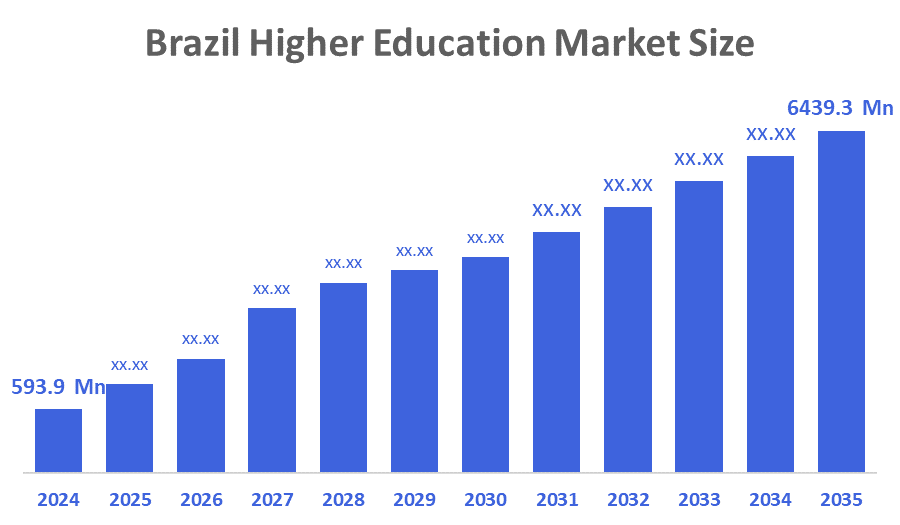
According to a research report published by Decision Advisior & Consulting, the Brazil Higher Education Market is anticipated to reach USD 6439.3 million by 2035, growing at a CAGR of 24.19% from 2025 to 2035. The Brazil higher education market is driven by expanding digital learning adoption, increasing the number of young people enrolled in higher education, a growing need for skilled workers, and a growing number of private universities, as well as an increased emphasis on employability-focused programs, will all continue to create opportunities for the sector's growth and expansion. Furthermore, the government is aiding through scholarships, inclusion initiatives, and online certification programs to further enhance the long-term growth of the sector.
Market Overview
Higher Education is a term describing an advanced form of education provided by universities, colleges, and other colleges that award undergraduate degrees, post-graduate degrees, and professional degrees. Further, the Brazilian higher education ecosystem is undergoing rapid development, driven by trends such as an increased digitalisation of the higher education system through increased use of online and hybrid forms of delivery as well as curricular reforms that focus on skills and expansion of private institutions. Several key trends in the Higher Education market include, growing demand for flexible delivery methods for higher education, increased numbers of programs that have been developed in partnership with industry, increased collaboration between international universities, increased student mobility, and expansion of EdTech solutions to support the development of successful learning outcomes. Additionally, government initiatives to accelerate the growth of the higher education market include, expansion of federal university networks, provision of loans at extremely low interest rates to students, modernization of distance education, and policies aimed at increasing equity and access to higher education in those areas of Brazil that have historically been underserved.
Report Coverage
This research report categorizes the market for the Brazil higher education market based on various segments and regions and forecasts revenue growth and analyzes trends in each submarket. The report analyses the key growth drivers, opportunities, and challenges influencing the Brazil higher education market. Recent market developments and competitive strategies such as expansion, product launch, and development, partnership, merger, and acquisition have been included to draw the competitive landscape in the market. The report strategically identifies and profiles the key market players and analyses their core competencies in each sub-segment of the Brazil higher education market.
Driving Factors
The Brazil higher education market is driven by increasing demand for flexibility in learning, the growth of distance education, and the expansion of government initiatives supporting the implementation of digital education models. The growing need to prepare graduates for the job market, the trend towards upskilling workers, and the increasing adoption by institutions of technology for teaching and learning, all contribute to the growth in student enrolments in higher education. Additionally, Investment by private education providers in the development of online delivery systems, multimedia-based hybrid delivery models, and low-cost degrees, is making higher education increasingly accessible. The continued growth in numbers of young people in Brazil, and the continued growth in partnership activity between corporations and educational institutions, all contribute to the potential for the long-term growth of this sector across Brazil.
Restraining Factors
The Brazil higher education market is restrained by unequal access to digital infrastructure, affordability issues for low-income students, regional variances in instructional quality, and limited institutional funding. All these aspects impact both prospective students access to, and participation in, enrolling in Brazil's institutions of higher education and significantly affect the pace with which underserved areas, particularly regions where universities are hindered by a lack of technological updates and/or adequate staff resources, grow and expand to meet the demand for higher-quality educational programming.
Market Segmentation
The Brazil higher education market share is classified into learning mode and end user.
- The online learning segment accounted for the largest revenue market share in 2024 and is expected to grow at a significant CAGR during the forecast period.
The Brazil higher education market is segmented by learning mode into online and offline. Among these, the online segment accounted for the largest revenue market share in 2024 and is expected to grow at a significant CAGR during the forecast period. The segmental growth is due to the flexible learning formats, reduced costs for educational programs, greater use of EdTech platforms, and greater approval for government approved online distance education programs. There has been a rise in the utilisation of virtual classrooms, digital content delivery systems, and certification programs. All these factors have led to continued growth potential for education technology.
- The Private Colleges segment dominated the market in 2024 and is projected to grow at a substantial CAGR during the forecast period.
The Brazil higher education market is segmented by end user into state universities, community colleges, and private colleges. Among these, private colleges segment dominated the market in 2024 and is projected to grow at a substantial CAGR during the forecast period. The growth of the segment is due to offering multiple options for studying, creating more relationships with employers, providing better marketing opportunities, having increased admissions process flexibility, and rapid creation of online options. Additionally, the growing focus on creating courses based on career readiness, using new curriculum ideas, and building global partnerships support the growth of this group.
Competitive Analysis:
The report offers the appropriate analysis of the key organizations/companies involved within the Brazil higher education market along with a comparative evaluation primarily based on their product offering, business overviews, geographic presence, enterprise strategies, segment market share, and SWOT analysis. The report also provides an elaborative analysis focusing on the current news and developments of the companies, which includes product development, innovations, joint ventures, partnerships, mergers & acquisitions, strategic alliances, and others. This allows for the evaluation of the overall competition within the market.
List of Key Companies
- Cogna Educacao
- YDUQS
- Anima Educaçao
- Ser Educacional
- Cruzeiro do Sul Educacional
- Unip (Universidade Paulista)
- Unicesumar
- Uninter
- FGV (Fundacao Getulio Vargas)
- Others
Recent Developments:
- In May 2025: The Ministry of Education (MEC) expanded federal support for distance learning by implementing a new policy to strengthen virtual learning environments and promote the use of digital and online education tools across higher education institutions.
Key Target Audience
- Market Players
- Investors
- End-users
- Government Authorities
- Consulting and Research Firm
- Venture capitalists
- Value-Added Resellers (VARs)
Market Segment
This study forecasts revenue at Brazil, regional, and country levels from 2020 to 2035 Decision Advisior segmented the Brazil Higher Education Market based on the below-mentioned segments:
Brazil Higher Education Market, By Learning Type
- Online
- Offline
Brazil Higher Education Market, By End User
- State Universities
- Community Colleges
- Private Colleges
Q: What is the Brazil higher education market size?
A: Brazil higher education market size is expected to grow from USD 593.9 million in 2024 to USD 6439.3 million by 2035, growing at a CAGR of 24.19% during the forecast period.
Q: Who are the key players in the Brazil higher education market?
A: Cogna Educacao, YDUQS, Anima Educaçao, Ser Educacional, Cruzeiro do Sul Educacional, Unip (Universidade Paulista), Unicesumar, Uninter, FGV (Fundacao Getulio Vargas), and Others are the key players in the Brazil higher education market.
Q: Who are the target audiences for this market report?
A: The report targets market players, investors, end-users, government authorities, consulting and research firms, venture capitalists, and value-added resellers (VARs).
Check Licence
Choose the plan that fits you best: Single User, Multi-User, or Enterprise solutions tailored for your needs.
We Have You Covered
- 24/7 Analyst Support
- Clients Across the Globe
- Tailored Insights
- Technology Tracking
- Competitive Intelligence
- Custom Research
- Syndicated Market Studies
- Market Overview
- Market Segmentation
- Growth Drivers
- Market Opportunities
- Regulatory Insights
- Innovation & Sustainability
Report Details
| Scope | country |
| Pages | 211 |
| Delivery | PDF & Excel via Email |
| Language | English |
| Release | Dec 2025 |
| Access | Download from this page |