
Global Bronchiolitis Obliterans Syndrome Market
 |
Pages:
195
|
Pages:
195
Global Bronchiolitis Obliterans Syndrome Market Size, Share, By Drug Class (Corticosteroids, Immunosuppressive Drugs, Macrolide Antibiotics, and Others) By Treatment Type (Medication, Lung Transplant, and Others) By Distribution Channel (Hospital Pharmacies, Retail Pharmacies, Online Pharmacies, and Others) and By Region (North America, Europe, Asia-Pacific, Latin America, Middle East, and Africa), Analysis and Forecast 2025 ? 2035.
REPORT COVERAGE
Global
Market Snapshot
- Market Size (2025): USD 65.8 Million
- Projected Market Size (2035): USD 103.2 Million
- Compound Annual Growth Rate (CAGR): 4.6%
- Largest Regional Market: North America
- Fastest Growing Region: Asia Pacific
- 3rd Largest Region: Europe
- Base Year: 2025
- Historical Period: 2021–2024
- Forecast Period: 2025–2035
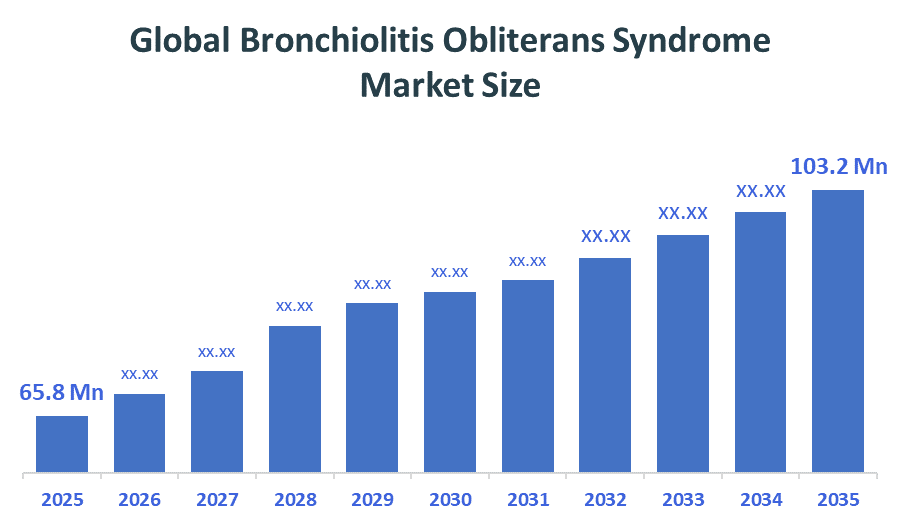
According to Decision Advisors, the Global Bronchiolitis Obliterans Syndrome Market Size is expected to grow from USD 65.8 million in 2025 to USD 103.2 million by 2035, at a CAGR of 4.6% during the forecast period 2025-2035. The global bronchiolitis obliterans syndrome market is driven by rising lung and stem cell transplants, increasing chronic graft-versus-host disease prevalence, technological advancements in diagnostics and immunosuppressive therapies, early intervention strategies, personalized medicine adoption, and expanding healthcare infrastructure and reimbursement coverage.
Market Overview/ Introduction
The global bronchiolitis obliterans syndrome (BOS) market refers to the healthcare segment focused on the diagnosis, treatment, and management of BOS, a severe pulmonary complication primarily occurring post lung or hematopoietic stem cell transplantation. Bronchiolitis Obliterans Syndrome is defined as progressive airflow obstruction caused by inflammation and fibrosis of the small airways, often associated with chronic graft-versus-host disease in transplant recipients. The market scope includes therapies such as immunosuppressive drugs (tacrolimus, cyclosporine, prednisone), anti-fibrotic agents, biologics, and supportive care interventions, along with diagnostic tools including high-resolution CT scans, spirometry, and pulmonary function tests. The market encompasses hospitals, transplant centers, specialty pulmonology clinics, and digital health platforms for patient monitoring. Future opportunities lie in personalized medicine approaches, novel biologics, inhaled therapy formulations, and AI-driven predictive diagnostics. Expansion of telehealth and remote monitoring, increased awareness of post-transplant complications, and government-supported rare disease research initiatives are expected to significantly enhance market growth and accessibility globally.
- In the United States, CMS Coverage for BOS Therapy allows Medicare and Medicaid to reimburse therapies like Extracorporeal Photopheresis (ECP) for post-transplant Bronchiolitis Obliterans Syndrome under defined clinical criteria, improving patient access.
- In India, the National Policy for Rare Diseases (NPRD 2021) provides financial assistance of up to ?50?lakhs per patient, offers tax exemptions on imported drugs, and supports research for rare diseases, including Bronchiolitis Obliterans Syndrome.
- Indian states, such as Karnataka, implement State Health Schemes and Centres of Excellence (CoEs), providing rare disease coverage through programs like Ayushman Bharat?Arogya Karnataka and offering specialized care and diagnostics for rare disease patients.
Notable Insights: -
- North America holds the largest regional market share approximately 4.9% in the global bronchiolitis obliterans syndrome market in 2025.
- Asia-Pacific is the fastest growing market share, approximately 5.8% in the global bronchiolitis obliterans syndrome market in 2025.
- Europe is the 3rd largest region in the global bronchiolitis obliterans syndrome market, accounting for approximately 4.3% of the market in 2025.
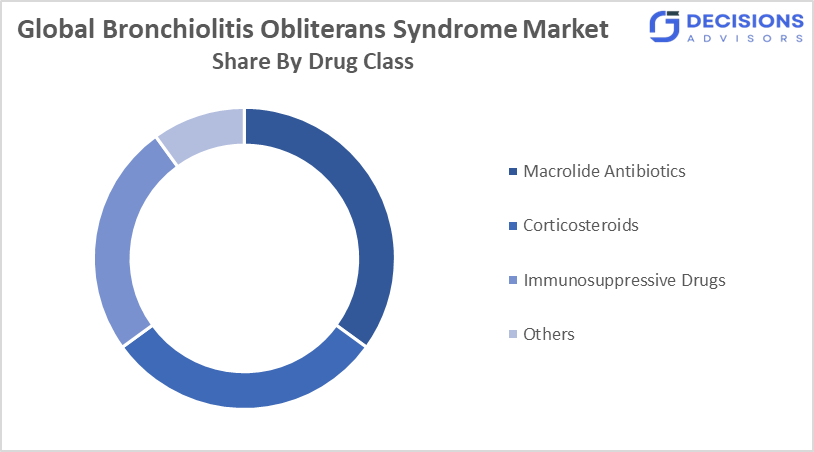
- By drug class, the macrolide antibiotics segment held a dominant position with approximately 35% in terms of market share in 2025.
- By treatment type, the medication segment held a dominant position with approximately 50% in terms of market share in 2025.
- By distribution channel, the hospital pharmacies segment held a dominant position with approximately 60% in terms of market share in 2025.
- The compound annual growth rate of the global Bronchiolitis Obliterans Syndrome market is 4.6%.
- The market is likely to achieve a valuation of USD 103.2 million by 2035.
What is role of technology in grooming the market?
Technology is shaping the global bronchiolitis obliterans syndrome market by improving diagnosis, treatment monitoring, and patient management. Advanced diagnostic tools such as high-resolution CT scans, spirometry, and pulmonary function testing enable earlier detection of BOS, improving outcomes. Digital health platforms and telemedicine enhance patient follow-up, adherence monitoring, and remote consultations, increasing treatment efficiency. AI and data analytics assist clinicians in predicting disease progression and optimizing immunosuppressive therapy regimens. Additionally, electronic health records (EHR) and supply chain management systems streamline the distribution of medications and specialized therapies, ensuring timely access for transplant recipients, thereby driving market growth.
How is Recent Developments Helping the Market?
Recent developments such as the introduction of targeted immunosuppressive therapies, anti-fibrotic agents, and biologics are expanding treatment options for BOS patients. Clinical trials exploring combination therapies and novel inhaled formulations are improving efficacy and reducing side effects. The adoption of telehealth and remote spirometry monitoring has increased patient engagement and compliance, particularly in post-transplant care. Awareness campaigns by transplant associations and rare disease advocacy groups are enhancing early diagnosis rates. Furthermore, research into personalized therapy approaches based on patient immunogenetics is increasing the effectiveness of interventions, supporting sustained market growth.
Market Drivers
The global BOS market is driven by the rising number of lung and hematopoietic stem cell transplants worldwide, increasing prevalence of chronic graft-versus-host disease, and growing recognition of BOS as a major post-transplant complication. Technological advancements in diagnostics and immunomodulatory therapies are expanding the treatment landscape. The increasing focus on personalized medicine and early intervention strategies is enhancing treatment adoption. Growth in healthcare infrastructure and reimbursement coverage in regions such as North America and Europe is facilitating access to BOS therapies. Research funding for rare diseases and post-transplant complications continues to stimulate innovation in this market.
Restrain
The main restraints on the global BOS market include high treatment costs, limited availability of disease-modifying therapies, and the complex regulatory requirements for rare disease drug approvals. The market also faces challenges from slow patient diagnosis, variability in transplant center protocols, and limited awareness among general physicians.
Competitive Analysis:
The report offers the appropriate analysis of the key organizations/companies involved within the global bronchiolitis obliterans syndrome market, along with a comparative evaluation primarily based on their product of offering, business overviews, geographic presence, enterprise strategies, segment market share, and SWOT analysis. The report also provides an elaborative analysis focusing on the current news and developments of the companies, which includes product development, innovations, joint ventures, partnerships, mergers & acquisitions, strategic alliances, and others. This allows for the evaluation of the overall competition within the market.
Top Companies in Global Bronchiolitis Obliterans Syndrome Market
- Zambon Company S.P.A.
- Incyte Corporation
- Renovion, Inc.
- OrphAI Therapeutics
- Altavant Sciences
- Breath Therapeutics
- Mereo BioPharma
- Other
Government Initiatives
|
Country |
Key Government Initiatives |
|
US |
NHLBI Rare Disease Awareness & Research led by the National Heart, Lung, and Blood Institute, this initiative funds research on rare lung diseases including BOS, promotes early diagnosis, and raises awareness among clinicians and patients. |
|
India |
Centres of Excellence (CoEs) Government-designated CoEs (e.g., Assam Medical College) provide specialized diagnostics, treatment, and research for rare diseases, improving access to care and clinical outcomes for BOS and similar conditions. |
Study on the Supply, Demand, Distribution, and Market Environment of the Global Bronchiolitis Obliterans Syndrome Market
The global bronchiolitis obliterans syndrome (BOS) market is driven by increasing organ transplant procedures, rising incidence of chronic respiratory disorders, and growing patient awareness. Supply is led by pharmaceutical companies, specialized clinics, and hospitals offering immunosuppressive therapies and supportive care solutions. Demand is primarily from post-lung and post-hematopoietic stem cell transplant patients, chronic respiratory patients, and healthcare institutions. Distribution channels include hospital pharmacies, retail pharmacies, and specialty clinics. The market environment is shaped by technological advancements in diagnostics, immunotherapy, and patient management systems, alongside regulatory support and orphan drug incentives, creating opportunities for improved treatment outcomes and global market expansion.
Price Analysis and Consumer Behaviour Analysis
BOS treatment pricing varies based on therapy type, dosage, and regional healthcare policies. Immunosuppressive therapies and novel biologics carry premium costs, while supportive care options remain moderately priced. Consumers, including hospitals and patients, prioritize efficacy, safety, and long-term outcomes when choosing therapies. Adoption is influenced by awareness of post-transplant complications, insurance coverage, and treatment accessibility. Healthcare providers show preference for cost-effective, standardized protocols, while patients seek therapies minimizing side effects. Seasonal demand fluctuations are minimal, but regional differences in organ transplant rates and reimbursement policies affect purchasing patterns, shaping consumer behavior and influencing market dynamics in both developed and emerging regions.
Market Segmentation
The global bronchiolitis obliterans syndrome market share is classified into drug class, treatment type, and distribution channel
- The macrolide antibiotics segment dominated the market in 2025, and is anticipated to grow at a remarkable CAGR of approximately 35% during the forecast period.
Based on the drug class, the global bronchiolitis obliterans syndrome market is divided into corticosteroids, immunosuppressive drugs, macrolide antibiotics, and others. Among these, the macrolide antibiotics segment dominated the market in 2025 and is anticipated to grow at a remarkable CAGR of approximately 35% during the forecast period. This is because macrolide antibiotics provide strong anti-inflammatory and immunomodulatory benefits, supporting long term disease control, improving lung function outcomes, and being widely prescribed in chronic management of bronchiolitis obliterans syndrome patients globally.
- The medication segment dominated the market in 2025, and is anticipated to grow at a remarkable CAGR of approximately 50% during the forecast period.
Based on the treatment type, the global bronchiolitis obliterans syndrome market is divided into medication, lung transplant, and others. Among these, the medication segment dominated the market in 2025 and is anticipated to grow at a remarkable CAGR of approximately 50% during the forecast period. This is driven by its role as first line therapy, continuous treatment requirement, strong clinical adoption, and increasing use of immunosuppressive and anti-inflammatory drugs for effective long term disease management outcomes.
- The hospital pharmacies segment dominated the market in 2025, and is anticipated to grow at a remarkable CAGR of approximately 60% during the forecast period.
Based on the distribution channel, the global bronchiolitis obliterans syndrome market is divided into hospital pharmacies, retail pharmacies, online pharmacies, and others. Among these, the hospital pharmacies segment dominated the market in 2025 and is anticipated to grow at a remarkable CAGR of approximately 60% during the forecast period. This is due to increasing hospital-based treatment, need for specialist supervision, controlled dispensing of critical drugs, and rising number of transplant related cases requiring continuous and monitored therapy administration.
Strategies to Implement for Growth of the Market in Non-Leading Regions
Market growth in non-leading regions can be driven by increasing awareness, improving healthcare access, and enhancing treatment availability. Companies should focus on partnerships with hospitals, clinics, and patient advocacy groups to educate about Bronchiolitis Obliterans Syndrome management. Expanding diagnostic and treatment facilities, offering cost-effective therapies, and adopting telemedicine solutions can improve patient reach. Localized clinical trials, training programs for healthcare professionals, and distribution network expansion will strengthen market presence. Additionally, marketing campaigns emphasizing early diagnosis, advanced therapies, and patient support programs can encourage adoption and drive sustainable growth.
Regional Segment Analysis of the Bronchiolitis Obliterans Syndrome Market
- North America (U.S., Canada, Mexico)
- Europe (Germany, France, U.K., Italy, Spain, Rest of Europe)
- Asia-Pacific (China, Japan, India, Rest of APAC)
- South America (Brazil and the Rest of South America)
- The Middle East and Africa (UAE, South Africa, Rest of MEA)
North America is anticipated to hold the largest share of the global bronchiolitis obliterans syndrome market over the predicted timeframe.
North America is anticipated to hold the largest share of the global bronchiolitis obliterans syndrome market over the predicted timeframe. The region is anticipated to grow at a remarkable CAGR of approximately 4.9% during the forecast period. This market is accounting about approximately 40%–45% of the total market share. The dominance of this market is driven by the advanced healthcare infrastructure, high number of transplant procedures, strong presence of key pharmaceutical companies, and favorable reimbursement policies supporting long term treatment. Countries such as the United States have a well-established healthcare system that drives significant Bronchiolitis Obliterans Syndrome treatment demand.
Asia Pacific is expected to grow at a rapid CAGR in the global bronchiolitis obliterans syndrome market during the forecast period. Asia Pacific is expected to grow at a rapid CAGR of approximately 5.8% in the global bronchiolitis obliterans syndrome market during the forecast period. It is fastest growing region because increasing number of organ transplant procedures, improving healthcare infrastructure, rising awareness regarding rare respiratory diseases, and expanding access to advanced treatment options across countries such as China, India, and Japan.
Europe is the 3rd largest region to grow in the global bronchiolitis obliterans syndrome market during the region. Europe is the 3rd largest region to grow at a remarkable CAGR of approximately 4.3% during the forecast period in the global bronchiolitis obliterans syndrome market during the region. It is because Europe has strong research capabilities, supportive regulatory frameworks for rare diseases, and widespread availability of advanced treatment options, with strong contribution from the countries like Germany, France, and United Kingdom.
Future Market Trends in Global Bronchiolitis Obliterans Syndrome Market: -
- Advancement of Targeted Immunomodulatory Therapies:
Emerging targeted therapies that modulate specific inflammatory pathways are expected to shift treatment paradigms toward more personalized and effective management. Next?generation immunomodulators designed to stabilize lung function and reduce disease progression will increasingly gain clinical adoption.
- Growth of Inhaled and Localized Drug Delivery:
Inhaled formulations such as liposomal immunosuppressants and antifibrotic agents are anticipated to grow as they offer enhanced drug targeting to the lungs, reduce systemic side effects, and improve long?term patient adherence compared to systemic therapies.
- Digital Health and Remote Monitoring Adoption:
Telemedicine, remote pulmonary function tracking, and digital adherence platforms will gain prominence in long?term BOS care, enabling clinicians to monitor disease progression, manage exacerbations early, and reduce hospitalization frequency.
Recent Development
- In October 2025, Pirfenidone clinical findings published for BOS related to chronic graft?versus?host disease. A phase?1, single?arm study showed that pirfenidone was safe and tolerable in BOS patients after hematopoietic cell transplant and may improve lung function, supporting further research into antifibrotic treatment strategies.
- In November 2025, European multicenter randomized Phase II trial of pirfenidone in BOS after bilateral lung transplantation published. This multisite study evaluated pirfenidone for progressive BOS post?transplant, contributing important clinical evidence; although results did not definitively demonstrate superiority over placebo, it informs future therapeutic exploration.
Market Segment
This study forecasts revenue at global, regional, and country levels from 2020 to 2035. Decision Advisor has segmented the global bronchiolitis obliterans syndrome market based on the below-mentioned segments:
Global Bronchiolitis Obliterans Syndrome Market, By Drug Class
- Corticosteroids
- Immunosuppressive Drugs
- Macrolide Antibiotics
- Others
Global Bronchiolitis Obliterans Syndrome Market, By Treatment Type
- Medication
- Lung Transplant
- Others
Global Bronchiolitis Obliterans Syndrome Market, By Distribution Channel
- Hospital Pharmacies
- Retail Pharmacies
- Online Pharmacies
- Others
Global Bronchiolitis Obliterans Syndrome Market, By Regional Analysis
- North America
- US
- Canada
- Mexico
- Europe
- Germany
- UK
- France
- Italy
- Spain
- Russia
- Rest of Europe
- Asia Pacific
- China
- Japan
- India
- South Korea
- Australia
- Rest of Asia Pacific
- South America
- Brazil
- Argentina
- Rest of South America
- Middle East & Africa
- UAE
- Saudi Arabia
- Qatar
- South Africa
- Rest of the Middle East & Africa
Frequently Asked Questions (FAQ)
Q1: What are the expected cost differences between oral and inhaled immunosuppressive therapies for Bronchiolitis Obliterans Syndrome in emerging markets?
A: Costs vary significantly due to formulation, manufacturing complexity, and local healthcare pricing. Inhaled therapies tend to be more expensive because of specialized delivery devices and stability requirements, while oral formulations are generally more affordable and widely accessible, though actual pricing depends on regional reimbursement policies.
Q2: Which specific genetic biomarkers are being used in ongoing clinical trials to predict patient response to macrolide antibiotics in BOS treatment?
A: Researchers are exploring multiple immune-related and inflammatory biomarkers, including polymorphisms in cytokine genes and HLA haplotypes, to identify patients who may benefit most from macrolide therapy. However, no standardized biomarker panel has yet been approved for clinical use.
Q3: How do patient adherence rates to telemedicine platforms for BOS management vary between rural and urban healthcare settings?
A: Urban patients generally show higher adherence due to better internet connectivity, digital literacy, and easier access to follow-up care, whereas rural patients may face challenges with bandwidth limitations, lack of devices, and limited local support, leading to lower engagement in remote monitoring programs.
Q4: What are the long-term environmental sustainability initiatives adopted by pharmaceutical companies manufacturing BOS therapies?
A: Companies are increasingly implementing eco-friendly manufacturing practices, such as reducing solvent use, recycling packaging, minimizing energy consumption, and offsetting carbon emissions. Some are also exploring biodegradable inhaler components and greener supply chains, though these initiatives are still in early adoption phases.
Check Licence
Choose the plan that fits you best: Single User, Multi-User, or Enterprise solutions tailored for your needs.
We Have You Covered
- 24/7 Analyst Support
- Clients Across the Globe
- Tailored Insights
- Technology Tracking
- Competitive Intelligence
- Custom Research
- Syndicated Market Studies
- Market Overview
- Market Segmentation
- Growth Drivers
- Market Opportunities
- Regulatory Insights
- Innovation & Sustainability
Report Details
| Scope | Global |
| Pages | 195 |
| Delivery | PDF & Excel via Email |
| Language | English |
| Release | Apr 2026 |
| Access | Download from this page |