
Canada Advanced Biofuel Market
 |
Pages:
178
|
Pages:
178
Canada Advanced Biofuel Market Size, Share, and COVID-19 Impact Analysis, By Type (Ethanol, Biodiesel, Biomethane, Hydrotreated Vegetable Oil, and Algal Biofuels), By Feedstock (Vegetable Oil, Animal Fat, Waste Oil, Straw, and Sorghum), and Canada Advanced Biofuel Market Insights, Industry Trend, Forecasts to 2035
REPORT COVERAGE
Country
Canada Advanced Biofuel Market Size Insights Forecasts to 2035
- The Market Size is Expected to Grow at a CAGR of around 6.70% from 2025 to 2035
- The Canada Advanced Biofuel Market Size is expected to Reach at a substantial share by 2035
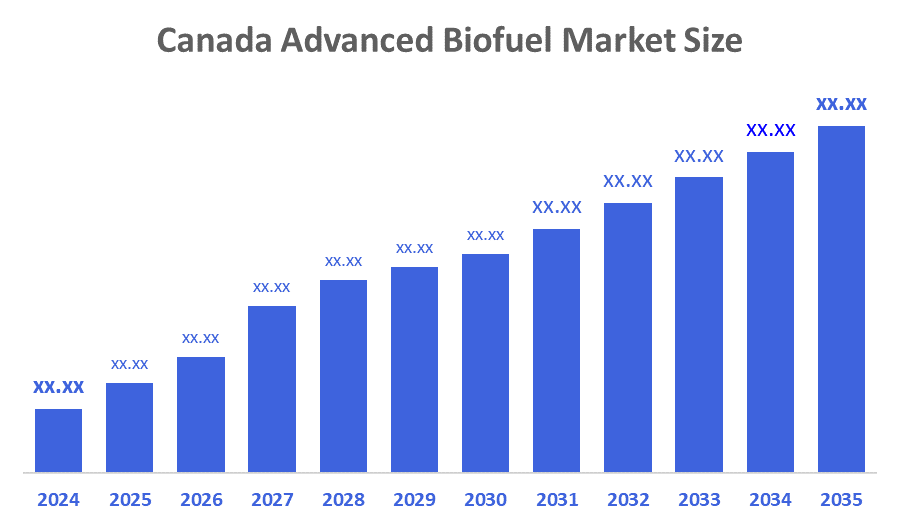
According to a Research Report Published by Decisions Advisors and Consulting, The Canada Advanced Biofuel Market Size is expected to Grow at a CAGR of 6.70% during the forecast period 2025-2035. Shifting attention away from foreign oil to supplement energy security will raise product demand, particularly in countries trying to diversify their energy portfolio and ensure a more resilient energy system. The market will grow faster if biofuels with fewer greenhouse gas emissions and other environmental benefits are adopted more widely.
Market Overview
The Canadian advanced biofuel market is the industrial segment that produces and distributes second- and next-generation biofuels (such as cellulosic ethanol, renewable diesel, and sustainable aviation fuel) derived from non-food biomass, waste, and novel feedstocks. It is characterised by its contribution to Canada's efforts to achieve net-zero emissions by 2050, lessen dependency on fossil fuels, and facilitate the shift to clean energy in industries like aviation and transportation that are challenging to decarbonise. Federal initiatives like the September 2025 Biofuels Incentive Program and the Clean Fuel Regulations (CFR) provide per-litre subsidies for low-carbon fuels like sustainable aviation fuel (SAF) and renewable diesel, offsetting U.S. subsidies and encouraging production from domestic feedstocks.
Provincial policies, such as diesel blend increases in British Columbia and "made-in-Canada" requirements in Ontario and B.C., encourage capital investment in new facilities in Vancouver, Prince George, and Edmonton, boosting rural economies and energy security.
Canadian biorefineries boost the country's economy by $19.8 billion when they are operating at full capacity. Canada's biofuels industry, which currently supports over 30,000 jobs, has the potential to grow to produce $44.4 billion in economic output and maintain over 60,000 jobs by 2030 with the correct fiscal and policy signals.
Report Coverage
This research report categorises the market for the Canada advanced biofuel market based on various segments and regions, and forecasts revenue growth and analyses trends in each submarket. The report analyses the key growth drivers, opportunities, and challenges influencing the Canada advanced biofuel market. Recent market developments and competitive strategies, such as expansion, product launch, development, partnership, merger, and acquisition, have been included to draw the competitive landscape in the market. The report strategically identifies and profiles the key market players and analyses their core competencies in each sub-segment of the Canada advanced biofuel market.
Driving Factors
The market for Canadian advanced biofuels is driven by the strict government regulations focused on lowering greenhouse gas emissions and improving energy security via renewable fuel mandates at both federal and provincial levels. Moreover, commitments to low-carbon fuels, along with blending mandates in regions like British Columbia, have encouraged investments in biomass-derived diesel production plants in locations such as Vancouver and Edmonton. Moreover, the industry advantages from plentiful non-food feedstocks such as agricultural residues and algae, enhanced by technological progress in biorefinery efficiency that reduces production expenses. Public and regulatory focus on sustainability enhances growth, establishing biofuels as a pathway to net-zero objectives while diversifying supply chains and strengthening rural economies. Continuous research and development in converting waste to fuel and its integration with carbon capture technologies improve scalability.
Ontario is exploring a new rule that would require locally generated biofuels to account for a large portion of its diesel pool. Specifically, the province proposes that 3% of diesel use be obtained from Canadian-produced renewable fuels, with three-quarters of the present renewable diesel mandate coming from local production.
Restraining Factors
Despite growing demand for low-carbon fuels, the Canadian advanced biofuel market is constrained by high production costs, limited feedstock availability, infrastructure challenges, and regulatory uncertainties.
Market Segmentation
The Canada advanced biofuel market share is classified into type and feedstock.
- The ethanol segment dominated the market in 2024 and is anticipated to grow at a substantial CAGR over the forecast period.
The Canada advanced biofuel market is segmented by type into ethanol, biodiesel, biomethane, hydrotreated vegetable oil, and algal biofuels. Among these, the ethanol segment dominated the market in 2024 and is anticipated to grow at a substantial CAGR over the forecast period. Its position has been strengthened by its extensive use in transportation fuels and its compatibility with current infrastructure. This is due to its adaptability and lower emissions than conventional diesel; biodiesel has acquired significant traction after ethanol, quickly expanding its market position.
- The vegetable oil segment dominated the market in 2024 and is projected to grow at a remarkable CAGR over the forecast period.
The Canada advanced biofuel market is divided by feedstock into vegetable oil, animal fat, waste oil, straw, and sorghum. Among these, the vegetable oil segment dominated the market in 2024 and is projected to grow at a remarkable CAGR over the forecast period. This type of feedstock advantages from its availability, variety in formulations, and incremental technological developments that improve processing efficiency.
Competitive Analysis:
The report offers the appropriate analysis of the key organizations/companies involved within the Canada advanced biofuel market, along with a comparative evaluation primarily based on their product offering, business overviews, geographic presence, enterprise strategies, segment market share, and SWOT analysis. The report also provides an elaborative analysis focusing on the current news and developments of the companies, which includes product development, innovations, joint ventures, partnerships, mergers & acquisitions, strategic alliances, and others. This allows for the evaluation of the overall competition within the market.
List of Key Companies
- Advanced Biofuels Canada (ABFC)
- Enerkem Inc.
- Greenfield Global
- Forge Hydrocarbons Corp.
- Woodland Biofuels Inc.
- LanzaTech (Canada operations)
- Others
Recent Developments:
- In February 2022, the Clean Ocean Advanced Biofuels Project was announced as Canada’s Ocean Supercluster’s largest initiative to date, with $65 million in funding. It is led by Ontario-based Valent in collaboration with a pan-Canadian consortium, aiming to produce Canada’s first renewable diesel from agricultural and forestry by-products.
Key Target Audience
- Market Players
- Investors
- End-users
- Government Authorities
- Consulting and Research Firm
- Venture capitalists
- Value-Added Resellers (VARs)
Market Segment
This study forecasts revenue at Canada, regional, and country levels from 2020 to 2035. Decisions Advisors has segmented the Canada advanced biofuel market based on the below-mentioned segments:
Canada Advanced Biofuel Market, By Type
- Ethanol
- Biodiesel
- Biomethane
- Hydrotreated Vegetable Oil
- Algal Biofuels
Canada Advanced Biofuel Market, By Feedstock
- Vegetable Oil
- Animal Fat
- Waste Oil
- Straw
- Sorghum
FAQ
1. What is the expected growth rate of the Canadian advanced biofuel market?
The market is projected to grow at a CAGR of approximately 6.70% from 2025 to 2035.
2. What types of advanced biofuels are included in this market?
Key types include ethanol, biodiesel, biomethane, hydrotreated vegetable oil, and algal biofuels.
3. Which biofuel type dominates the market currently?
Ethanol was the leading segment in 2024, favoured for its use in transportation fuels and compatibility with existing infrastructure.
4. What are the main feedstocks used for advanced biofuel production in Canada?
The primary feedstocks are vegetable oil, animal fat, waste oil, straw, and sorghum, with vegetable oil currently dominating.
5. What government initiatives support the advanced biofuel market in Canada?
Federal programs like the Biofuels Incentive Program (starting September 2025) and Clean Fuel Regulations provide subsidies for low-carbon fuels. Provincial policies in British Columbia and Ontario also encourage biofuel blending and local production.
6. How does the advanced biofuel industry impact the Canadian economy and employment?
Canada’s biofuel sector contributes about $19.8 billion to the economy at full capacity and supports over 30,000 jobs. With proper support, it could reach $44.4 billion and over 60,000 jobs by 2030.
7. Who are the key players in the Canadian advanced biofuel market?
Notable companies include Advanced Biofuels Canada (ABFC), Enerkem Inc., Greenfield Global, Forge Hydrocarbons Corp., Woodland Biofuels Inc., and LanzaTech (Canada operations).
Check Licence
Choose the plan that fits you best: Single User, Multi-User, or Enterprise solutions tailored for your needs.
We Have You Covered
- 24/7 Analyst Support
- Clients Across the Globe
- Tailored Insights
- Technology Tracking
- Competitive Intelligence
- Custom Research
- Syndicated Market Studies
- Market Overview
- Market Segmentation
- Growth Drivers
- Market Opportunities
- Regulatory Insights
- Innovation & Sustainability
Report Details
| Scope | Country |
| Pages | 178 |
| Delivery | PDF & Excel via Email |
| Language | English |
| Release | Dec 2025 |
| Access | Download from this page |