
Canada Flavour Market
 |
Author:
Sayali T
|
Pages:
210
|
Author:
Sayali T
|
Pages:
210
Canada Flavour Market Size, Share, By Type (Natural Flavours, Artificial/Synthetic Flavours, and Nature-Identical Flavours), By Source (Plant-Based, Animal-Based, and Microbial/Biotechnological), By Form (Liquid Flavours, Powder Flavours, and Gel/Emulsion Flavours), By Application (Beverages, Bakery & Confectionery, Dairy & Frozen Products, Savory & Snacks, Others) Analysis and Forecast 2026 ? 2035
CAGR
4.34%
REVENUE 2025
USD Million 372.9
FORECAST 2035
USD Million 570.2
REPORT COVERAGE
country
Market Snapshot
- Canada Flavour Market Size (2025): USD 372.9 Million
- Canada Flavour Projected Market Size (2035): USD 570.2 Million
- Canada Flavour Compound Annual Growth Rate (CAGR): 4.34%
- Base Year: 2025
- Historical Period: 2021–2024
- Forecast Period: 2026–2035
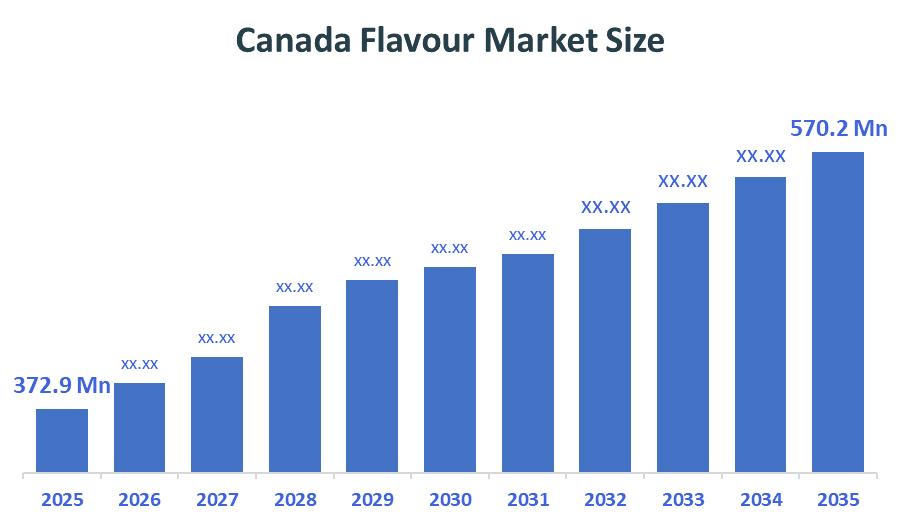
According to Decision Advisors, the Canada flavours market was projected to grow from USD 372.9 million in 2025 to USD 570.2 million by 2035, achieving a CAGR of 4.34% during the forecast period of 2026–2035. Canada flavours market is driven mainly by changing consumer preferences for natural, clean?label and bold taste profiles, rising demand in food & beverages, and innovation to meet healthier, plant?based and global flavour trends. Manufacturers are responding with diverse, novel flavours to appeal to evolving Canadian palates.
Market Overview/Introduction
The Canada Flavour Market includes the manufacturing and distribution of natural and artificial flavour utilized within the food Form to improve taste and smell characteristics. Such flavours exist in liquid, dry, and gel formats and serve to create unique tastes in bakery products, dairy goods, snack foods, beverages, and plant-based foods to deliver consistent taste and mask any off notes. The drivers behind the market include changing consumer tastes towards natural flavours and clean labels, the development of convenient foods, the emergence of multicultural tastes, and the rising popularity of plant-based and functional foods. The technological advancements that will help the sector include biotechnology fermentation techniques, aroma extraction, and artificial intelligence flavour formulation. Research and innovation will be directed towards the creation of more complex flavours, enhanced shelf stability, and the development of healthier formulations that meet consumer needs. The government of Canada has been instrumental in fostering the development of this sector through various programs including the Strategic Innovation Fund and the Canadian Food Innovation Network (CFIN).
- February 2026: Canada launches a $75 million Agri Marketing Program (2026?2031) to help food processors and exporters diversify markets. While not flavour-specific, the initiative indirectly supports flavour-using industries by promoting exports and enhancing competitiveness amid global trade challenges.
- In April 2026, the Canadian government announced $1.2 million for bio-electric chemical processes, supporting the development of low-carbon, sustainable ingredients, directly advancing the clean-label flavour trend and innovation in the Canada flavour market.
- The Circular Foodservice Innovation Fund (CFIF) will award up to $35,000 to flavour-related Canadian small businesses in Spring 2026, enabling reusable and circular systems that reduce environmental impact and promote sustainable practices in the Canada flavour market.
Notable Insights: -
- By type, the synthetic (artificial) flavour segment holds a dominant position with an estimated share of over 64.4% in 2025.
- By source, the plant?based segment holds a dominant position with an estimated share of over 54.2% in 2025.
- By form, the powder segment holds a dominant position with an estimated share of over 67% in 2025.
- By application, the bakery & confectionery segment holds a dominant position with an estimated share of over 32% in 2025.
- The forecasted CAGR for the Canada flavour market is expected to be about 4.34% for the period between 2026 and 2035.
- The market is expected to reach a valuation of approximately USD 570.2 million by 2035
What is the Role of Technology in Grooming the Market?
Technology plays a crucial role in grooming the Canada flavour market by driving innovation, efficiency, and product differentiation. Advanced techniques like biotechnology, fermentation, and AI-assisted formulation enable the creation of natural, clean-label, and plant-based flavours with precise sensory profiles. Modern extraction and aroma recovery technologies enhance purity and sustainability, while automation ensures quality control, consistency, and regulatory compliance. Data-driven insights allow rapid adaptation to consumer trends, supporting customized flavour solutions for diverse foods and beverages. Overall, technology accelerates R&D, improves product quality, expands flavour diversity, and fosters sustainable practices, positioning the market for consistent growth and competitiveness.
Market Drivers
The Canada's $371 million flavour market, which will grow in the forecast period of 2025, is driven by a move towards stronger, functional, and cultural profiles. One of the major drivers here is the immense diversity in culture within Canada, which has progressed from broad fusion to a strong desire for regional cuisine, such as Filipino, North African, and Eastern Mediterranean cuisines. It is exemplified by the use of the "savoury" approach, whereby ingredients, such as miso, tahini, and pomegranate, are used to develop complex flavours for snacks and beverages. On the other hand, the wellness culture is driving the change in how flavours are applied. The awareness among 74% of consumers about ultra-processed foods is creating a high demand for clean-label and botanically sourced flavours, providing the "health halo”. In addition, the development of the plant-based Form is demanding an increased use of masking techniques due to off-notes caused by alternative proteins. All these trends are expected to result in a $517 million market by 2033.
Restraints
The Canada flavours market faces restraints such as stringent regulatory compliance for food additives, rising raw material costs, and challenges in sourcing natural ingredients sustainably. Consumer concerns over artificial flavours and allergens limit adoption, while intense competition and price sensitivity among manufacturers hinder profit margins. Additionally, complex supply chains and seasonal variations affect consistent product availability.
Study on the Supply, Demand, Distribution, and Market Environment
The Canada flavour market is growing steadily, driven by rising demand in processed foods, beverages, snacks, and plant-based products. Supply relies on domestic production and imports, with natural ingredients sourced locally where possible, though exotic compounds depend on global suppliers. Demand is fuelled by consumer preference for clean-label, natural, and innovative flavours, particularly in beverages and functional foods. Distribution occurs through food and beverage manufacturers, ingredient distributors, and industrial processors, ensuring wide market reach. The market environment is shaped by stringent regulations, sustainability concerns, competitive pressures, and rapid innovation, requiring manufacturers to balance quality, cost, and consumer trends for continued growth.
Price Analysis and Consumer Behaviour Analysis
The Canadian flavour market is navigating a "value-recalibration" era, balancing premiumization with a 4% to 6% rise in food prices. While natural flavours grow at a faster 5.7% CAGR, synthetic options still hold roughly 64% of the market due to their role as a price buffer for cost-conscious "private label" brands. Consumers have become "Mindful Adventurers," prioritizing clean-label transparency and functional benefits such as botanicals for gut health while seeking bold, culturally authentic profiles like "swicy" (sweet-and-spicy) and umami. Consequently, behaviour is shifting toward "small treats" and essential value, forcing brands to innovate with high-impact, cost-efficient sensory experiences.
Market Segmentation
The Canada flavours market is categorised by type, source, form, and application
- The synthetic (artificial) flavour segment dominated the market in 2025 and is projected to grow at a steady CAGR of approximately 5.7% during the forecast period.
Based on the type, the flavours market is divided into natural flavours, artificial/synthetic flavours, and nature-identical flavours. Among these, the synthetic (artificial) flavour segment currently dominates with the largest revenue share about 64.4% in 2024 because they offer consistent taste profiles, cost efficiency, and reliable supply for large?scale food and beverage manufacturing. Meanwhile, natural flavours are growing faster, with a higher CAGR approximately 5.7% driven by rising consumer preference for clean?label and healthier products. Nature?identical flavours remain smaller, bridging cost?effective formulation and natural?like profiles, but do not yet match the dominant synthetic share.
- The plant?based segment accounted for the largest share in 2025 and is anticipated to grow at a significant CAGR of approximately 8.7% during the forecast period.
Based on the source, the flavour market is divided into plant-based, animal-based, and microbial/biotechnological. Among these, plant?based sources dominate the source segment, driven by strong consumer demand for natural, clean?label, and vegan?friendly ingredients that enhance taste in foods and beverages. global data suggest that plant?derived sources hold the largest share approximately 54.2% in the broader natural flavour industry, reflecting their strong preference in food and beverage applications. Plant?based flavours often grow quicker with a higher CAGR approximately 8–9% globally compared with other sources due to consumer shifts toward healthier options, though animal?based and microbial sources remain smaller.
- The powdered flavours segment dominated the market in 2025 and is projected to grow at a substantial CAGR of approximately 5.5% during the forecast period.
Based on the form, the flavour market is divided into liquid flavours, powder flavours, and gel/emulsion flavours. Among these, the powdered flavours segment currently dominates, accounting for approximately 67% of the market in 2024. This dominance is attributed to powdered flavours’ enhanced shelf stability, ease of handling, efficient transportation, and precise dosing, which make them particularly suitable for industrial food and beverage applications. The segment also demonstrates a robust CAGR around 5.5%, reflecting sustained demand in dry mixes, bakery products, and processed foods. Meanwhile, liquid and gel/emulsion flavours continue to grow steadily, primarily driven by applications in beverages, dairy, and specialty food products.
- The bakery & confectionery segment dominated the market in 2025 and is projected to grow at a substantial CAGR of approximately 4.5% during the forecast period.
Based on the application, the flavour market is divided into beverages, bakery & confectionery, dairy & frozen products, savoury & snacks, others. Among these, the bakery & confectionery segment dominates, accounting for approximately 32% of the market in 2024. This dominance is driven by the high consumption of baked goods, chocolates, candies, and confectionery products, where flavours are essential for taste consistency and consumer appeal. The segment benefits from continuous product innovation, seasonal demand, and rising convenience food trends. It is projected to grow at a CAGR of around 4.5% through 2033, reflecting steady expansion in both retail and industrial bakery and confectionery applications.
Recent Developments
- In October 2024, Foodarom launched its “Stellar Collection”, a universe-inspired line of innovative flavours for 2025, directly impacting the Canada flavour market by offering novel taste solutions for food and beverage manufacturers seeking memorable consumer experiences.
- In April 2026, Corby Spirit and Wine launched Absolut® TABASCO™ vodka across Canada, highlighting the rising “swicy” (sweet and spicy) trend and driving innovation in bold, heat-forward flavour profiles within the Canada flavour market.
- In April 2026, Gummi Popz™, the world’s first “popping” gummy candy, launched in Canada, exemplifying the “Sensory Chaos” trend and driving innovation in multi-layered, interactive flavours within the Canadian confectionery and flavour market.
Competitive Analysis
The report offers the appropriate analysis of the key organisations/companies involved within the Canada flavour market, along with a comparative evaluation primarily based on their product offering, business overviews, geographic presence, enterprise strategies, segment market share, and SWOT analysis. The report also provides an elaborate analysis focusing on the current news and developments of the companies, which includes product development, innovations, joint ventures, partnerships, mergers & acquisitions, strategic alliances, and others. This allows for the evaluation of the overall competition within the market.
Top Key Companies in the Canada Flavour Market
- Givaudan
- Firmenich
- Kerry Group
- International Flavors & Fragrances (IFF)
- Koninklijke DSM N.V.
- Flavorcan International Inc.
- Aromatics + Flavors Inc.
- Corbion NV
- Custom Flavors Ltd.
- Wonder Flavours
- Others
Key Target Audience
- Market Players
- Investors
- End-users
- Government Authorities
- Consulting and Research Firm
- Venture capitalists
- Value-Added Resellers (VARs)
Market Segmentation
This study forecasts revenue at the national and regional levels from 2021 to 2035. The report segmented the Canada flavour market based on the following segments:
Canada Flavour Market, By Type
- Natural Flavours
- Artificial/Synthetic Flavours
- Nature-Identical Flavours
- Food and Water Testing
- Pharmaceutical Testing
Canada Flavour Market, By Technology
- Plant-Based
- Animal-Based
- Microbial/Biotechnological
- Spectroscopy
Canada Flavour Market, By Form
- Liquid Flavours
- Powder Flavours
- Food & Beverages
- Gel/Emulsion Flavours
Frequently Asked Questions (FAQ)
1. Question: What is the competitive pricing strategy and average cost of different flavour types in Canada?
Answer: The report does not provide detailed pricing information, such as average costs for natural, synthetic, or nature-identical flavours, or how pricing varies by form (liquid, powder, gel) and application. Insight into pricing trends is important for manufacturers and distributors to strategically position products in the market.
2. Question: How does the Canada flavour market interact with international trade and import/export trends?
Answer: While the report mentions general supply and imports of natural ingredients, it lacks specific data on trade volumes, key export/import countries, tariffs, and trade barriers, which are crucial for export-oriented flavour manufacturers and investors.
3. Question: What is the consumer segmentation by age, income, and lifestyle preferences for flavours in Canada?
Answer: The report discusses broad trends like “Gen Z” and clean-label awareness but does not provide detailed demographic segmentation, such as age-wise, income-based, or lifestyle-based consumption patterns, which would guide targeted marketing and product development.
4. Question: Are there any emerging regulatory changes or food safety guidelines specifically affecting flavour manufacturers in Canada?
Answer: The report mentions general regulatory restraints but does not provide a detailed overview of anticipated legislative changes, compliance deadlines, or provincial variations, which are critical for ensuring market compliance and planning.
5. Question: What are the projected profitability and ROI metrics for flavour manufacturers in Canada?
Answer: The report focuses on market size and CAGR but does not provide financial performance indicators, such as profit margins, return on investment, or cost-benefit analysis for different segments, which are important for investors and market entrants.
Check Licence
Choose the plan that fits you best: Single User, Multi-User, or Enterprise solutions tailored for your needs.
We Have You Covered
- 24/7 Analyst Support
- Clients Across the Globe
- Tailored Insights
- Technology Tracking
- Competitive Intelligence
- Custom Research
- Syndicated Market Studies
- Market Overview
- Market Segmentation
- Growth Drivers
- Market Opportunities
- Regulatory Insights
- Innovation & Sustainability
Report Details
| Scope | country |
| Pages | 210 |
| Delivery | PDF & Excel via Email |
| Language | English |
| Release | Apr 2026 |
| Access | Download from this page |