
Global Cancer Cachexia Market
 |
Pages:
240
|
Pages:
240
Global Cancer Cachexia Market Size, Share, By Therapeutic Class (Ghrelin Receptor Agonists, Selective Androgen Receptor Modulators (SARMs), Beta-blockers, Progestogens, Corticosteroids, Combination Therapy, and Other) By Mechanism of Action (Appetite Stimulators, Anabolic Agents, Catabolic-Pathway Inhibitors, Anti-inflammatory, Multi-target ACTAs) By Cancer Type (Lung Cancer, Gastro-intestinal Cancers, Breast Cancer, Prostate Cancer, Hematologic Malignancies, and Other) By Stage of Cachexia (Pre-cachexia, Established Cachexia, Refractory Cachexia) By Distribution Channel (Hospital Pharmacies, Retail Pharmacies, Online Pharmacies) and By Region (North America, Europe, Asia-Pacific, Latin America, Middle East, and Africa), Analysis and Forecast 2025-2035
REPORT COVERAGE
Global
Market Snapshot
- Market Size (2025): USD 2.83 Billion
- Projected Market Size (2035): USD 4.79 Billion
- Compound Annual Growth Rate (CAGR): 5.4%
- Largest Regional Market: North America
- Fastest Growing Region: Asia Pacific
- 3rd Largest Region: Europe
- Base Year: 2025
- Historical Period: 2021–2024
- Forecast Period: 2025–2035
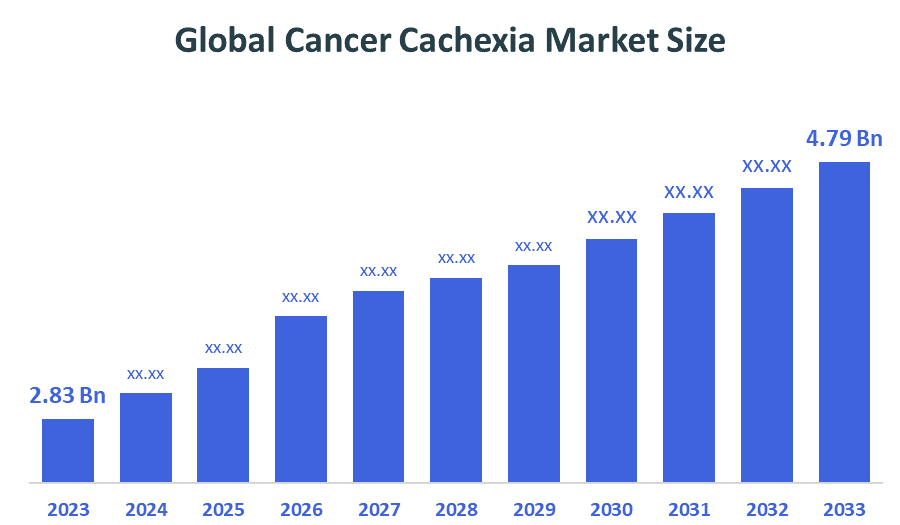
According to Decision Advisors, the Global Cancer Cachexia Market Size is expected to grow from USD 2.83 billion in 2025 to USD 4.79 billion by 2035, at a CAGR of 5.4% during the forecast period 2025-2035. Global cancer cachexia market is projected to grow significantly over the next decade rising cancer prevalence, increasing awareness of early diagnosis, and growing demand for supportive care therapies. Expanding research investments, advancements in targeted treatments, and adoption of personalized and multimodal approaches are further accelerating market growth.
Market Overview/ Introduction
The global Cancer Cachexia market refers to the development, commercialization, and adoption of therapies and supportive care solutions aimed at managing cancer-induced cachexia, a complex metabolic syndrome characterized by progressive weight loss, skeletal muscle wasting, and reduced functional capacity in cancer patients. Cancer cachexia is defined as a multifactorial condition driven by systemic inflammation, metabolic abnormalities, and tumor-host interactions, leading to loss of muscle mass with or without fat loss. It commonly occurs in advanced-stage cancers such as lung, pancreatic, and gastrointestinal malignancies, significantly impacting patient quality of life and survival outcomes. The market scope includes therapeutic classes such as appetite stimulators, anabolic agents, anti-inflammatory drugs, and emerging targeted therapies, along with nutritional support and multimodal treatment approaches. Growth is supported by increasing cancer incidence, rising awareness of supportive oncology care, and expanding clinical research focused on novel drug development. Future opportunities lie in targeted biologics, early-stage intervention strategies, and precision medicine approaches leveraging biomarkers and AI-based diagnostics. Increasing adoption of integrated care models combining pharmacological, nutritional, and digital health solutions is expected to unlock significant market potential globally.
- National cancer control programs in countries such as Germany and Italy increasingly incorporate cachexia screening into clinical guidelines, while Nordic countries focus on comprehensive cancer care frameworks including nutritional and supportive therapy interventions.
- Health Minister's Cancer Patient Fund (HMCPF) (India), Provides up to ?15 lakh per patient through revolving funds at 27 Regional Cancer Centres, supporting below-poverty-line cancer patients by ensuring financial aid for treatment and improving access to quality care.
- The 2025-26 Budget’s Customs Duty Exemptions for 36 lifesaving cancer drugs reduce import costs, improve affordability, and facilitate wider access to essential oncology medicines across India for patients in need.
- The National Cancer Grid (NCG), a network of 280+ cancer centers, standardizes treatment protocols, improves care quality, and makes oncology services affordable, collectively addressing over 60% of India's cancer burden through coordinated clinical, research, and educational initiatives.
Notable Insights: -
- North America holds the largest regional market share, accounting for approximately 46% in the global cancer cachexia market.
- Asia-Pacific is the fastest-growing region in the global cancer cachexia market, expanding at a CAGR of approximately 6.08% during the forecast period.
- By therapeutic class, the ghrelin receptor agonists segment held a dominant position with approximately 34.6% in terms of market share in 2025.
- By mechanism of action, the appetite stimulators segment dominated the market, accounting for approximately 46.4% of the global market share in 2025.
- By cancer type, the lung cancer segment held a dominant position with around 29.32% market share in 2025.
- By stage of cachexia, the established cachexia segment dominated the market, accounting for approximately 48.12% of the global market share in 2025.
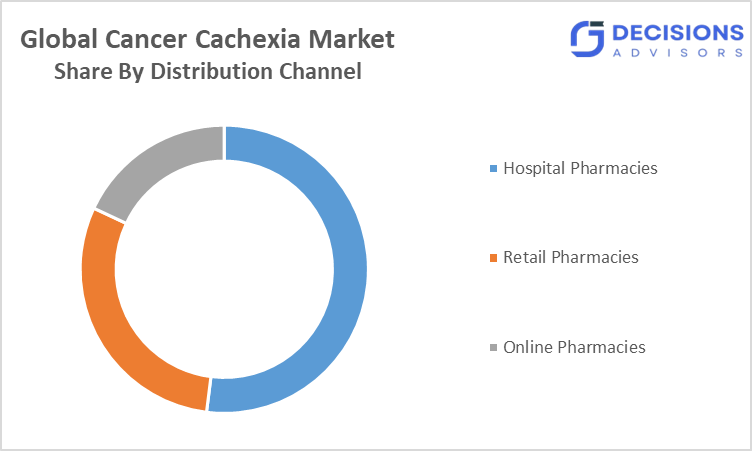
- By distribution channel, the hospital pharmacies segment held the largest share with approximately 51.97% in 2025.
- The compound annual growth rate of the global cancer cachexia market is 5.4%.
- The market is likely to achieve a valuation of USD 4.79 billion by 2035.
What is role of technology in grooming the market?
Technology plays a crucial role in shaping the global Cancer Cachexia market by accelerating drug discovery, improving early diagnosis, and enhancing patient monitoring. Artificial intelligence and multi-omics profiling are increasingly used to identify cachexia biomarkers such as GDF-15, enabling targeted therapy development and improving clinical success rates. Digital health tools, including remote patient monitoring and mobile applications, help track weight loss, appetite, and treatment adherence in real time, improving patient outcomes. Additionally, advanced clinical trial designs and data analytics are reducing drug development timelines and increasing precision in patient selection. Telemedicine and e-pharmacy platforms are also expanding access to supportive care treatments globally. These technological advancements are enabling companies to improve treatment effectiveness, enhance patient engagement, and drive long-term market growth.
How is Recent Developments Helping the Market?
Recent developments such as targeted therapy innovation, expansion of clinical trials, and increasing focus on early-stage intervention are supporting the growth of the global Cancer Cachexia market. The emergence of drugs targeting cachexia pathways, including GDF-15 inhibitors and ghrelin receptor agonists, is significantly improving treatment outcomes. Increasing clinical pipeline activity, particularly in Phase II and III trials, reflects strong industry focus on addressing unmet medical needs. Additionally, growing adoption of multimodal treatment approaches, combining pharmacological therapies with nutritional and supportive care, is enhancing patient recovery rates. Regulatory support and faster approval pathways for oncology supportive care drugs are further accelerating market entry. These developments are strengthening the therapeutic landscape and expanding growth opportunities.
Market Drivers
The global cancer cachexia market is driven by the rising prevalence of cancer and the increasing incidence of cachexia among advanced-stage patients. Growing awareness regarding early diagnosis and treatment of cachexia is supporting demand for targeted therapies. The expansion of oncology treatment infrastructure and supportive care services is further contributing to market growth. Increasing investment in research and development for novel therapeutics, including appetite stimulators and anabolic agents, is accelerating innovation. Additionally, the shift toward personalized medicine and multimodal treatment approaches is improving patient outcomes and driving adoption. The growing aging population and higher cancer burden globally are also key factors supporting sustained market expansion.
Restrain
The global cancer cachexia market is restrained by complex disease pathology and limited availability of approved therapies. High drug development costs and stringent regulatory requirements delay product approvals. Additionally, low awareness, underdiagnosis in early stages, and lack of standardized treatment guidelines restrict adoption. Variability in patient response and limited clinical success rates further challenge overall market growth potential.
Competitive Analysis:
The report offers the appropriate analysis of the key organizations/companies involved within the global cancer cachexia market, along with a comparative evaluation primarily based on their product of offering, business overviews, geographic presence, enterprise strategies, segment market share, and SWOT analysis. The report also provides an elaborative analysis focusing on the current news and developments of the companies, which includes product development, innovations, joint ventures, partnerships, mergers & acquisitions, strategic alliances, and others. This allows for the evaluation of the overall competition within the market.
Top Companies in Global Cancer Cachexia Market
- Helsinn Group
- Fresenius SE & Co. KGaA
- Actimed Therapeutics
- Endevica Bio
- Artelo Biosciences
- Pfizer Inc.
- Bristol-Myers Squibb Company
- Eli Lilly and Company
- Novartis AG
- Merck & Co., Inc.
- AbbVie Inc.
- AstraZeneca PLC
- Takeda Pharmaceutical Company Limited
Government Initiatives
|
Country |
Key Government Initiatives |
|
US |
FDA issued guidance for cancer cachexia drug development (2023) to streamline approval pathways, while the National Cancer Institute (NCI) funded a $25 million multi-year research initiative to advance understanding and treatment of cancer cachexia. |
|
India |
Ayushman Bharat Yojana provides financial coverage of up to ?5 lakh per family for cancer treatment, while the Health Minister’s Cancer Patient Fund (HMCPF) offers financial assistance for economically weaker patients, improving access to supportive cancer care including cachexia management. |
|
Japan |
Government-supported regulatory approval of anamorelin (Adlumiz) for cancer cachexia treatment has strengthened early adoption of targeted therapies and positioned Japan as a leading market in cachexia treatment innovation. |
Market Segmentation
The global cancer cachexia market share is classified into therapeutic class, mechanism of action, cancer type, stage of cachexia, and distribution channel.
- The Ghrelin Receptor Agonists segment dominated the market in 2025, and is projected to grow at a substantial CAGR of approximately 34.6% during the forecast period.
Based on the therapeutic class, the global Cancer Cachexia market is divided into ghrelin receptor agonists, selective androgen receptor modulators (SARMs), beta-blockers, progestogens, corticosteroids, combination therapy, and other. Among these, the ghrelin receptor agonists segment dominated the market in 2025, and is projected to grow at a substantial CAGR of approximately 34.6% during the forecast period. It is because of its strong clinical efficacy in improving appetite and body weight in cancer patients. It has gained significant adoption due to increasing clinical approvals and supportive trial outcomes. Here, the dominance is driven by rising demand for effective cachexia-targeted therapies, growing awareness among healthcare professionals, and increasing focus on improving patient quality of life.
- The Appetite Stimulators segment accounted for the largest share in 2025, and is anticipated to grow at a significant CAGR of approximately 46.4 % during the forecast period.
Based on the mechanism of action, the global Cancer Cachexia market is divided into appetite stimulators, anabolic agents, catabolic-pathway inhibitors, anti-inflammatory, and multi-target ACTAs. Among these, the appetite stimulators segment accounted for the largest share in 2025, and is anticipated to grow at a significant CAGR of approximately 46.4 % during the forecast period. It is dominating because these therapies directly address appetite loss, which is the primary symptom of cachexia. Again, the increasing prevalence of cancer and rising demand for supportive care therapies are supporting the segment growth.
- The Lung Cancer segment dominated the market in 2025, and is projected to grow at a substantial CAGR of approximately 29.32% during the forecast period.
Based on the cancer type, the global Cancer Cachexia market is divided into lung cancer, gastro-intestinal cancers, breast cancer, prostate cancer, hematologic malignancies, and other. Among these, the lung cancer segment dominated the market in 2025, and is projected to grow at a substantial CAGR of approximately 29.32% during the forecast period. This is because cachexia is highly prevalent among lung cancer patients, especially in advanced stages. Increasing global incidence of lung cancer and rising need for supportive oncology care are further driving the segment growth.
- The Established Cachexia segment dominated the market in 2025, and is projected to grow at a substantial CAGR of approximately 48.12% during the forecast period.
Based on the stage of cachexia, the global Cancer Cachexia market is divided into pre-cachexia, established cachexia, and refractory cachexia. Among these, the established cachexia segment dominated the market in 2025, and is projected to grow at a substantial CAGR of approximately 48.12% during the forecast period. This is due to the higher number of patients diagnosed at this stage, where clinical intervention becomes necessary. Increasing awareness and diagnosis rates are further contributing to the segment dominance.
- The Hospital Pharmacies segment dominated the market in 2025, and is projected to grow at a substantial CAGR of approximately 51.97% during the forecast period.
Based on the distribution channel, the global Cancer Cachexia market is divided into hospital pharmacies, retail pharmacies, and online pharmacies. Among these, the hospital pharmacies segment dominated the market in 2025, and is projected to grow at a substantial CAGR of approximately 51.97% during the forecast period. This is because most cancer cachexia treatments are administered under clinical supervision in hospitals. Increasing hospitalization rates and need for specialized drug administration are further supporting the segment growth.
What is the Reason of the Region Dominance?
The dominance of certain regions in the global Cancer Cachexia market is primarily driven by the high prevalence of cancer cases, advanced healthcare infrastructure, strong clinical research capabilities, and early adoption of supportive oncology therapies. Regions such as North America lead the market due to significant healthcare spending, widespread awareness regarding cancer-associated cachexia, and the availability of approved therapies such as anamorelin. Rapid advancements in precision medicine, increasing focus on early diagnosis, and strong reimbursement frameworks further support market growth. Additionally, the presence of major pharmaceutical companies, ongoing clinical trials, and increasing investment in targeted therapies contribute to regional dominance.
Strategies to Implement for Growth of the Market in Non-Leading Regions
Growth in non-leading regions can be supported through strategic investments, improved access to diagnosis, and expansion of healthcare infrastructure. Companies can increase market penetration by introducing cost-effective therapies and improving awareness about cancer cachexia management among healthcare professionals and patients. Expanding hospital and oncology care networks can also improve treatment accessibility in emerging markets. Additionally, partnerships with local healthcare providers and government bodies can help enhance screening and early diagnosis rates. Awareness campaigns focusing on nutritional support and early-stage intervention can further drive adoption. Investment in clinical research, digital health solutions, and personalized treatment approaches may also strengthen long-term market growth.
Regional Segment Analysis of the Cancer Cachexia Market
- North America (U.S., Canada, Mexico)
- Europe (Germany, France, U.K., Italy, Spain, Rest of Europe)
- Asia-Pacific (China, Japan, India, Rest of APAC)
- South America (Brazil and the Rest of South America)
- The Middle East and Africa (UAE, South Africa, Rest of MEA)
North America is anticipated to hold the largest share of the global Cancer Cachexia market over the predicted timeframe.
North America is anticipated to hold the largest share of the global Cancer Cachexia market over the predicted timeframe. This market is accounting for approximately 46% of the total market share, the dominance of this market is driven by the high prevalence of cancer cases, advanced healthcare infrastructure, strong clinical research activities, and high adoption of cachexia-targeted therapies. Countries such as the United States dominate the global Cancer Cachexia market, with strong presence of pharmaceutical companies, increasing awareness regarding supportive oncology care, and availability of advanced treatment options contributing to the high market value.
Asia-Pacific is expected to grow at a rapid CAGR in the global Cancer Cachexia market during the forecast period. It is the fastest growing region because the region itself is expanding at a CAGR of approximately 6.08%, driven by increasing cancer incidence in China, Japan, and India, improving healthcare infrastructure, and rising awareness regarding supportive cancer care. Large patient populations, expanding access to oncology treatments, and growing government initiatives are supporting the rapid market growth in this region.
Europe is the 3rd largest region to grow in the global Cancer Cachexia market during the region It is because Europe has well-established healthcare systems, strong oncology research capabilities, and increasing focus on cancer supportive care management. Countries such as Germany, France, and the UK give strong contribution. The region is a major hub for clinical research and therapeutic advancements, driving steady market growth even with moderate patient volume expansion.
Future Market Trends in Global Cancer Cachexia Market: -
- Novel Therapeutic Development
Shift towards targeted treatments, including anti-GDF-15 monoclonal antibodies (e.g., AV-380), myostatin inhibitors, and Dual Anabolic-Catabolic Transforming Agents (ACTAs) to target the root causes of muscle wasting.
- Combination Therapies Growth
The combination therapies segment is projected to grow rapidly, reflecting a shift toward multimodal approaches that combine pharmacological agents with nutritional counseling to improve patient quality of life.
- Increased Focus on Personalized Medicine
Integration of biomarker-enabled patient identification to identify patients earlier in the disease cycle for better intervention efficacy.
Recent Development
- In January 2025, Pfizer Inc. reported breakthrough clinical results for ponsegromab, a monoclonal antibody targeting GDF-15, demonstrating significant improvements in body weight, appetite, and muscle mass in cancer cachexia patients, strengthening targeted therapy development.
- In April 2025, Endevica Bio initiated Phase II clinical trials for TCMCB07, focusing on preventing weight loss in metastatic colorectal cancer patients by targeting metabolic dysregulation associated with cancer cachexia progression.
- In March 2025, GenFleet Therapeutics received approval from National Medical Products Administration to conduct Phase I trials for GFS202A, aimed at treating patients with pre-cachexia and cachexia, expanding early-stage intervention approaches.
- In January 2026, research published in MDPI highlighted the use of multi-omics profiling to identify novel molecular pathways involved in cancer cachexia, enabling development of next-generation targeted therapies.
Market Segment
This study forecasts revenue at global, regional, and country levels from 2020 to 2035. Decision Advisor has segmented the global cancer cachexia market based on the below-mentioned segments:
Global Cancer Cachexia Market, By Therapeutic Class
- Ghrelin Receptor Agonists
- Selective Androgen Receptor Modulators (SARMs)
- Beta-blockers
- Progestogens
- Corticosteroids
- Combination Therapy
- Other
Global Cancer Cachexia Market, By Mechanism of Action
- Appetite Stimulators
- Anabolic Agents
- Catabolic-Pathway Inhibitors
- Anti-inflammatory
- Multi-target ACTAs
Global Cancer Cachexia Market, By Cancer Type
- Lung Cancer
- Gastro-intestinal Cancers
- Breast Cancer
- Prostate Cancer
- Hematologic Malignancies
- Other
Global Cancer Cachexia Market, By Stage of Cachexia
- Pre-cachexia
- Established Cachexia
- Refractory Cachexia
Global Cancer Cachexia Market, By Distribution Channel
- Hospital Pharmacies
- Retail Pharmacies
- Online Pharmacies
Global Cancer Cachexia Market, By Regional Analysis
- North America
- US
- Canada
- Mexico
- Europe
- Germany
- UK
- France
- Italy
- Spain
- Russia
- Rest of Europe
- Asia Pacific
- China
- Japan
- India
- South Korea
- Australia
- Rest of Asia Pacific
- South America
- Brazil
- Argentina
- Rest of South America
- Middle East & Africa
- UAE
- Saudi Arabia
- Qatar
- South Africa
- Rest of the Middle East & Africa
Frequently Asked Questions (FAQ)
Q. How are wearable technologies influencing patient outcomes in cancer cachexia management?
A. Wearable devices help monitor weight, muscle mass, and activity levels in real time, enabling clinicians to adjust treatments promptly and improve patient quality of life.
Q. What role do patient support programs play in improving therapy adherence for cancer cachexia?
A. Support programs provide education, counseling, and financial guidance, which help patients follow prescribed treatment plans consistently, enhancing clinical outcomes and reducing disease progression.
Q. How might blockchain technology enhance clinical trials for cancer cachexia drugs?
A. Blockchain ensures secure, transparent, and tamper-proof management of patient data, improving trial integrity, accelerating regulatory approvals, and fostering trust among stakeholders.
Q. What emerging markets are likely to become future hubs for cancer cachexia therapeutics research?
A. Countries in Asia-Pacific, including India, China, and South Korea, are rapidly expanding oncology research infrastructure, attracting clinical trials and investments in cachexia-targeted drug development.
Check Licence
Choose the plan that fits you best: Single User, Multi-User, or Enterprise solutions tailored for your needs.
We Have You Covered
- 24/7 Analyst Support
- Clients Across the Globe
- Tailored Insights
- Technology Tracking
- Competitive Intelligence
- Custom Research
- Syndicated Market Studies
- Market Overview
- Market Segmentation
- Growth Drivers
- Market Opportunities
- Regulatory Insights
- Innovation & Sustainability
Report Details
| Scope | Global |
| Pages | 240 |
| Delivery | PDF & Excel via Email |
| Language | English |
| Release | Mar 2026 |
| Access | Download from this page |