
Global Cancer Palliative Care Market
 |
Pages:
190
|
Pages:
190
Global Cancer Palliative Care Market Size, Share, By Service Type (Inpatient Care, Outpatient Care, Home-Based Care), By Therapy (Pain Management, Symptom Management, Psychological Support), By End User (Hospitals, Hospice Centers, Home Care Settings), and By Region (North America, Europe, Asia-Pacific, Latin America, Middle East & Africa), Analysis and Forecast 2025?2035.
REPORT COVERAGE
Global
Market Snapshot
- Compound Annual Growth Rate (CAGR): 10.1%
- Largest Regional Market: North America
- Fastest Growing Region: Asia Pacific
- 3rd Largest Region: Europe
- Base Year: 2025
- Historical Period: 2021–2025
- Forecast Period: 2025–2035
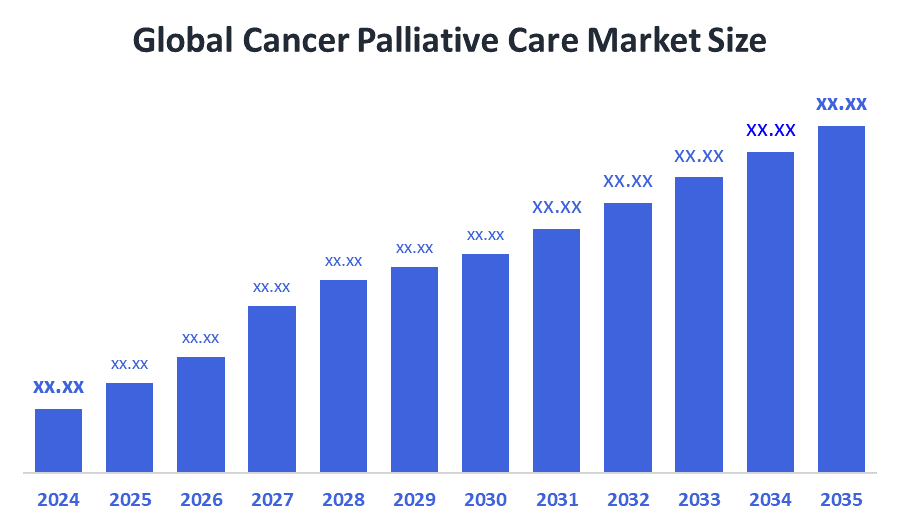
According to Decision Advisors, the global cancer palliative care market Size is expected to grow at a CAGR of 10.1% during the forecast period 2025-2035. The global cancer palliative care market is projected to expand steadily over the next decade, driven by the rising prevalence of cancer, increasing demand for quality-of-life-focused treatment, and growing awareness about supportive care services. The expansion of home-based care, advancements in pain and symptom management therapies, and the integration of palliative care into standard oncology treatment pathways are significantly contributing to market growth.
Market Overview/ Introduction
The cancer palliative care market refers to the segment of healthcare services focused on improving the quality of life for patients diagnosed with cancer by managing pain, symptoms, and psychological distress associated with the disease and its treatment. This includes taking care of emotional, social and spiritual needs. The goal of care is to relieve physical pain, psychological distress and spiritual burden holistically. It is a market that is worth a lot of money. As doctors find ways to help patients live longer with cancer, the need for good supportive care is greater than ever. Cancer palliative care is now a part of helping patients with advanced cancer live better lives. This growth is being met with significant momentum from both the public and private sectors. Around the world, governments are starting to treat this kind of care as a fundamental right rather than a luxury. In India, for example, the National Programme for Palliative Care and the Ayushman Bharat scheme are life-changing initiatives, opening doors for millions of families who previously had nowhere to turn. It’s a massive step toward making sure that a cancer diagnosis doesn't mean a loss of dignity or comfort. Looking ahead, the most exciting future opportunities reside in digital transformation. The rise of Tele-palliative services and AI-driven remote monitoring is allowing clinicians to track symptoms like pain and fatigue in real-time.
- Australia recently injected USD 53 million into national palliative projects.
- Companies like VITAS Healthcare and Amedisys are spearheading a shift toward "home-based" models, partnering with organizations like Macmillan Cancer Support to bring specialized care directly to the patient's bedside.
Notable Insights: -
- North America is anticipated to hold the largest share of the cancer palliative care market over the predicted timeframe
- Asia Pacific is expected to grow at a rapid CAGR in the cancer palliative care market during the forecast period.
- By service, the home-based segment dominated the market in 2025 and is projected to grow at a substantial CAGR during the forecast period.
- By end user, the hospitals segment dominated the market in 2025, and is projected to grow at a substantial CAGR during the forecast period.
- The compound annual growth rate of the global spirit market is 10.1%.
What is role of technology in grooming the market?
Technology plays a transformative role in the cancer palliative care market by enhancing patient monitoring, improving symptom management, and enabling remote care delivery. Telemedicine platforms allow healthcare providers to offer consultations and follow-ups without requiring hospital visits, improving accessibility for patients with limited mobility. Wearable devices and remote monitoring tools help track vital signs, pain levels, and treatment responses in real time, enabling timely interventions. Artificial intelligence is also being explored to predict symptom progression and personalize care plans. Additionally, electronic health records (EHRs) improve coordination among multidisciplinary care teams, ensuring seamless patient management. These technological advancements are making palliative care more efficient, patient-centric, and accessible, thereby driving market growth.
Market Drivers
The cancer palliative care market is driven by the rising global incidence of cancer and the growing need for supportive care services. Increasing awareness about the importance of quality of life during cancer treatment is encouraging the adoption of palliative care services. The ageing population, which is more susceptible to cancer, is further contributing to market growth. Additionally, advancements in pain management therapies and supportive care techniques are improving patient outcomes. Government initiatives, improved reimbursement policies, and the expansion of hospice and home healthcare services are also supporting market expansion. The growing integration of palliative care into standard oncology treatment protocols is further accelerating adoption.
Restrain
The cancer palliative care market is restrained due to some challenges. Limited awareness in developing regions and cultural barriers associated with end-of-life care can hinder adoption. Shortage of skilled palliative care professionals is another major constraint. Additionally, inadequate reimbursement policies in some regions and a lack of infrastructure for home-based care services can restrict market growth.
Competitive Analysis:
The report offers the appropriate analysis of the key organizations/companies involved within the cancer palliative care market, along with a comparative evaluation primarily based on their product of offering, business overviews, geographic presence, enterprise strategies, segment market share, and SWOT analysis. The report also provides an elaborative analysis focusing on the current news and developments of the companies, which includes product development, innovations, joint ventures, partnerships, mergers & acquisitions, strategic alliances, and others. This allows for the evaluation of the overall competition within the market.
Top Companies in Global Cancer Palliative Care Market
- VITAS Healthcare
- Kindred Healthcare
- Brookdale Senior Living
- Genesis Healthcare
- Amedisys Inc.
- LHC Group
- AccentCare
- Seasons Hospice & Palliative Care
- National Hospice and Palliative Care Organization (NHPCO)
- Hospice UK
Government Initiatives
|
Country |
Key Government Initiatives |
|
UK |
Hospice Funding: In early 2026, the government allocated an additional £25 million in capital funding to support adult and children's hospices across England. |
|
US |
While the US has an extensive infrastructure, recent 2025 studies cited by WHO-affiliated researchers indicate that its utilization rate for cancer patients is approximately 30.3%, which is lower than in some other regions due to systemic barriers |
|
India |
1. Union Budget 2025-26 Customs Exemptions: The central government has fully exempted 36 lifesaving cancer drugs from Basic Customs Duty (BCD) to lower treatment costs. 2. Ayushman Bharat (PM-JAY): Provides ?5 lakh per family annually, covering over 200 cancer treatment packages, including specialized palliative care. |
Market Segmentation
The cancer palliative care market share is classified into service type, therapy, and end user
- The home-based care segment dominated the market in 2025 and is projected to grow at a substantial CAGR during the forecast period.
Based on the service type, the cancer palliative care market is divided into inpatient care, outpatient care, and home-based care. Among these, the home-based segment dominated the market in 2025 and is projected to grow at a substantial CAGR during the forecast period. This dominance is attributed to the increasing patient preference for receiving care in a comfortable and familiar environment. Home-based care reduces hospital visits, lowers treatment costs, and improves patient satisfaction. Additionally, the growing availability of home healthcare services and remote monitoring technologies is further driving the adoption of this segment.
- The pain management segment accounted for the largest share in 2025, and is anticipated to grow at a significant CAGR during the forecast period.
Based on the therapy, the cancer palliative care market is divided into pain management, symptom management and psychological support. Among these, the pain management segment accounted for the largest share in 2025, and it's anticipated to grow at a significant CAGR during the forecast period. This is primarily due to the high prevalence of cancer-related pain among patients, especially in advanced stages of the disease. The increasing availability of effective analgesics, opioids, and supportive therapies, along with improved pain assessment practices, has significantly driven the adoption of pain management services, supporting continued growth during the forecast period.
- The hospitals segment dominated the market in 2025, and is projected to grow at a substantial CAGR during the forecast period.
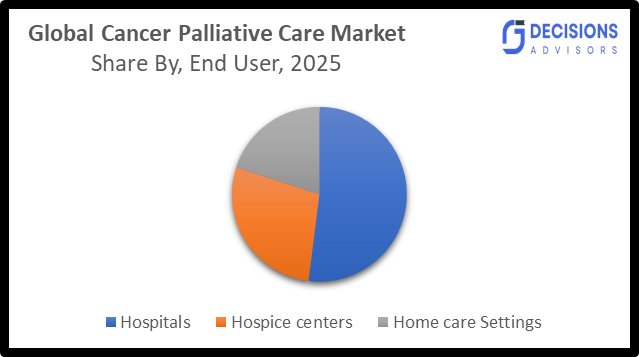
Based on the end user, the cancer palliative care market is divided into hospitals, hospice centers and home care settings. Among these, the hospitals segment dominated the market in 2025, and is projected to grow at a substantial CAGR during the forecast period. This dominance is attributed to the availability of advanced healthcare infrastructure, specialized oncology and palliative care teams, and access to multidisciplinary treatment approaches. Hospitals serve as primary centers for managing complex symptoms and providing integrated care, which drives higher patient inflow. The hospice centers segment held the second-largest share, supported by the growing focus on end-of-life care and increasing awareness regarding quality-of-life management. Hospice facilities provide specialized services focused on comfort, emotional support, and holistic care, making them an essential component of the palliative care ecosystem. The home care settings segment accounted for a significant share of the market and is expected to grow steadily over the forecast period. This growth is driven by increasing patient preference for receiving care at home, along with the rising availability of home healthcare services and remote monitoring solutions. Home-based care offers cost-effective and personalized treatment, further supporting its adoption.
Strategies to Implement for Growth of the Market in Non-Leading Regions
Market growth in non-leading regions can be accelerated by improving healthcare infrastructure and expanding access to palliative care services. Governments and private organizations should focus on awareness campaigns to educate patients and healthcare providers about the benefits of palliative care. Investment in training healthcare professionals and developing community-based care models can enhance service availability. Adoption of telemedicine and mobile health solutions can further improve access in rural and underserved areas. Collaborations with international organizations and NGOs can also help strengthen palliative care frameworks and ensure affordable care delivery.
Regional Segment Analysis of the Cancer Palliative Care Market
- North America (U.S., Canada, Mexico)
- Europe (Germany, France, U.K., Italy, Spain, Rest of Europe)
- Asia-Pacific (China, Japan, India, Rest of APAC)
- South America (Brazil and the Rest of South America)
- The Middle East and Africa (UAE, South Africa, Rest of MEA)
North America is anticipated to hold the largest share of the cancer palliative care market over the predicted timeframe.
North America is anticipated to hold the largest share of the cancer palliative care market over the predicted timeframe. The dominance of this region is primarily driven by its well-established healthcare infrastructure, strong integration of palliative care into standard oncology treatment, and high awareness regarding quality-of-life care. The region benefits from a robust network of hospice and home healthcare providers, enabling comprehensive and accessible palliative services. Favourable reimbursement frameworks, particularly Medicare coverage for hospice care in the United States, further support widespread adoption. Additionally, the presence of advanced healthcare technologies, increasing use of tele-palliative care, and rising healthcare expenditure are contributing significantly to market growth.
Asia Pacific is expected to grow at a rapid CAGR in the cancer palliative care market during the forecast period.
Asia Pacific is expected to grow at a rapid CAGR in the cancer palliative care market during the forecast period. This growth is driven by the rapidly increasing burden of cancer, large patient population, and improving healthcare infrastructure across countries such as China, India, and Japan. Governments in the region are increasingly focusing on expanding access to palliative care services through national healthcare programs and policy initiatives. The growing awareness of supportive care, along with the expansion of home-based and community care models, is further accelerating market growth. Additionally, increasing investments in healthcare and the gradual adoption of digital health technologies are enhancing accessibility and service delivery.
Europe is the 3rd largest region to grow in the cancer palliative care market during the period.
Europe is the third-largest region in the cancer palliative care market, supported by well-developed healthcare systems and strong policy frameworks promoting palliative care integration. Key countries such as Germany, France, and the United Kingdom play a significant role in regional growth. The region is witnessing increased adoption of hospice and community-based care services, along with a growing focus on patient-centred care. Supportive government initiatives, improved access to pain management therapies, and rising awareness regarding end-of-life care are further contributing to market expansion. Additionally, the increasing ageing population and cancer prevalence are driving sustained demand for palliative care services across Europe.
Future Market Trends in Global Cancer Palliative Care Market: -
- Rapid Expansion of Home-Based and Community Palliative Care
Home-based palliative care is emerging as the most dominant trend, driven by increasing patient preference for receiving care in a comfortable environment. Healthcare systems are shifting toward community-based models to reduce hospital burden and improve patient satisfaction. This trend is further supported by the growing need for personalized and cost-effective care delivery.
- Integration of Digital Health, Telemedicine, and Remote Monitoring
The adoption of tele-palliative care and digital health platforms is significantly transforming care delivery. Remote consultations, wearable devices, and AI-driven monitoring tools are enabling continuous patient support and early symptom management, especially in rural and underserved areas.
- Early Integration of Palliative Care into Oncology Treatment
Palliative care is increasingly being introduced at earlier stages of cancer treatment rather than only at end-of-life. This shift improves quality of life, enhances treatment adherence, and reduces symptom burden. Healthcare providers are focusing on multidisciplinary care models that combine curative and supportive treatments.
Recent Development
- In February 2026, regional healthcare authorities expanded palliative care programs across public hospitals, including free home-based services and community-level care delivery. These initiatives aim to improve accessibility and provide comprehensive support, including pain management and counselling services.
- In October 2025, global healthcare organizations observed World Hospice and Palliative Care Day 2025, focusing on achieving universal access to palliative care. This initiative strengthened awareness, encouraged policy implementation, and promoted integration of palliative care into national healthcare systems, highlighting the growing global emphasis on equitable and accessible supportive care services.
- In May 2025, the Government of India strengthened its National Programme for Palliative Care (NPPC) by expanding services across district hospitals and primary healthcare centres. This initiative improved access to pain relief, essential medicines, and community-based palliative services, addressing unmet needs in cancer care and supporting market growth.
How is Recent Developments Helping the Market?
Recent developments are significantly accelerating the growth of the cancer palliative care market by improving patient quality of life and expanding access to supportive care services. The increasing adoption of home-based and tele-palliative care models is enabling continuous patient monitoring, timely symptom management, and reduced hospital dependency. Advancements in pain management therapies and supportive care techniques are enhancing patient comfort and overall treatment experience. Additionally, the integration of palliative care into standard oncology pathways ensures earlier intervention and better clinical outcomes. Government initiatives and awareness programs are improving access to essential medicines and care services, particularly in underserved regions. Continuous investments in healthcare infrastructure, digital health technologies, and workforce training are further driving innovation and strengthening the overall palliative care ecosystem.
Market Segment
This study forecasts revenue at global, regional, and country levels from 2020 to 2035. Decision Advisors has segmented the cancer palliative care market based on the below-mentioned segments:
Global Cancer Palliative Care Market, By Service Type
- Inpatient Care
- Outpatient Care
- Home-Based care
Global Cancer Palliative Care Market, By Therapy
- Pain Management
- Symptom Management
- Psychological Support
- Supportive Care Services
Global Cancer Palliative Care Market, By End User
- Hospitals
- Hospice Centers
- Home Care Settings
Global Cancer Palliative Care Market, By Regional Analysis
- North America
- US
- Canada
- Mexico
- Europe
- Germany
- UK
- France
- Italy
- Spain
- Russia
- Rest of Europe
- Asia Pacific
- China
- Japan
- India
- South Korea
- Australia
- Rest of Asia Pacific
- South America
- Brazil
- Argentina
- Rest of South America
- Middle East & Africa
- UAE
- Saudi Arabia
- Qatar
- South Africa
- Rest of the Middle East & Africa
Frequently Asked Questions (FAQ)
Q. How does palliative care impact healthcare costs for cancer patients?
A. Palliative care can significantly reduce overall healthcare costs by minimizing unnecessary hospital admissions, emergency visits, and intensive treatments. Early integration of palliative care helps in better symptom control and care planning, leading to more efficient resource utilisation.
Q. What role do multidisciplinary teams play in cancer palliative care?
A. Multidisciplinary teams, including doctors, nurses, social workers, and psychologists, play a crucial role in delivering comprehensive care. They address not only physical symptoms but also emotional, social, and spiritual needs, improving overall patient well-being.
Q. How does palliative care support caregivers and family members?
A. Palliative care provides counselling, education, and emotional support to caregivers and families. It helps them manage stress, understand patient needs, and make informed decisions, thereby improving the overall care environment.
Q. What are the key challenges in implementing home-based palliative care services?
A. Major challenges include limited availability of trained professionals, lack of infrastructure in rural areas, inconsistent reimbursement policies, and difficulties in ensuring continuous medical support outside hospital settings.
Check Licence
Choose the plan that fits you best: Single User, Multi-User, or Enterprise solutions tailored for your needs.
We Have You Covered
- 24/7 Analyst Support
- Clients Across the Globe
- Tailored Insights
- Technology Tracking
- Competitive Intelligence
- Custom Research
- Syndicated Market Studies
- Market Overview
- Market Segmentation
- Growth Drivers
- Market Opportunities
- Regulatory Insights
- Innovation & Sustainability
Report Details
| Scope | Global |
| Pages | 190 |
| Delivery | PDF & Excel via Email |
| Language | English |
| Release | Mar 2026 |
| Access | Download from this page |