
Global Cell-Identification Technology Market
 |
Pages:
245
|
Pages:
245
Global Cell-identification technology market Size, Share, By Product & Service (Reagents & Consumables, Instruments), By Technology (PCR, Microscopy), By Cell Type (Human Cells, Animal Cells, Microbial Cells), By Application (Research Applications, Clinical Diagnostics, Drug Discovery & Development, Stem Cell Research, Cancer Research, Immunology Studies), By End User (Pharmaceutical & Biotechnology Companies, Academic & Research Institutes, Hospitals & Diagnostic Laboratories, Contract Research Organizations (CROs)) and By Region (North America, Europe, Asia-Pacific, Latin America, Middle East & Africa), Analysis and Forecast 2025?2035
REPORT COVERAGE
Global
Market Snapshot
- Market Size (2025): USD 5.74 Billion
- Projected Market Size (2035): USD 16.32 Billion
- Compound Annual Growth Rate (CAGR): 11.1%
- Largest Regional Market: North America
- Fastest Growing Region: Asia-Pacific
- 3rd Largest Region: Europe
- Base Year: 2025
- Historical Period: 2021–2024
- Forecast Period: 2026–2035
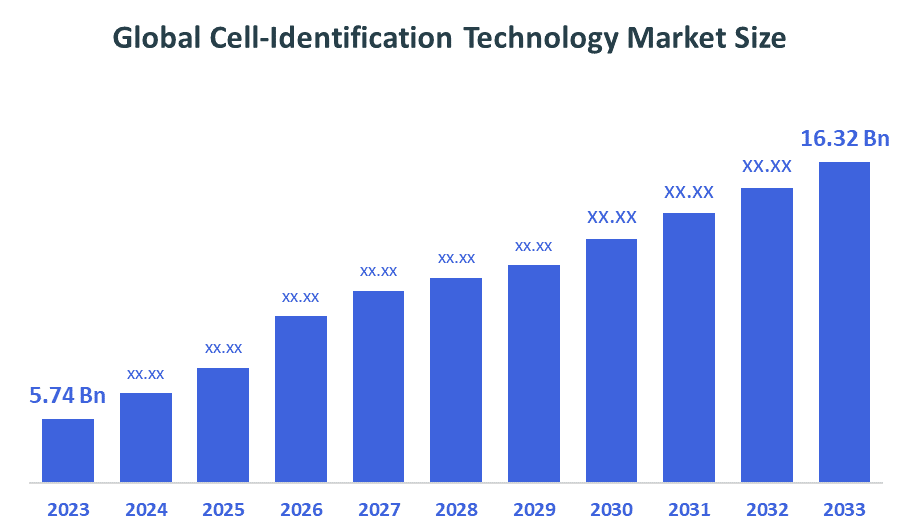
According to Decision Advisors, the Global Cell-identification technology market Size is expected to grow from USD 5.74 billion in 2024 to USD 16.32 billion by 2035, at a CAGR of 11.1% during the forecast period 2025-2035. The global Cell-identification technology market is projected to grow significantly over the next decade due to disease prevalence & treatment demand, precision medicine, technological advancement, AI and automation, R&D spending, rise in chronic and infectious diseases, and expansion of precision and personalized medicine.
Market Overview/ Introduction
The global cell-identification technology market refers to the advanced tools, instruments and software systems that work to identify, categorize, and study cells through their physical, biochemical, and molecular properties. These technologies serve as essential tools for research in both genomics and proteomics, together with their use in clinical diagnostics and drug development. The market expands because of the growing requirement to achieve precise cellular analysis in oncology and immunology, and the rising adoption of single-cell analysis, together with advanced imaging technologies. The ability to conduct extensive research through high-throughput platforms and integrated data analysis solutions boosts operational productivity and supports extensive research initiatives. The wider use of these technologies in stem cell research and regenerative medicine fields creates fresh business possibilities. The global market environment receives additional strength from ongoing product development and increased usage among academic institutions, biotechnology companies, and healthcare providers.
Notable Insights: -
- North America holds the largest regional market share of approximately 40%in the global cell-identification technology market.
- Asia Pacific is expected to grow at a rapid CAGR of approximately 14.5% in the global cell-identification technology market during the forecast period.
- The reagents & consumables segment held the dominant share of approximately 41% in 2025.
- The PCR segment dominated the market in 2025 and is projected to grow at a substantial CAGR of approximately 7.80% during the forecast period.
- The human cells segment accounted for the largest share in 2025, and is anticipated to grow at a significant CAGR of approximately 12.6% of during the forecast period.
- The clinical diagnostics segment dominated the market in 2025 and is projected to grow at a substantial CAGR during the forecast period.
- The pharmaceutical & biotechnology companies segment dominated the market in 2025 and is projected to grow at a substantial CAGR during the forecast period.
- The compound annual growth rate of the Global Cell-identification technology market is 11.1%.
- The market is likely to achieve a valuation of USD 16.32 billion by 2035.
What is role of technology in grooming the market?
Technology plays a pivotal role in shaping the global cell-identification technology market by enhancing accuracy, speed, and efficiency of cell analysis. Advanced tools such as flow cytometry, PCR, next-generation sequencing, and AI-driven imaging enable precise identification and characterization of cells. Integration of automation and digital platforms improves workflow efficiency and reduces human error. Additionally, innovations in bioinformatics support large-scale data analysis, accelerating research and clinical decision-making. These technological advancements drive adoption across diagnostics, drug discovery, and personalized medicine, ultimately fueling market growth and enabling more targeted and effective healthcare solutions worldwide.
Market Drivers
The global cell-identification technology market is experiencing rapid growth because more patients are being diagnosed with cancer, autoimmune disorders, and other chronic health conditions. The increase in this condition has created a greater demand for advanced cellular analysis methods, which medical researchers use to develop effective treatments. The industry is moving towards customized medical treatments, which require hospitals to accurately identify patient cells and create detailed profiles of individual cells. The development of new technologies, such as spectral flow cytometry and high-content screening (HCS), and next-generation sequencing, improves both the speed and precision of results. The combination of AI and machine learning technologies enables simpler analysis of difficult data, while the pharmaceutical industry and life sciences research field continue to expand their market presence through their research funding activities.
Restrain
The global cell-identification technology market faces restraints due to the high costs of advanced instruments and reagents, limiting adoption among small laboratories. Additionally, complex workflows, the need for skilled professionals, and stringent regulatory requirements hinder widespread implementation, particularly in developing regions with limited healthcare infrastructure and funding availability.
Competitive Analysis:
The report offers the appropriate analysis of the key organizations/companies involved within the Global Cell-Identification Technology Market, along with a comparative evaluation primarily based on their product of offering, business overviews, geographic presence, enterprise strategies, segment market share, and SWOT analysis. The report also provides an elaborative analysis focusing on the current news and developments of the companies, which includes product development, innovations, joint ventures, partnerships, mergers & acquisitions, strategic alliances, and others. This allows for the evaluation of the overall competition within the market.
Top Companies in Global Cell-Identification Technology Market
- Thermo Fisher Scientific
- Becton, Dickinson and Company
- Danaher Corporation
- Merck KGaA
- Agilent Technologies
- Bio-Rad Laboratories
- PerkinElmer (Revvity)
- QIAGEN N.V.
- Lonza Group
- Promega Corporation
- Cell Signaling Technology
- GE Healthcare
Government Initiatives
|
Country |
Key Government Initiatives |
|
China |
China’s 15th Five-Year Plan promotes innovation-driven biotechnology, prioritizing cell and gene therapy, which increases demand for cell-identification technologies. The Zhongguancun Innovation Forum supports commercialization, strengthening research, infrastructure, and market growth, creating a positive outlook for advanced cellular analysis technologies. |
|
US |
U.S. policies positively impact the cell-identification technology market by accelerating cell and gene therapy development. U.S. Food and Drug Administration CMC flexibility streamlines approvals, while the National Bioeconomy Executive Order boosts biomanufacturing investments. These initiatives enhance innovation, infrastructure, and demand for advanced cell-identification technologies. |
|
India |
India’s government initiatives strongly support the cell-identification technology market. Programs like the BioE3 Policy, GenomeIndia Project, and Biomedical Research Career Programme promote AI-driven cellular analysis, genomics, and single-cell research. These efforts enhance precision medicine, strengthen research infrastructure, and drive innovation, creating a positive growth environment for advanced cell-identification technologies. |
Market Segmentation
The cell-identification technology market share is classified into product & service, technology, cell type, application and end-user
- The reagents & consumables segment dominated the market in 2025 and is projected to grow at a substantial CAGR during the forecast period.
Based on the product & service, the cell-identification technology market is divided into reagents & consumables and instruments. Among these, the reagents & consumables segment dominated the market in 2025 and is projected to grow at a substantial CAGR during the forecast period. The reagents & consumables segment held the dominant share of approximately 41% in 2025. Fueled by the recurring usage in routine laboratory procedures, increasing research activities, and rising diagnostic testing volumes. Continuous demand, cost-effectiveness, and frequent replenishment needs are expected to drive steady growth throughout the forecast period.
- The PCR segment dominated the market in 2025 and is projected to grow at a substantial CAGR during the forecast period.
Based on the technology, the cell-identification technology market is divided into PCR and microscopy. Among these, the PCR segment accounted for the largest share in 2025, and it's anticipated to grow at a significant CAGR approximately 7.80% during the forecast period. Due to its high sensitivity, specificity, and rapid detection capabilities in identifying genetic material. It is widely used in diagnostics, infectious disease detection, and research. Increasing demand for accurate molecular testing and advancements in PCR techniques further drive its widespread adoption across healthcare and laboratories.
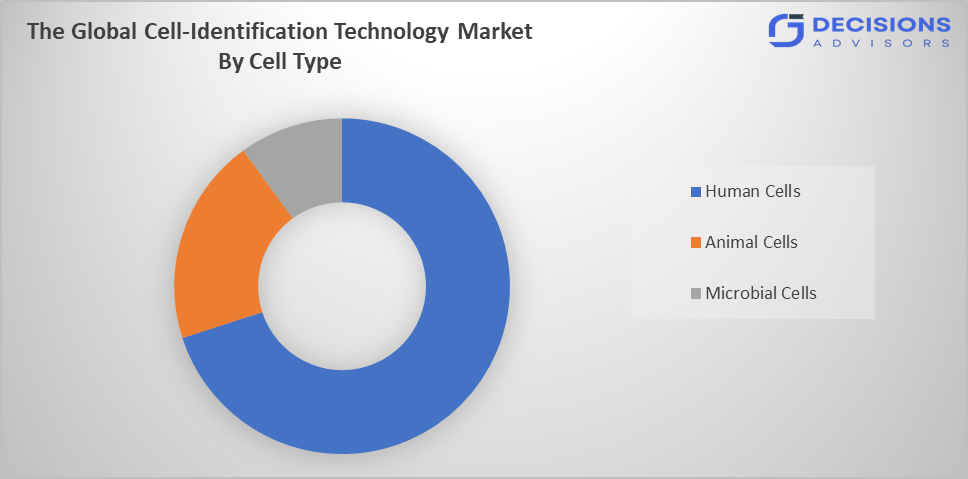
- The human cells segment accounted for the largest share in 2025, and is anticipated to grow at a significant CAGR of approximately 12.6% during the forecast period.
Based on the cell type, the cell-identification technology market is divided into human cells, animal cells, and microbial cells. Among these, the human cells segment accounted for the largest share in 2025, and it's anticipated to grow at a significant CAGR of approximately 12.6% during the forecast period. Due to their critical role in clinical diagnostics, disease research, and drug development. Increasing focus on personalized medicine, rising prevalence of chronic diseases, and demand for human-based testing models drive their extensive use, making them more relevant compared to animal and microbial cell applications in healthcare.
- The clinical diagnostics segment dominated the market in 2025 and is projected to grow at a substantial CAGR during the forecast period.
Based on the application, the cell-identification technology market is divided into research applications, clinical diagnostics, drug discovery & development, stem cell research, cancer research, and immunology studies. Among these, the clinical diagnostics segment dominated the market in 2025 and is projected to grow at a substantial CAGR during the forecast period. Fueled by the increasing need for early and precise disease detection. Rising prevalence of chronic and infectious diseases, growing adoption of advanced diagnostic technologies, and expanding healthcare access drive demand. Additionally, emphasis on personalized treatment and routine testing further supports the widespread use of cell identification in diagnostics.
- The pharmaceutical & biotechnology companies segment dominated the market in 2025 and is projected to grow at a substantial CAGR during the forecast period.
Based on the end-user, the cell-identification technology market is divided into pharmaceutical & biotechnology companies, academic & research institutes, hospitals & diagnostic laboratories, and contract research organizations (CROs). Among these, the pharmaceutical & biotechnology companies segment dominated the market in 2025 and is projected to grow at a substantial CAGR during the forecast period. Fueled by their heavy investment in research and development activities. Extensive use of cell identification technologies in drug discovery, biologics development, and clinical trials, along with growing focus on targeted therapies and innovation, drives their leading position in the market.
Strategies to Implement for Growth of the Market in Non-Leading Regions
To drive growth in non-leading regions of the global cell-identification technology market, stakeholders should prioritize strengthening research infrastructure, increasing funding for biotechnology, and fostering public–private partnerships. Expanding access to advanced tools such as flow cytometry and next-generation sequencing is essential. Governments should support skill development in genomics and single-cell analysis while encouraging regulatory frameworks that accelerate innovation. Collaborations with global biotech firms can enable technology transfer and knowledge sharing. Additionally, integrating AI-driven data analysis and promoting affordable, scalable solutions will enhance adoption. These strategies collectively improve accessibility, innovation capacity, and market expansion in emerging regions.
Regional Segment Analysis of the Cell-Identification Technology Market
- North America (U.S., Canada, Mexico)
- Europe (Germany, France, U.K., Italy, Spain, Rest of Europe)
- Asia-Pacific (China, Japan, India, Rest of APAC)
- South America (Brazil and the Rest of South America)
- The Middle East and Africa (UAE, South Africa, Rest of MEA)
North America is anticipated to hold the largest share of approximately 40% the cell-identification technology market over the predicted timeframe.
North America is anticipated to hold the largest share of approximately 40% the cell-identification technology market over the predicted timeframe. Fueled by the cell-identification technology market due to advanced healthcare infrastructure, strong presence of leading biotech companies, and high adoption of innovative technologies. Significant investments in research, supportive regulatory frameworks, and growing demand for personalized medicine further drive regional market growth.
Asia Pacific is expected to grow at a rapid CAGR of approximately 14.5% in the cell-identification technology market during the forecast period.
Asia-Pacific is the fastest-growing region in the global cell-identification technology market. Asia Pacific is expected to grow at a rapid CAGR of approximately 14.5% in the cell-identification technology market during the forecast period. This growth is driven by increasing healthcare investments, expanding biotechnology sectors, and rising prevalence of chronic diseases. Growing government initiatives, improving research infrastructure, and higher adoption of advanced technologies like genomics and single-cell analysis further accelerate market growth in the region.
Europe is the 3rd largest region to grow in the cell-identification technology market during the period. It is fueled by its well-established research infrastructure and strong government support for biotechnology and life sciences. Increasing focus on precision medicine, along with the presence of leading pharmaceutical and biotech companies, drives demand. Supportive regulations and collaborative research initiatives further sustain steady market growth.
Future Market Trends in Global Cell-Identification Technology Market: -
1. Rising Adoption of Single-Cell Analysis
The rising adoption of single-cell analysis is driven by advances in Genomics and Precision Medicine, enabling detailed cellular insights. Global cell-identification technologies support disease research, especially in cancer and immunology. Increasing demand for targeted therapies, improved diagnostics, and technological innovations further accelerates market growth across research and clinical applications worldwide.
2. Integration of AI and Automation
The integration of Artificial Intelligence and automation in the global cell-identification technology market enhances accuracy, speed, and scalability of data analysis. Automated workflows reduce human error, while AI-driven algorithms enable precise cell classification. This advancement supports high-throughput research, improves diagnostics, and accelerates drug discovery, driving significant market growth.
3. Expansion of High-Throughput and Advanced Imaging Technologies
The expansion of high-throughput systems and advanced imaging technologies, such as Flow Cytometry and High-Content Screening, enables rapid and detailed cell analysis. These innovations improve accuracy and efficiency in research and diagnostics, supporting large-scale studies and accelerating discoveries, thereby driving growth in the global cell-identification technology market.
Recent Development
- In February 2026, Sub-terahertz biosensors had enabled label-free identification of cancer cells, improving accuracy and efficiency. They supported advanced analysis in Cancer research, enhanced diagnostic capabilities, and contributed positively to the growth of cell-identification technologies through scalable and non-invasive solutions.
- In February 2026, the adoption of new technology by UCHealth had improved the identification of cancer cells. The use of Pafolacianine enabled better tumor visualization, enhanced surgical precision, reduced missed cells, and contributed positively to the advancement of cell-identification technologies.
- In January 2026, the discovery of a critical DNA repair coordinator advanced understanding of DNA Repair during cell division. It supported improved identification of abnormal cells in Cancer research, enhanced diagnostics, and contributed positively to the growth of cell-identification technologies.
- In September 2025, the tool scODIN, developed by the University of Osaka, had significantly advanced cell-identification technologies. It improved the speed and accuracy of Single-cell RNA sequencing data analysis, addressed misclassification issues, enhanced large-scale research efficiency, and supported better disease understanding, thereby positively contributing to market growth and adoption.
How is Recent Developments Helping the Market?
Recent developments in the global cell-identification technology market are significantly enhancing growth by improving accuracy, efficiency, and scalability. Innovations in Artificial Intelligence and machine learning enable advanced data analysis and precise cell classification. Emerging tools in Genomics and Proteomics support deeper cellular insights, especially in cancer and immunology research. Advancements in high-throughput screening and imaging technologies allow faster processing of large sample volumes. Additionally, integration with Precision Medicine enhances personalized treatment strategies. Increased investments, collaborations, and continuous product innovations by key players further accelerate adoption, strengthening the market’s expansion across clinical diagnostics, drug discovery, and research applications globally.
Market Segment
This study forecasts revenue at global, regional, and country levels from 2020 to 2035. Decision Advisors has segmented the Cell-Identification Technology Market based on the below-mentioned segments:
Global Cell-Identification Technology Market, By Product & Service
- Reagents & Consumables
- Instruments
Global Cell-Identification Technology Market, By Technology
- PCR
- Microscopy
Global Cell-Identification Technology Market, By Cell Type
- Human Cells
- Animal Cells
- Microbial Cells
Global Cell-Identification Technology Market, By Application
- Research Applications
- Clinical Diagnostics
- Drug Discovery & Development
- Stem Cell Research
- Cancer Research
- Immunology Studies
Global Cell-Identification Technology Market, By End User
- Pharmaceutical & Biotechnology Companies
- Academic & Research Institutes
- Hospitals & Diagnostic Laboratories
- Contract Research Organizations (CROs)
Global Cell-Identification Technology Market, By Regional Analysis
- North America
- US
- Canada
- Mexico
- Europe
- Germany
- UK
- France
- Italy
- Spain
- Russia
- Rest of Europe
- Asia Pacific
- China
- Japan
- India
- South Korea
- Australia
- Rest of Asia Pacific
- South America
- Brazil
- Argentina
- Rest of South America
- Middle East & Africa
- UAE
- Saudi Arabia
- Qatar
- South Africa
- Rest of the Middle East & Africa
Frequently Asked Questions (FAQ)
Q How do cell-identification technologies support advancements in immunology research?
A. Cell-identification technologies enable precise detection and classification of immune cells, helping researchers understand immune responses at a deeper level. This supports the development of immunotherapies, vaccine research, and better management of autoimmune conditions through detailed cellular profiling.
Q. What role do software and data analysis platforms play in this market?
A. Software platforms are essential for processing complex cellular data, especially from high-throughput systems. They assist in visualization, pattern recognition, and interpretation of results, improving decision-making in both research and clinical settings while enhancing overall workflow efficiency.
Q. Why are academic and research institutes important contributors to market growth?
A. Academic and research institutes drive innovation by conducting extensive studies in areas like Genomics and Proteomics. Their continuous exploration and experimentation increase demand for advanced cell-identification tools and promote technological advancements.
Q. How does cell-identification technology improve outcomes in drug discovery?
A. These technologies allow researchers to study cellular responses to drug compounds at a detailed level. This improves target validation, reduces failure rates in clinical trials, and accelerates the development of safer and more effective therapeutic solutions.
Check Licence
Choose the plan that fits you best: Single User, Multi-User, or Enterprise solutions tailored for your needs.
We Have You Covered
- 24/7 Analyst Support
- Clients Across the Globe
- Tailored Insights
- Technology Tracking
- Competitive Intelligence
- Custom Research
- Syndicated Market Studies
- Market Overview
- Market Segmentation
- Growth Drivers
- Market Opportunities
- Regulatory Insights
- Innovation & Sustainability
Report Details
| Scope | Global |
| Pages | 245 |
| Delivery | PDF & Excel via Email |
| Language | English |
| Release | Apr 2026 |
| Access | Download from this page |