
Global Cerebral Palsy Market
 |
Pages:
230
|
Pages:
230
Global Cerebral Palsy Market Size, Share, and COVID-19 Impact Analysis, By Drug Type (Muscle relaxants, Anticonvulsants, Anticholinergics, Antidepressants, and Other drug types), By Disease Type (Spastic cerebral palsy, [Quadriplegia, Diplegia, Hemiplegia], Dyskinetic cerebral palsy, Ataxic cerebral palsy, and Mixed cerebral palsy), By Route of Administration (Oral, and Injectable), and By Region (North America, Europe, Asia-Pacific, Latin America, Middle East, and Africa), Analysis and Forecast 2025-2035
REPORT COVERAGE
Global
Global Cerebral Palsy Market Size Insights Forecasts to 2035
- The Global Cerebral Palsy Market Size Was Estimated at USD 2.95 Billion in 2024
- The Market Size is Expected to Grow at a CAGR of around 3.74 % from 2025 to 2035
- The Worldwide Cerebral Palsy Market Size is Expected to Reach USD 4.42 Billion by 2035
- Europe is expected to grow the fastest during the forecast period.
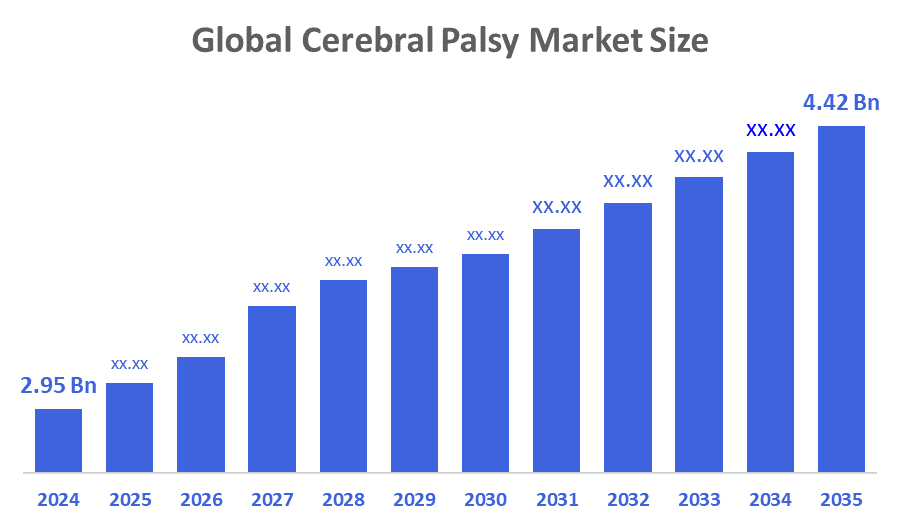
According to a research report published by Decisions Advisors and Consulting, The Global Cerebral Palsy Market Size Was Worth Around USD 2.95 Billion In 2024 And Is Predicted To Grow To Around USD 4.42 Billion By 2035 With A Compound Annual Growth Rate (CAGR) Of 3.74 % From 2025 To 2035. The main reason for this is the high prevalence and stable incidence rate of cerebral palsy, advances in pharmaceuticals and injection therapies, a strong infrastructure for medical rehabilitation services and supportive care, and favourable insurance and reimbursement policies, among other factors.
Market Overview
The cerebral palsy market refers to the global ecosystem of products, services, and interventions aimed at managing, treating, and supporting individuals with cerebral palsy. Treatment of cerebral palsy (CP) is a broad term that encompasses various medical, surgical, therapeutic, and supportive measures to improve the motor function and quality of life of patients with CP. Most children with cerebral palsy are born with the condition (congenital cerebral palsy), although some children acquire the condition later in life (acquired cerebral palsy). Acquired cerebral palsy may be caused by brain damage in the first few months or years of life due to infections of the brain, such as bacterial meningitis or viral encephalitis, blood flow problems, or head trauma from accidents or abuse. The severity and type of cerebral palsy vary depending on the type of abnormalities in the brain. The various types of cerebral palsy include spastic, dyskinetic, ataxic, and mixed cerebral palsy. Being the most prevalent form of motor impairment in children, various risk factors may predispose a child to be born with cerebral palsy, including being born with a low birth weight, preterm birth, infections during pregnancy, or exposure to toxins. It may involve physical, occupational, and speech therapy, muscle relaxers, orthopaedic surgery, and assistive devices. Increased research and development expenditures in stem cell therapy, neuromodulation, and innovative drug development are also triggering new approaches for effective interventions.
The Cerebral Palsy Alliance launched the new $7 million Hunter Centre in Beresfield to expand disability services across the growing Hunter region. Backed by $3.38 million from the NSW Government’s Regional Economic Development Grant, with CPA funding the remainder, the centre delivers early intervention, therapy, assistive technology, and family support. Modern therapy spaces, advanced equipment, and a dedicated training hub enhance care and community impact.
The programme you’re referring to is called ELEVATE, a €11.6 million cerebral palsy research initiative launched at University College Cork (UCC) in March 2024. Early detection is critical; combining cutting-edge AI with clinical expertise, ELEVATE reduces diagnosis delays and enhances long-term care strategies, improving outcomes for children and families.
Report Coverage
This research report categorizes the cerebral palsy market based on various segments and regions, forecasts revenue growth, and analyzes trends in each submarket. The report analyses the key growth drivers, opportunities, and challenges influencing the cerebral palsy market. Recent market developments and competitive strategies, such as expansion, product launch, development, partnership, merger, and acquisition, have been included to draw the competitive landscape in the market. The report strategically identifies and profiles the key market players and analyzes their core competencies in each sub-segment of the cerebral palsy market.
Driving Factors
The cerebral palsy market is currently undergoing a significant transformation due to the advancements in medical technology and the growing awareness of this condition. As more healthcare professionals and researchers study cerebral palsy, new treatment methods are being developed. Moreover, the incorporation of assistive technology is also becoming more common, offering patients the tools they need to achieve greater independence and mobility. Apart from these developments in treatment, the cerebral palsy market is also changing public perception and awareness. Organisations working towards increasing awareness about cerebral palsy are playing an important role in educating the public about this condition, which could potentially result in earlier diagnosis and treatment. This growing awareness could also have a significant impact on funding and research projects, creating a more supportive environment for those affected by this condition.
United Cerebral Palsy (UCP) offered USD $20,000 Pilot and Extension Grants, with a priority on early diagnosis and early treatment of cerebral palsy. Their 2025 grant recipients include projects on early detection training for primary care providers and validating new infant assessment tools.
Restraining Factors
Specialised treatments for cerebral palsy, such as robotic therapy devices, neurostimulation, and long-term rehabilitation, are often prohibitively expensive, costing thousands to tens of thousands annually. This financial burden limits access for families in low-income regions and smaller clinics, forcing reliance on traditional, less effective interventions that may not deliver optimal outcomes for children.
Market Segmentation
The Cerebral Palsy market share is classified into drug type, disease type, and route of administration.
- The muscle relaxants segment accounted for the largest share in 2024 and is anticipated to grow at a significant CAGR during the forecast period.
Based on the drug type, the cerebral palsy market is divided into muscle relaxants, anticonvulsants, anticholinergics, antidepressants, and other drug types. Among these, the muscle relaxants segment accounted for the largest share in 2024 and is anticipated to grow at a significant CAGR during the forecast period. The muscle relaxants segment, which is fueled by their widespread use in the management of spasticity and muscle stiffness, which are the most common and debilitating symptoms in cerebral palsy patients.
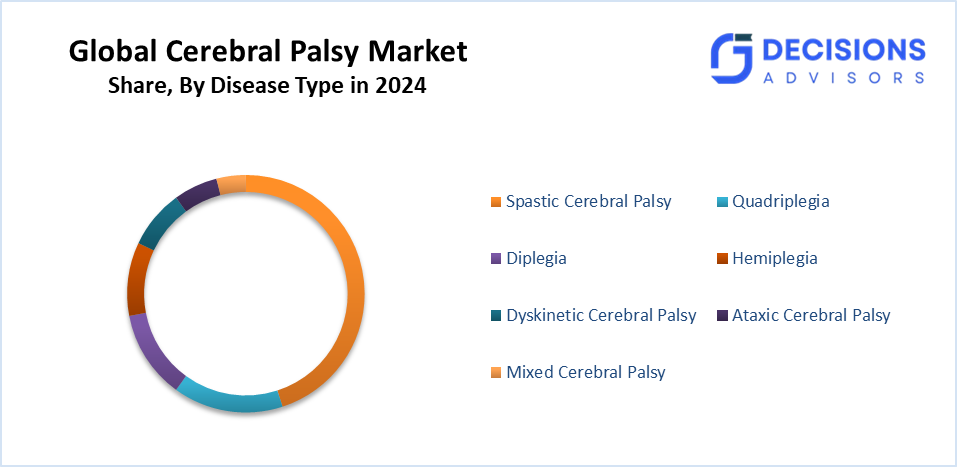
- The spastic cerebral palsy segment accounted for the largest share in 2024 and is anticipated to grow at a substantial CAGR during the forecast period.
Based on the disease type, the cerebral palsy market is differentiated into spastic cerebral palsy, quadriplegia, diplegia, hemiplegia, dyskinetic cerebral palsy, ataxic cerebral palsy, and mixed cerebral palsy. Among these, the spastic cerebral palsy segment accounted for the largest share in 2024 and is anticipated to grow at a substantial CAGR during the forecast period. The popularity of spastic cerebral palsy is fueled by technological advancements in orthopaedic and neurosurgical treatments, the growing number of pediatric rehabilitation centres, and the increasing adoption of wearable mobility assistance devices, among other factors. A Preliminary Study of Using Computer Vision to Quantify Trunk Recruitment during Bimanual Play and the Effect of Upper Extremity Interventions in Unilateral Spastic Cerebral Palsy”—is part of an emerging research trend that blends rehabilitation science with AI-driven motion analysis. The high prevalence rate of this type of cerebral palsy directly influences the demand for pharmaceuticals, physical therapy, orthopaedic, and assistive devices.
- The oral segment accounted for the highest market revenue in 2024 and is anticipated to grow at a significant CAGR during the forecast period.
Based on the route of administration, the cerebral palsy market is segmented into oral and injectable. Among these, the oral segment accounted for the highest market revenue in 2024 and is anticipated to grow at a significant CAGR during the forecast period. Oral medications consist of a range of drugs that are intended for the treatment of cerebral palsy challenges and symptoms. It comprises antispasmodic drugs such as baclofen, which helps to reduce muscle spasticity. It also comprises analgesics for the treatment of pain and antiepileptic drugs for patients with seizures as a comorbidity. Nutritional supplements are important because patients also consume adequate amounts of food. This is important in terms of health.
Regional Segment Analysis of the Cerebral Palsy Market
- North America (U.S., Canada, Mexico)
- Europe (Germany, France, U.K., Italy, Spain, Rest of Europe)
- Asia-Pacific (China, Japan, India, Rest of APAC)
- South America (Brazil and the Rest of South America)
- The Middle East and Africa (UAE, South Africa, Rest of MEA)
Asia Pacific is anticipated to hold the largest share of the cerebral palsy market over the predicted timeframe.
Asia Pacific is anticipated to hold the largest share of the cerebral palsy market over the predicted timeframe. The Asia-Pacific region is propelled by a rapidly growing population and an increasing awareness of cerebral palsy, thus fueling the demand for an effective treatment. Countries such as China and India are experiencing substantial investments in healthcare infrastructure, which is expected to improve access to therapies. The regulatory authorities are also becoming increasingly supportive of the approval of new treatments, further fueling the growth of the market. The market is undergoing a shift in its competitive dynamics, with both regional and global companies vying to gain a larger share of the market. The rising focus on R&D is expected to result in the development of innovative solutions for the treatment of cerebral palsy in the coming years.
Baby Memorial Hospital (BMH) in Kannur has taken a major step forward in pediatric orthopaedic care by launching a centre of excellence for child hip preservation and cerebral palsy. The initiative offers specialised and patient-friendly care to children suffering from hip problems, cerebral palsy, and even sports injuries. By focusing on early diagnosis and rehabilitation, the centre hopes to improve the mobility and living standards of children.
Europe is expected to grow at a rapid CAGR in the cerebral palsy market during the forecast period. Europe is experiencing substantial growth in the cerebral palsy market, contributing about 30% to the overall market share. The region is home to favourable government regulations and efforts to enhance healthcare accessibility and treatment options for patients. Germany and the UK are leading the way, with growing investments in the healthcare infrastructure and research. The European Medicines Agency (EMA) is playing a vital role in ensuring the smooth approval of new treatments, which is a major contributing factor to the growth of the market. Germany and the UK are the leading nations in this market, with a strong presence of major players. Personalised medicine and patient-centric strategies are defining the future of cerebral palsy treatment in Europe, ensuring that patients have access to customised treatment options that cater to their needs.
In January 2026, the company submitted a regulatory application to the European Medicines Agency (EMA) for a new indication of XEOMIN® (incobotulinumtoxinA) in pediatric spasticity. Merz Therapeutics has just taken a significant step in expanding treatment options for children with cerebral palsy and related conditions.
Competitive Analysis:
The report offers the appropriate analysis of the key organizations/companies involved within the cerebral palsy market, along with a comparative evaluation primarily based on their product offering, business overviews, geographic presence, enterprise strategies, segment market share, and SWOT analysis. The report also provides an elaborative analysis focusing on the current news and developments of the companies, which includes product development, innovations, joint ventures, partnerships, mergers & acquisitions, strategic alliances, and others. This allows for the evaluation of the overall competition within the market.
List of Key Companies
- AbbVie
- Amneal
- CHEPLAPHARM
- Dr Reddy's
- GSK
- IPSEN
- Merz Pharmaceuticals
- Novartis
- Roche
- Teva
- UCB
- VIATRIS
- Others
Key Target Audience
- Market Players
- Investors
- End-users
- Government Authorities
- Consulting and Research Firm
- Venture capitalists
- Value-Added Resellers (VARs)
Recent Development
- In January 2026, the launch of CPAdvance™ marks a major milestone in global cerebral palsy care and training. Developed by the Cerebral Palsy Alliance (CPA). This platform is designed to ensure that the latest, world-leading clinical evidence reaches the clinicians who support children and families every day.
Market Segment
This study forecasts revenue at global, regional, and country levels from 2020 to 2035. Decisions Advisors has segmented the cerebral palsy market based on the below-mentioned segments:
Global Cerebral Palsy Market, By Drug Type
- Muscle relaxants
- Anticonvulsants
- Anticholinergics
- Antidepressants
- Other drug types
Global Cerebral Palsy Market, By Disease Type
- Spastic cerebral palsy
- Quadriplegia
- Diplegia
- Hemiplegia
- Dyskinetic cerebral palsy
- Ataxic cerebral palsy
- Mixed cerebral palsy
Global Cerebral Palsy Market, By Route of Administration
- Oral
- Injectable
Global Cerebral Palsy Market, By Regional Analysis
- North America
- US
- Canada
- Mexico
- Europe
- Germany
- UK
- France
- Italy
- Spain
- Russia
- Rest of Europe
- Asia Pacific
- China
- Japan
- India
- South Korea
- Australia
- Rest of Asia Pacific
- South America
- Brazil
- Argentina
- Rest of South America
- Middle East & Africa
- UAE
- Saudi Arabia
- Qatar
- South Africa
- Rest of the Middle East & Africa
Frequently Asked Questions (FAQ)
1. What is the current size of the global cerebral palsy market, and how fast is it growing?
As of the base year 2024, the market is valued at approximately USD 2.95 billion. According to our forecast, it is projected to reach USD 4.42 billion by 2035, growing at a Compound Annual Growth Rate (CAGR) of 3.74% during the forecast period of 2025–2035.
2. Which drug type dominates the market, and why?
Muscle relaxants currently hold the largest market share. This dominance is driven by their critical role in managing spasticity the most common and debilitating symptom in cerebral palsy patients, particularly those with spastic cerebral palsy, which accounts for nearly 80% of cases.
3. Why is the spastic cerebral palsy segment so significant in this market?
Spastic cerebral palsy is the most prevalent disease type, which directly influences the demand for pharmaceuticals, therapy, and devices. The segment is further fueled by technological advancements in orthopaedic and neurosurgical treatments (like selective dorsal rhizotomy), the rise of pediatric rehabilitation centres, and the growing adoption of wearable mobility devices.
4. Which region offers the most lucrative investment opportunity?
While Asia Pacific currently holds the largest share due to its massive population and improving healthcare infrastructure, Europe is expected to grow at the fastest CAGR during the forecast period. This rapid growth in Europe is attributed to favourable government regulations, supportive reimbursement policies, and the active role of the European Medicines Agency (EMA) in streamlining treatment approvals, as seen with the recent XEOMIN® submission.
5. What are the primary factors driving innovation in this market?
Innovation is driven by a combination of high R&D expenditures in advanced therapies (such as stem cell research and neuromodulation) and the integration of digital health. Key initiatives include the ELEVATE program in Ireland (using AI for early diagnosis) and research into computer vision and AI-driven motion analysis to quantify movement and improve intervention strategies.
6. What are the major challenges or restraining factors affecting market access?
The primary barrier is the prohibitively high cost of specialised treatments. Advanced interventions like robotic therapy devices, neurostimulation, and long-term rehabilitation can cost thousands to tens of thousands of dollars annually. This financial burden limits access for families in low-income regions and smaller clinics, forcing reliance on traditional, less effective methods.
7. How are recent developments like CPAdvance™ and new grants shaping the market landscape?
Digital platforms like CPAdvance™ (launched by Cerebral Palsy Alliance in January 2026) are crucial for translating clinical evidence into practice, ensuring clinicians have access to the latest care protocols. Simultaneously, funding initiatives like the UCP Pilot and Extension Grants (prioritising early diagnosis) are fostering innovation at the grassroots level, leading to better screening tools and validating new assessment methods.
8. Who are the key players dominating the competitive landscape?
The market features a mix of global pharmaceutical giants and specialised biotech firms. Key companies actively shaping the market through product development, mergers, and strategic alliances include AbbVie, IPSEN, Merz Pharmaceuticals, Novartis, Roche, Teva, and UCB. Recent regulatory moves, such as Merz Therapeutics' January 2026 submission to the EMA for pediatric spasticity, highlight the competitive activity in this space.
Check Licence
Choose the plan that fits you best: Single User, Multi-User, or Enterprise solutions tailored for your needs.
We Have You Covered
- 24/7 Analyst Support
- Clients Across the Globe
- Tailored Insights
- Technology Tracking
- Competitive Intelligence
- Custom Research
- Syndicated Market Studies
- Market Overview
- Market Segmentation
- Growth Drivers
- Market Opportunities
- Regulatory Insights
- Innovation & Sustainability
Report Details
| Scope | Global |
| Pages | 230 |
| Delivery | PDF & Excel via Email |
| Language | English |
| Release | Feb 2026 |
| Access | Download from this page |