
China Luxury Hotel Market
 |
Author:
Nikita K
|
Pages:
190
|
Author:
Nikita K
|
Pages:
190
China Luxury Hotel Market Size, Share, By Property Type (Luxury Hotels, Luxury Resorts, Boutique Luxury Hotels), By Location (Urban, Resort, Heritage & Destination), By Booking Channel (Direct Booking, Online Travel Agencies, Travel Agents)
CAGR
9.04%
REVENUE 2025
USD Billion 156.2
FORECAST 2035
USD Billion 371.2
REPORT COVERAGE
Country
Market Snapshot
- Market Size (2025): USD 156.2 Billion
- Projected Market Size (2035): USD 371.2 Billion
- Compound Annual Growth Rate (CAGR): 9.04%
- Base Year: 2025
- Historical Period: 2021–2024
- Forecast Period: 2025–2035
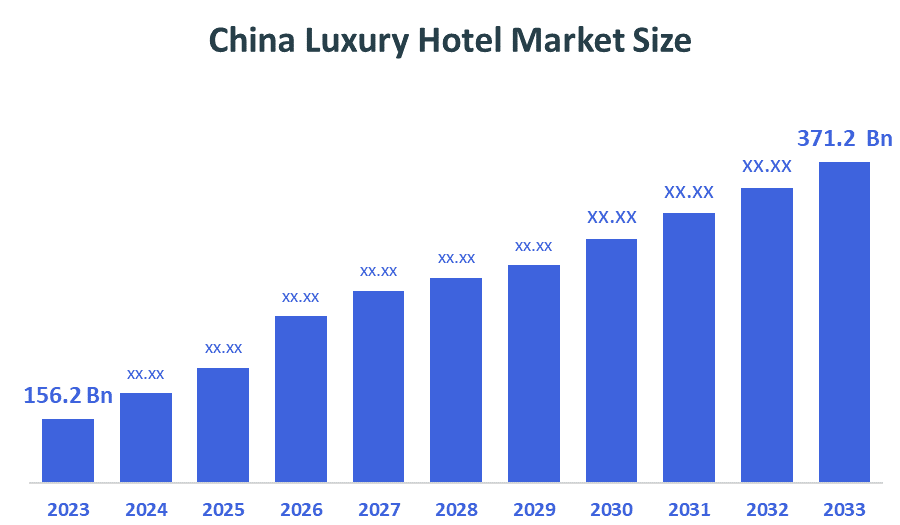
According to Decision Advisors, the China Luxury Hotel Market Size is expected to grow from USD 156.2 billion in 2024 to USD 371.2 billion by 2035, at a CAGR of 9.04% during the forecast period 2025-2035. China Luxury Hotel Market is projected to grow significantly over the next decade due to rising disposable income, recovering tourism, urbanization in Tier-1/2 cities, international hotel expansions, government tourism support, tech integration, and increasing demand for personalized luxury experiences.
Market Overview/Introduction
The china luxury hotel market consists of high-end hospitality properties offering premium accommodations, personalized services, and exclusive experiences to affluent domestic and international travelers. The market includes luxury hotels and resorts and boutique hotels and destination properties which are located in urban areas and resort areas and heritage sites.
The market is witnessing strong expansion due to rising disposable incomes, increasing domestic and international tourism, urbanization, and growing demand for experiential luxury stays. China’s government promotes tourism development through infrastructure expansion, Tier-2 and Tier-3 city development initiatives, visa facilitation for international tourists, and subsidies for hospitality projects that enhance cultural and regional tourism. Key players such as Marriott International, Hilton, Shangri-La, and Minor Hotels are expanding portfolios, introducing boutique and wellness-focused properties, implementing digital and AI-driven guest services, and leveraging strategic partnerships to increase market share. China’s luxury hotel market benefits from a large and growing affluent population, strong domestic travel demand, high international tourist inflows, and opportunities to integrate cultural experiences and premium amenities.
- April,?2026: China’s expanded visa?free entry policies have driven strong growth in international arrivals, directly boosting demand, occupancy and luxury hotel bookings in key cities such as Beijing and Shanghai.
Notable Insights: -
- By property type, the luxury hotel segment held a dominant position with 21% in terms of market share in 2025.
- By location, urban segment is the dominating accounting for over 48% of the china luxury hotel market share in 2025.
- The compound annual growth rate of the china luxury hotel market is 12.8%.
- The market is likely to achieve a valuation of USD 372.3 billion by 2035.
What is role of technology in grooming the market?
Technology is a critical driver in grooming the China luxury hotel market, enhancing both operational efficiency and guest experiences. Artificial intelligence (AI) and data analytics enable hotels to predict guest preferences, optimize pricing strategies, and deliver personalized services, improving customer satisfaction and loyalty. Internet of Things (IoT)–enabled smart rooms allow guests to control lighting, climate, and entertainment seamlessly, creating highly customized stays. Digital sales channels, including online booking platforms, mobile apps, and virtual concierge services, increase accessibility, streamline reservations, and broaden market reach. Automation in housekeeping, inventory management, and energy systems reduces operational costs while maintaining service consistency. Blockchain and contactless technologies ensure secure payments, transparent loyalty programs, and reliable guest identification.
Market Drivers
The China luxury hotel market is primarily driven by rising disposable incomes and a growing affluent population, which fuel demand for premium and personalized accommodations. Domestic tourism recovery, supported by improved infrastructure and government initiatives, has increased occupancy rates across Tier-1 and Tier-2 cities. International tourism growth, facilitated by simplified visa policies and Free Trade Agreements, further expands the market. Premiumization trends are encouraging hotels to offer boutique, wellness-focused, and experiential services, catering to Millennial and Gen Z travelers who value unique experiences. The expansion of global hotel chains into China, combined with investments in luxury resorts and business hotels, enhances market capacity and brand recognition. Technological adoption, including AI, IoT, and smart booking systems, improves operational efficiency and customer engagement. Additionally, sustainability initiatives and eco-friendly practices attract environmentally conscious guests, further driving market growth.
Restrain
The main restraints on the China luxury hotel market is that it faces restraints from high operational and construction costs, intense competition among domestic and international chains, regulatory constraints, economic fluctuations affecting business travel, and potential challenges in maintaining consistent service quality amid rapid market expansion.
Strategies to Implement for Growth of the Market
- Geographic Expansion
Expanding into Tier-2 and Tier-3 cities allows luxury hotels to access untapped markets, benefit from lower real estate costs, and cater to growing local demand. This diversification reduces dependency on saturated Tier-1 cities and strengthens long-term revenue stability across multiple regions.
- Personalized Guest Experiences
Offering AI-driven personalized services, boutique accommodations, and wellness programs enhances guest satisfaction and loyalty. Tailored experiences, such as custom room settings or curated activities, appeal to high-net-worth individuals and Millennial/Gen Z travelers seeking exclusive, memorable stays beyond standard luxury offerings.
- Digital and E-Commerce Integration
Implementing mobile apps, online booking platforms, and virtual concierge services simplifies reservations, improves accessibility, and allows hotels to engage guests before, during, and after their stay. This digital approach increases bookings, streamlines operations, and supports targeted marketing campaigns.
- Sustainable Practices
Adoption of eco-friendly systems, smart energy management, and green certifications demonstrates environmental responsibility, attracting sustainability-conscious travelers. Such initiatives reduce operational costs, enhance brand reputation, and differentiate hotels in an increasingly competitive luxury hospitality market.
Market Segmentation
The china luxury hotel market share is classified into property type, location, booking channels
- The luxury hotels segment dominated the market in 2024, and is projected to grow at a substantial CAGR of approximately 21% during the forecast period.
Based on the property type, the china luxury hotel market is divided into luxury hotels, luxury resorts, and boutique luxury hotels. Among these, the vodka segment dominated the market in 2024, and is projected to grow at a substantial CAGR of approximately 21% during the forecast period. It is due to its neutral flavour and clean finish, making it ideal for cocktails. Its versatility appeals to both younger and premium-seeking consumers. Trends in premiumization, flavoured variants, and strong distribution across on-trade and off-trade channels further reinforce vodka’s leading position in the market.
- The urban segment accounted for the largest share in 2024, and is anticipated to grow at a significant CAGR of approximately 46 % during the forecast period.
Based on the location, the china luxury hotel market is divided urban, resort, heritage & destination. Among these, the urban segment accounted for the largest share in 2024, and is anticipated to grow at a significant CAGR of approximately 48 % during the forecast period. It is dominating because Tier-1 and Tier-2 cities concentrate business, commerce, and tourism activity. High demand from corporate travelers, affluent domestic tourists, and international visitors ensures strong occupancy rates, while proximity to commercial and entertainment hubs enhances convenience, premium service appeal, and long-term revenue growth.
- The online travel agencies segment dominated the market in 2024, and is projected to grow at a substantial CAGR during the forecast period.
Based on the booking channels, the china luxury hotel market is divided into direct booking, online travel agencies, travel agents. Among these, online travel agencies segment dominated the market in 2024, and is projected to grow at a substantial CAGR during the forecast period. This is because travelers prefer the convenience of instant bookings, easy price comparisons, and access to reviews. High internet penetration, mobile app usage, and integrated loyalty programs further encourage digital reservations, making OTAs the preferred channel for both domestic and international luxury hotel guests in China.
Recent Development
In October 2025, Minor Hotels launched the Anantara Xiling Snow Mountain Chengdu Resort, a 111?room property targeting the luxury ski and wellness segment, marking a significant addition to China’s luxury hotel market
In July 2025, Shangri?La introduced its new luxury brand focused on unique cultural experiences, targeting affluent travelers and expanding China’s luxury hotel market with premium, experience-driven, and culturally immersive offerings.
Competitive Analysis
The report offers the appropriate analysis of the key organisations/companies involved within the China Luxury Hotel Market, along with a comparative evaluation primarily based on their product offering, business overviews, geographic presence, enterprise strategies, segment market share, and SWOT analysis. The report also provides an elaborative analysis focusing on the current news and developments of the companies, which includes product development, innovations, joint ventures, partnerships, mergers & acquisitions, strategic alliances, and others. This allows for the evaluation of the overall competition within the market.
Top Key Companies in China Luxury Hotel Market
- Marriott International
- Hilton Worldwide
- InterContinental Hotels Group (IHG)
- Shangri?La Hotels and Resorts
- Kempinski Hotels / BTG Hotels
- Hyatt Hotels Corporation
- Accor
- Swire Hotels
Key Target Audience
- High-net-worth individuals (HNWIs) and affluent travelers
- Business travelers and corporate clients
- International tourists seeking premium experiences
- Domestic luxury leisure travelers
- Travel agencies and luxury tour operators
- Event planners and MICE (Meetings, Incentives, Conferences, Exhibitions) organizers
- Investors and hospitality real estate developers
Market Segment
This study forecasts revenue at the China, regional, and country levels from 2020 to 2035. Spherical Insights has segmented the United Kingdom China Luxury Hotel Marketbased on the below-mentioned segments
China Luxury Hotel Market, By Property Type
- Luxury Hotel
- Luxury Resorts
- Boutique Luxury Hotels
China Luxury Hotel Market, By Location
- Urban, Resort
- Heritage & Destination
China Luxury Hotel Market, By Booking Channel
- Direct Booking
- Online Travel Agencies
- Travel Agents
Frequently Asked Questions (FAQ)
Q. How is the rise of Millennial and Gen Z travelers shaping luxury hotel offerings in China?
A. Younger affluent travelers prioritize personalized experiences, wellness, boutique design, Instagram-worthy aesthetics, and digital convenience, pushing hotels to innovate in service, amenities, and experience-led offerings beyond traditional luxury.
Q. What role do local cultural experiences play in attracting international guests?
A. Integrating Chinese heritage, culinary traditions, and regional arts into hotel design and services enhances appeal for international guests seeking authentic, immersive experiences, differentiating luxury properties in competitive markets.
Q. How do international collaborations influence China’s luxury hotel market?
A. Partnerships with global brands bring operational expertise, brand recognition, and international clientele, accelerating growth and elevating service standards in local luxury hospitality.
Q. Are luxury hotels in China adopting contactless services post-pandemic?
A. Yes, many properties now implement contactless check-in/check-out, mobile room keys, voice-activated controls, and app-based service requests to enhance safety, convenience, and modern guest experiences.
Check Licence
Choose the plan that fits you best: Single User, Multi-User, or Enterprise solutions tailored for your needs.
We Have You Covered
- 24/7 Analyst Support
- Clients Across the Globe
- Tailored Insights
- Technology Tracking
- Competitive Intelligence
- Custom Research
- Syndicated Market Studies
- Market Overview
- Market Segmentation
- Growth Drivers
- Market Opportunities
- Regulatory Insights
- Innovation & Sustainability
Report Details
| Scope | Country |
| Pages | 190 |
| Delivery | PDF & Excel via Email |
| Language | English |
| Release | Apr 2026 |
| Access | Download from this page |