
Global Chronic Kidney Disease Therapeutics Market
 |
Author:
Disha B
|
Pages:
240
|
Author:
Disha B
|
Pages:
240
Global Chronic Kidney Disease Therapeutics Market Size, Share, By Drug Class (ACE Inhibitors, Angiotensin II Receptor Blockers, Calcium Channel Blockers, Beta Blockers, Diuretics, Erythropoiesis-Stimulating Agents, Phosphate Binders and Others), By Therapy Type (Pharmacological Therapy, Non-Pharmacological Therapy and Renal Replacement Therapy), By Mode of Administration (Injectable, Oral), By Distribution Channel (Hospital Pharmacies, Retail Pharmacies, Online Pharmacies), and By Region (North America, Europe, Asia-Pacific, Latin America, Middle East & Africa), Analysis and Forecast 2025?2035
REPORT COVERAGE
Global
Market Snapshot
- Market Size (2025): USD 5.31 Billion
- Projected Market Size (2035): USD 7.10 Billion
- Compound Annual Growth Rate (CAGR): 2.95%
- Largest Regional Market: North America
- Fastest Growing Region: Asia-Pacific
- 3rd Largest Region: Europe
- Base Year: 2025
- Historical Period: 2021–2024
- Forecast Period: 2026–2035
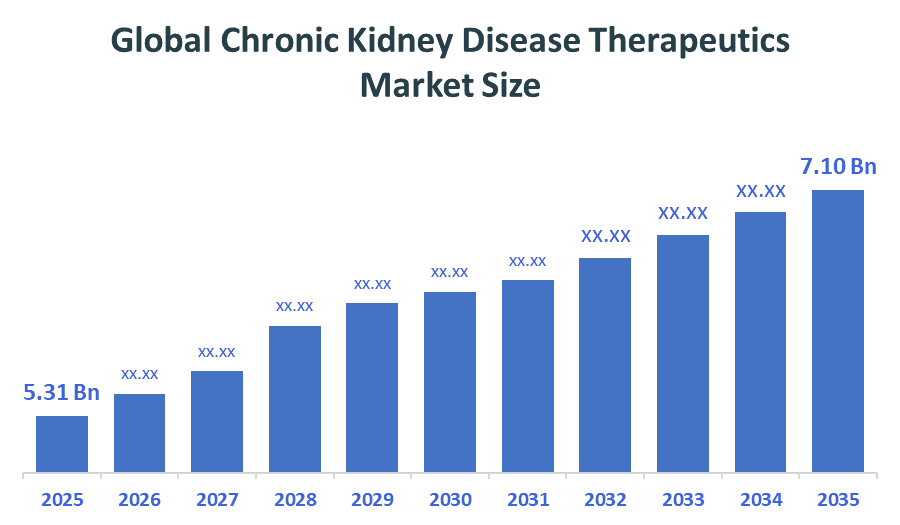
According to Decision Advisors, the Global Chronic Kidney Disease Therapeutics Market Size is expected to grow from USD 5.31 billion in 2024 to USD 7.10billion by 2035, at a CAGR of 2.95% during the forecast period 2025-2035. The global chronic kidney disease therapeutics market is projected to grow significantly over the next decade, fueled by the rising prevalence of CKD, largely due to diabetes, hypertension, aging populations, novel drug approvals, targeted therapies, and increasing R&D.
Market Overview/ Introduction
The global chronic kidney disease (CKD) therapeutics market includes various medications and treatment methods that aim to assist patients in extending their kidney function duration while managing their symptoms and avoiding medical complications. The major medications include ACE inhibitors, SGLT2 inhibitors, and ESA, which help patients manage the condition effectively. RAAS modulation and dietary and lifestyle changes in exercise are the treatment options available to patients with the disease, while dialysis and kidney transplantation are the end-stage disease. The market for chronic kidney disease therapeutics is growing steadily due to the increasing number of patients requiring treatment, more patients being subjected to screening programs, and the development of new techniques for managing the disease. The market for chronic kidney disease therapeutics is characterized by good market trends due to the accessibility of healthcare services, an increase in health awareness among people, and the availability of new drug classes to the market, both in emerging and developed markets.
- A federal entitlement program covered patients of all ages with kidney failure, paying 80% of dialysis and transplant costs. This initiative improved treatment accessibility, reduced financial burden, and supported increased adoption of CKD therapies, positively influencing the chronic kidney disease therapeutics market.
- The government implemented a national strategy to slow CKD progression and promoted a peritoneal dialysis-preferred approach for home-based care. This initiative enhanced early management, increased treatment accessibility, reduced hospital burden, and supported growth in the chronic kidney disease therapeutics market.
- The government provided fully publicly funded kidney transplantation and dialysis through the Medicare system with no fees at the point of delivery. This improved patient access, reduced financial barriers, increased treatment uptake, and supported growth in the chronic kidney disease therapeutics market.
Notable Insights: -
- North America is anticipated to hold the largest share of approximately 38% the chronic kidney disease therapeutics market over the forecast period.
- Asia Pacific is expected to grow at a rapid CAGR of approximately6.5 % in the chronic kidney disease therapeutics market during the forecast period.
- The angiotensin II receptor blockers segment accounted for the largest market share in 2025 and is anticipated to grow at approximately 31% during the forecast period.
- The pharmacological therapy segment accounted for the largest share in 2025 and is anticipated to grow at a significant CAGR of approximately 6.15% during the forecast period.
- The oral segment dominated the market in 2025 and is projected to grow at a substantial CAGR of approximately 6.60% during the forecast period
- The hospital pharmacies segment dominated the market in 2025 and is projected to grow at a substantial CAGR of approximately 7.3% during the forecast period.
- The compound annual growth rate of the Global Chronic kidney disease therapeutics market is 2.95%.
- The market is likely to achieve a valuation of USD 7.10 billion by 2035.
What is role of technology in grooming the market?
Technology plays a crucial role in advancing the Global Chronic Kidney Disease (CKD) Therapeutics Market by enabling early diagnosis, improving treatment precision, and enhancing patient outcomes. Innovations such as artificial intelligence and machine learning support predictive analytics, helping clinicians identify CKD at earlier stages and tailor personalized treatment plans. Wearable devices and remote monitoring tools allow continuous tracking of kidney function, reducing hospital visits and improving disease management. Additionally, advancements in drug development, including biologics and targeted therapies, are expanding treatment options. Telemedicine platforms further improve access to care, especially in remote regions. Digital health records streamline data sharing among healthcare providers, ensuring coordinated care. Overall, these technological advancements are driving efficiency, accessibility, and innovation, significantly contributing to the growth of the global CKD therapeutics market.
Market Drivers
The global chronic kidney disease therapeutics market is growing due to the increasing incidence of CKD, which is mainly caused by the increasing incidence of diabetes, hypertension, and obesity. Moreover, the increasing number of regulatory approvals of new therapies, including advanced therapies for the progression of chronic kidney disease and metabolic acidosis, has resulted in the growth of the global chronic kidney disease therapeutics market. In addition, the importance of new therapies such as SGLT2 inhibitors and non-steroidal mineralocorticoid receptor antagonists is increasing in the treatment of chronic kidney disease, which can delay the progression of the disease. Moreover, the increasing number of research and development activities has resulted in better results, which has improved the quality of life and propelled the growth of the global chronic kidney disease therapeutics market due to the increasing population suffering from chronic kidney diseases, especially among the aging population.
Restrain
The Global chronic kidney disease therapeutics Market faces restraints due to high treatment costs, limited access to advanced therapies in low-income regions, and adverse side effects associated with certain drugs. Additionally, delayed diagnosis and low awareness hinder timely treatment, restricting market growth despite rising disease prevalence and ongoing therapeutic advancements.
Competitive Analysis:
The report offers the appropriate analysis of the key organizations/companies involved within the Global Chronic Kidney Disease Therapeutics market, along with a comparative evaluation primarily based on their product of offering, business overviews, geographic presence, enterprise strategies, segment market share, and SWOT analysis. The report also provides an elaborative analysis focusing on the current news and developments of the companies, which includes product development, innovations, joint ventures, partnerships, mergers & acquisitions, strategic alliances, and others. This allows for the evaluation of the overall competition within the market.
Top Companies in Global Chronic Kidney Disease Therapeutics Market
- AstraZeneca plc
- Amgen Inc.
- AbbVie Inc.
- Bayer AG
- Pfizer Inc.
- Sanofi S.A.
- GlaxoSmithKline plc
- Johnson & Johnson
- Novartis AG
- Boehringer Ingelheim
- F. Hoffmann-La Roche Ltd.
- Baxter International Inc.
Government Initiatives
|
Country |
Key Government Initiatives |
|
UK |
The government supported the World Health Organization 2025 resolution and mandated e-GFR testing in primary care for at-risk patients. This improved early CKD detection, enabled timely treatment, increased diagnosis rates, and supported growth in the chronic kidney disease therapeutics market. |
|
US |
The Advancing American Kidney Health (AAKH) initiative promoted home dialysis and transplants, while the U.S. Food and Drug Administration approved Ozempic for CKD in type 2 diabetes, enhancing treatment access and driving growth in the CKD therapeutics market. |
|
India |
The government made affordable generic CKD medicines available through Jan Aushadhi Kendras and National Pharmaceutical Pricing Authority fixed ceiling prices for dialysis-related formulations, improving accessibility, reducing treatment costs, and supporting growth in the chronic kidney disease therapeutics market. |
Study on the Supply, Demand, Distribution, and Market Environment of Chronic Kidney Disease Therapeutics Market
The market for Chronic Kidney Disease (CKD) treatments is affected by strong dynamics that relate to supply, demand, distribution, and the general market environment. The demand for these treatments is increasing owing to an increased prevalence of diabetes, hypertension, and aging populations, hence increasing the need for efficient treatments and timely interventions. The supply side is also affected, with pharmaceutical organizations increasing their product portfolio to include cutting-edge products such as SGLT2 and biological products, hence increasing competition and driving innovation. The distribution side is dominated by hospital and retail pharmacy chains, coupled with an increased online platform and a holistic approach to healthcare, while the market is moderately concentrated with strong partnerships, a strong regulatory environment, and an increased focus on preventive care, although costs and late diagnosis are major hurdles.
Price Analysis and Consumer Behaviour Analysis
The CKD therapeutics market has high price variability depending on the stage of the disease, the nature of treatment, and the region. While the cost of treating the early stages is relatively low, the cost of treating the later stages is high, especially in the case of dialysis and transplantations, as the cost can reach up to tens of thousands of dollars. In the case of the new drugs, the cost is considered to be cost-effective, and the SGLT2 inhibitors are facing challenges in the pricing and reimbursement of the drugs, especially in low-income regions. Consumer behavior is highly dependent on the affordability of the product, the availability of insurance, and awareness of the disease. Consumers are likely to delay treatment and have low compliance due to the costs of treatment in the long run and the asymptomatic nature of the disease in the early stages. In addition, there is a preference for home-based, cost-effective, and delayed dialysis treatment options.
Market Segmentation
The chronic kidney disease therapeutics market share is classified into drug class, therapy type, mode of administration, and distribution channel
- The angiotensin II receptor blockers segment accounted for the largest market share in 2025 and is anticipated to grow at approximately 31% during the forecast period.
Based on the drug class, the chronic kidney disease therapeutics market is divided into ACE inhibitors, angiotensin II receptor blockers, calcium channel blockers, beta blockers, diuretics, erythropoiesis-stimulating agents, phosphate binders, and others. Among these,the angiotensin II receptor blockers segment accounted for the largest market share in 2025 and is anticipated to grow at approximately 31% during the forecast period. ARBs dominate due to their strong efficacy in slowing CKD progression, particularly in patients with hypertension and diabetes. They are widely prescribed, better tolerated than ACE inhibitors (fewer side effects like cough), and recommended in clinical guidelines for long-term kidney protection.
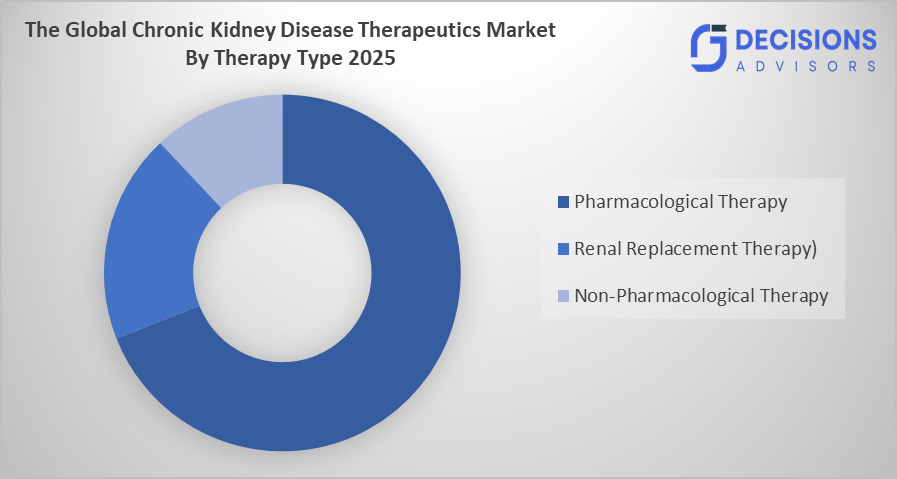
- The pharmacological therapy segment accounted for the largest share in 2025 and is anticipated to grow at a significant CAGR of approximately 6.15% during the forecast period.
Based on the therapy type, the chronic kidney disease therapeutics market is divided into pharmacological therapy, non-pharmacological therapy, and renal replacement therapy. Among these, the pharmacological therapy segment accounted for the largest share in 2025, and it's anticipated to grow at a significant CAGR of approximately 6.15% during the forecast period. This segment leads due to widespread use of medications for early-stage CKD management, including antihypertensives and disease-modifying drugs, which are more accessible and commonly prescribed compared to other treatment approaches.
- The oral segment dominated the market in 2025 and is projected to grow at a substantial CAGR of approximately 6.60% during the forecast period.
Based on the mode of administration, the chronic kidney disease therapeutics market is divided into injectable and oral. Among these, the oral segment dominated the market in 2025 and is projected to grow at a substantial CAGR of approximately 6.60% during the forecast period. Oral drugs dominate due to their convenience, ease of administration, and high patient compliance. Most first-line CKD medications, including antihypertensives and diabetes-related therapies, are available in oral form, making them widely prescribed for long-term disease management.
- The hospital pharmacies segment dominated the market in 2025 and is projected to grow at a substantial CAGR of approximately 7.3% during the forecast period.
Based on the distribution channel, the chronic kidney disease therapeutics market is divided into hospital pharmacies, retail pharmacies, and online pharmacies. Among these, the hospital pharmacies segment dominated the market in 2025 and is projected to grow at a substantial CAGR of approximately 7.3% during the forecast period. Hospital pharmacies dominate due to the high number of CKD patients requiring regular monitoring, dialysis, and specialized treatments. These settings ensure access to critical medications, physician supervision, and integrated care, especially for advanced-stage patients and those undergoing renal replacement therapy.
Strategies to Implement for Growth of the Market in Non-Leading Regions
Growth in non-leading regions of the global chronic kidney disease (CKD) therapeutics market can be driven through targeted strategies focused on accessibility, affordability, and awareness. Governments and companies should expand low-cost treatment options by promoting generics and biosimilars, alongside strengthening reimbursement frameworks to reduce financial barriers. Improving healthcare infrastructure, especially in rural areas, and investing in dialysis centers and diagnostic facilities will enhance early detection and treatment rates. Public-private partnerships can accelerate market entry and distribution efficiency. Additionally, awareness campaigns and screening programs can address underdiagnosis and encourage timely intervention. Leveraging telemedicine and home-based care solutions will further improve patient reach. Strategic collaborations with local players, regulatory support, and localized pricing models will also play a key role in unlocking growth opportunities and expanding market penetration in emerging economies.
Regional Segment Analysis of the Chronic Kidney Disease Therapeutics Market
- North America (U.S., Canada, Mexico)
- Europe (Germany, France, U.K., Italy, Spain, Rest of Europe)
- Asia-Pacific (China, Japan, India, Rest of APAC)
- South America (Brazil and the Rest of South America)
- The Middle East and Africa (UAE, South Africa, Rest of MEA)
North America is anticipated to hold the largest share of approximately 38% the chronic kidney disease therapeutics market over the forecast period.
North America is anticipated to hold the largest share of approximately 38% the chronic kidney disease therapeutics market over the forecast period. The dominance of this region is primarily due to advanced healthcare infrastructure, high CKD prevalence, strong reimbursement systems, and early adoption of innovative therapies. Additionally, significant R&D investments, the presence of major pharmaceutical companies, and increased awareness support effective disease management and sustained market growth.
Asia Pacific is expected to grow at a rapid CAGR of approximately 6.5% in the chronic kidney disease therapeutics market during the forecast period.
Asia Pacific is expected to grow at a rapid CAGR of approximately 6.5% in the chronic kidney disease therapeutics market during the forecast period. This growth is driven by rising CKD prevalence, increasing healthcare investments, improving access to advanced treatments, and growing awareness about early diagnosis and disease management.
Europe is the 3rd largest region to grow in the chronic kidney disease therapeutics market during the period.
Europe is the third-largest region in the chronic kidney disease therapeutics market during the forecast period, supported by well-established healthcare systems, increasing prevalence of CKD, rising geriatric population, and steady adoption of advanced treatment options, along with favorable government initiatives and reimbursement policies.
Future Market Trends in Global Chronic Kidney Disease Therapeutics Market: -
1. Growth of home-based and decentralized care models
The growth of home-based and decentralized care models in the Chronic Kidney Disease (CKD) therapeutics market is driven by the need to reduce hospital burden, lower treatment costs, and improve patient convenience. Advances in remote monitoring, telehealth, and peritoneal dialysis technologies have enabled effective at-home care, enhancing adherence and long-term disease management outcomes.
2. Increasing penetration of generic and biosimilar drugs
The increasing penetration of generic and biosimilar drugs in the Chronic Kidney Disease (CKD) therapeutics market is driven by patent expirations of branded drugs and rising cost pressures. These affordable alternatives improve treatment accessibility, especially in emerging markets, while encouraging competition, supporting wider adoption, and reducing the overall financial burden on patients and healthcare systems.
3. Strong focus on cardio-renal integrated treatment approaches
The strong focus on cardio-renal integrated treatment approaches in the Chronic Kidney Disease (CKD) therapeutics market is driven by the close link between kidney and cardiovascular diseases. Advanced therapies targeting both conditions simultaneously improve clinical outcomes, reduce complications, and enhance patient survival, supporting more holistic and efficient long-term disease management.
Recent Development
- In March 2026, Alebund Pharmaceuticals granted R1 Therapeutics exclusive global rights (excluding Greater China) for AP306, received equity, and secured milestone and royalty terms, strengthening CKD drug development and advancing plans for a global Phase 2b MRCT, reflecting positive market momentum.
- In March 2026, R1 Therapeutics launched with an oversubscribed $77.5 million Series A financing to develop a first-in-class treatment for hyperphosphatemia in CKD patients, strengthening innovation, attracting investor confidence, and supporting growth and advancement within the chronic kidney disease therapeutics market.
- In January 2026, Akebia Therapeutics reported Vafseo commercialization progress, expanded dialysis patient access, and completed VOICE trial enrollment. It advanced VOCAL and pipeline candidates, including praliciguat and AKB-097, while anticipating revenue recovery in 2026, indicating positive momentum in CKD therapeutics development and market growth.
- In June 2025, the combination of Bayer’s finerenone and Boehringer Ingelheim and Eli Lilly’s Jardiance demonstrated superior efficacy over monotherapy in CKD patients with type 2 diabetes, improving treatment outcomes and reinforcing advancements in combination-based therapeutic strategies within the CKD market.
How are recent developments helping the Market?
Recent advancements have greatly expedited expansion in the worldwide Chronic Kidney Disease (CKD) therapeutics market by enhancing treatment results, broadening drug indications, and improving early detection. Innovative drug approvals, like semaglutide for CKD, along with the swift uptake of SGLT2 inhibitors, have changed treatment benchmarks by diminishing disease progression and cardiovascular hazards. Moreover, progress in precision medicine, biologics, and combination therapies is facilitating more precise and efficient treatment. Enhanced integration of digital health tools and AI-based diagnostics is fostering early identification and tailored treatment approaches. Moreover, increasing investments, collaborations, and pipeline development are enhancing innovation, collectively fueling market growth, enhancing patient outcomes, and transforming the global competitive environment.
Market Segment
This study forecasts revenue at global, regional, and country levels from 2020 to 2035. Decision Advisors has segmented the chronic kidney disease therapeutics market based on the below-mentioned segments:
Global Chronic Kidney Disease Therapeutics Market, By Drug Class
- Angiotensin II Receptor Blockers
- Calcium Channel Blockers
- Beta Blockers, Diuretics
- Erythropoiesis-Stimulating Agents
- Phosphate Binders
- Others
Global Chronic Kidney Disease Therapeutics Market, By Therapy Type
- Pharmacological Therapy
- Non-Pharmacological Therapy
- Renal Replacement Therapy
Global Chronic Kidney Disease Therapeutics Market, By Mode of Administration
- Injectable
- Oral
Global Chronic Kidney Disease Therapeutics Market, By Distribution Channel
- Hospital Pharmacies
- Retail Pharmacies
- Online Pharmacies
Global Chronic Kidney Disease Therapeutics Market, By Regional Analysis
- North America
- US
- Canada
- Mexico
- Europe
- Germany
- UK
- France
- Italy
- Spain
- Russia
- Rest of Europe
- Asia Pacific
- China
- Japan
- India
- South Korea
- Australia
- Rest of Asia Pacific
- South America
- Brazil
- Argentina
- Rest of South America
- Middle East & Africa
- UAE
- Saudi Arabia
- Qatar
- South Africa
- Rest of the Middle East & Africa
Frequently Asked Questions (FAQ)
Q What factors influence patient adherence in CKD treatment?
A. Patient adherence is influenced by medication cost, complexity of treatment regimens, side effects, and awareness levels. Long-term therapy requirements and asymptomatic early stages often reduce compliance, while patient education and simplified dosing improve adherence.
Q. How does early screening impact the CKD therapeutics market?
A. Early screening increases diagnosis rates, allowing timely intervention and slowing disease progression. This boosts demand for medications and monitoring solutions, ultimately expanding the therapeutics market and improving patient outcomes.
Q. What role do biosimilars play in the CKD therapeutics market?
A. Biosimilars provide cost-effective alternatives to expensive biologics, increasing treatment accessibility, especially in developing regions. They also intensify market competition, encouraging innovation and broader adoption of advanced therapies.
Q. How is the shift toward home-based care affecting the CKD market?
A. The shift toward home-based care, including home dialysis and remote monitoring, reduces hospital dependency, lowers costs, and enhances patient convenience, thereby driving demand for supportive therapeutics and digital health solutions in the market.
- Introduction
- Objectives of the Study
- Market Definition
- Research Scope
- Research Methodology and Assumptions
- Executive Summary
- Premium Insights
- Porter’s Five Forces Analysis
- Value Chain Analysis
- Top Investment Pockets
- Market Attractiveness Analysis By Drug Class
- Market Attractiveness Analysis By Therapy Type
- Market Attractiveness Analysis By Mode of Administration
- Market Attractiveness Analysis By Distribution Channel
- Market Attractiveness Analysis By Region
- Industry Trends
- Market Dynamics
- Market Evaluation
- Drivers
- Increasing incidence of diabetes, hypertension, and obesitys
- Restraints
- Limited access to advanced therapies in low-income regions
- Opportunities
- Increase in the number of regulatory approvals of new therapies
- Challenges
5.5.1. Delayed diagnosis and low awareness hinder timely treatment
- Global Chronic Kidney Disease Therapeutics Market Analysis and Projection, By Drug Class
- Segment Overview
- ACE Inhibitors
- Angiotensin II Receptor Blockers
- Calcium Channel Blockers
- Beta Blockers
- Others
- Global Chronic Kidney Disease Therapeutics Market Analysis and Projection, By Therapy Type
- Segment Overview
- Pharmacological Therapy
- Non-Pharmacological Therapy
- Renal Replacement Therapy
- Global Chronic Kidney Disease Therapeutics Market Analysis and Projection, By Mode of Administration
- Segment Overview
- Injectable
- Oral
- Global Chronic Kidney Disease Therapeutics Market Analysis and Projection, By Distribution Channel
- Segment Overview
- Hospital Pharmacies
- Retail Pharmacies
- Online Pharmacies
- Global Chronic Kidney Disease Therapeutics Market Analysis and Projection, By Regional Analysis
- Segment Overview
- North America
- U.S.
- Canada
- Mexico
- Europe
- Germany
- France
- U.K.
- Italy
- Spain
- Asia-Pacific
- Japan
- China
- India
- South America
- Brazil
- Middle East and Africa
- UAE
- South Africa
- Global Chronic Kidney Disease Therapeutics Market-Competitive Landscape
- Overview
- Market Share of Key Players in the Chronic Kidney Disease Therapeutics Market
- Global Company Market Share
- North America Company Market Share
- Europe Company Market Share
- APAC Company Market Share
- Competitive Situations and Trends
- Coverage Launches and Developments
- Partnerships, Collaborations, and Agreements
- Mergers & Acquisitions
- Expansions
- Company Profiles
- AstraZeneca plc
- Business Overview
- Company Snapshot
- Company Market Share Analysis
- Company Coverage Portfolio
- Recent Developments
- SWOT Analysis
- Amgen Inc.
- Business Overview
- Company Snapshot
- Company Market Share Analysis
- Company Coverage Portfolio
- Recent Developments
- SWOT Analysis
- AbbVie Inc.
- Business Overview
- Company Snapshot
- Company Market Share Analysis
- Company Coverage Portfolio
- Recent Developments
- SWOT Analysis
- Bayer AG
- Business Overview
- Company Snapshot
- Company Market Share Analysis
- Company Coverage Portfolio
- Recent Developments
- SWOT Analysis
- Pfizer Inc.
- Business Overview
- Company Snapshot
- Company Market Share Analysis
- Company Coverage Portfolio
- Recent Developments
- SWOT Analysis
- Sanofi S.A.
- Business Overview
- Company Snapshot
- Company Market Share Analysis
- Company Coverage Portfolio
- Recent Developments
- SWOT Analysis
- GlaxoSmithKline plc
- Business Overview
- Company Snapshot
- Company Market Share Analysis
- Company Coverage Portfolio
- Recent Developments
- SWOT Analysis
- Johnson & Johnson
- Business Overview
- Company Snapshot
- Company Market Share Analysis
- Company Coverage Portfolio
- Recent Developments
- SWOT Analysis
- Novartis AG
- Business Overview
- Company Snapshot
- Company Market Share Analysis
- Company Coverage Portfolio
- Recent Developments
- SWOT Analysis
- Boehringer Ingelheim
- Business Overview
- Company Snapshot
- Company Market Share Analysis
- Company Coverage Portfolio
- Recent Developments
- SWOT Analysis
- F. Hoffmann-La Roche Ltd.
- Business Overview
- Company Snapshot
- Company Market Share Analysis
- Company Coverage Portfolio
- Recent Developments
- SWOT Analysis
- Baxter International Inc.
- Business Overview
- Company Snapshot
- Company Market Share Analysis
- Company Coverage Portfolio
- Recent Developments
- SWOT Analysis
- AstraZeneca plc
List of Table
- Global Chronic Kidney Disease Therapeutics Market, By Drug Class, 2024-2035(USD Billion)
- Global ACE Inhibitors, Chronic Kidney Disease Therapeutics Market, By Region, 2024-2035(USD Billion)
- Global Angiotensin II Receptor Blockers, Chronic Kidney Disease Therapeutics Market, By Region, 2024-2035(USD Billion)
- Global Calcium Channel Blockers, Chronic Kidney Disease Therapeutics Market, By Region, 2024-2035(USD Billion)
- Global Beta Blockers, Chronic Kidney Disease Therapeutics Market, By Region, 2024-2035(USD Billion)
- Global Others, Chronic Kidney Disease Therapeutics Market, By Region, 2024-2035(USD Billion)
- Global Chronic Kidney Disease Therapeutics Market, By Therapy Type, 2024-2035(USD Billion)
- Global Pharmacological Therapy, Chronic Kidney Disease Therapeutics Market, By Region, 2024-2035(USD Billion)
- Global Non-Pharmacological Therapy, Chronic Kidney Disease Therapeutics Market, By Region, 2024-2035(USD Billion)
- Global Renal Replacement Therapy, Chronic Kidney Disease Therapeutics Market, By Region, 2024-2035(USD Billion)
- Global Chronic Kidney Disease Therapeutics Market, By Mode of Administration, 2024-2035(USD Billion)
- Global Injectable, Chronic Kidney Disease Therapeutics Market, By Region, 2024-2035(USD Billion)
- Global Oral, Chronic Kidney Disease Therapeutics Market, By Region, 2024-2035(USD Billion)
- Global Chronic Kidney Disease Therapeutics Market, By Distribution Channel, 2024-2035(USD Billion)
- Global Hospital Pharmacies, Chronic Kidney Disease Therapeutics Market, By Region, 2024-2035(USD Billion)
- Global Retail Pharmacies, Chronic Kidney Disease Therapeutics Market, By Region, 2024-2035(USD Billion)
- Global Online Pharmacies, Chronic Kidney Disease Therapeutics Market, By Region, 2024-2035(USD Billion)
- North America Chronic Kidney Disease Therapeutics Market, By Drug Class, 2024-2035(USD Billion)
- North America Chronic Kidney Disease Therapeutics Market, By Therapy Type, 2024-2035(USD Billion)
- North America Chronic Kidney Disease Therapeutics Market, By Mode of Administration, 2024-2035(USD Billion)
- North America Chronic Kidney Disease Therapeutics Market, By Distribution Channel, 2024-2035(USD Billion)
- North America Chronic Kidney Disease Therapeutics Market, By <<Seg5>>, 2024-2035(USD Billion)
- U.S. Chronic Kidney Disease Therapeutics Market, By Drug Class, 2024-2035(USD Billion)
- U.S. Chronic Kidney Disease Therapeutics Market, By Therapy Type, 2024-2035(USD Billion)
- U.S. Chronic Kidney Disease Therapeutics Market, By Mode of Administration, 2024-2035(USD Billion)
- U.S. Chronic Kidney Disease Therapeutics Market, By Distribution Channel, 2024-2035(USD Billion)
- Canada Chronic Kidney Disease Therapeutics Market, By Drug Class, 2024-2035(USD Billion)
- Canada Chronic Kidney Disease Therapeutics Market, By Therapy Type, 2024-2035(USD Billion)
- Canada Chronic Kidney Disease Therapeutics Market, By Mode of Administration, 2024-2035(USD Billion)
- Canada Chronic Kidney Disease Therapeutics Market, By Distribution Channel, 2024-2035(USD Billion)
- Mexico Chronic Kidney Disease Therapeutics Market, By Drug Class, 2024-2035(USD Billion)
- Mexico Chronic Kidney Disease Therapeutics Market, By Therapy Type, 2024-2035(USD Billion)
- Mexico Chronic Kidney Disease Therapeutics Market, By Mode of Administration, 2024-2035(USD Billion)
- Mexico Chronic Kidney Disease Therapeutics Market, By Distribution Channel, 2024-2035(USD Billion)
- Europe Chronic Kidney Disease Therapeutics Market, By Drug Class, 2024-2035(USD Billion)
- Europe Chronic Kidney Disease Therapeutics Market, By Therapy Type, 2024-2035(USD Billion)
- Europe Chronic Kidney Disease Therapeutics Market, By Mode of Administration, 2024-2035(USD Billion)
- Europe Chronic Kidney Disease Therapeutics Market, By Distribution Channel, 2024-2035(USD Billion)
- Germany Chronic Kidney Disease Therapeutics Market, By Drug Class, 2024-2035(USD Billion)
- Germany Chronic Kidney Disease Therapeutics Market, By Therapy Type, 2024-2035(USD Billion)
- Germany Chronic Kidney Disease Therapeutics Market, By Mode of Administration, 2024-2035(USD Billion)
- Germany Chronic Kidney Disease Therapeutics Market, By Distribution Channel, 2024-2035(USD Billion)
- France Chronic Kidney Disease Therapeutics Market, By Drug Class, 2024-2035(USD Billion)
- France Chronic Kidney Disease Therapeutics Market, By Therapy Type, 2024-2035(USD Billion)
- France Chronic Kidney Disease Therapeutics Market, By Mode of Administration, 2024-2035(USD Billion)
- France Chronic Kidney Disease Therapeutics Market, By Distribution Channel, 2024-2035(USD Billion)
- U.K. Chronic Kidney Disease Therapeutics Market, By Drug Class, 2024-2035(USD Billion)
- U.K. Chronic Kidney Disease Therapeutics Market, By Therapy Type, 2024-2035(USD Billion)
- U.K. Chronic Kidney Disease Therapeutics Market, By Mode of Administration, 2024-2035(USD Billion)
- U.K. Chronic Kidney Disease Therapeutics Market, By Distribution Channel, 2024-2035(USD Billion)
- Italy Chronic Kidney Disease Therapeutics Market, By Drug Class, 2024-2035(USD Billion)
- Italy Chronic Kidney Disease Therapeutics Market, By Therapy Type, 2024-2035(USD Billion)
- Italy Chronic Kidney Disease Therapeutics Market, By Mode of Administration, 2024-2035(USD Billion)
- Italy Chronic Kidney Disease Therapeutics Market, By Distribution Channel, 2024-2035(USD Billion)
- Spain Chronic Kidney Disease Therapeutics Market, By Drug Class, 2024-2035(USD Billion)
- Spain Chronic Kidney Disease Therapeutics Market, By Therapy Type, 2024-2035(USD Billion)
- Spain Chronic Kidney Disease Therapeutics Market, By Mode of Administration, 2024-2035(USD Billion)
- Spain Chronic Kidney Disease Therapeutics Market, By Distribution Channel, 2024-2035(USD Billion)
- Asia Pacific Chronic Kidney Disease Therapeutics Market, By Drug Class, 2024-2035(USD Billion)
- Asia Pacific Chronic Kidney Disease Therapeutics Market, By Therapy Type, 2024-2035(USD Billion)
- Asia Pacific Chronic Kidney Disease Therapeutics Market, By Mode of Administration, 2024-2035(USD Billion)
- Asia Pacific Chronic Kidney Disease Therapeutics Market, By Distribution Channel, 2024-2035(USD Billion)
- Japan Chronic Kidney Disease Therapeutics Market, By Drug Class, 2024-2035(USD Billion)
- Japan Chronic Kidney Disease Therapeutics Market, By Therapy Type, 2024-2035(USD Billion)
- Japan Chronic Kidney Disease Therapeutics Market, By Mode of Administration, 2024-2035(USD Billion)
- Japan Chronic Kidney Disease Therapeutics Market, By Distribution Channel, 2024-2035(USD Billion)
- China Chronic Kidney Disease Therapeutics Market, By Drug Class, 2024-2035(USD Billion)
- China Chronic Kidney Disease Therapeutics Market, By Therapy Type, 2024-2035(USD Billion)
- China Chronic Kidney Disease Therapeutics Market, By Mode of Administration, 2024-2035(USD Billion)
- China Chronic Kidney Disease Therapeutics Market, By Distribution Channel, 2024-2035(USD Billion)
- India Chronic Kidney Disease Therapeutics Market, By Drug Class, 2024-2035(USD Billion)
- India Chronic Kidney Disease Therapeutics Market, By Therapy Type, 2024-2035(USD Billion)
- India Chronic Kidney Disease Therapeutics Market, By Mode of Administration, 2024-2035(USD Billion)
- India Chronic Kidney Disease Therapeutics Market, By Distribution Channel, 2024-2035(USD Billion)
- South America Chronic Kidney Disease Therapeutics Market, By Drug Class, 2024-2035(USD Billion)
- South America Chronic Kidney Disease Therapeutics Market, By Therapy Type, 2024-2035(USD Billion)
- South America Chronic Kidney Disease Therapeutics Market, By Mode of Administration, 2024-2035(USD Billion)
- South America Chronic Kidney Disease Therapeutics Market, By Distribution Channel, 2024-2035(USD Billion)
- Brazil Chronic Kidney Disease Therapeutics Market, By Drug Class, 2024-2035(USD Billion)
- Brazil Chronic Kidney Disease Therapeutics Market, By Therapy Type, 2024-2035(USD Billion)
- Brazil Chronic Kidney Disease Therapeutics Market, By Mode of Administration, 2024-2035(USD Billion)
- Brazil Chronic Kidney Disease Therapeutics Market, By Distribution Channel, 2024-2035(USD Billion)
- The Middle East and Africa Chronic Kidney Disease Therapeutics Market, By Drug Class, 2024-2035(USD Billion)
- The Middle East and Africa Chronic Kidney Disease Therapeutics Market, By Therapy Type, 2024-2035(USD Billion)
- The Middle East and Africa Chronic Kidney Disease Therapeutics Market, By Mode of Administration, 2024-2035(USD Billion)
- The Middle East and Africa Chronic Kidney Disease Therapeutics Market, By Distribution Channel, 2024-2035(USD Billion)
- UAE Chronic Kidney Disease Therapeutics Market, By Drug Class, 2024-2035(USD Billion)
- UAE Chronic Kidney Disease Therapeutics Market, By Therapy Type, 2024-2035(USD Billion)
- UAE Chronic Kidney Disease Therapeutics Market, By Mode of Administration, 2024-2035(USD Billion)
- UAE Chronic Kidney Disease Therapeutics Market, By Distribution Channel, 2024-2035(USD Billion)
- South Africa Chronic Kidney Disease Therapeutics Market, By Drug Class, 2024-2035(USD Billion)
- South Africa Chronic Kidney Disease Therapeutics Market, By Therapy Type, 2024-2035(USD Billion)
- South Africa Chronic Kidney Disease Therapeutics Market, By Mode of Administration, 2024-2035(USD Billion)
- South Africa Chronic Kidney Disease Therapeutics Market, By Distribution Channel, 2024-2035(USD Billion)
List of Figures
- Global Chronic Kidney Disease Therapeutics Market Segmentation
- Chronic Kidney Disease Therapeutics Market: Research Methodology
- Market Size Estimation Methodology: Bottom-Up Approach
- Market Size Estimation Methodology: Top-down Approach
- Data Triangulation
- Porter’s Five Forces Analysis
- Value Chain Analysis
- Top investment pocket in the Chronic Kidney Disease Therapeutics Market
- Top Winning Strategies, 2024-2035
- Top Winning Strategies, By Development, 2024-2035(%)
- Top Winning Strategies, By Company, 2024-2035
- Moderate Bargaining power of Buyers
- Moderate Bargaining power of Suppliers
- Moderate Bargaining power of New Entrants
- Low threat of Substitution
- High Competitive Rivalry
- Top Player Positioning, 2024
- Market Share Analysis, 2024
- Restraint and Drivers: Chronic Kidney Disease Therapeutics Market
- Chronic Kidney Disease Therapeutics Market Segmentation, By Drug Class
- Chronic Kidney Disease Therapeutics Market For ACE Inhibitors, By Region, 2024-2035 ($ Billion)
- Chronic Kidney Disease Therapeutics Market For Angiotensin II Receptor Blockers, By Region, 2024-2035 ($ Billion)
- Chronic Kidney Disease Therapeutics Market For Calcium Channel Blockers, By Region, 2024-2035 ($ Billion)
- Chronic Kidney Disease Therapeutics Market For Beta Blockers, By Region, 2024-2035 ($ Billion)
- Chronic Kidney Disease Therapeutics Market For Others, By Region, 2024-2035 ($ Billion)
- Chronic Kidney Disease Therapeutics Market Segmentation, By Therapy Type
- Chronic Kidney Disease Therapeutics Market For Pharmacological Therapy, By Region, 2024-2035 ($ Billion)
- Chronic Kidney Disease Therapeutics Market For Non-Pharmacological Therapy, By Region, 2024-2035 ($ Billion)
- Chronic Kidney Disease Therapeutics Market For Renal Replacement Therapy, By Region, 2024-2035 ($ Billion)
- Chronic Kidney Disease Therapeutics Market For <<Sub2_se4>>, By Region, 2024-2035 ($ Billion)
- Chronic Kidney Disease Therapeutics Market For <<Sub2_se5>>, By Region, 2024-2035 ($ Billion)
- Chronic Kidney Disease Therapeutics Market Segmentation, By Mode of Administration
- Chronic Kidney Disease Therapeutics Market For Injectable, By Region, 2024-2035 ($ Billion)
- Chronic Kidney Disease Therapeutics Market For Oral, By Region, 2024-2035 ($ Billion)
- Chronic Kidney Disease Therapeutics Market Segmentation, By Distribution Channel
- Chronic Kidney Disease Therapeutics Market For Hospital Pharmacies, By Region, 2024-2035 ($ Billion)
- Chronic Kidney Disease Therapeutics Market For Retail Pharmacies, By Region, 2024-2035 ($ Billion)
- Chronic Kidney Disease Therapeutics Market For Online Pharmacies, By Region, 2024-2035 ($ Billion)
- AstraZeneca plc: Net Sales, 2024-2035 ($ Billion)
- AstraZeneca plc: Revenue Share, By Segment, 2024 (%)
- AstraZeneca plc: Revenue Share, By Region, 2024 (%)
- Amgen Inc.: Net Sales, 2024-2035 ($ Billion)
- Amgen Inc.: Revenue Share, By Segment, 2024 (%)
- Amgen Inc.: Revenue Share, By Region, 2024 (%)
- AbbVie Inc.: Net Sales, 2024-2035 ($ Billion)
- AbbVie Inc.: Revenue Share, By Segment, 2024 (%)
- AbbVie Inc.: Revenue Share, By Region, 2024 (%)
- Bayer AG: Net Sales, 2024-2035 ($ Billion)
- Bayer AG: Revenue Share, By Segment, 2024 (%)
- Bayer AG: Revenue Share, By Region, 2024 (%)
- Pfizer Inc.: Net Sales, 2024-2035 ($ Billion)
- Pfizer Inc.: Revenue Share, By Segment, 2024 (%)
- Pfizer Inc.: Revenue Share, By Region, 2024 (%)
- Sanofi S.A.: Net Sales, 2024-2035 ($ Billion)
- Sanofi S.A.: Revenue Share, By Segment, 2024 (%)
- Sanofi S.A.: Revenue Share, By Region, 2024 (%)
- GlaxoSmithKline plc: Net Sales, 2024-2035 ($ Billion)
- GlaxoSmithKline plc: Revenue Share, By Segment, 2024 (%)
- GlaxoSmithKline plc: Revenue Share, By Region, 2024 (%)
- Johnson & Johnson: Net Sales, 2024-2035 ($ Billion)
- Johnson & Johnson: Revenue Share, By Segment, 2024 (%)
- Johnson & Johnson: Revenue Share, By Region, 2024 (%)
- Novartis AG.: Net Sales, 2024-2035 ($ Billion)
- Novartis AG.: Revenue Share, By Segment, 2024 (%)
- Novartis AG.: Revenue Share, By Region, 2024 (%)
- Boehringer Ingelheim: Net Sales, 2024-2035 ($ Billion)
- Boehringer Ingelheim: Revenue Share, By Segment, 2024 (%)
- Boehringer Ingelheim: Revenue Share, By Region, 2024 (%)
- F. Hoffmann-La Roche Ltd.: Net Sales, 2024-2035 ($ Billion)
- F. Hoffmann-La Roche Ltd.: Revenue Share, By Segment, 2024 (%)
- F. Hoffmann-La Roche Ltd.: Revenue Share, By Region, 2024 (%)
- Baxter International Inc.: Net Sales, 2024-2035 ($ Billion)
- Baxter International Inc.: Revenue Share, By Segment, 2024 (%)
- Baxter International Inc.: Revenue Share, By Region, 2024 (%)
- <<comp_13>>: Net Sales, 2024-2035 ($ Billion)
- <<comp_13>>: Revenue Share, By Segment, 2024 (%)
- <<comp_13>>: Revenue Share, By Region, 2024 (%)
- <<comp_14>>: Net Sales, 2024-2035 ($ Billion)
- <<comp_14>>: Revenue Share, By Segment, 2024 (%)
- <<comp_14>>: Revenue Share, By Region, 2024 (%)
- <<comp_15>>: Net Sales, 2024-2035 ($ Billion)
- <<comp_15>>: Revenue Share, By Segment, 2024 (%)
- <<comp_15>>: Revenue Share, By Region, 2024 (%)
Check Licence
Choose the plan that fits you best: Single User, Multi-User, or Enterprise solutions tailored for your needs.
We Have You Covered
- 24/7 Analyst Support
- Clients Across the Globe
- Tailored Insights
- Technology Tracking
- Competitive Intelligence
- Custom Research
- Syndicated Market Studies
- Market Overview
- Market Segmentation
- Growth Drivers
- Market Opportunities
- Regulatory Insights
- Innovation & Sustainability
Report Details
| Scope | Global |
| Pages | 240 |
| Delivery | PDF & Excel via Email |
| Language | English |
| Release | Apr 2026 |
| Access | Download from this page |