
Global Clomiphene Citrate Market
 |
Author:
David J
|
Pages:
210
|
Author:
David J
|
Pages:
210
Global Clomiphene Citrate Market Size, Share, By Product Type (Tablets, Capsules), By Application (Female Infertility Treatment, Male Infertility Treatment), By Distribution Channel (Hospital Pharmacies, Retail Pharmacies, Online Pharmacies), and By Region (North America, Europe, Asia-Pacific, Latin America, Middle East & Africa), Analysis and Forecast 2026?2035
CAGR
5.43%
REVENUE 2025
USD Million 1388.44
FORECAST 2035
USD Million 2355.48
REPORT COVERAGE
Global
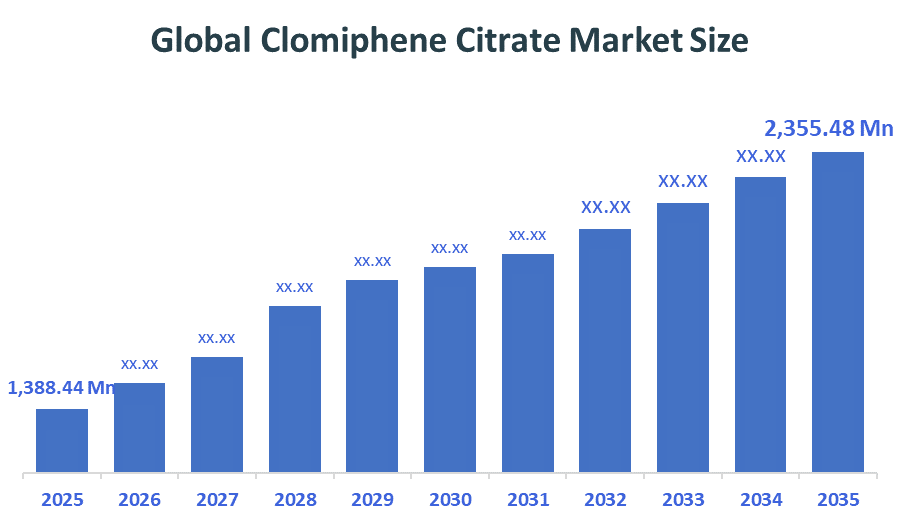
The Global Clomiphene Citrate Market size is forecast to grow from USD 1,388.44 Million in 2025 to approximately USD 2,355.48 Million by 2035. According to Decision Advisors, a detailed research report on the clomiphene citrate market indicates that the low-cost generic drugs dominate the market, accounting for approximately 70-75% of the total share globally. Teva Pharmaceutical Industries Ltd. leads the market with an estimated 10-15% global market share. The company reported a 2025 revenue of approximately USD 17.3 billion, making it one of the most influential forces shaping industry trends and overall market growth.
Market Snapshot
- Global Clomiphene Citrate Market Size (2025): USD 1,388.44 Million
- Projected Global Clomiphene Citrate Market Size (2035): USD 2,355.48 Million
- Global Clomiphene Citrate Market Compound Annual Growth Rate (CAGR): 5.43%
- Largest Regional Market: North America
- Fastest Growing Region: Asia-Pacific
- Market 3rd Largest Region: Europe
- Base Year: 2025
- Historical Period: 2021–2024
- Forecast Period: 2026–2035
Market Overview/ Introduction
The Global Clomiphene Citrate Market refers to the industry that produces, distributes, and uses clomiphene citrate-based drugs, primarily for treating infertility. Clomiphene citrate functions as a selective estrogen receptor modulator (SERM), which doctors use to treat female patients who need help with ovulation, while they also use it for specific male infertility conditions. The market's future potential exists because businesses can develop male fertility treatments, reach new customers in developing countries, and create digital health systems that connect with their products. The market experiences growth because both infertility rates and PCOS cases increase, and more people become aware of reproductive health, and women postpone their pregnancies. The drug maintains high global demand because people can use it as an affordable first-line treatment, which they can take orally and which demonstrates effective results.
- India’s Ayushman Bharat scheme is expanding reproductive healthcare by integrating infertility screening and counselling at primary health centres. Additionally, ESIC and CGHS provide subsidized or free IVF treatments, including medications. These initiatives reduce financial barriers and increase access to ovulation induction drugs such as clomiphene citrate.
- The World Health Organization recognizes infertility as a key public health issue and supports integration of fertility care into universal health coverage. Clomiphene citrate remains a recommended first-line therapy for anovulatory infertility, particularly in low- and middle-income countries due to its affordability and proven effectiveness.
Notable Insights: -
- North America is anticipated to hold the largest share of approximately 38% in the clomiphene citrate market over the forecast period.
- Asia Pacific is expected to grow at a rapid CAGR of approximately 8.5% in the clomiphene citrate market during the forecast period.
- The tablets segment dominated the market in 2025, approximately 85%, and is projected to grow at a substantial CAGR during the forecast period.
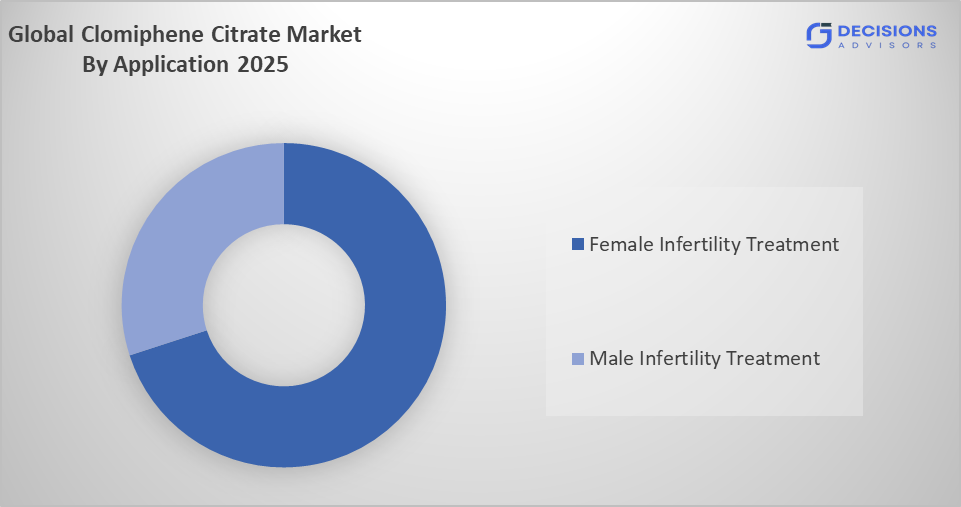
- The female infertility treatment segment dominated the market in 2025, approximately 90%, and is projected to grow at a substantial CAGR during the forecast period.
- The hospital pharmacies segment dominated the market in 2025, approximately 45%, and is projected to grow at a substantial CAGR during the forecast period.
- The compound annual growth rate of the Global Clomiphene Citrate Market is 5.43%.
- The market is likely to achieve a valuation of USD 2,355.48 Million by 2035.
What is role of technology in grooming the market?
Technology plays a key role in grooming the Global Clomiphene Citrate Market by improving diagnosis, treatment access, and drug distribution. Advanced fertility diagnostic tools and AI-based reproductive health platforms help detect infertility issues earlier, increasing demand for clomiphene citrate. Telemedicine and digital health apps enable remote consultations and prescriptions, expanding access in underserved regions. Automation in pharmaceutical manufacturing enhances production efficiency and ensures consistent drug quality. Online pharmacies and e-prescription systems improve distribution speed and patient convenience. Additionally, data analytics supports personalized fertility treatments, optimizing drug usage. Overall, technology enhances accessibility, affordability, and treatment effectiveness, driving steady market growth.
Market Drivers
The Global Clomiphene Citrate Market is driven by increasing infertility rates, which cause more patients to experience infertility problems, resulting from their modern lifestyle choices, work-related stress, obesity issues, and delayed childbirth decisions. The higher medical demand for ovulation-inducing medications has developed because more people now suffer from the polycystic ovary syndrome (PCOS) condition. People begin to diagnose and treat their infertility problems at higher rates because they can now access better healthcare services, while public awareness of fertility treatments continues to grow. Clomiphene citrate functions as the primary oral treatment because its low cost and effective treatment capabilities make it suitable for widespread use. The market experiences growth because fertility clinics expand, healthcare spending increases, and governments create programs that support reproductive health. The global market for medical fertility solutions experiences growth because more people now accept these treatments.
Restrain
The global clomiphene citrate market faces restraints due to side effects such as ovarian hyperstimulation and multiple pregnancies, which limit long-term use. Growing preference for advanced assisted reproductive technologies (ART) also restricts demand. Additionally, strict regulatory approvals, drug resistance concerns, and availability of alternative fertility treatments hinder overall market expansion.
Competitive Analysis:
The report offers the appropriate analysis of the key organizations/companies involved within the global clomiphene citrate market, along with a comparative evaluation primarily based on their product offerings, business overviews, geographic presence, enterprise strategies, segment market share, and SWOT analysis. The report also provides an elaborative analysis focusing on the current news and developments of the companies, which includes product development, innovations, joint ventures, partnerships, mergers & acquisitions, strategic alliances, and others. This allows for the evaluation of the overall competition within the market.
Top Companies in Global Clomiphene Citrate Market
- Sanofi S.A.
- Teva Pharmaceutical Industries Ltd.
- Merck & Co. Inc.
- Cipla Ltd.
- Sun Pharmaceutical Industries Ltd.
- Dr. Reddy’s Laboratories Ltd.
- Lupin Ltd.
- Aurobindo Pharma Ltd.
- Zydus Lifesciences Ltd.
- Emcure Pharmaceuticals Ltd.
Government Initiatives
|
Country |
Key Government Initiatives |
|
US |
The U.S. Food and Drug Administration regulates clomiphene citrate as a prescription SERM for ovulation induction, ensuring safety, efficacy, and labeling compliance. Established expedited review pathways support innovation in fertility drugs. Growing infertility prevalence and insurance coverage expansion are strengthening demand for cost-effective first-line therapies like clomiphene citrate. |
|
India |
India’s Production Linked Incentive (PLI) Scheme is strengthening domestic pharmaceutical manufacturing, including APIs. The Assisted Reproductive Technology (Regulation) Act standardizes fertility services and expands access via certified clinics. Rising infertility and PCOS prevalence are increasing the demand for affordable ovulation induction drugs like clomiphene citrate. |
|
China |
China is expanding fertility policies to address declining birth rates, with the National Health Commission of the People's Republic of China promoting reproductive health access. Insurance expansion and affordability initiatives for infertility treatment are improving uptake, supporting demand for ovulation-induction therapies such as clomiphene citrate. |
Study on the Supply, Demand, Distribution, and Market Environment of the Clomiphene Citrate Market
The Global Clomiphene Citrate Market operates under a balanced but demand-driven environment influenced by rising infertility rates and expanding reproductive healthcare access. On the supply side, pharmaceutical companies and API manufacturers in regions like India and China dominate production due to low-cost manufacturing capabilities and strong generic drug supply chains. Increasing API production capacity and contract manufacturing organizations ensure steady availability of raw materials and finished formulations, supporting stable supply conditions. On the demand side, growing infertility cases, PCOS prevalence, and delayed pregnancies are increasing the need for ovulation-inducing drugs like clomiphene citrate. Hospitals, fertility clinics, and retail pharmacies remain major demand centers, with online pharmacies gaining traction for accessibility. In terms of distribution, hospital pharmacies lead due to direct fertility treatment integration, followed by clinics and retail channels. Online distribution is rapidly growing, improving reach in underserved regions. The market environment is highly competitive and price-sensitive, driven by generics, regulatory approvals, and increasing adoption of assisted reproductive treatments, shaping both access and affordability globally.
Price Analysis and Consumer Behaviour Analysis
Price analysis in the Global Clomiphene Citrate Market shows that the drug is generally positioned as an affordable fertility treatment, especially due to the strong presence of generic manufacturers. Prices remain relatively stable but vary across regions depending on regulatory policies, healthcare reimbursement systems, and local production capacity. In developed countries, branded versions may cost more, while emerging markets rely heavily on low-cost generics, making treatment widely accessible. Consumer behaviour is strongly influenced by rising infertility awareness and increasing acceptance of medical fertility treatments. Patients are more likely to seek early diagnosis and prefer cost-effective oral medications like clomiphene citrate over advanced assisted reproductive technologies due to lower cost and ease of use. Online pharmacies and telemedicine platforms are also shaping buying behaviour by offering privacy, convenience, and home delivery. Overall, price sensitivity and accessibility strongly guide consumer choices in this market.
Market Segmentation
The Clomiphene Citrate Market share is classified into product type, application, and distribution channel.
- The tablets segment dominated the market in 2025, approximately 85%, and is projected to grow at a substantial CAGR during the forecast period.
Based on the product type, the clomiphene citrate market is divided into tablets and capsules. Among these, the tablets segment dominated the market in 2025, approximately 85%, and is projected to grow at a substantial CAGR during the forecast period. The growth of the tablets segment is growing due to their ease of administration, precise dosing, and widespread availability. They are the standard prescribed form for ovulation induction, offering better patient compliance and cost-effectiveness compared to capsules, which have limited adoption in most regions.
- The female infertility treatment segment dominated the market in 2025, approximately 38%, and is projected to grow at a substantial CAGR during the forecast period.
Based on the application, the clomiphene citrate market is divided into female infertility treatment and male infertility treatment. Among these, the female infertility treatment segment dominated the market in 2025, approximately 38%, and is projected to grow at a substantial CAGR during the forecast period. The female infertility treatment segment dominated due to its primary approval and is widely used for inducing ovulation in women, especially those with PCOS. Its strong clinical acceptance as a first-line therapy and proven effectiveness drive higher demand compared to its limited off-label use in male infertility.
- The hospital pharmacies segment dominated the market in 2025, approximately 45%, and is projected to grow at a substantial CAGR during the forecast period.
Based on the distribution channel, the clomiphene citrate market is divided into hospital pharmacies, retail pharmacies, and online pharmacies. Among these, the hospital pharmacies segment dominated the market in 2025, approximately 45%, and is projected to grow at a substantial CAGR during the forecast period. The growth of the hospital pharmacies segment is due to the fertility treatments are often initiated and monitored within clinical settings. Physicians prefer prescribing and dispensing through hospitals to ensure proper dosage and patient supervision. This controlled environment enhances treatment success rates and maintains the dominance of hospital-based distribution channels.
Strategies to Implement for Growth of the Market in Non-Leading Regions
To drive growth of the Global Clomiphene Citrate Market in non-leading regions, companies should focus on improving affordability and access. Expanding the distribution network through partnerships with local pharmaceutical companies and retail pharmacies can ensure wider drug availability. Increasing investment in awareness campaigns about infertility and PCOS will help in early diagnosis and treatment adoption. Strengthening telemedicine platforms can bridge the gap between patients and fertility specialists in rural and underserved areas. Governments and private players should collaborate to provide subsidies or insurance coverage for infertility treatments to reduce financial barriers. Additionally, training healthcare professionals in emerging regions will improve prescription practices and patient trust. Encouraging the entry of generic manufacturers can further reduce costs. These combined strategies will enhance market penetration, improve treatment accessibility, and support sustainable growth of the clomiphene citrate market in non-leading regions.
Regional Segment Analysis of the Clomiphene Citrate Market
- North America (U.S., Canada, Mexico)
- Europe (Germany, France, U.K., Italy, Spain, Rest of Europe)
- Asia-Pacific (China, Japan, India, Rest of APAC)
- South America (Brazil and the Rest of South America)
- The Middle East and Africa (UAE, South Africa, Rest of MEA)
North America is anticipated to hold the largest share of approximately 38% the clomiphene citrate market over the forecast period.
North America is anticipated to hold the largest share of approximately 38% the clomiphene citrate market over the forecast period. The dominance of this region is primarily driven by a high infertility awareness, advanced healthcare infrastructure, and strong presence of fertility clinics. Favorable insurance coverage, higher healthcare spending, and early adoption of fertility treatments further support demand. Additionally, increasing cases of delayed pregnancies contribute to sustained market dominance.
Asia Pacific is expected to grow at a rapid CAGR of approximately 8.5% in the clomiphene citrate market during the forecast period.
Asia Pacific is expected to grow at a rapid CAGR of approximately 8.5% in the clomiphene citrate market during the forecast period. This growth is driven by rising infertility rates, a large population base, and improving healthcare access. Growing awareness of reproductive health, expansion of fertility clinics, and increasing affordability of generic drugs are driving demand. Government initiatives and medical tourism also contribute to rapid regional market growth.
Europe is the 3rd largest region to grow in the clomiphene citrate market during the period.
Europe is the third-largest region in the Global Clomiphene Citrate Market, supported by well-established healthcare systems and increasing awareness of infertility treatments. Rising cases of delayed pregnancies and hormonal disorders are driving demand for ovulation-inducing drugs. Additionally, government support for reproductive health services and access to fertility clinics contribute to steady market growth across the region.
Future Market Trends in Global Clomiphene Citrate Market: -
1. Growth in Male Infertility Applications
The market is increasingly shifting toward male infertility treatment due to rising awareness of hormonal imbalance and low sperm count issues. Clinical studies supporting off-label use of Clomiphene Citrate are expanding its application. This diversification beyond female infertility is creating new demand segments and supporting overall market growth.
2. Expansion of Digital Health and Telemedicine
Telemedicine and digital fertility platforms are becoming a major trend, enabling remote consultations and prescription access for Clomiphene Citrate. This improves convenience, especially in rural and underserved regions. Increased digital healthcare adoption is expected to enhance treatment reach, patient compliance, and market penetration globally.
3. Rising Use of Generic and Affordable Drugs
Growing demand for cost-effective infertility treatments is boosting the use of generic Clomiphene Citrate formulations. Pharmaceutical companies are expanding production in emerging economies to improve affordability. This trend supports wider accessibility, especially in low- and middle-income regions, thereby driving steady market expansion in the coming years.
Recent Development
- In December 2025, Accord Healthcare announced the launch of clomiphene citrate tablets (50 mg) in the United States, a generic equivalent to CLOMID. The product was introduced to expand access to affordable ovulation-induction therapy, strengthening the company’s women’s health portfolio.
- In October 2025, ANI Pharmaceuticals launched clomiphene citrate tablets (50 mg) in the United States. The product marked the company’s entry into the ovulation-induction segment, expanding access to generic fertility treatments and contributing to increased competition.
- In August 2025, Burel Pharmaceuticals introduced clomiphene citrate tablets (50 mg) in the United States. The generic product expanded the availability of ovulation-induction therapies, increased market competition, and improved affordability.
- In November 2024, Rising Pharma Holdings, Inc., in collaboration with Appco Pharma LLC, introduced clomiphene citrate tablets (50 mg) in the United States following ANDA approval.
How is Recent Developments Helping the Market?
Recent developments are positively driving the Global Clomiphene Citrate Market by improving awareness, accessibility, and treatment adoption for infertility management. Increasing recognition of infertility and PCOS as treatable conditions has led to higher diagnosis rates and greater use of clomiphene citrate as a first-line ovulation-inducing drug. Expansion of telemedicine and digital healthcare platforms has made fertility consultations more accessible, especially in remote and developing regions, boosting prescription volumes. The growth of online pharmacies and improved drug distribution networks has also enhanced availability and affordability. Additionally, ongoing clinical research exploring off-label uses, including male infertility treatment, is expanding the drug’s application scope. Government initiatives supporting reproductive health and rising investments in fertility clinics are further strengthening market penetration. Together, these developments are increasing patient access, improving treatment outcomes, and supporting the steady growth of the global clomiphene citrate market.
Market Segment
This study forecasts revenue at global, regional, and country levels from 2020 to 2035. Decision Advisors has segmented the global clomiphene citrate market based on the below-mentioned segments:
Global Clomiphene Citrate Market, By Product Type
- Tablets
- Capsules
Global Clomiphene Citrate Market, By Application
- Female Infertility Treatment
- Male Infertility Treatment
Global Clomiphene Citrate Market, By Distribution Channel
- Hospital Pharmacies
- Retail Pharmacies
- Online Pharmacies
Global Clomiphene Citrate Market, By Regional Analysis
- North America
- US
- Canada
- Mexico
- Europe
- Germany
- UK
- France
- Italy
- Spain
- Russia
- Rest of Europe
- Asia Pacific
- China
- Japan
- India
- South Korea
- Australia
- Rest of Asia Pacific
- South America
- Brazil
- Argentina
- Rest of South America
- Middle East & Africa
- UAE
- Saudi Arabia
- Qatar
- South Africa
- Rest of the Middle East & Africa
Frequently Asked Questions (FAQ)
Q. How does lifestyle change impact the demand for clomiphene citrate?
A. Modern lifestyle factors such as stress, poor diet, obesity, and delayed parenthood significantly increase infertility rates. These factors directly boost demand for ovulation-inducing drugs like clomiphene citrate, as more individuals seek medical assistance for reproductive health issues.
Q. Why is clomiphene citrate preferred over advanced fertility treatments in many cases?
A. Clomiphene citrate is widely preferred because it is an affordable, non-invasive, and orally administered treatment. Compared to costly assisted reproductive technologies like IVF, it offers a simpler first-line option with proven effectiveness, making it accessible to a broader patient population.
Q. How do emerging markets contribute to the growth of this market?
A. Emerging markets contribute through large patient populations, increasing healthcare investments, and rising awareness of infertility treatments. Availability of low-cost generics and improving healthcare infrastructure further accelerate adoption, making these regions key growth drivers.
Q. What challenges do manufacturers face in this market?
A. Manufacturers face challenges such as strict regulatory requirements, intense competition from generic players, and pricing pressures. Additionally, the presence of alternative fertility treatments and concerns regarding side effects can impact product demand and market expansion.
Check Licence
Choose the plan that fits you best: Single User, Multi-User, or Enterprise solutions tailored for your needs.
We Have You Covered
- 24/7 Analyst Support
- Clients Across the Globe
- Tailored Insights
- Technology Tracking
- Competitive Intelligence
- Custom Research
- Syndicated Market Studies
- Market Overview
- Market Segmentation
- Growth Drivers
- Market Opportunities
- Regulatory Insights
- Innovation & Sustainability
Report Details
| Scope | Global |
| Pages | 210 |
| Delivery | PDF & Excel via Email |
| Language | English |
| Release | Apr 2026 |
| Access | Download from this page |