
Global Cocaine Use Disorder Market
 |
Pages:
210
|
Pages:
210
Global Cocaine Use Disorder Market Size, Share, By Treatment Modality (Cognitive Behavioral Therapy, Contingency Management, Motivational Interviewing), By Pharmacotherapy (Antidepressants, Psychostimulants, Anticonvulsants, and Antipsychotics), By Complementary Therapies (Counseling Programs, Digital Therapeutics, Peer Support Systems,), and By Region (North America, Europe, Asia-Pacific, Latin America, Middle East, and Africa), Analysis and Forecast 2025 ? 2035
REPORT COVERAGE
Global
Market Snapshot
- Market Size (2025): USD 1.32Billion
- Projected Market Size (2035): USD 2.48 Billion
- Compound Annual Growth Rate (CAGR): 6.51%
- Largest Regional Market: North America
- Fastest Growing Region: Asia Pacific
- 2nd Largest Region: Europe
- Base Year: 2025
- Historical Period: 2021–2024
- Forecast Period: 2025–2035
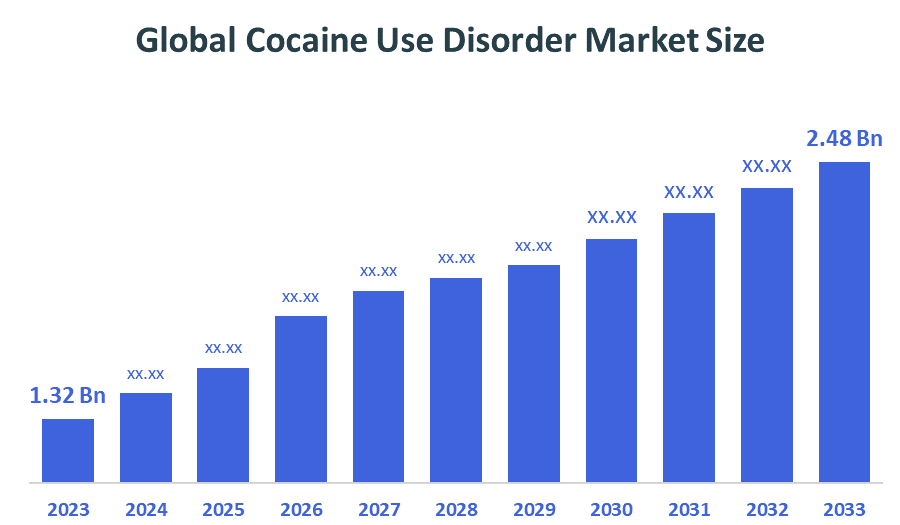
According to Decision Advisors, the Global Cocaine Use Disorder Market Size is expected to grow from USD 1.32billion in 2025 to USD 2.48 billion by 2035, at a CAGR of 6.51% during the forecast period 2025-2035. The global cocaine use disorder market is projected to grow significantly over the next decade, as the increased awareness and social acceptance of addiction issues are necessitating the treatments for cocaine use disorders
Market Overview/ Introduction
The cocaine use disorder (CUD) market refers to the global healthcare and pharmaceutical ecosystem focused on the diagnosis, treatment, and management of cocaine addiction. The market growth is rising prevalence of cocaine use, high unmet medical need, expanding R&D pipeline, and growth of digital health & telemedicine, increasing awareness & destigmatization, government & private funding. rising global cocaine consumption, increasing awareness of addiction as a medical condition, and expanding access to treatment services. The growing patient population and improved diagnosis rates are significantly boosting demand for structured care.
The hereditary influence on CUD susceptibility is estimated to be up to 65% in women and up to 79% in men. The European Drug Agency reports that around 2.7 million young adults (between the ages of 15-34) use cocaine regularly, representing around 2.5% of the population in that age group.
Market opportunities are substantial due to the absence of approved drugs, creating a strong unmet need. Emerging innovations such as digital therapeutics, telepsychiatry, anti-cocaine vaccines, and long-acting medications are opening new avenues. Additionally, expansion into emerging regions and integrated care models combining behavioral and medical treatments are expected to further accelerate market growth
- The governmental and private funding for addiction treatment programs influences the market scope.
- There is a 250% increase in cases receiving treatment for cocaine as their main problem drug since 2017, particularly in Ireland
- The European Union is experiencing increased treatment demand, with wastewater analysis showing rising cocaine residues in over half of monitored cities.
Notable Insights: -
- North America holds the largest regional market share, approximately 45% in the global cocaine use disorder market.
- Asia Pacific is the fastest-growing region in the global cocaine use disorder market.
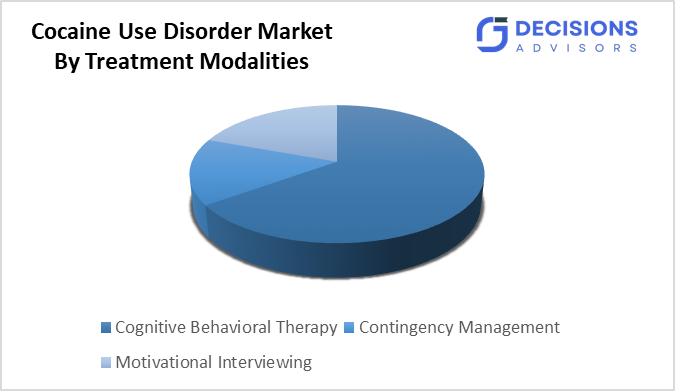
- By treatment modality, the cognitive behavioral therapy segment held a dominant position of over 38% in terms of market share in 2025.
- By pharmacotherapy, the antidepressants segment is the dominating one, accounting for over 70% of the global market share in 2025.
- The compound annual growth rate of the global Cocaine Use Disorder market is 6.51%.
- The market is likely to achieve a valuation of USD 2.48billion by 2035.
What is the role of technology in grooming the market?
Technology plays a crucial role in shaping the Cocaine Use Disorder market, driving both treatment innovation and market expansion. Digital health tools such as telepsychiatry platforms and mobile applications have increased treatment accessibility by over 35% in remote and underserved regions. Artificial intelligence (AI) is being used for predictive analytics, improving relapse detection accuracy by nearly 25–30%. Wearable devices and biosensors enable real-time monitoring of patient behavior, enhancing adherence rates by around 20%. Additionally, digital therapeutics have shown a 15–20% improvement in patient engagement compared to traditional methods. Technology is also accelerating drug development through data-driven clinical trials, reducing trial timelines by approximately 30%. With the global market projected to grow at a 6% CAGR, technology remains a key enabler, improving outcomes, reducing costs, and expanding the reach of treatment solutions worldwide.
Market Drivers
The global cocaine use disorder market is driven by rising addiction prevalence and strong unmet medical needs. Key drivers include increasing cocaine dependence cases, with 1.3 million affected individuals in the U.S., and relapse rates of 40–60%, highlighting treatment demand. Product launches focus on long-acting injectables, anti-cocaine vaccines, and monoclonal antibodies, alongside digital therapeutics and telepsychiatry platforms, accelerating innovation and expanding treatment accessibility globally. Boosting demand for treatment. A major driver is the lack of FDA-approved medications, creating strong opportunities for innovation. Increasing government funding and awareness programs contribute to ~6% CAGR growth. Product development is accelerating, with novel therapies such as anti-cocaine vaccines and dopamine modulators entering clinical trials.
Restrain
The main restraints on the global cocaine use disorder market include the absence of widely approved pharmacological treatments, which restricts revenue expansion and slows adoption. High clinical trial failure rates—estimated at over 70% for addiction therapies- further hinder innovation. Social stigma leads to nearly 60% underdiagnosis, reducing treatment demand. Limited reimbursement policies and uneven healthcare access, especially in developing regions, constrain market penetration.
Competitive Analysis:
The report offers the appropriate analysis of the key organizations/companies involved within the cocaine use disorder market, along with a comparative evaluation primarily based on their product of offering, business overviews, geographic presence, enterprise strategies, segment market share, and SWOT analysis. The report also provides an elaborative analysis focusing on the current news and developments of the companies, which includes product development, innovations, joint ventures, partnerships, mergers & acquisitions, strategic alliances, and others. This allows for the evaluation of the overall competition within the market.
Top Companies in Global Cocaine Use Disorder Market
- Alkermes PLC
- Alnylam Pharmaceuticals, Inc.
- Camurus AB
- Embera NeuroTherapeutics, Inc.
- Indivior PLC
- Johnson & Johnson Services, Inc.
- KemPharm, Inc.
- Kinoxis Therapeutics
- Novartis International AG
- Orexo AB
Government Initiatives
|
Country |
Key Government Initiatives |
|
US |
SUPPORT Act (Substance Use-Disorder Prevention that Promotes Opioid Recovery and Treatment), SAMHSA (Substance Abuse and Mental Health Services Administration) grants, Federal & state opioid settlement funds |
|
China |
Strict anti-drug enforcement policies, Expansion of rehabilitation centers, and public awareness campaigns |
|
India |
National Action Plan for Drug Demand Reduction (NAPDDR), National Drug De-Addiction Programme, University-level awareness (e.g., UGC SWAYAM drug courses) |
Market Segmentation
The cocaine use disorder market share is classified into treatment modalities, pharmacotherapy, and complementary therapies.
- The cognitive behavioral therapy segment dominated the market in 2025, and is projected to grow at a substantial CAGR of approximately 38% during the forecast period.
Based on the treatment modalities, the cocaine use disorder market is divided into cognitive behavioral therapy, contingency management, motivational interviewing. Among these, the cognitive behavioral therapy segment dominated the market in 2025 and is projected to grow at a substantial CAGR of approximately 38% during the forecast period. The growth of the segment is driven by the strongest clinical evidence, structured protocols, and wide adoption across healthcare systems. It effectively addresses relapse triggers and behavioral patterns, making it the most standardized, scalable, and preferred first-line treatment compared to other behavioral approaches.
- The antidepressants segment accounted for the largest share in 2025, and is anticipated to grow at a significant CAGR of approximately 70% during the forecast period.
Based on the pharmacotherapy, the cocaine use disorder market is divided into antidepressants, psychostimulants, anticonvulsants, and antipsychotics. Among these, the antidepressants segment accounted for the largest share in 2025 and is anticipated to grow at a significant CAGR of approximately 70% during the forecast period. They are widely prescribed to manage co-occurring conditions like depression and anxiety, which are common in CUD patients. Their established safety profile, availability, and physician familiarity drive higher adoption compared to experimental or less-proven alternatives like psychostimulants or anticonvulsants.
- The counseling programs segment dominated the market in 2025, and is projected to grow at a substantial CAGR of approximately 50% during the forecast period.
Based on the complementary therapies, the cocaine use disorder market is divided into counseling programs, digital therapeutics, peer support systems. Among these, the counseling programs segment dominated the market in 2025 and is projected to grow at a substantial CAGR of approximately 50% during the forecast period. Because they are widely accessible, cost-effective, and form the foundation of treatment. Unlike Digital Therapeutics or peer support, counseling is clinically validated, scalable, and reimbursed in many systems, making it the most adopted and established intervention globally.
Regional Segment Analysis of the Cocaine Use Disorder Market
- North America (U.S., Canada, Mexico)
- Europe (Germany, France, U.K., Italy, Spain, Rest of Europe)
- Asia-Pacific (China, Japan, India, Rest of APAC)
- South America (Brazil and the Rest of South America)
- The Middle East and Africa (UAE, South Africa, Rest of MEA)
North America is anticipated to hold the largest share of the cocaine use disorder market over the predicted timeframe.
North America is anticipated to hold the largest share of the Cocaine Use Disorder market over the predicted timeframe. This market is accounting about approximately 55% of the total market share. The largest region in the global Cocaine Use Disorder market is North America, driven by several key factors. First, the region has a high prevalence of cocaine use, with millions of users, creating strong demand for treatment services. Second, North America benefits from a well-developed healthcare infrastructure, including specialized rehabilitation centers and advanced clinical care. Third, significant government funding and insurance coverage support addiction treatment programs. Finally, the presence of leading pharmaceutical companies and ongoing research into new therapies further strengthens market growth.
Asia Pacific is expected to grow at a rapid CAGR in the cocaine use disorder market during the forecast period. Asia Pacific is poised to be the fastest-growing region in the global cocaine use disorder market. Asia-Pacific is expected to register the highest CAGR, typically around 6–8%+, compared to the global average of 5.8–6.25%. Rising substance use population driven by urbanization and lifestyle changes, improving healthcare infrastructure in countries like China and India, increasing government initiatives and awareness programs, Low base effect – historically underdiagnosed and undertreated populations, and Expansion of telemedicine and digital therapeutics, improving access to care
Europe is the 2nd largest region to grow in the Cocaine Use Disorder market during the period. Europe is projected to grow at a CAGR of 5–6%, slightly below Asia-Pacific but close to the global average. Countries like the United Kingdom, Germany, and France drive this growth due to rising stimulant use and strong public healthcare systems. The region benefits from structured addiction treatment frameworks, government-funded programs, and increasing adoption of Digital Therapeutics
Strategies to Implement for Growth of the Market in Non-Leading Regions
To drive growth of the Cocaine Use Disorder market in non-leading regions (e.g., Asia, Africa, Latin America), a multi-pronged strategy is essential. First, expand access to counseling and community-based treatment, which are cost-effective and scalable. Governments should integrate addiction care into primary healthcare systems. Second, promote Digital Therapeutics and telemedicine to overcome infrastructure gaps, especially in rural areas. Third, increase public awareness campaigns to reduce stigma and improve early diagnosis. Fourth, strengthen public-private partnerships to fund rehabilitation centers and training programs. Fifth, encourage local clinical research and drug development to adapt treatments to regional needs. Additionally, implementing insurance coverage and government reimbursement policies can improve affordability and uptake. Workforce development—training healthcare professionals in addiction medicine—is also critical.
Future Market Trends in Global Cocaine Use Disorder Market: -
1. High Unmet Need for Approved Pharmacotherapies:
One of the major trends in the cocaine use disorder therapeutics market is the significant unmet medical need due to the absence of FDA-approved medications specifically for cocaine addiction. This gap is driving extensive research and creating opportunities for pharmaceutical companies to develop novel pharmacological therapies.
2. Expansion of Clinical Pipeline and Emerging Therapies
The therapeutic pipeline for cocaine uses disorder is gradually expanding with investigational drugs targeting neurotransmitter pathways, craving reduction, and relapse prevention. Increased clinical research activity reflects growing interest from biotechnology and pharmaceutical companies in addressing this underserved therapeutic area.
3. Growing Adoption of Digital Health and Telepsychiatry
Digital therapeutics, telepsychiatry platforms, and mobile health applications are becoming increasingly important in addiction management. These technologies enable remote counseling, continuous monitoring, and improved patient engagement, expanding access to treatment for individuals with cocaine use disorder
Recent Development
In October 2024, ANANDA Scientific Inc., a research-focused biopharmaceutical company, announced the commencement of a clinical trial evaluating Nantheia ATL5, an investigational drug using cannabidiol (CBD), leveraging ANANDA’s proprietary delivery technology, co-administered with delta-9-tetrahydrocannabinol (THC), for its potential efficacy in treating co-occurring opioid use disorder (OUD) and chronic pain.
How is Recent Developments Helping the Market?
Recent developments are significantly accelerating the growth of the cocaine use disorder market by improving treatment effectiveness and accessibility. One major advancement is the expansion of the drug development pipeline, including therapies like TNX-1300 and EMB-001, targeting cravings and relapse prevention. These innovations address the long-standing lack of approved medications. Additionally, novel approaches such as monoclonal antibodies and anti-cocaine vaccines are emerging, offering targeted and potentially long-lasting treatment effects. Another key development is the rise of digital therapeutics and telepsychiatry, enabling remote counseling, continuous monitoring, and improved patient adherence, especially in underserved regions. Governments and global organizations are also expanding awareness programs and treatment access, increasing diagnosis rates and patient engagement.
Market Segment
This study forecasts revenue at global, regional, and country levels from 2020 to 2035. Decision Advisors has segmented the cocaine use disorder market based on the below-mentioned segments:
Global Cocaine Use Disorder Market, By Treatment Modality
- Cognitive Behavioral Therapy
- Contingency Management
- Motivational Interviewing
Global Cocaine Use Disorder Market, By Pharmacotherapy
- Antidepressants
- Psychostimulants
- Anticonvulsants
- Antipsychotics
Global Cocaine Use Disorder Market, By Complementary Therapies
- Counseling Programs
- Digital Therapeutics
- Peer Support Systems
Global Cocaine Use Disorder Market, By Regional Analysis
- North America
- US
- Canada
- Mexico
- Europe
- Germany
- UK
- France
- Italy
- Spain
- Russia
- Rest of Europe
- Asia Pacific
- China
- Japan
- India
- South Korea
- Australia
- Rest of Asia Pacific
- South America
- Brazil
- Argentina
- Rest of South America
- Middle East & Africa
- UAE
- Saudi Arabia
- Qatar
- South Africa
- Rest of the Middle East & Africa
Frequently Asked Questions (FAQ).
Q: What role do counseling programs play in the market?
A: Counseling programs are central to the cocaine use disorder market, forming the foundation of treatment. They include cognitive behavioral therapy and motivational approaches, helping patients modify behavior and prevent relapse. Due to strong clinical validation and accessibility, counseling remains the most widely adopted and scalable intervention globally.
Q: How are Digital Therapeutics impacting the market?
A: Digital therapeutics are transforming treatment by enabling remote care, real-time monitoring, and personalized interventions. Mobile apps and telehealth platforms improve patient adherence and access, especially in underserved regions. These technologies reduce treatment gaps and are increasingly integrated with traditional therapies, driving innovation and expanding the overall market.
Q: What is the role of government initiatives?
A: Governments play a crucial role through funding, awareness campaigns, and policy frameworks. Programs supporting rehabilitation centers, insurance coverage, and early diagnosis improve treatment accessibility. Public health approaches are replacing punitive measures, significantly boosting demand for structured addiction care services and supporting long-term market growth
Q: Who are the key stakeholders in this market?
A: Key stakeholders include healthcare providers, rehabilitation centers, pharmaceutical companies, digital health firms, and government agencies. Non-governmental organizations and community groups also contribute significantly. Collaboration among these stakeholders is essential to expand treatment access, improve outcomes, and drive innovation in addiction care.
Q: What is the role of rehabilitation centers?
A: Rehabilitation centers provide structured, long-term care for individuals with severe addiction. They offer detoxification, therapy, and relapse prevention programs. These centers are a major revenue contributor, as they deliver comprehensive treatment solutions, especially for chronic cases requiring continuous monitoring and support.
Check Licence
Choose the plan that fits you best: Single User, Multi-User, or Enterprise solutions tailored for your needs.
We Have You Covered
- 24/7 Analyst Support
- Clients Across the Globe
- Tailored Insights
- Technology Tracking
- Competitive Intelligence
- Custom Research
- Syndicated Market Studies
- Market Overview
- Market Segmentation
- Growth Drivers
- Market Opportunities
- Regulatory Insights
- Innovation & Sustainability
Report Details
| Scope | Global |
| Pages | 210 |
| Delivery | PDF & Excel via Email |
| Language | English |
| Release | Mar 2026 |
| Access | Download from this page |