
Global Commercial Cleaning Equipment Market
 |
Author:
Rahul B
|
Pages:
240
|
Author:
Rahul B
|
Pages:
240
Global Commercial Cleaning Equipment Market Size, Share, By Type (Mechanical Equipment, Manual Equipment), By Application (Floors, Carpets, Bathrooms, Furniture, Ceilings), By End-User(Healthcare Facilities, Hospitality, Corporate Offices, Retail Stores, Educational Institutions, Industrial and Manufacturing Units), and By Region (North America, Europe, Asia-Pacific, Latin America, Middle East, and Africa), Analysis and Forecast 2026-2035.
CAGR
5.78%
REVENUE 2025
USD Billion 28.12
FORECAST 2035
USD Billion 49.31
REPORT COVERAGE
Global
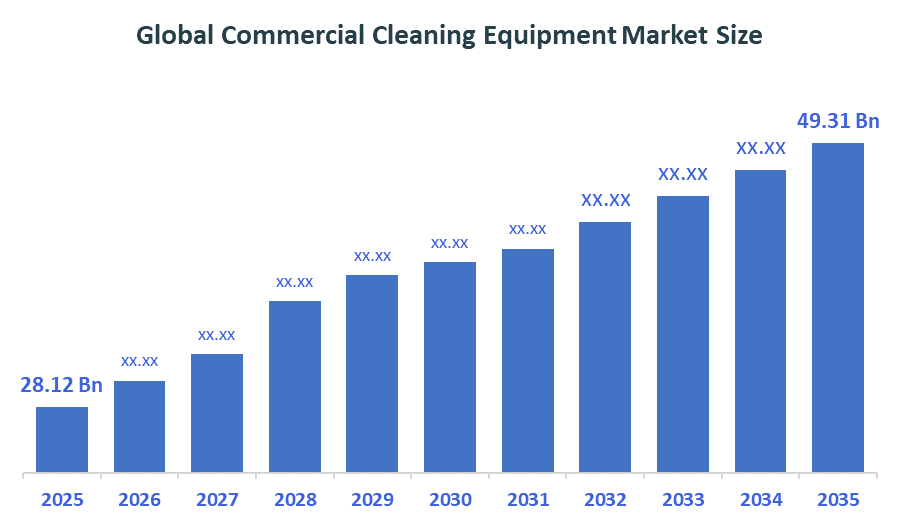
The Global Commercial Cleaning Equipment Market Size is Expected to grow from USD 28.12 billion in 2025 and is expected to reach around USD 49.31 billion by 2035. According to Decision Advisors, a comprehensive study indicates that the automation trend leads the global commercial cleaning equipment market, holding an estimated 15-20% share globally. Tennant reflects a well-established market footprint, producing USD 1.20 Billion in revenue while maintaining a 13-14% share globally, impacting global industry trends and competitive strategy.
Market Snapshot
- Global Commercial Cleaning Equipment Market Size (2025): USD 28.12 billion
- Projected Global Commercial Cleaning Equipment Market Size (2035): USD 49.31 billion
- Global Commercial Cleaning Equipment Market Compound Annual Growth Rate (CAGR): 5.78%
- Largest Regional Market: North America
- Fastest Growing Region: Asia-Pacific
- 3rd Largest Region: Europe
- Base Year: 2025
- Historical Period: 2021-2024
- Forecast Period: 2026-2035
Market Overview/ Introduction
The global commercial cleaning equipment market includes both automated cleaning systems and hand-operated cleaning systems which designers built to perform deep cleaning tasks in areas with high foot traffic. These solutions are deployed across healthcare, hospitality, corporate, retail, and industrial settings because they help maintain hygiene standards and improve operational efficiency while enabling organizations to handle extensive cleaning tasks. The factors driving adoption in this sector include automation technology, government regulations, and the requirement for businesses to maintain uniform cleaning standards at their multiple locations. The innovation phase which focuses on three main technologies that include autonomous robotics, IoT-based diagnostic systems, and AI-driven navigation systems. The combination of green chemistry advances and low-energy systems development meets the requirements of current environmental social governance standards while electrostatic UV disinfection methods improve sanitation results. The development of tailored solutions together with fast-growing infrastructure networks in emerging markets creates business opportunities that enable widespread solution implementation.
- In the United States, the Global Commercial Cleaning Equipment Market gains momentum through the GSA’s MRFS2 program, channelling USD 2.8 billion annually, strengthening procurement efficiency, accelerating equipment adoption, and supporting large-scale institutional demand across sectors.
- In China is accelerating the global commercial cleaning equipment market through smart city initiatives, with investments exceeding USD 1 billion in automated sanitation systems, driving adoption of robotic cleaners across public spaces and improving urban hygiene efficiency.
- The Europe is driving the global commercial cleaning equipment market through EU Ecolabel standards, with sustainability-linked investments exceeding €500 million, accelerating adoption of eco-friendly equipment, influencing public procurement, and strengthening demand for low-impact cleaning technologies across commercial sectors.
Notable Insights: -
- North America holds the largest regional market share, approximately 32.7% in the global commercial cleaning equipment market.
- Asia-Pacific is the fastest growing region in the commercial cleaning equipment market supported by the development of commercial infrastructure and the establishment of higher hygiene standards and the growing use of automated cleaning systems and robotic cleaning technologies.
- By type, the mechanical equipment segment held a dominant position with 69.8% in terms of market share in 2025.
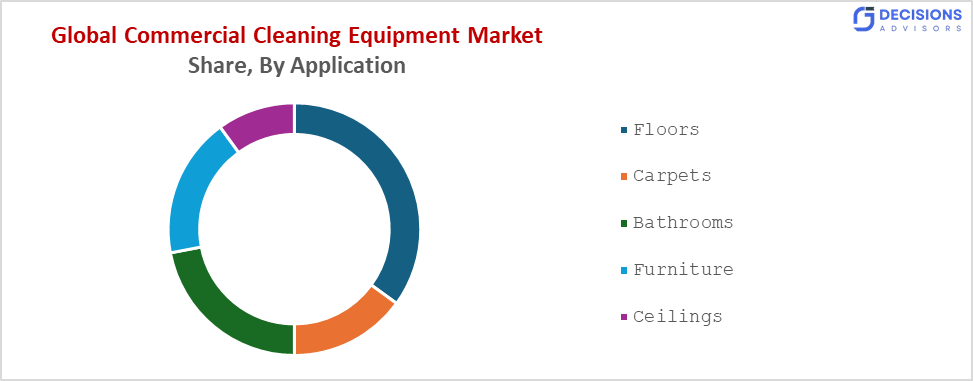
- By application, floors segment is the dominating accounting for over 45.2% of the global market share in 2025.
- The compound annual growth rate of the global commercial cleaning equipment market is 5.78%.
- The market is likely to achieve a valuation of USD 49.31 billion by 2035.
What is role of technology in grooming the market?
The global commercial cleaning equipment market experiences transformation through technological advancements which create automated systems that operate without human input. The combination of IoT machines and AI robotics and predictive maintenance systems establishes better operational efficiency which leads to less equipment downtime. The smart sensors now optimize water, chemical, and energy usage, aligning cleaning processes with sustainability mandates. In autonomous equipment solves the problem of labor shortages by providing reliable performance throughout extensive operating areas. Enterprises now access real-time monitoring and expense management through cloud-based fleet management systems. The current technological advancements of cleaning systems have changed cleaning work from being a basic task into a vital operation which enhances efficiency within current facility management systems.
How is Recent Developments Helping the Market?
Recent developments are driving the global commercial cleaning equipment market forward because of the hygiene standards into measurable performance metrics, nowadays organizations prefer to purchase automated systems that do not require physical contact because of touchless systems and improvements in robotics and IoT technology. The United States government sector and European sustainability standards create uniform requirements for high-efficiency equipment. The manufacturers develop compact machines that can perform multiple functions, which they designed to operate in areas with high urban population density. The market progresses toward technology-focused efficiency-based growth because these developments create new applications and improve product lifecycle value.
Market Drivers
The global commercial cleaning equipment market arises due to the businesses now prioritize efficiency-based facility management systems and hygiene standards which require special cleaning procedures. The cleaning industry now requires automation because of robotic scrubbers and autonomous sweepers provide better operational results through automated cleaning processes. In the post-pandemic sanitation standards, which exceed previous levels have created ongoing demand for advanced disinfection equipment used in healthcare facilities, hospitality venues and educational institutions. In the commercial real estate market is expanding through increased urbanization which creates demand for cleaning systems that can handle larger operations. Buyers now regard sustainability as the main consideration when choosing machines that conserve water and use chemicals with minimal environmental impact. The new drivers of cleaning processes now enable organizations to transform their daily cleaning tasks into technology-based operations which enhance their organizational efficiency and regulatory compliance and environmental management practices.
Restrain
The global commercial cleaning equipment market faces some structural limitations which prevent it from achieving its maximum growth potential. Small and mid-sized enterprises face obstacles to investing in automated and robotic systems because these technologies require high initial expenditures. The advanced equipment remains underused because the organization lacks sufficient operational professionals with technical expertise. The strict environmental and chemical regulations create higher compliance expenses while delaying the approval process for products. The growing trend of businesses outsourcing their cleaning needs creates affordable options which decrease their requirement for internal cleaning equipment.
Competitive Analysis:
The report offers the appropriate analysis of the key organizations/companies involved within the global commercial cleaning equipment market, along with a comparative evaluation primarily based on their product of offering, business overviews, geographic presence, enterprise strategies, segment market share, and SWOT analysis. The report also provides an elaborative analysis focusing on the current news and developments of the companies, which includes product development, innovations, joint ventures, partnerships, mergers & acquisitions, strategic alliances, and others. This allows for the evaluation of the overall competition within the market.
Top Companies in Global Commercial Cleaning Equipment Market
- Alfred Kärcher SE & Co. KG
- Nilfisk A/S
- Tennant Company
- Diversey Holdings Ltd.
- Ecolab Inc.
- Hako GmbH
- Comac S.p.A.
- Fimap S.p.A.
- Eureka S.p.A.
- Roots Multiclean Ltd.
- Avidbots Corp.
- Tornado Industries
Government Initiatives
|
Country |
Key Government Initiatives |
|
United Kingdom |
United Kingdom is advancing the global commercial cleaning equipment market through DEFRA standards, with investments exceeding £300 million in sustainable procurement, accelerating adoption of eco-friendly equipment, responsible sourcing, and low-impact cleaning technologies across commercial sectors. |
|
Australia |
Australia is supporting the global commercial cleaning equipment market through sustainability programs, with investments nearing AUD 300 million across green initiatives, accelerating adoption of eco-friendly cleaning technologies, energy-efficient equipment, and low-impact operational practices across commercial sectors. |
|
|
Market Segmentation
The Commercial Cleaning Equipment Market share is classified into type, application, and end-user
- The mechanical equipment segment dominated the market in 2024 and is projected to grow at a substantial CAGR of approximately 7.3% during the forecast period.
Based on the type, the commercial cleaning equipment market is divided into mechanical equipment, manual equipment. Among these, the mechanical equipment segment dominated the market in 2024 and is projected to grow at a substantial CAGR of approximately 7.3% during the forecast period. It is because of the demand for advanced machines which improve commercial facility operations and support extensive cleaning work leads to increased productivity through automated processes that need less human work.
- The floors segment accounted for the largest share in 2024 and is anticipated to grow at a significant CAGR of approximately 8.1% during the forecast period.
Based on the application, the commercial cleaning equipment market is divided into floors, carpets, bathrooms, furniture, ceilings. Among these, the floors segment accounted for the largest share in 2024 and is anticipated to grow at a significant CAGR of approximately 8.1% during the forecast period. It is dominating because of the extensive surface coverage, frequent cleaning requirements, and strong demand for automated floor scrubbers and sweepers across commercial and industrial facilities.
- The healthcare Facilities segment dominated the market in 2024, and is projected to grow at a substantial CAGR during the forecast period.
Based on the end-user, the commercial cleaning equipment market is divided into healthcare facilities, hospitality, corporate offices, retail stores, educational institutions, industrial and manufacturing units. Among these, the healthcare Facilities segment dominated the market in 2024, and is projected to grow at a substantial CAGR during the forecast period. It is because of the rising infection control requirements, and continuous demand for advanced sanitizing equipment across hospitals and medical centers to ensure safety and compliance.
Strategies to Implement for Growth of the Market in Non-Leading Regions
The global commercial cleaning equipment market needs specific affordable solutions that match local needs and comply with existing regulations to achieve growth in its non-leading regions. Manufacturers should develop affordable modular equipment solutions which meet the needs of cost-sensitive markets while establishing local production facilities and maintenance networks to decrease total operational expenses. The introduction of leasing and pay-per-use systems through municipal partnerships and facility manager partnerships will help organizations reduce their initial investment requirements. The government uses hygiene regulations and green procurement incentives to create market demand.
Regional Segment Analysis of the Global Commercial Cleaning Equipment Market
- North America (U.S., Canada, Mexico)
- Europe (Germany, France, U.K., Italy, Spain, Rest of Europe)
- Asia-Pacific (China, Japan, India, Rest of APAC)
- South America (Brazil and the Rest of South America)
- The Middle East and Africa (UAE, South Africa, Rest of MEA)
North America is anticipated to hold the largest share of the commercial cleaning equipment market over the predicted timeframe. The North America is anticipated to hold the largest share of the commercial cleaning equipment market, accounting for approximately 32.2% of total revenue over the forecast period. It is because of the automated technologies and strict hygiene requirements together with high demand from the healthcare and corporate and retail industries drive its advanced facility management solutions.
Asia-Pacific is expected to grow at a rapid CAGR in the commercial cleaning equipment market during the forecast period. The Asia-Pacific market will experience fast growth because it accounts for approximately 8.1% of it is due to the demand for the region has increased due to four factors which include rapid urbanization and expanding commercial infrastructure and rising hygiene awareness and growing use of automated robotic cleaning solutions in developing countries.
Europe are the 3rd largest region to grow in the Commercial Cleaning Equipment Market during the region. The Europe region stands as the third biggest area global for the commercial cleaning equipment market since it holds approximately 27.2% the strong regulatory frameworks, sustainability-driven procurement, and steady demand across commercial sectors. The rising use of environmentally friendly automated cleaning systems leads to regional expansion which establishes Europe as a dependable, innovative market that competes globally.
Future Market Trends in Commercial Cleaning Equipment Market: -
1. Automation-Led Service Transformation
The global commercial cleaning equipment market is shifting toward automation-first service models, where robotic scrubbers and autonomous sweepers replace repetitive labor. This transition is redefining cost structures, enabling predictable outcomes and higher uptime. Enterprises are increasingly viewing cleaning as a measurable performance function rather than a purely manual, service-driven activity.
2. Subscription and Leasing Business Models
The market is witnessing a transition from capital expenditure to operational expenditure models. Equipment-as-a-service, leasing, and pay-per-use frameworks are lowering entry barriers for small and mid-sized enterprises. This financial innovation is expanding market access while providing manufacturers with recurring revenue streams and stronger customer retention.
3. Integration with Smart Infrastructure Systems
The commercial cleaning equipment is increasingly integrated into smart building ecosystems. Machines now interact with building management systems to align cleaning schedules with occupancy patterns and energy usage. This convergence is enhancing operational efficiency and positioning cleaning as an integral component of intelligent infrastructure management.
Recent Development
- In March 2026, China boosted the global commercial cleaning equipment market through the Shanghai China Clean Expo, attracting nearly 500 exhibitors, showcasing AI-driven cleaning technologies, and strengthening innovation, partnerships, and global market expansion.
- In March 2026, United States supported the global commercial cleaning equipment market as laser cleaning systems gained traction, with the segment valued near USD 0.82 billion in 2026, accelerating adoption of non-chemical, precision-driven cleaning solutions.
- In April 2026, Germany advanced the global commercial cleaning equipment market as Freudenberg secured over 90% stake in Nilfisk, strengthening market consolidation, expanding product portfolios, and enhancing operational scale across professional cleaning equipment segments.
Market Segment
This study forecasts revenue at global, regional, and country levels from 2020 to 2035. Decision Advisors has segmented the commercial cleaning equipment market based on the above-mentioned segments:
Global Commercial Cleaning Equipment Market, By Type
- Mechanical Equipment
- Manual Equipment
Global Commercial Cleaning Equipment Market, By Application
- Floors
- Carpets
- Bathrooms
- Furniture
- Ceilings
Global Commercial Cleaning Equipment Market, By End-User
- Healthcare Facilities
- Hospitality
- Corporate Offices
- Retail Stores
- Educational Institutions
- Industrial and Manufacturing Units
Global Commercial Cleaning Equipment Market, By Regional Analysis
- North America
- US
- Canada
- Mexico
- Europe
- Germany
- UK
- France
- Italy
- Spain
- Russia
- Rest of Europe
- Asia Pacific
- China
- Japan
- India
- South Korea
- Australia
- Rest of Asia Pacific
- South America
- Brazil
- Argentina
- Rest of South America
- Middle East & Africa
- UAE
- Saudi Arabia
- Qatar
- South Africa
- Rest of the Middle East & Africa
Frequently Asked Questions (FAQ)
Q. How is automation reshaping the competitive landscape?
A. Automation works to decrease operational expenses while it boosts operational efficiency. The use of robotic scrubbers together with autonomous sweepers and AI-powered systems enables facilities to maintain continuous cleaning operations based on real-time data. The new market conditions drive manufacturers to create more intelligent machines with advanced connectivity features while they shift their service operations to outcome-based contracts and performance-based purchasing models.
Q. Which sectors contribute most to market revenues?
A. The healthcare and hospitality and corporate facilities generate their main revenue through essential hygiene standards which attract high customer traffic. Industrial and logistics sectors are experiencing growth because they need more automated equipment specifically designed for large operations. The diversification of end-use industries enables companies to generate multiple revenue streams which stabilizes their market growth throughout different economic periods.
Q. How are labour dynamics influencing equipment adoption?
A. The growing expenses of labor and the decreasing number of available workers are driving businesses to adopt automated cleaning systems together with robotic cleaning technologies. Companies are purchasing equipment which improves employee productivity while decreasing the need for manual work and providing continuous operation, particularly in large industrial and commercial spaces.
Q. What is the long-term outlook for the market?
A. The long-term outlook maintains its strength because of technological advancements and changing hygiene requirements. The market will shift its focus toward intelligent integrated cleaning systems which will become essential for present-day facility management methods as automation becomes affordable and environmental regulations grow stricter.
Check Licence
Choose the plan that fits you best: Single User, Multi-User, or Enterprise solutions tailored for your needs.
We Have You Covered
- 24/7 Analyst Support
- Clients Across the Globe
- Tailored Insights
- Technology Tracking
- Competitive Intelligence
- Custom Research
- Syndicated Market Studies
- Market Overview
- Market Segmentation
- Growth Drivers
- Market Opportunities
- Regulatory Insights
- Innovation & Sustainability
Report Details
| Scope | Global |
| Pages | 240 |
| Delivery | PDF & Excel via Email |
| Language | English |
| Release | Apr 2026 |
| Access | Download from this page |