
Global Condom Market
 |
Pages:
230
|
Pages:
230
Global Condom Market Size, Share, and COVID-19 Impact Analysis, By Material (Latex and Non-latex), By Distribution Channel (Mass Merchandisers, Drug Stores/Pharmacies, Online Retail Stores, and Others), and By Region (North America, Europe, Asia-Pacific, Latin America, Middle East, and Africa), Analysis and Forecast 2025-2035
REPORT COVERAGE
Global
Global Condom Market Size Insights Forecasts to 2035
- The Global Condom Market Size Was Estimated at USD 13.21 Billion in 2024
- The Market Size is Expected to Grow at a CAGR of around 8.74 % from 2025 to 2035
- The Worldwide Condom Market Size is Expected to Reach USD 33.22 Bllion by 2035
- North America is expected to grow the fastest during the forecast period.
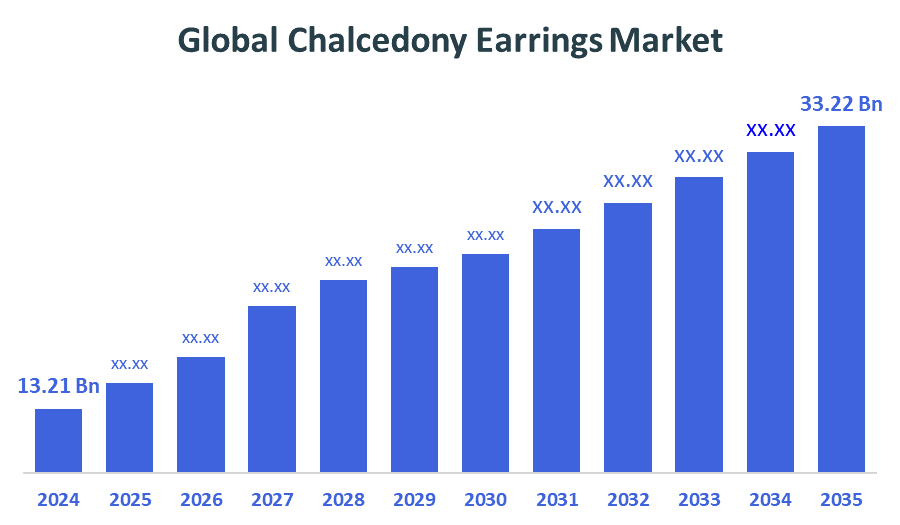
According to a research report published by Decisions Advisors and Consulting, The Global Condom Market Size Was Worth Around USD 13.21 Billion In 2024 And Is Predicted To Grow To Around USD 33.22 Billion By 2035 With A Compound Annual Growth Rate (CAGR) Of 8.74 % From 2025 To 2035. Market expansion is anticipated to be fueled by rising awareness of condom use, efforts to stop the spread of HIV and other STIs, and the availability of a variety of products to meet consumer demands.
Market Overview
The condom market includes an effective method of preventing pregnancy and lowering the risk of STIs, which is to use a condom, a protective barrier, during sexual activity. Usually composed of latex, polyurethane, or lambskin, condoms come in male and female varieties that are intended to cover the genitalia and stop the exchange of body fluids. Among the most effective contraceptive methods, condoms have reduced the risk of several sexually transmitted diseases (STDs). Thus, two major variables influencing the demand for condoms are STD prevention and contraception. Positive features are being given to female-based items, even while male-based products dominate the market. This is because women are becoming more conscious of the negative impact that other medication-based pill-based contraceptives might have on their health. Adoption of the product is also likely to be supported by raising awareness of the risk of HIV infections spreading through sex workers.
For example, sex workers are around 30 times more likely to contract HIV, according to the UNAIDS Global HIV & AIDS statistics.
The World Health Organisation (WHO) estimates that in 2023, there were about 374 million new cases of trichomoniasis, chlamydia, gonorrhoea, and syphilis recorded each year. Two-thirds of the 39.0 million people living with HIV worldwide, according to a WHO data from that year, reside in African nations. Beyond the acute effects of the illness, this may result in major consequences. Complications, including infertility and impotence, can result from untreated sexually transmitted diseases.
The London Sexual Health Programme (LSHP) is a collaborative initiative of 31 London local authorities, hosted by the City of London Corporation, working with the NHS to improve sexual health services. It focuses on strategic commissioning, partnership working, and innovation, including the online service Sexual Health London (SHL.UK), which offers free STI testing and contraception access.
Report Coverage
This research report categorizes the condom market based on various segments and regions, forecasts revenue growth, and analyzes trends in each submarket. The report analyses the key growth drivers, opportunities, and challenges influencing the condom market. Recent market developments and competitive strategies, such as expansion, product launch, development, partnership, merger, and acquisition, have been included to draw the competitive landscape in the market. The report strategically identifies and profiles the key market players and analyzes their core competencies in each sub-segment of the condom market.
Driving Factors
The growing awareness of sexual health issues and a focus on family planning and disease prevention are driving the massive growth of the worldwide condom business. Condom use has been more widely accepted in many parts of the world as governments and organisations place a strong emphasis on safe sexual behaviours, especially in emerging markets, which creates a chance of market expansion. Consumer demand for cutting-edge condom products has increased significantly as consumers look for products that improve comfort, safety, and enjoyment, which boosts the market expansion. Further, due to advancements in material technology, such as environmentally friendly latex-free condoms made for maximum performance, demand is still rising dramatically across all regions. Additionally, e-commerce platforms offer new ways to contact more people. Companies can target growing consumer categories, such as those seeking more customised products, by leveraging greater accessibility while highlighting sustainability and diversity.
Comuns proposed new social measures in Catalonia: a €30 annual voucher for condoms for young people aged 16–29, and a €60 annual voucher for menstrual products for women aged 12–50. The initiative, part of budget negotiations, aims to promote sexual health and ease the cost of essential monthly products.
Restraining Factors
The condom market is constrained by social shame, cultural taboos, and ignorance in conservative areas. Adoption is further hampered by a lack of sex education, problems with pricing in low-income communities, and opposition from traditional organisations. Growth is further constrained by regulatory barriers and uneven government actions, even in the face of growing demand for safe contraception techniques.
Market Segmentation
The condom market share is classified into material and distribution channel.
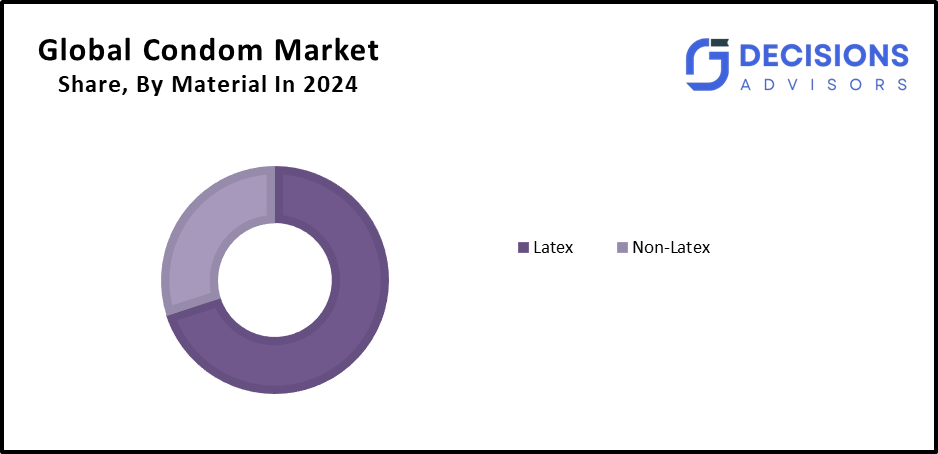
- The latex segment accounted for the largest share in 2024 and is anticipated to grow at a significant CAGR during the forecast period.
Based on the material, the condom market is divided into latex and non-latex. Among these, the latex segment accounted for the largest share in 2024 and is anticipated to grow at a significant CAGR during the forecast period. This is explained by its efficiency, robustness, and adaptability. The demand for these condoms is anticipated to be driven by the fact that they provide effective protection against unintended pregnancies and are composed of premium latex rubber. In addition, producers are concentrating on studying and creating new goods to satisfy the rising demand for premium latex condoms.
For instance, ONE Condoms announced the launch of two brand new condoms, expanding its innovative product portfolio. This follows the company’s breakthrough with the graphene-based ONE Flex, the world’s first condom made with graphene. The new products are designed to enhance intimacy, safety, and consumer choice, reinforcing ONE®’s reputation for pushing boundaries in sexual health innovation.
- The drug stores/pharmacies segment accounted for the highest market share in 2024 and is anticipated to grow at a substantial CAGR over the forecast period.
Based on the distribution channel, the condom market is divided into mass merchandisers, drug stores/pharmacies, online retail stores, and others. Among these, the drug stores/pharmacies segment accounted for the highest market share in 2024 and is anticipated to grow at a substantial CAGR over the forecast period. The main driver of the distribution channel segment's growth is the ease with which consumers can purchase preferred contraceptive goods while maintaining their privacy. Customers may find condoms more reasonable because they are frequently offered at competitive prices at drugstores. Another reason driving the expansion of this market is the affordability of the products found in drug stores.
Regional Segment Analysis of the Condom Market
- North America (U.S., Canada, Mexico)
- Europe (Germany, France, U.K., Italy, Spain, Rest of Europe)
- Asia-Pacific (China, Japan, India, Rest of APAC)
- South America (Brazil and the Rest of South America)
- The Middle East and Africa (UAE, South Africa, Rest of MEA)
Asia Pacific is anticipated to hold the largest share of the condom market over the predicted timeframe.
Asia Pacific is anticipated to hold the largest share of the condom market over the predicted timeframe. The regional market is driven by increasing population density and rising awareness of sexual health. The demand for family planning and sexual education programs has received substantial support from regulatory authorities. The market in China, India and Japan represents the leading edge of this sector, where LifeStyles and Kimono operate as their main competitive defenders. The marketplace consists of established brands and local manufacturers, which together create a competitive atmosphere. E-commerce platforms have improved product availability in the region, which has resulted in economic growth. The market will keep growing as more people become aware of and embrace sexual health products.
UNAIDS and the Australian Government have signed a new partnership to strengthen the fight against AIDS in the Asia-Pacific region. Australia will invest up to AU$12 million to support HIV prevention, testing, and treatment, while reducing stigma and discrimination. The initiative emphasises community leadership, aiming to accelerate progress toward ending AIDS in Southeast Asia and the Pacific.
North America is expected to grow at a rapid CAGR in the condom market during the forecast period. The demand for sexual education programs increased because of governmental support for sexual education initiatives. The market offers multiple product options, which include latex and non-latex products to meet different consumer needs. E-commerce platforms have improved customer access to these products, which has resulted in higher sales numbers. The US and Canada lead this region as its main markets because Trojan and Durex operate as its biggest market competitors. The business environment relies on innovation as companies develop new products, which include ultra-thin items with added sensory features. Established brands create a strong market presence while new businesses enter the field to create a competitive atmosphere.
Karex Bhd, through its subsidiary Karex Holdings, has acquired the assets of US condom maker TheyFit LLC for US$1.3 million (RM5.63 million). The move is part of Karex’s own brand manufacturing (OBM) expansion strategy, complementing its existing brands like Carex, INNO, ONE, and ESP. The acquisition includes patents, trademarks, and FDA approvals, enabling Karex to market custom-fit condoms in the US and globally. Karex shares closed lower at RM4.09 following the announcement.
Competitive Analysis:
The report offers the appropriate analysis of the key organizations/companies involved within the condom market, along with a comparative evaluation primarily based on their product offering, business overviews, geographic presence, enterprise strategies, segment market share, and SWOT analysis. The report also provides an elaborative analysis focusing on the current news and developments of the companies, which includes product development, innovations, joint ventures, partnerships, mergers & acquisitions, strategic alliances, and others. This allows for the evaluation of the overall competition within the market.
List of Key Companies
- Church & Dwight Co., Inc.
- CPR GmbH
- Cupid Limited
- FUJILATEX CO., LTD
- Karex Berhad
- LELO iAB
- Lifestyles
- Mankind Pharma
- MAYER LABORATORIES, INC.
- Okamoto Industries, Inc
- Pasante Healthcare Ltd.
- Reckitt Benckiser Group PLC
- RITEX GMBH
- rrtMedcon
- Others
Key Target Audience
- Market Players
- Investors
- End-users
- Government Authorities
- Consulting and Research Firm
- Venture capitalists
- Value-Added Resellers (VARs)
Recent Development
- In September 2025, Manforce Condoms launched a new campaign featuring its first AI-powered brand ambassador. The initiative aims to connect with younger audiences by blending technology and intimacy, positioning itself as a digital personality who can engage consumers across platforms. The campaign highlights innovation in marketing while reinforcing Manforce’s focus on safe intimacy and modern brand storytelling.
- In September 2024, Durex launched India’s first close-fit ultra-thin condoms, expanding its premium range with a product designed for enhanced sensitivity and comfort. Marketed as part of the Durex Invisible line, these condoms combine a super-thin design with a tighter fit, aiming to deliver greater intimacy while maintaining protection. The innovation targets consumers seeking both safety and heightened sensation.
Market Segment
This study forecasts revenue at global, regional, and country levels from 2020 to 2035. Decisions Advisors has segmented the condom market based on the below-mentioned segments:
Global Condom Market, By Material
- Latex
- Non-latex
Global Condom Market, By Distribution Channel
- Mass Merchandisers
- Drug Stores/Pharmacies
- Online Retail Stores
- Others
Global Condom Market, By Regional Analysis
- North America
- US
- Canada
- Mexico
- Europe
- Germany
- UK
- France
- Italy
- Spain
- Russia
- Rest of Europe
- Asia Pacific
- China
- Japan
- India
- South Korea
- Australia
- Rest of Asia Pacific
- South America
- Brazil
- Argentina
- Rest of South America
- Middle East & Africa
- UAE
- Saudi Arabia
- Qatar
- South Africa
- Rest of the Middle East & Africa
Frequently Asked Questions (FAQ)
- How is sustainability influencing product innovation in the condom market?
Sustainability is becoming a major differentiator in the condom industry. Manufacturers are increasingly investing in biodegradable materials, vegan-certified latex, recyclable packaging, and carbon-neutral production processes. Environmentally conscious consumers, particularly in Europe and North America, are driving demand for eco-friendly alternatives.
- What impact does digital marketing have on condom sales growth?
Digital marketing significantly influences brand visibility and consumer engagement. Social media campaigns, influencer partnerships, AI-powered ambassadors, and targeted online advertising help brands normalise sexual wellness conversations and attract younger demographics, boosting online retail sales.
- How does pricing strategy differ between emerging and developed markets?
In emerging markets, affordability and government-supported distribution programs play a major role in product penetration. In developed markets, premium pricing strategies focus on ultra-thin, textured, flavoured, and speciality products that enhance user experience rather than basic contraception needs.
- What role do government voucher programs play in increasing condom adoption?
Government-backed voucher or subsidy programs lower financial barriers for young adults and low-income populations. These initiatives can significantly increase adoption rates, improve sexual health outcomes, and expand market volume, particularly in regions with strong public health frameworks.
- How is the rise of female-controlled contraceptive methods affecting the condom market?
While hormonal and long-acting contraceptive methods are growing, condoms remain the only widely available method that simultaneously prevents STIs and pregnancy. Female condoms and women-focused sexual health education initiatives are expected to gradually reshape market dynamics.
- What competitive advantages do custom-fit or advanced-material condoms provide?
Custom-fit and advanced-material condoms (e.g., graphene-based or ultra-thin variants) enhance comfort, sensitivity, and personalisation. These innovations reduce common consumer complaints such as discomfort or reduced sensation, helping brands command premium pricing and improve brand loyalty.
- How does stigma impact distribution channel performance?
In conservative regions, stigma may limit in-store purchases, increasing reliance on discreet online platforms. E-commerce growth reflects changing consumer behaviour, where privacy and convenience strongly influence purchasing decisions.
Check Licence
Choose the plan that fits you best: Single User, Multi-User, or Enterprise solutions tailored for your needs.
We Have You Covered
- 24/7 Analyst Support
- Clients Across the Globe
- Tailored Insights
- Technology Tracking
- Competitive Intelligence
- Custom Research
- Syndicated Market Studies
- Market Overview
- Market Segmentation
- Growth Drivers
- Market Opportunities
- Regulatory Insights
- Innovation & Sustainability
Report Details
| Scope | Global |
| Pages | 230 |
| Delivery | PDF & Excel via Email |
| Language | English |
| Release | Mar 2026 |
| Access | Download from this page |