
Global Contract Furniture and Furnishing Market
 |
Author:
Somesh R
|
Pages:
195
|
Author:
Somesh R
|
Pages:
195
Global Contract Furniture and Furnishing Market Size, Share By Product Type (Seating Furniture, Tables & Desks, Storage Units, Soft Furnishings, and Others), By Material (Wood, Metal, Plastic, Fabric, and Others), By Distribution Channel (Direct Sales, Distributors, Online Channels), and By Region (North America, Europe, Asia-Pacific, Latin America, Middle East & Africa), Analysis and Forecast 2026-2035.
CAGR
4.45%
REVENUE 2025
USD Billion 46.16
FORECAST 2035
USD Billion 71.32
REPORT COVERAGE
Global
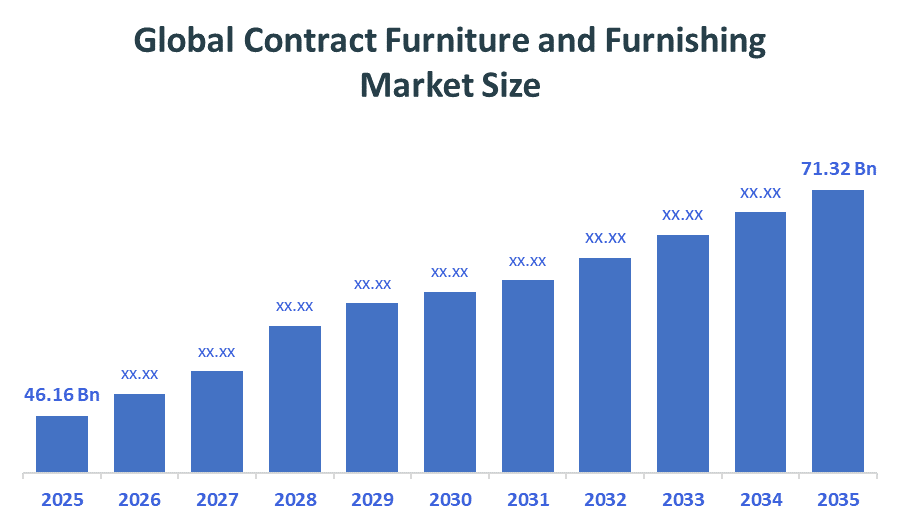
The Global Contract Furniture and Furnishing Market Size is predicted to grow from USD 46.16 Billion in 2025 and is likely to reach around USD 71.32 Billion by 2035 with a CAGR of 4.45%. According to Decision Advisors, a detailed research report on the market reflects that the Ergonomic Seating Demand trend dominates the Global Contract Furniture and Furnishing Market, accounting for approximately 35% of the total share worldwide. Steelcase Inc. leads the market with annual revenue of approximately USD 3.6 Billion and approx 20 - 25% global market share, making it the key contributor to global market development and growth dynamics.
Market Snapshot
- Global Contract Furniture and Furnishing Market Size (2025): USD 46.16 Billion
- Projected Global Contract Furniture and Furnishing Market Size (2035): USD 71.32 Billion
- Global Contract Furniture and Furnishing Market Compound Annual Growth Rate (CAGR): 4.45%
- Largest Regional Market: North America
- 2nd Largest Region: Europe
- Fastest Growing Region: Asia Pacific
- Base Year: 2025
- Historical Period: 2021-2024
- Market Forecast Period: 2026-2035
Market Overview/ Introduction
The Global Contract Furniture and Furnishing Market refers to commercial-grade furniture solutions designed for institutional and business environments such as offices, hotels, hospitals, and educational facilities. Market growth is driven by rising commercial infrastructure development, evolving workplace designs, and increasing demand for ergonomic and sustainable furniture solutions. Governments and corporations are focusing on green building standards and workplace productivity, encouraging adoption of eco-friendly and modular furniture systems. Leading companies are investing in smart furniture, sustainable materials, and digital customization platforms to enhance user experience and operational efficiency. The market benefits from durability, bulk procurement demand, and customization capabilities tailored to commercial requirements.
Notable Insights: -
- North America is anticipated to hold approximately 35% share of the Global Contract Furniture and Furnishing Market over the predicted timeframe.
- Asia Pacific is expected to grow at a rapid CAGR in the Global Contract Furniture and Furnishing Market by holding approximately 28% of the share during the forecast period.
- By product type, the seating furniture, segment dominated the market and holds approximately 38% share in 2025 and is projected to grow at a substantial CAGR during the forecast period.
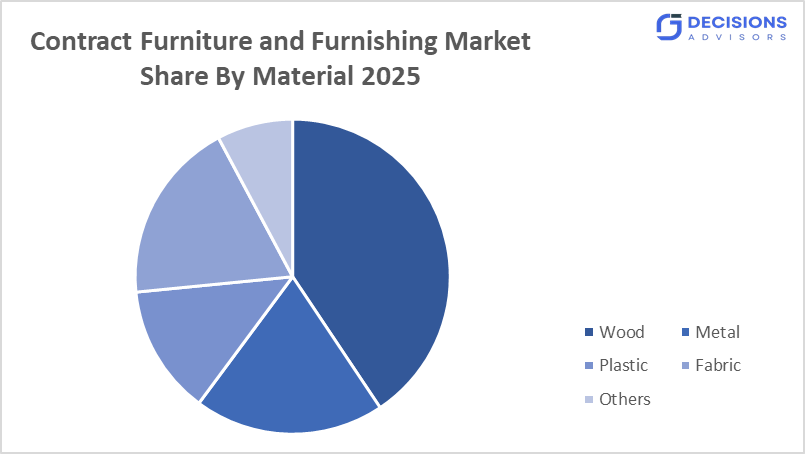
- By material, the wood segment dominated the market and holds approximately 42% share in 2025 and is projected to grow at a substantial CAGR during the forecast period.
- The compound annual growth rate of the Global Contract Furniture and Furnishing Market is 4.45%
- The market is likely to achieve a valuation of USD 71.32 Billion by 2035.
What is the role of technology in grooming the market?
Technology is playing a transformative role in shaping the Contract Furniture and Furnishing Market by enhancing efficiency, customization, and sustainability. Smart furniture integrated with IoT enables real-time monitoring and improved workspace utilization. Digital design platforms allow businesses to create tailored solutions that optimize space and aesthetics. Automation in manufacturing reduces production costs while improving precision and scalability. Additionally, advancements in sustainable materials support environmental compliance and durability. Data-driven workplace analytics help improve employee productivity and comfort. Modular and flexible furniture systems further enable adaptation to hybrid work environments, making technology a key driver of innovation, operational efficiency, and long-term market growth.
Market Drivers
Growth in the Contract Furniture and Furnishing Market is driven by expanding commercial infrastructure and rising office space demand globally. Increasing focus on ergonomic and flexible workplace solutions enhances employee productivity and comfort. Rapid growth in hospitality and healthcare sectors further fuels demand for durable, high-quality furniture. Sustainability trends are encouraging adoption of eco-friendly materials and green-certified products. Additionally, the shift toward hybrid work models is accelerating the need for modular and adaptable furniture systems. Continuous innovation in design, materials, and functionality is also supporting long-term market expansion and strengthening demand across diverse commercial applications worldwide.
Restrain
High initial investment costs limit adoption, especially for small businesses. Fluctuating raw material prices impact manufacturing expenses and pricing stability. Additionally, supply chain disruptions delay deliveries and project timelines, reducing operational efficiency and slowing overall market growth across regions.
Competitive Analysis:
The report offers the appropriate analysis of the key organizations/companies involved within the Global Contract Furniture and Furnishing Market along with a comparative evaluation primarily based on their product offerings, business overviews, geographic presence, enterprise strategies, segment market share, and SWOT analysis. The report also provides an elaborative analysis focusing on the current news and developments of the companies, which includes product development, innovations, joint ventures, partnerships, mergers & acquisitions, strategic alliances, and others. This allows for the evaluation of the overall competition within the market.
Top Companies in the Global Contract Furniture and Furnishing Market
- Steelcase Inc.
- Herman Miller Inc.
- HNI Corporation
- Haworth Inc.
- Okamura Corporation
- Teknion Corporation
- Kinnarps AB
- Godrej Interio
- Kimball International
- Vitra International
Government Initiatives
|
Country |
Key Government Initiatives |
|
UK |
The UK promotes sustainable construction through green building regulations, encouraging adoption of eco-friendly, recyclable contract furniture in commercial spaces, supporting carbon reduction goals and environmentally responsible procurement practices across industries. |
|
US |
The US enforces workplace safety and ergonomic standards that drive demand for comfortable, health-focused office furniture, encouraging organizations to invest in ergonomically designed contract furniture for improved productivity and employee well-being. |
|
India |
India’s infrastructure development and smart city initiatives significantly increase demand for contract furniture across offices, healthcare, and education sectors, supporting commercial expansion and modernization of institutional and public facilities nationwide. |
Study on the Supply, Demand, Distribution, and Market Environment of the Global Contract Furniture and Furnishing Market
Supply in the Contract Furniture and Furnishing Market is driven by large-scale manufacturers offering durable, customizable, and bulk-produced furniture tailored for commercial applications. Demand is primarily generated from corporate offices, hospitality, healthcare, education, and retail sectors requiring functional and aesthetically appealing solutions. Rapid urbanization, infrastructure development, and expansion of commercial spaces continue to strengthen demand globally. Distribution channels include direct sales contracts, authorized dealers, and growing online platforms that improve accessibility and procurement efficiency. Additionally, increasing preference for sustainable materials, modular designs, and ergonomic solutions is shaping both supply strategies and demand patterns, contributing to steady and long-term market growth worldwide.
Price Analysis and Consumer Behaviour Analysis
Pricing in the Contract Furniture and Furnishing Market varies based on material quality, customization, and durability, typically ranging from $25–$75 per sq. ft. for mid-to-premium segments. Buyers increasingly prioritize lifecycle value, as total ownership costs can exceed 200% of initial purchase cost over time. Installation and logistics add 10–15% to project costs, influencing procurement decisions. Bulk purchasing offers 10–25% cost savings, while customization can increase pricing by 15–30%. Consumers prefer durable, ergonomic, and sustainable furniture, focusing on long-term efficiency, reduced replacement cycles, and overall operational cost optimization rather than just upfront expenditure.
Market Segmentation
The Global Contract Furniture and Furnishing Market share is classified into product type, material, and distribution channel
- The Seating Furniture segment dominated the market and holds approximately 38% share in 2025 and is projected to grow at a substantial CAGR during the forecast period.
Based on the product type, the Global Contract Furniture and Furnishing Market is divided into Seating Furniture, Tables & Desks, Storage Units, Soft Furnishings, and Others. Among these, Seating Furniture dominates the market due to its essential role in workplaces, hospitality, and institutional environments where comfort and ergonomics are critical. Increasing demand for office chairs, lounge seating, and collaborative seating solutions is driving growth. Continuous innovation in ergonomic designs and adjustable features further enhances productivity and user comfort. Its widespread adoption across commercial spaces strengthens its leading position globally.
- The Wood segment accounted for the largest share of approximately 42% in 2025 and is anticipated to grow at a significant CAGR during the forecast period.
Based on the material, the Global Contract Furniture and Furnishing Market is divided into Wood, Metal, Plastic, Fabric, and Others. Among these, Wood dominates the market due to its durability, aesthetic appeal, and versatility in design. It is widely used in premium office furniture, hospitality interiors, and institutional applications. Wood offers a balance of strength and visual appeal, making it suitable for both traditional and modern designs. Increasing preference for sustainable and certified wood materials is further supporting its dominance across global markets.
- The Direct Sales segment accounted for the largest share of approximately 46% in 2025 and is anticipated to grow at a significant CAGR during the forecast period.
Based on the distribution channel, the Global Contract Furniture and Furnishing Market is divided into Direct Sales, Distributors, and Online Channels. Among these, Direct Sales dominate the market due to large-scale procurement by corporate clients, hotels, and institutions requiring customized furniture solutions. This channel allows manufacturers to offer tailored designs, bulk pricing advantages, and better after-sales services. Strong relationships between manufacturers and commercial buyers further enhance this segment’s dominance. Increasing preference for project-based procurement and turnkey solutions continues to drive growth in direct sales globally.
Strategies to Implement for Growth of the Market in Non-Leading Regions
Growth in non-leading regions can be accelerated by focusing on affordability, localization, and accessibility of contract furniture solutions. Companies should introduce cost-effective, modular, and space-saving designs tailored for small and mid-sized enterprises. Establishing regional manufacturing and assembly units can reduce logistics costs and improve delivery timelines. Strategic partnerships with local distributors, architects, and contractors will enhance market penetration. Promoting sustainable and durable materials aligned with regional regulations can strengthen adoption. Additionally, expanding digital platforms for customization and procurement, along with offering financing or leasing options, can improve accessibility and attract a broader customer base in emerging markets.
Regional Segment Analysis of the Global Contract Furniture and Furnishing Market
- North America (U.S., Canada, Mexico)?
- Europe (Germany, France, U.K., Italy, Spain, Rest of Europe)
- Asia-Pacific (China, Japan, India, Rest of APAC)
- South America (Brazil and the Rest of South America)?
- The Middle East and Africa (UAE, South Africa, Rest of MEA)
North America is anticipated to hold approximately 35% share of the Global Contract Furniture and Furnishing Market over the predicted timeframe.
North America holds approximately 35% share in the Contract Furniture and Furnishing Market, driven by strong corporate infrastructure, high demand for ergonomic office solutions, and continuous workplace modernization. The region benefits from the presence of major market players and advanced manufacturing capabilities. Increasing adoption of hybrid work models is fueling demand for flexible and modular furniture systems. Additionally, strict workplace safety and ergonomic standards encourage organizations to invest in high-quality, employee-centric furniture. Growth in commercial real estate, healthcare facilities, and hospitality sectors further supports demand. Technological integration, including smart furniture and sustainable materials, is strengthening the region’s leadership position globally.
Europe is expected to grow at a rapid CAGR in the Global Contract Furniture and Furnishing Market, holding approximately 30% of the share during the forecast period
Europe holds approximately 30% share in the Contract Furniture and Furnishing Market, driven by strong emphasis on sustainability, eco-friendly materials, and innovative design standards. Strict environmental regulations and circular economy policies encourage manufacturers to adopt recyclable and low-emission materials. The region is witnessing increasing demand for premium, aesthetically advanced, and ergonomic furniture across corporate, hospitality, and healthcare sectors. Countries such as Germany, France, and the UK lead in design innovation and sustainable production practices. Additionally, rising investments in green buildings and modern office spaces are accelerating demand. Integration of smart furniture and customization solutions further strengthens Europe’s competitive position globally.
Asia Pacific is the fastest-growing region in the Global Contract Furniture and Furnishing Market during the period, holding approximately 28% share.
Asia-Pacific holds approximately 28% share and is the fastest-growing region in the Contract Furniture and Furnishing Market, driven by rapid urbanization, expanding commercial infrastructure, and increasing investments in office spaces, hospitality, and healthcare sectors. Countries such as China, India, and Japan are key contributors due to rising corporate activities and industrial development. Growing middle-class population and increasing demand for modern, ergonomic, and affordable furniture further support market expansion. Government initiatives focused on infrastructure and smart cities are accelerating demand. Additionally, the presence of cost-effective manufacturing and raw material availability enhances regional competitiveness and supports strong growth across global markets.
Future Market Trends in Global Atomic Layer Deposition Equipment Market: -
-
- Growth of Smart Furniture
Smart furniture integrates IoT sensors and connectivity features to enhance workplace functionality and efficiency. These solutions enable real-time usage tracking, space optimization, and improved employee comfort. Increasing adoption in modern offices supports productivity, automation, and data-driven workspace management across commercial environments globally.
- Growth of Smart Furniture
-
- Sustainable Material Adoption
Sustainable materials such as recycled wood, bamboo, and eco-friendly fabrics are gaining traction due to strict environmental regulations and corporate sustainability goals. Businesses are prioritizing low-emission and recyclable furniture to reduce carbon footprints, enhance brand value, and comply with green building standards worldwide.
- Sustainable Material Adoption
-
- Modular and Flexible Designs
Modular furniture systems allow easy reconfiguration to suit changing workspace needs, especially in hybrid and co-working environments. These designs enhance space utilization, reduce costs, and improve adaptability. Growing demand for dynamic office layouts is significantly driving adoption of flexible furniture solutions globally.
- Modular and Flexible Designs
-
- Digital Customization Platforms
Digital platforms enable customers to design and customize furniture according to specific requirements, including size, material, and layout. These tools improve purchasing efficiency, visualization, and accuracy. Increasing preference for personalized solutions is driving adoption of digital configuration technologies in commercial furniture procurement.
- Digital Customization Platforms
-
- Expansion in Emerging Markets
Emerging economies are witnessing rapid growth due to increasing urbanization, infrastructure development, and rising commercial investments. Expanding office spaces, hospitality, and healthcare sectors are driving demand for contract furniture. Cost-effective manufacturing and growing business activities further accelerate market expansion in these regions.
- Expansion in Emerging Markets
Recent Development
- In March 2025, Steelcase Inc. launched advanced smart office furniture integrated with IoT-enabled sensors to enhance workspace analytics, optimize space utilization, and improve employee productivity in hybrid work environments.
- In October 2024, Herman Miller expanded its sustainable furniture portfolio by incorporating recycled and low-emission materials, supporting corporate sustainability goals and increasing demand for eco-friendly contract furniture solutions globally.
How is Recent Developments Helping the Market?
Recent developments are significantly supporting the Contract Furniture and Furnishing Market by enhancing innovation, sustainability, and operational efficiency. Advancements in smart furniture and IoT integration are improving workspace productivity and space utilization. Increased focus on eco-friendly materials and circular design is helping companies meet environmental regulations and sustainability goals. Digital customization tools are streamlining procurement and improving customer satisfaction. Additionally, modular and flexible furniture designs are enabling businesses to adapt to hybrid work environments. Investments in advanced manufacturing technologies are reducing production costs and improving quality. These developments collectively drive market growth, strengthen competitiveness, and expand adoption across commercial sectors globally.
Market Segment
This study forecasts revenue at global, regional, and country levels from 2020 to 2035. Decision Advisors has segmented the Global Contract Furniture and Furnishing Market based on the below-mentioned segments:
Global Contract Furniture and Furnishing Market, By Product Type
- Seating Furniture
- Tables & Desks
- Storage Units
- Soft Furnishings
- Others
Global Contract Furniture and Furnishing Market, By Material
- Wood
- Metal
- Plastic
- Fabric
- Other
Global Contract Furniture and Furnishing Market, By Distribution Channel
- Direct Sales
- Distributors
- Online Channels
Global Contract Furniture and Furnishing Market, By Regional Analysis
- North America
- US
- Canada
- Mexico
- Europe
- Germany
- UK
- France
- Italy
- Spain
- Russia
- Rest of Europe
- Asia Pacific
- China
- Japan
- India
- South Korea
- Australia
- Rest of Asia Pacific
- South America
- Brazil
- Argentina
- Rest of South America
- Middle East & Africa
- UAE
- Saudi Arabia
- Qatar
- South Africa
- Rest of the Middle East & Africa
Frequently Asked Questions (FAQ)
Q. How does workplace culture influence contract furniture demand?
A. Workplace culture shapes furniture demand by emphasizing collaboration, wellness, and flexibility. Organizations increasingly choose layouts and furniture that encourage interaction, creativity, and employee satisfaction, influencing procurement strategies beyond traditional functional requirements.
Q. What role does lifecycle assessment play in furniture selection?
A. Lifecycle assessment helps buyers evaluate long-term environmental and economic impacts, including production, usage, and disposal. This approach supports sustainable procurement decisions and ensures cost efficiency over the product’s lifespan.
Q. How are leasing models changing purchasing behavior in this market?
A. Leasing models reduce upfront capital expenditure and allow businesses to upgrade furniture periodically. This approach increases flexibility, supports cash flow management, and is particularly attractive for startups and rapidly scaling companies.
Q. Why is acoustics becoming important in contract furniture design?
A. Acoustic performance is gaining importance in open workspaces to reduce noise distractions. Furniture integrated with sound-absorbing materials improves concentration, privacy, and overall workplace productivity.
Q. How does global standardization impact contract furniture manufacturing?
A. Standardization ensures consistent quality, safety, and interoperability across markets. It simplifies international procurement and helps manufacturers scale production while meeting diverse regulatory and design requirements globally.
Check Licence
Choose the plan that fits you best: Single User, Multi-User, or Enterprise solutions tailored for your needs.
We Have You Covered
- 24/7 Analyst Support
- Clients Across the Globe
- Tailored Insights
- Technology Tracking
- Competitive Intelligence
- Custom Research
- Syndicated Market Studies
- Market Overview
- Market Segmentation
- Growth Drivers
- Market Opportunities
- Regulatory Insights
- Innovation & Sustainability
Report Details
| Scope | Global |
| Pages | 195 |
| Delivery | PDF & Excel via Email |
| Language | English |
| Release | May 2026 |
| Access | Download from this page |