
Global Cutaneous Lupus Erythematosus Market
 |
Pages:
240
|
Pages:
240
Global Cutaneous Lupus Erythematosus Market Size, Share, By Type (Acute, Subacute, Intermittent, Chronic), By Drug Class (Retinoids, Corticosteroids, Immunosuppressants, Antimalarial Drugs, Others), By Route of Administration (Oral, Injections, Topical, Others), By Distribution Channel (Hospital Pharmacy, Retail Pharmacy, Online Pharmacy, Others), and By Region (North America, Europe, Asia-Pacific, Latin America, Middle East, and Africa), Analysis and Forecast 2025-2035
REPORT COVERAGE
Global
Market Snapshot
- Market Size (2025): USD 349.7Billion
- Projected Market Size (2035): USD 576.4 Billion
- Compound Annual Growth Rate (CAGR): 5.12%
- Largest Regional Market: North America
- Fastest Growing Region: Asia Pacific
- 2nd Largest Region: Europe
- Base Year: 2025
- Historical Period: 2021–2024
- Forecast Period: 2025–2035
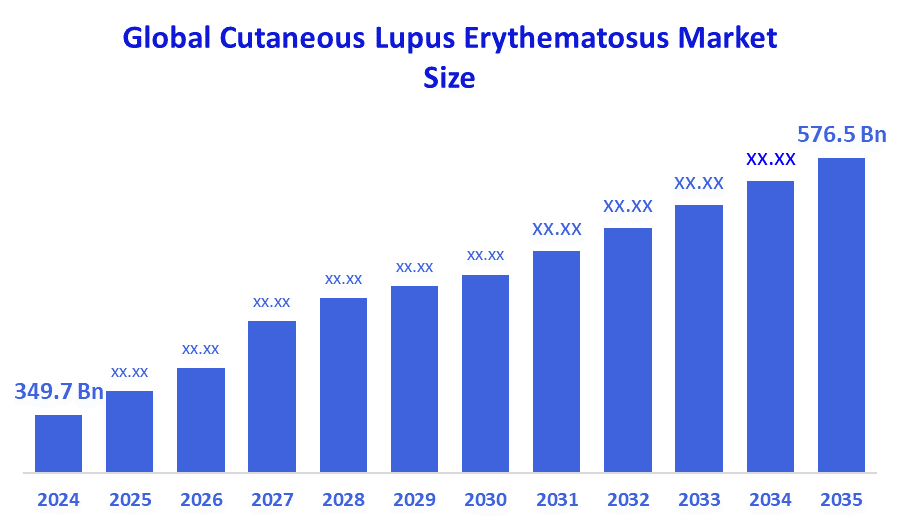
According to Decision Advisors, the Global Cutaneous Lupus Erythematosus Market Size is expected to grow from USD 349.7 billion in 2025 to USD 576.4 billion by 2035, at a CAGR of 5.12% during the forecast period 2025-2035. The global cutaneous lupus erythematosus market is projected to grow significantly over the next decade due to the increasing occurrence of diseases together with advanced biological treatments and better diagnostic methods and the development of new biological treatments and the need for efficient disease control methods have created a rising demand for treatment solutions.
Market Overview/ Introduction
The cutaneous lupus erythematosus (CLE) market refers to the global industry that focuses on developing, manufacturing and selling treatments that doctors use to diagnose and treat cutaneous lupus erythematosus, an autoimmune disorder that causes skin inflammation and lesions and photosensitivity. The market provides various treatment options that include both topical agents, corticosteroids, antimalarial drugs, immunosuppressants and new biological treatments. The system includes diagnostic instruments and healthcare solutions, and various distribution methods, which include hospital and retail, and online pharmacy networks. The market experiences expansion because of increasing autoimmune disease cases, rising public knowledge, better dermatological treatment methods, and enhanced targeted therapy accessibility.
The American College of Rheumatology and other organizations published the updated 2025 lupus management guidelines, which establish standardized procedures for diagnosing and treating lupus throughout the world.
- In January 2026, Biogen Inc. announced that the U.S. Food and Drug Administration (FDA) had granted Breakthrough Therapy Designation for litifilimab (BIIB059) for the treatment of cutaneous lupus erythematosus (CLE).
- Biogen’s litifilimab and BMS’s deucravacitinib are projected to become market leaders, each potentially capturing roughly 25% of total sales over the next decade.
Notable Insights: -
- North America holds the largest regional market share, approximately 39% in the global cutaneous lupus erythematosus market.
- Asia Pacific is the fastest-growing region in the global cutaneous lupus erythematosus market.
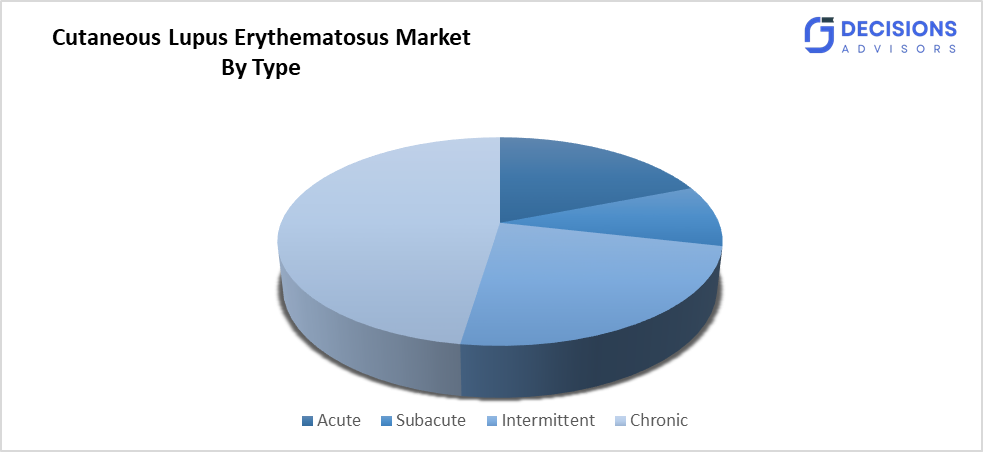
- By type, the chronic segment held a dominant position of over 50% in terms of market share in 2025.
- By route of administration, the topical segment is the dominating one, accounting for over 55% of the global market share in 2025.
- The compound annual growth rate of the global cutaneous lupus erythematosus market is 5.12%.
- The market is likely to achieve a valuation of USD 576.4 billion by 2035.
What is role of technology in grooming the market?
Technology plays a crucial role in shaping the cutaneous lupus erythematosus (CLE) market by improving diagnosis, treatment, and patient management. The implementation of advanced diagnostic tools which use AI-based imaging together with machine learning algorithms enables doctors to detect skin lesions at earlier times with higher accuracy, which results in decreased misdiagnosis rates. Digital dermoscopy and teledermatology platforms provide remote consultation services, which enable patients to access specialists who work in remote areas of the world. Biotechnology innovations have developed targeted therapies together with biologics, which treat immune pathways that cause CLE through their improved safety and effectiveness. Physicians use electronic health records, with data analytics tools to monitor disease progression while creating customized treatment approaches. Mobile health applications enable patients to monitor their health status while maintaining their medication schedule and tracking their symptoms. Technology speeds up drug discovery processes by using computational modeling together with methods that improve clinical trial efficiency. The latest advancements in technology help doctors achieve better patient results while making medical services more reachable to others and expanding the worldwide CLE market.
Market Drivers
The global cutaneous lupus erythematosus market is propelled by the number of diagnosed cases of CLE, which continues to rise because there are currently 800,000 active cases throughout major markets during the 2023 period. The Advanced treatments, which include monoclonal antibodies, have achieved a growth rate of 15% per year, resulting in better patient outcomes that drive market expansion. The combination of multiple ongoing late-stage clinical trials and new therapies that will soon become available will create a new treatment landscape that will increase market size. The combination of better public knowledge, earlier disease detection and better healthcare facilities results in higher global treatment rates. The healthcare sector receives more funding, which leads to better access for patients who need specialized dermatological treatments and results in higher diagnosis rates and treatment rates.
Restrain
The main restraints on the global cutaneous lupus erythematosus market include biologics and targeted treatments, their high costs restrict access to low- and middle-income regions and create barriers for treatment implementation. There are few CLE-specific approved therapies, forcing reliance on off-label treatments like corticosteroids and antimalarials. The underdiagnosis of CLE happens because people confuse it with other skin diseases, which results in treatment delays and hampers market expansion.
Competitive Analysis:
The report offers the appropriate analysis of the key organizations/companies involved within the cutaneous lupus erythematosus market, along with a comparative evaluation primarily based on their product of offering, business overviews, geographic presence, enterprise strategies, segment market share, and SWOT analysis. The report also provides an elaborative analysis focusing on the current news and developments of the companies, which includes product development, innovations, joint ventures, partnerships, mergers & acquisitions, strategic alliances, and others. This allows for the evaluation of the overall competition within the market.
Top Companies in Global Cutaneous Lupus Erythematosus Market
- Novartis AG
- Pfizer Inc.
- Sanofi S.A.
- GlaxoSmithKline plc
- AstraZeneca plc
- F. Hoffmann-La Roche Ltd
- AbbVie Inc.
- Amgen Inc.
- Eli Lilly and Company
- Merck & Co., Inc.
Government Initiatives
|
Country |
Key Government Initiatives |
|
China |
China introduced updated 2025 national clinical guidelines for lupus management led by the Chinese Rheumatology Association. Government-backed institutions like the National Clinical Research Center for Dermatologic and Immunologic Diseases drive evidence-based treatment standards. |
|
Europe |
AstraZeneca’s Saphnelo (anifrolumab) has been approved in the European Union (EU) for subcutaneous self-administration as a pre-filled pen for adult patients with systemic lupus erythematosus (SLE) on top of standard therapy. |
Market Segmentation
The cutaneous lupus erythematosus market share is classified into type, drug class, route of administration, and distribution channel.
- The chronic segment dominated the market in 2025, and is projected to grow at a substantial CAGR of approximately 50% during the forecast period.
Based on the type, the cutaneous lupus erythematosus market is divided into acute, subacute, intermittent, chronic. Among these, the chronic segment dominated the market in 2025 and is projected to grow at a substantial CAGR of approximately 50% during the forecast period. Chronic conditions dominate because they exist for extended periods and need ongoing medical care, which has become more common due to the growing elderly population and the rising prevalence of unhealthy eating habits, stress and lack of physical activity. The ongoing management of chronic diseases results in more people needing treatment, which creates persistent healthcare demands that exist throughout the world.
- The corticosteroids segment accounted for the largest share in 2025, and is anticipated to grow at a significant CAGR of approximately 45% during the forecast period.
Based on the drug class, the cutaneous lupus erythematosus market is divided into retinoids, corticosteroids, immunosuppressants, antimalarial drugs, others. Among these, the corticosteroids segment accounted for the largest share in 2025 and is anticipated to grow at a significant CAGR of approximately 45% during the forecast period. The segmental growth is driven by anti-inflammatory effects of their medication, with its immunosuppressive effects making the treatment suitable for various skin diseases and autoimmune disorders. The medication gets prescribed to many patients because it comes in different forms and maintains affordable pricing for most people. Patients use their medication more frequently than other drug categories because it treats both immediate medical needs and long-term health conditions.
- The topical segment dominated the market in 2025, and is projected to grow at a substantial CAGR of approximately 55% during the forecast period.
Based on the route of administration, the cutaneous lupus erythematosus market is divided into oral, injections, topical, others. Among these, the topical segment dominated the market in 2025 and is projected to grow at a substantial CAGR of approximately 55% during the forecast period. Their direct application to specific regions enables them to deliver focused treatment, which results in reduced systemic adverse effects. The products treat dermatological conditions because they can be easily used and purchased without a prescription. The products meet high patient demand because they treat chronic skin disorders, which results in increased market share for the products.
- The retail pharmacy segment accounted for the largest share in 2025, and is anticipated to grow at a significant CAGR during the forecast period.
Based on the distribution channel, the cutaneous lupus erythematosus market is divided into hospital pharmacy, retail pharmacy, online pharmacy, others. Among these, the retail pharmacy segment accounted for the largest share in 2025 and is anticipated to grow at a significant CAGR during the forecast period. The growth of the segment is driven by its widespread accessibility and convenience, with strong consumer trust. Patients choose to buy medications from local pharmacies because they want to get immediate access to drugs while receiving professional help from pharmacists. The distribution channel handles large quantities of prescription medications and over-the-counter products because it serves as the main distribution system between hospitals and online pharmacies.
Regional Segment Analysis of the Cutaneous Lupus Erythematosus Market
- North America (U.S., Canada, Mexico)
- Europe (Germany, France, U.K., Italy, Spain, Rest of Europe)
- Asia-Pacific (China, Japan, India, Rest of APAC)
- South America (Brazil and the Rest of South America)
- The Middle East and Africa (UAE, South Africa, Rest of MEA)
North America is anticipated to hold the largest share of the Cutaneous Lupus Erythematosus market over the predicted timeframe.
North America is anticipated to hold the largest share of the Cutaneous Lupus Erythematosus market over the predicted timeframe. This market is accounting about approximately 39% of the total market share. The dominance of this market is driven by the region achieving its current status through three main factors, which include its advanced healthcare infrastructure, its high disease rates and its strong pharmaceutical industry presence. The region benefits from early diagnosis because people understand the need for specialized dermatology and autoimmune care centers. Patients gain better treatment options through reimbursement systems that provide insurance coverage for essential medications like hydroxychloroquine and biologics. Pharmaceutical companies conduct their research operations while clinical studies take place which creates new possibilities for developing advanced biologic and targeted treatment options. The market expands because healthcare expenses increase and people quickly adopt emerging technologies, which include teledermatology and specialty pharmacy networks.
Asia Pacific is expected to grow at a rapid CAGR in the Cutaneous Lupus Erythematosus market during the forecast period. Asia Pacific is poised to be the fastest-growing region in the global cutaneous lupus erythematosus market during the forecast period of 2025 to 2035. Asia-Pacific is experiencing the fastest growth in the CLE market due to a combination of demographic factors, economic factors and healthcare factors, which creates a complete assessment of the region. The area experiences population growth, which includes an increasing number of elderly people who have a higher chance of developing autoimmune diseases such as lupus. The rising awareness of autoimmune disorders, with the enhanced ability to diagnose these conditions, has resulted in increased detection rates. The healthcare system in China and India benefits from rapid economic development because it creates better access to advanced medical treatments through improved healthcare infrastructure. The two factors of government programs and increased insurance coverage both work to make healthcare more affordable, while they also encourage people to seek treatment at earlier stages of their medical conditions. The pharmaceutical industry is making substantial financial commitments to develop new markets in Asia because these regions offer both unexploited potential and rising demand for their products.
Europe is the 2nd largest region to grow in the cutaneous lupus erythematosus market during the period. This is mainly due to its well-established healthcare systems, strong reimbursement policies, and increasing prevalence of autoimmune diseases. The region benefits from extensive research activities, the presence of major pharmaceutical companies, and supportive regulatory frameworks that encourage the development and adoption of advanced therapies.
Strategies to Implement for Growth of the Market in Non-Leading Regions
Expanding the cutaneous lupus erythematosus (CLE) market in non-leading regions requires a multi-pronged strategy focused on access, awareness, and affordability. Public health campaigns, with physician training programs, will help increase public awareness of diseases, which will result in higher rates of early disease identification and treatment. Dermatology services and autoimmune disorder treatment facilities will become more accessible when healthcare systems receive better infrastructure development in remote areas and regions that lack sufficient medical resources. Government partnerships with pharmaceutical companies will enable the creation of subsidized medication programs, which will enhance drug distribution efforts. Local manufacturing and distribution operations will help decrease expenses while providing steady product availability to customers. Telemedicine platforms enable remote patients to connect with medical specialists who work in distant areas. Companies should establish clinical trials in specific regions to gain insight into local disease trends and how patients respond to various treatment options.
Future Market Trends in Global Cutaneous Lupus Erythematosus Market: -
- Rising adoption of biologic and targeted therapies
Biologic and targeted therapies are rapidly growing, with the segment expected to expand at ~15.25% CAGR through 2031 in the cutaneous lupus erythematosus market. Their adoption is increasing due to higher efficacy, reduced side effects, and the ability to target specific immune pathways, improving outcomes in moderate-to-severe and treatment-resistant patients.
- Growth in AI-based diagnostics and early detection
AI-based diagnostics are rapidly expanding, with the dermatology AI market projected to grow at 26–27% CAGR through 2031–2033. These tools achieve 90–98% diagnostic sensitivity, improving early detection of skin conditions like CLE. Increased adoption in hospitals (40%+ share) enhances accuracy, reduces delays, and supports better treatment outcomes.
- Expansion of telemedicine and online pharmacies
Telemedicine and online pharmacies are rapidly expanding, with telemedicine growing at 11.3% CAGR (2025–2030) and online pharmacies at 17–20% CAGR through 2033. This trend is driven by rising demand for remote consultations, home delivery, and digital healthcare, significantly improving access, convenience, and treatment adherence globally.
Recent Development
In May 2025, AbelZeta Pharma, Inc. a global clinical-stage biopharmaceutical company focused on discovery and development of innovative and proprietary cell-based therapeutic products, announced that the U.S. Food and Drug Administration (FDA) has granted Regenerative Medicine Advanced Therapy (RMAT) designation to its investigational therapy, C-CAR168, for the treatment of refractory Systemic Lupus Erythematosus (SLE), including Lupus Nephritis (LN).
How is Recent Developments Helping the Market?
Recent developments are significantly accelerating the growth of the Cutaneous Lupus Erythematosus (CLE) market by improving diagnosis, treatment, and patient access. The development of biologic and targeted therapy treatments through litifilimab research allows medical professionals to create more precise and effective treatment methods that surpass standard corticosteroid and antimalarial therapies. The combination of breakthrough therapy designations and fast-track approvals permits faster drug development processes, which lead to accelerated market entry. The research field and clinical trial work are advancing because of increased funding, which allows more treatment options to be developed. AI-based diagnostic technologies enable medical professionals to detect diseases at earlier stages with higher precision, which allows them to start treatment sooner. The development of telemedicine services together with online pharmacy platforms enables better healthcare access for patients who live in faraway regions. Growing awareness campaigns, with government initiatives, drive people to seek early medical diagnosis and treatment.
Market Segment
This study forecasts revenue at global, regional, and country levels from 2020 to 2035. Decision Advisors has segmented the cutaneous lupus erythematosus market based on the below-mentioned segments:
Global Cutaneous Lupus Erythematosus Market, By Type
- Acute
- Subacute
- Intermittent
- Chronic
Global Cutaneous Lupus Erythematosus Market, By Drug Class
- Retinoids
- Corticosteroids
- Immunosuppressants
- Antimalarial Drugs
- Others
Global Cutaneous Lupus Erythematosus Market, By Route of Administration
- Oral
- Injections
- Topical
- Others
Global Cutaneous Lupus Erythematosus Market, By Distribution Channel
- Hospital Pharmacy
- Retail Pharmacy
- Online Pharmacy
- Others
Global Cutaneous Lupus Erythematosus Market, By Regional Analysis
- North America
- US
- Canada
- Mexico
- Europe
- Germany
- UK
- France
- Italy
- Spain
- Russia
- Rest of Europe
- Asia Pacific
- China
- Japan
- India
- South Korea
- Australia
- Rest of Asia Pacific
- South America
- Brazil
- Argentina
- Rest of South America
- Middle East & Africa
- UAE
- Saudi Arabia
- Qatar
- South Africa
- Rest of the Middle East & Africa
Frequently Asked Questions (FAQ)
Q: Which route of administration is most popular?
Topical treatments are the most widely used route, holding around 50–60% market share. They are preferred because they provide targeted action, minimize systemic side effects, and are easy to use. Their widespread availability as over-the-counter and prescription products further increases their adoption among patients with mild to moderate CLE.
Q: What are the latest trends in the CLE market?
Key trends include rising adoption of biologics, growing at 15% CAGR, increasing use of AI-based diagnostics, and expansion of telemedicine and online pharmacies. Personalized medicine is also gaining traction, allowing tailored treatments. These innovations are improving diagnosis accuracy, treatment outcomes, and patient accessibility across both developed and emerging regions.
Q: What role do biologics play in the CLE market?
Biologics are increasingly important, targeting specific immune pathways involved in CLE. They are expected to grow at 15% CAGR, especially for moderate-to-severe cases. These therapies offer improved efficacy and fewer systemic side effects compared to traditional treatments, making them a key driver of future market expansion and innovation.
Q: How does aging population affect the CLE market?
An aging population increases the risk of autoimmune diseases, including CLE. As the elderly population grows globally, the demand for diagnosis and treatment rises. This demographic trend is expected to contribute significantly to market expansion over the forecast period.
Q: What is the future outlook for the CLE market?
The CLE market is expected to grow steadily, reaching around USD 380–390 million by 2035. Future growth will be driven by new drug launches, increasing use of targeted therapies, and improved diagnostic technologies. Expanding healthcare access and continued research investments will further enhance treatment options and overall market development globally.
Check Licence
Choose the plan that fits you best: Single User, Multi-User, or Enterprise solutions tailored for your needs.
We Have You Covered
- 24/7 Analyst Support
- Clients Across the Globe
- Tailored Insights
- Technology Tracking
- Competitive Intelligence
- Custom Research
- Syndicated Market Studies
- Market Overview
- Market Segmentation
- Growth Drivers
- Market Opportunities
- Regulatory Insights
- Innovation & Sustainability
Report Details
| Scope | Global |
| Pages | 240 |
| Delivery | PDF & Excel via Email |
| Language | English |
| Release | Mar 2026 |
| Access | Download from this page |