
Global Diabetic Footwear Market
 |
Pages:
245
|
Pages:
245
Global Diabetic Footwear Market Size, Share By Type (Athletic Shoes, Casual Shoes, Dress Shoes, Sandals), By Distribution Channel (Online, Offline) By End User (Men, Women), and By Region (North America, Europe, Asia-Pacific, Latin America, Middle East & Africa), Analysis and Forecast 2026-2035.
REPORT COVERAGE
Global
Market Snapshot
- Global Diabetic Footwear Market Size (2025): USD 9.65 Billion
- Projected Global Diabetic Footwear Market Size (2035): USD 21.01 Billion
- Global Diabetic Footwear Market Compound Annual Growth Rate (CAGR): 8.09%
- Largest Regional Market: North America
- 2nd Largest Region: Asia Pacific
- Fastest Growing Region: Europe
- Base Year: 2025
- Historical Period: 2021–2024
- Market Forecast Period: 2026–2035
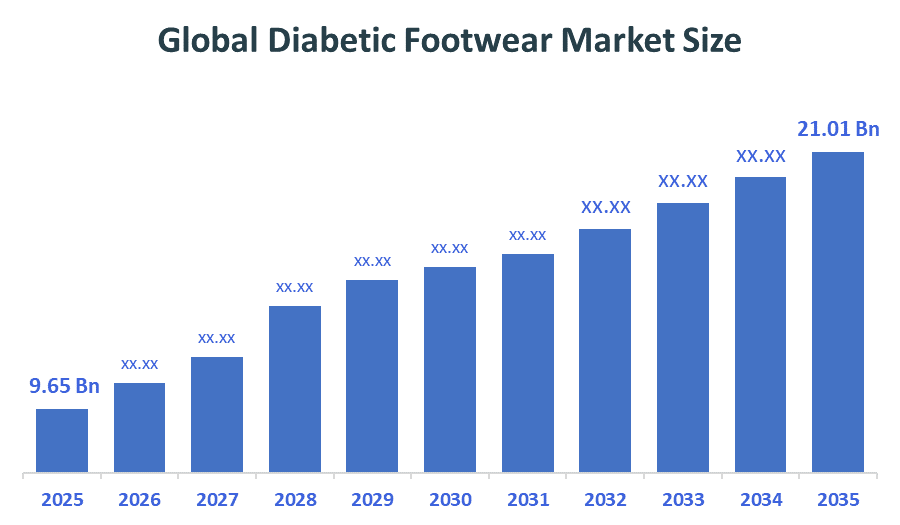
According to Decision Advisors, the Global Diabetic Footwear Market Size is expected to grow from USD 9.65 Billion in 2025 to USD 21.01 Billion by 2035, at a CAGR of 8.09% during the forecast period 2026-2035. The Global Diabetic Footwear Market is projected to grow steadily, driven by the rising global diabetic population, increasing awareness of foot-related complications, growing emphasis on preventive healthcare, and higher demand for specialized, comfortable, and protective therapeutic footwear solutions.
Market Overview/ Introduction
The Global Diabetic Footwear Market includes specially designed footwear that helps reduce pressure, prevent foot ulcers, and support overall foot health for people living with diabetes. The product line includes therapeutic shoes, custom-moulded footwear and orthopaedic insoles which provide comfort and protection. The market expansion occurs because more than 500 million adults worldwide currently possess diabetes, creating a substantial base of potential customers. People who learn that even a minor foot injury can develop into serious complications need preventive footwear before other treatments. The options available to consumers are becoming more effective at solving their problems. Our society now prefers efficient solution which provide both technological advancements and comfort through smart pressure-sensing insoles and 3D-printed custom designs and breathable materials. The combination of improved insurance access and extended life expectancy among the global population base enables people to obtain specialized support, helping them maintain their active lifestyles.
Notable Insights: -
- North America is anticipated to hold approximately 38% share of the global diabetic footwear market over the predicted timeframe.
- Asia Pacific is expected to grow at a rapid CAGR in the global diabetic footwear market by holding approximately 22% of the share during the forecast period.
- By type, the athletic shoes segment dominated the market and holds approximately 40% share in 2025 and is projected to grow at a substantial CAGR during the forecast period.
- By end user, the men segment dominated the market and holds approximately 55% share in 2025 and is projected to grow at a substantial CAGR during the forecast period.
- The compound annual growth rate of the global diabetic footwear market is 8.09%.
- The market is likely to achieve a valuation of USD 21.01 Billion by 2035.
What is the role of technology in grooming the market?
Technology is significantly transforming diabetic footwear through innovations in materials, customization, and monitoring. Advanced cushioning systems and pressure-distribution technologies reduce the risk of ulcers. 3D scanning and printing enable personalized footwear tailored to individual foot structure. Smart insoles with embedded sensors provide real-time pressure and gait analysis, helping prevent injuries. Additionally, lightweight, breathable, and antimicrobial materials improve comfort and hygiene. Integration with mobile health applications enables continuous monitoring, enhancing patient compliance and outcomes.
Market Drivers
The Global Diabetic Footwear Market experiences its main growth engine through the worldwide diabetic population increasing at a rate of approximately 8% each year across various global regions. Approximately 25 % of diabetic patients develop foot complications, creating a major requirement for preventive footwear products. The combination of healthcare awareness programs and medical professional endorsements leads to increased product acceptance. The growing elderly population that faces higher risks of diabetes-related health issues maintains a continuous demand for medical products. The increasing purchasing power of consumers in developing markets allows them to buy advanced therapeutic footwear, which drives market expansion.
Restrain
High product costs and limited reimbursement coverage in developing regions restrict market penetration. Lack of awareness in rural areas and limited access to specialized healthcare providers also hinder adoption. Additionally, aesthetic concerns and limited fashionable designs may discourage usage among younger patients.
Competitive Analysis:
The report offers the appropriate analysis of the key organizations/companies involved within the global diabetic footwear market, along with a comparative evaluation primarily based on their product offerings, business overviews, geographic presence, enterprise strategies, segment market share, and SWOT analysis. The report also provides an elaborative analysis focusing on the current news and developments of the companies, which includes product development, innovations, joint ventures, partnerships, mergers & acquisitions, strategic alliances, and others. This allows for the evaluation of the overall competition within the market.
Top Companies in the Global Diabetic Footwear Market
- Dr. Comfort
- Orthofeet Inc.
- Apex Foot Health Industries
- New Balance Athletics Inc.
- Propet USA Inc.
- Drew Shoe Corporation
- Podartis Srl
- Hanger Inc.
- DARCO International
- Vionic Group LLC
Government Initiatives
|
Country |
Key Government Initiatives |
|
UK |
UK clinical guidance NICE NG19 integrates diabetic foot risk assessment and protective footwear advice into national care pathways, driving structured use of therapeutic footwear and influencing demand patterns relevant to the global diabetic footwear market. |
|
US |
In the U.S., Medicare covers therapeutic footwear for eligible diabetic patients, providing one pair of shoes and three pairs of inserts annually, driving demand, guiding product design, and influencing the global diabetic footwear market. |
|
India |
The Diabetic Foot Education Program (DFEP) in India improves awareness and clinical knowledge of diabetic foot care, promoting preventive practices and proper footwear use, which supports increased demand for diabetic footwear solutions. |
Study on the Supply, Demand, Distribution, and Market Environment of the Global Diabetic Footwear Market
Demand in the global diabetic footwear market is strongly driven by the rising global diabetic population, exceeding 500 million individuals worldwide. Approximately 28% of patients develop foot ulcers during their lifetime, while approximately 26 million cases occur annually. Increasing awareness of complications, which precede nearly 80% of diabetes-related amputations, is accelerating preventive footwear adoption. On the supply side, manufacturers are focusing on advanced cushioning, pressure redistribution, and medical-grade materials. Distribution through hospitals, specialty clinics, and online platforms is expanding access, while growing healthcare investments continue to strengthen the overall market environment globally.
Price Analysis and Consumer Behaviour Analysis
Prices in the global diabetic footwear market vary based on customization, materials, and medical features. Customized orthopedic footwear is significantly higher priced than standard products due to personalization requirements. Around 65% of consumers prioritize comfort, medical effectiveness, and durability over aesthetics, though demand for stylish designs is increasing by nearly 9% annually. Physician recommendations influence over 65% of purchasing decisions, particularly in clinical environments. Additionally, insurance coverage in developed regions reduces patient cost burden by approximately 40%, improving accessibility and encouraging wider adoption of therapeutic footwear solutions.
Market Segmentation
The Global Diabetic Footwear Market share is classified into type, distribution channel and end-user.
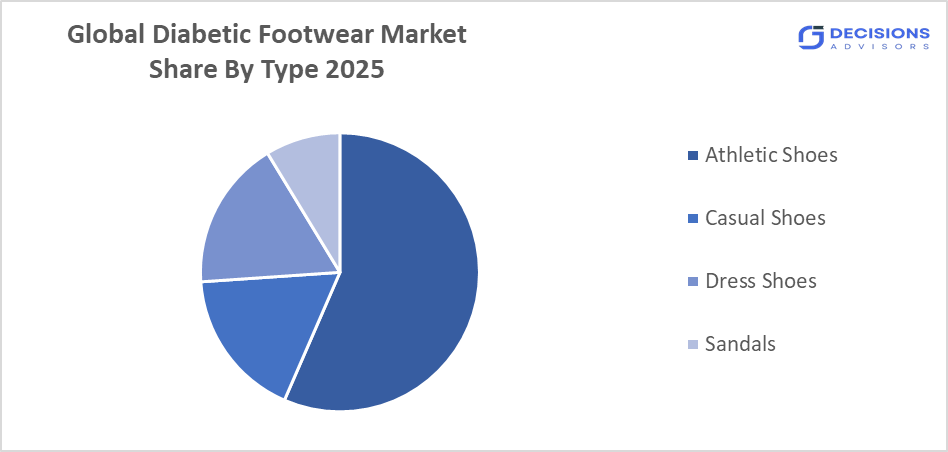
- The athletic shoes segment dominated the market and holds approximately 40% share in 2025 and is projected to grow at a substantial CAGR during the forecast period.
Based on the type, the global diabetic footwear market is divided into athletic shoes, casual shoes, dress shoes, and sandals. Among these, the athletic shoes segment dominated the market and holds approximately 40% share in 2025 and is projected to grow at a substantial CAGR during the forecast period. This dominance is attributed to superior comfort, shock absorption, and pressure distribution features, making them ideal for daily use and long-duration wear among diabetic patients.
- The offline segment accounted for the largest share of approximately 65% in 2025 and is anticipated to grow at a significant CAGR during the forecast period.
Based on the distribution channel, the diabetic footwear market is divided into online and offline. Among these, the offline segment accounted for the largest share of approximately 65% in 2025 and is anticipated to grow at a significant CAGR during the forecast period. This dominance is due to the need for proper fitting, clinical consultation, and personalized recommendations, while online channels are witnessing rapid growth due to convenience and expanding e-commerce penetration.
- The men segment accounted for the largest share of approximately 55% in 2025 and is anticipated to grow at a significant CAGR during the forecast period.
Based on the end users, the global diabetic footwear market is divided into men and women. Among these, the men segment accounted for the largest share of approximately 55% in 2025 and is anticipated to grow at a significant CAGR during the forecast period. This growth is driven by higher prevalence of diabetes among men, greater adoption of therapeutic footwear, and increased awareness regarding preventive foot care.
Strategies to Implement for Growth of the Market in Non-Leading Regions
Expansion in non-leading regions of the global diabetic footwear market requires a targeted strategy emphasizing affordability, accessibility, and awareness. Companies should develop cost-efficient product lines tailored to price-sensitive consumers while maintaining essential medical benefits. Strengthening distribution through partnerships with hospitals, clinics, and pharmacies can improve market penetration. Increasing awareness via public health initiatives and physician-led education programs is crucial for early adoption. Collaboration between governments and private players to expand reimbursement policies will enhance accessibility. Additionally, leveraging e-commerce, telehealth platforms, and localized manufacturing can reduce costs, improve supply chain efficiency, and support sustainable long-term market growth.
Regional Segment Analysis of the Global Diabetic Footwear Market
- North America (U.S., Canada, Mexico)?
- Europe (Germany, France, U.K., Italy, Spain, Rest of Europe)
- Asia-Pacific (China, Japan, India, Rest of APAC)
- South America (Brazil and the Rest of South America)?
- The Middle East and Africa (UAE, South Africa, Rest of MEA)
North America is anticipated to hold approximately 38% share of the global diabetic footwear market over the predicted timeframe.
North America is anticipated to hold approximately 38% share of the global diabetic footwear market over the predicted timeframe. The region’s growth is driven by a high prevalence of diabetes, with a significant portion of the population requiring preventive foot care. The region benefits from advanced healthcare infrastructure, strong reimbursement frameworks, and widespread awareness of diabetic complications. Additionally, the presence of leading manufacturers and continuous product innovations support market growth. Increasing adoption of customized and technologically advanced footwear, along with favorable insurance coverage, further enhances accessibility and drives sustained demand across the United States and Canada.
Asia Pacific is expected to grow at a rapid CAGR in the global diabetic footwear market, holding approximately 22% of the share during the forecast period
Asia Pacific is expected to grow at a rapid CAGR in the global diabetic footwear market, holding approximately 22% of the share during the forecast period. The region’s growth is driven by rising diabetes prevalence, rapid urbanization, and increasing awareness of diabetic foot complications. Expanding healthcare infrastructure, growing disposable incomes, and favorable government initiatives promoting preventive healthcare are further supporting market adoption. Additionally, technological advancements such as custom-molded footwear, pressure-sensing insoles, and breathable materials are enhancing product effectiveness. The region’s large population base, combined with increasing access to both online and offline distribution channels, ensures strong demand growth over the forecast period.
Europe is the fastest-growing region in the global diabetic footwear market during the period, holding approximately 28% share.
Europe is the fastest-growing region in the global diabetic footwear market during the period, holding approximately 28% share. Market expansion in Europe is fueled by greater awareness of diabetic foot complications, robust healthcare systems, and supportive reimbursement policies that encourage therapeutic footwear use. Early integration of innovations like 3D-printed custom shoes and pressure-monitoring insoles strengthens growth. Furthermore, an aging population, rapid urbanization, and increasing lifestyle-related health concerns are driving higher demand for preventive and specialized footwear, positioning Europe as a leading growth region.
Future Market Trends in Global Diabetic Footwear Market: -
1. Integration of Smart Technologies
Diabetic footwear is increasingly equipped with wearable sensors, pressure-mapping insoles, and IoT connectivity, enabling real-time monitoring of foot pressure, temperature, and movement. These technologies help prevent ulcers, provide alerts to patients and healthcare providers, and support personalized treatment plans, improving patient safety and adherence.
?2. 3D Printing & Customization
The adoption of 3D printing allows production of patient-specific footwear tailored to individual foot contours. Custom designs improve fit, comfort, and pressure distribution, reducing the risk of ulcers and other complications. This trend enhances patient compliance and supports scalable, cost-effective personalized therapeutic solutions.
3. Sustainable & Breathable Materials
Manufacturers are incorporating lightweight, eco-friendly, and breathable materials into diabetic footwear. These materials enhance comfort, prevent moisture accumulation, reduce skin irritation, and align with sustainability goals. Their use promotes longer product life, environmental responsibility, and improved overall patient experience.
Recent Development
- In July?2025, SHOEMART launched the Le Confort diabetic footwear range in the UAE, featuring wide toe boxes, memory foam insoles, and slip?resistant soles designed to reduce foot pressure and discomfort for diabetic users, aligning with therapeutic diabetic footwear demand trends.
- In June 2025, DARCO International launched the POGO Athletic Offloading Sneaker and DUOPro Wound Care Shoe, featuring enhanced cushioning and removable peg systems for pressure relief, expanding therapeutic options in diabetic footwear.
- In February 2025, FootSecure launched a custom prescription footwear facility in India with an app-based ordering system, enabling clinicians to provide personalized therapeutic shoes, supporting diabetic footcare and expanding the diabetic footwear market.
- In November 2023, Aetrex Worldwide launched the FitStarter personalized footwear recommendation platform with Heeluxe to improve shoe fitting accuracy and reduce returns, impacting fit?driven demand and product adoption trends in the diabetic footwear market.
How is Recent Developments Helping the Market?
Recent developments are driving growth in the global diabetic footwear market by enhancing innovation, accessibility, and adoption. Smart technologies, 3D-printed customized footwear, and sustainable materials improve safety, comfort, and compliance. Expansion of e-commerce and telehealth services increases reach, while collaborations between manufacturers, healthcare providers, and technology firms accelerate innovation, awareness, and long-term market growth.
Market Segment
This study forecasts revenue at global, regional, and country levels from 2020 to 2035. Decision Advisors has segmented the global diabetic footwear market based on the below-mentioned segments:
Global Diabetic Footwear Market, By Type
- Athletic Shoes
- Casual Shoes
- Dress Shoes
- Sandals
Global Diabetic Footwear Market, By Distribution Channel
- Online
- Offline
Global Diabetic Footwear Market, By End User
- Men
- Women
Global Diabetic Footwear Market, By Regional Analysis
- North America
- US
- Canada
- Mexico
- Europe
- Germany
- UK
- France
- Italy
- Spain
- Russia
- Rest of Europe
- Asia Pacific
- China
- Japan
- India
- South Korea
- Australia
- Rest of Asia Pacific
- South America
- Brazil
- Argentina
- Rest of South America
- Middle East & Africa
- UAE
- Saudi Arabia
- Qatar
- South Africa
- Rest of the Middle East & Africa
Frequently Asked Questions (FAQ)
Q. How are distribution channels shaping the market?
The combination of offline retail, hospitals, and expanding e-commerce platforms increases accessibility and convenience, reaching both urban and remote consumers. Effective channel strategies directly influence market penetration and sales growth.
Q. How is personalization influencing the market?
Customized diabetic footwear, including 3D-printed insoles and shoes tailored to individual foot profiles, enhances comfort and reduces complications. Personalization increases customer satisfaction and repeat purchases, driving revenue growth.
Q. How are online platforms transforming the market?
E-commerce and telehealth integration allow wider access to therapeutic footwear in remote areas, support virtual fittings, and enable faster adoption, increasing overall market penetration.
Q. How do regional healthcare initiatives influence the market?
Government programs promoting preventive healthcare and funding for diabetic care increase awareness and accessibility of therapeutic footwear, particularly in emerging economies, boosting adoption rates.
Check Licence
Choose the plan that fits you best: Single User, Multi-User, or Enterprise solutions tailored for your needs.
We Have You Covered
- 24/7 Analyst Support
- Clients Across the Globe
- Tailored Insights
- Technology Tracking
- Competitive Intelligence
- Custom Research
- Syndicated Market Studies
- Market Overview
- Market Segmentation
- Growth Drivers
- Market Opportunities
- Regulatory Insights
- Innovation & Sustainability
Report Details
| Scope | Global |
| Pages | 245 |
| Delivery | PDF & Excel via Email |
| Language | English |
| Release | Apr 2026 |
| Access | Download from this page |