
Global Diamond Blackfan Anemia Market
 |
Pages:
210
|
Pages:
210
Global Diamond Blackfan Anemia Market Size, Share, By Treatment (Corticosteroids, Chelation Therapy, Blood Transfusions, Stem Cell Transplant, Others), By Diagnosis (Complete Blood Count, X-ray, Ultrasound, Genetic Testing, Biopsy, Peripheral Smear, Others), By Distribution Channel (Hospital Pharmacy, Retail Pharmacy, Online Pharmacy), and By Region (North America, Europe, Asia-Pacific, South America, Middle East & Africa), Analysis and Forecast 2025 ? 2035.
REPORT COVERAGE
Global
Market Snapshot
- Market Size (2025): USD 5.47 Billion
- Projected Market Size (2035): USD 8.69 Billion
- Compound Annual Growth Rate (CAGR): 4.74%
- Largest Regional Market: North America
- Fastest Growing Region: Asia Pacific
- 3rd Largest Region: Europe
- Base Year: 2025
- Historical Period: 2021–2024
- Forecast Period: 2025–2035
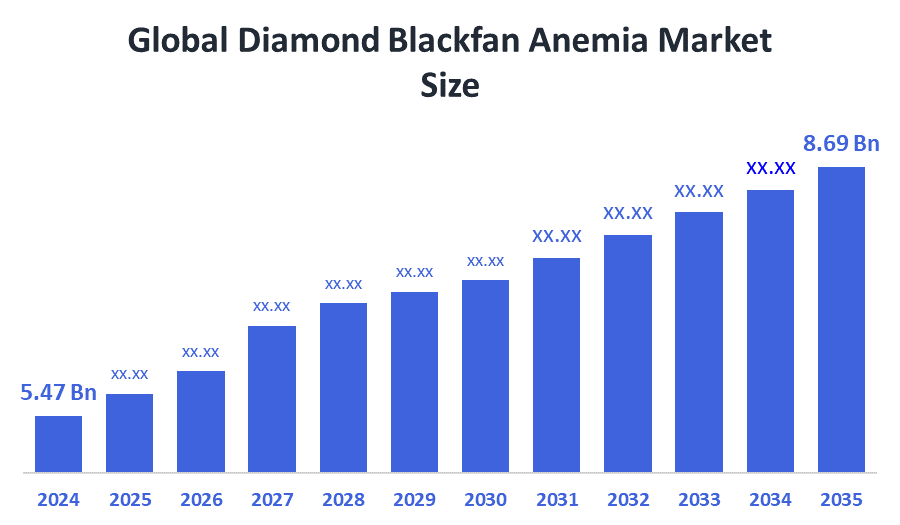
According to Decision Advisors, the Global Diamond Blackfan Anemia Market Size is expected to grow from USD 5.47 Billion in 2025 to USD 8.69 Billion by 2035, at a CAGR of 4.74% during the forecast period 2025-2035. The global diamond blackfan anemia market is driven by increasing demand for targeted rare disease therapies, advancements in gene therapy and personalized medicine, growing genetic research, early diagnosis through sequencing, rising healthcare infrastructure, and supportive orphan drug development incentives globally.
Market Overview/ Introduction
The global diamond blackfan anemia (DBA) market focuses on the development, diagnosis, and treatment of a rare genetic blood disorder characterized by insufficient red blood cell production. Diamond blackfan anemia occurs when mutations in ribosomal protein genes disrupt normal erythropoiesis, causing severe anemia, growth retardation, and congenital abnormalities. DBA therapeutics encompass gene therapies, hematopoietic stem cell transplantation, supportive care including corticosteroids and transfusions, and emerging personalized medicine approaches. The market scope covers research and development, clinical trials, diagnostic tools, orphan drug programs, and rare disease-focused biotechnology and pharmaceutical innovation. Patient advocacy and awareness initiatives further expand the market reach globally. Future opportunities in the diamond blackfan anemia market lie in advancing gene editing therapies, innovative drug development, and precision medicine solutions. Early genetic diagnosis, expansion of clinical trial networks, and increasing healthcare investments in rare disease infrastructure present significant growth potential. Additionally, collaborations between pharmaceutical companies, research institutions, and patient organizations are expected to accelerate therapeutic innovation and improve patient outcomes worldwide.
- The US NIH Rare Disease Clinical Research Network funds research, clinical trials, and development of new treatments to improve patient care for rare diseases.
Notable Insights: -
- North America holds the largest regional market share, approximately 41.6% in the global diamond blackfan anemia market in 2025.
- Asia-Pacific is the fastest-growing region in the global diamond blackfan anemia market, with around 9.5% share in 2025.
- Europe accounted for the third-largest regional market share, approximately 34% in 2025, supported by public healthcare systems and rare disease policies.
- By treatment, the corticosteroids segment dominated the market in 2025 with approximately 42.9% share.
- By diagnosis, the complete blood count (CBC) segment held the largest share at around 39.7% in 2025.
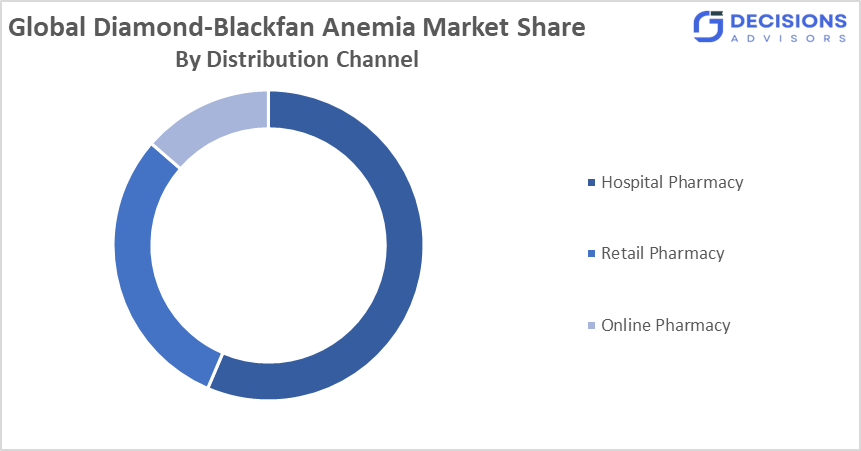
- By distribution channel, the hospital pharmacy segment dominated the market in 2025 with approximately 56.4% share.
- The compound annual growth rate of the global diamond blackfan anemia market is 4.74%.
- The market is likely to achieve a valuation of USD 8.69 billion by 2035.
What is role of technology in grooming the market?
Technology plays a critical role in advancing the global diamond blackfan anemia market by accelerating drug discovery, improving diagnostic accuracy, and enabling personalized treatment approaches. High-throughput genetic sequencing and bioinformatics tools allow faster identification of DBA-related mutations, while AI-driven data analytics optimize clinical trial design and patient stratification. Telemedicine platforms and digital health solutions expand patient access to specialized care, particularly in regions with limited hematology infrastructure. Additionally, automated laboratory systems and robotics enhance efficiency in therapeutic production and preclinical research, supporting faster development of novel treatments and improving overall market scalability.
How is Recent Developments Helping the Market?
Recent developments such as gene therapy advancements, preclinical models, and market-focused research are driving growth in the Diamond Blackfan Anemia market. In 2025, preclinical gene therapy studies showed promising efficacy and safety, paving the way for first-in-human trials. Novel mouse models replicating human DBA phenotypes have improved drug testing accuracy and accelerated therapeutic evaluation. Increased awareness, genetic research advancements, and targeted treatment initiatives are also fueling industry focus and investment, enabling companies to bring innovative therapies to patients faster.
Market Drivers
The global diamond blackfan anemia market is driven by rising demand for targeted rare disease therapies, advancements in gene editing, and growing healthcare infrastructure in developed and emerging regions. Early diagnosis through genetic testing and increasing research into personalized treatments are expanding therapeutic opportunities. Patient advocacy and awareness programs are encouraging earlier intervention and clinical trial participation. Additionally, investments in biopharmaceutical R&D and orphan drug development incentives are stimulating pipeline growth and attracting global pharmaceutical players to the market.
Restrain
Key restraints include the high cost of rare disease therapies, limited patient populations, regulatory complexities, and challenges in clinical trial recruitment. Long development timelines and the specialized nature of gene and cell therapies can slow commercial adoption. Reimbursement uncertainties and pricing pressures in certain healthcare systems also constrain market growth.
Competitive Analysis:
The report offers the appropriate analysis of the key organizations/companies involved within the global diamond blackfan anemia market, along with a comparative evaluation primarily based on their product of offering, business overviews, geographic presence, enterprise strategies, segment market share, and SWOT analysis. The report also provides an elaborative analysis focusing on the current news and developments of the companies, which includes product development, innovations, joint ventures, partnerships, mergers & acquisitions, strategic alliances, and others. This allows for the evaluation of the overall competition within the market.
Top Companies in Global Diamond Blackfan Anemia Market
- Novartis AG
- Pfizer Inc.
- Sanofi S.A.
- Merck KGaA
- Johnson & Johnson Private Limited
- Sumitomo Corporation
- AstraZeneca Plc
- GSK plc
- Cipla Ltd.
- Disc Medicine, Inc.
Government Initiatives
|
Country |
Key Government Initiatives |
|
India |
The National Consortium for Research and Development on Therapeutics for Rare Diseases (NCRDTRD) promotes research and innovation to develop therapies for rare diseases, including Diamond Blackfan Anemia. |
|
US |
The Orphan Drug Act and FDA programs provide regulatory incentives, grants, and expedited approvals to encourage the development of therapies for rare diseases. |
Market Segmentation
The global Diamond Blackfan Anemia market share is classified into treatment, diagnosis, and distribution channels.
- The corticosteroids segment dominated the market in 2025 with approximately 42.9% share, and is projected to grow at a substantial CAGR during the forecast period.
Based on treatment, the global diamond?blackfan anemia market is divided into corticosteroids, chelation therapy, blood transfusions, stem cell transplant, and others. Among these, the corticosteroids segment dominated the market in 2025 with approximately 42.9% share. This is because corticosteroids are the first?line therapy widely prescribed to increase red blood cell counts, are cost?effective, and have broad clinical acceptance across pediatric and adult patients, driving high adoption in standard care pathways. Strong physician preference for corticosteroids and widespread availability in major health systems also support sustained utilization. Regions such as North America, with advanced hematology care infrastructure and effective reimbursement frameworks, further bolster corticosteroid dominance.
- The complete blood count segment accounted for the largest share in 2025 with around 39.7% share, and is anticipated to grow at a significant CAGR during the forecast period.
Based on diagnosis, the global diamond?blackfan anemia market is divided into complete blood count, X?ray, ultrasound, genetic testing, biopsy, peripheral smear, and others. Among these, the complete blood count (CBC) segment accounted for the largest share in 2025 at approximately 39.7%. This is because CBC is a routine, low?cost diagnostic method that provides rapid, reliable assessment of anemia severity and is widely available across clinical and diagnostic settings worldwide. High familiarity among clinicians and its essential role in both initial diagnosis and monitoring make CBC the preferred method.
- The hospital pharmacy segment dominated the market in 2025 with approximately 56.4% share, and is projected to grow at a substantial CAGR during the forecast period.
Based on distribution channel, the global diamond?blackfan anemia market is divided into hospital pharmacy, retail pharmacy, and online pharmacy. Among these, the hospital pharmacy segment dominated in 2025 with approximately 56.4% share. Hospital pharmacies serve as primary points of dispensing for prescribed treatments, supporting adherence to complex therapeutic regimens such as corticosteroids and supportive care products, while ensuring proper dosing and monitoring. Their integration within hospital care pathways and direct tie?ins with physician prescribing behavior strengthen this channel’s dominance.
What is the Reason of the Region Dominance?
The dominance of certain regions in the global diamond blackfan anemia market is primarily driven by high prevalence rates, well-established healthcare infrastructure, increasing awareness about rare blood disorders, and rising healthcare expenditure. Regions such as North America lead the market due to advanced diagnostic facilities, strong adoption of novel therapies, and presence of key pharmaceutical players. Europe holds the second-largest share supported by well-structured reimbursement policies and robust clinical research frameworks. Rapid urbanization, increasing patient diagnosis rates, and government initiatives for rare diseases further strengthen regional dominance. Additionally, growing investment in research and development for targeted therapies and biologics contributes to market leadership in these regions.
Strategies to Implement for Growth of the Market in Non-Leading Regions
Growth in non-leading regions can be supported through strategic awareness campaigns, expansion of diagnostic infrastructure, and affordable treatment accessibility. Companies can increase market penetration by introducing cost-effective diamond blackfan anemia therapies tailored to local patient needs. Expanding distribution through hospitals, specialty pharmacies, and telemedicine platforms can improve treatment accessibility. Collaborations with local healthcare providers, patient advocacy groups, and government programs can enhance disease awareness and early diagnosis. Marketing initiatives focused on education, patient support programs, and rare disease management can further boost adoption. Investment in local clinical trials, capacity building, and supply chain optimization may also strengthen market presence in emerging regions.
Regional Segment Analysis of the Diamond Blackfan Anemia Market
- North America (U.S., Canada, Mexico)
- Europe (Germany, France, U.K., Italy, Spain, Rest of Europe)
- Asia-Pacific (China, Japan, India, Rest of APAC)
- South America (Brazil and the Rest of South America)
- The Middle East and Africa (UAE, South Africa, Rest of MEA)
The North America hold the largest share of the global diamond blackfan anemia market over the predicted timeframe.
North America held the largest revenue share of about?41.6?% in 2025, supported by advanced healthcare infrastructure, high awareness of rare genetic blood disorders, well?established diagnostic facilities, and strong presence of specialized therapeutic centers. The U.S. particularly drives regional dominance due to extensive adoption of established treatments, orphan drug incentives, and significant research funding for pediatric hematology disorders. High investment in genetic testing and supportive care also underpins the robust regional performance.
The Asia Pacific region is expected to grow at a rapid CAGR in the global diamond blackfan anemia market during the forecast period. Asia Pacific held around?9.5?% share in 2025 and is recognized as the fastest?growing owing to rising healthcare investments, improvements in rare disease diagnosis, expanding access to advanced therapies, and growing awareness of DBA in countries such as China, Japan, and India. Governments in the region are increasingly supporting rare disease programs, and clinical research capacity is expanding, enabling better patient access to specialized treatment options that accelerate market growth.
The Europe region accounted for the third?largest region to grow in the global diamond blackfan anemia market over the predicted timeframe. Europe follows North America and Asia Pacific with an estimated?34?% share in 2025, bolstered by comprehensive public healthcare systems, strong rare disease policy frameworks, and established genetic research institutions. Countries such as Germany, the U.K., and France contribute significantly through well?structured diagnostic networks and adoption of both standard and advanced treatment protocols. Patient advocacy efforts and regional access programs further support stable market expansion in this region.
Future Market Trends in Global Diamond Blackfan Anemia Market: -
- Advancement of Gene and Targeted Therapies
Gene therapy and targeted biologics are increasingly being developed to address the underlying genetic defects of diamond blackfan anemia. These therapies offer the potential for long-term, disease-modifying treatment, moving beyond conventional corticosteroid and transfusion approaches.
- Expansion of Personalized Medicine Approaches
Precision diagnostics and patient-specific treatment strategies are gaining traction, enabling earlier detection and tailored interventions for patients. This approach improves clinical outcomes and supports more effective management of this rare blood disorder.
- Integration of Digital Health and Telemedicine
Digital health tools and telemedicine platforms are being adopted to monitor patient progress and improve treatment adherence. These technologies enhance accessibility to specialized care, particularly in regions with limited healthcare infrastructure.
Recent Development
- In March 2025, St. Jude Children’s Research Hospital advanced a gene therapy for diamond?blackfan anemia, preparing it for first-in-human clinical trials. This marks a major milestone in therapeutic innovation, moving toward long-term, disease-modifying treatments in the global DBA market.
- In June 2025, a novel mouse model replicating the human hematologic phenotype of diamond?blackfan anemia was published. This provides a critical preclinical tool for testing emerging therapies and accelerating drug development within the global DBA market.
- In November 2025, a global diamond?blackfan anemia market report was released, highlighting advances in genetic research and rising demand for targeted therapies. The report underscores increasing industry focus and investment in innovative treatments for this rare disease.
- In February 2026, researchers identified new genetic mutations associated with diamond?blackfan anemia. These findings improve understanding of disease mechanisms, support early diagnosis, and pave the way for personalized therapeutic approaches.
- In January 2026, a study explored repurposing existing tyrosine kinase inhibitors for diamond?blackfan anemia treatment. The research opens opportunities for orphan drug designation and future clinical trials, expanding potential treatment options in the DBA market.
Market Segment
This study forecasts revenue at global, regional, and country levels from 2020 to 2035. Decision Advisor has segmented the global diamond blackfan anemia market based on the below-mentioned segments:
Global Diamond?Blackfan Anemia Market, By Treatment
- Corticosteroids
- Chelation Therapy
- Blood Transfusions
- Stem Cell Transplant
- Others
Global Diamond?Blackfan Anemia Market, By Diagnosis
- Complete Blood Count
- X-ray
- Ultrasound
- Genetic Testing
- Biopsy
- Peripheral Smear
- Others
Global Diamond?Blackfan Anemia Market, By Distribution Channel
- Hospital Pharmacy
- Retail Pharmacy
- Online Pharmacy
Global Diamond Blackfan Anemia Market, By Regional Analysis
- North America
- US
- Canada
- Mexico
- Europe
- Germany
- UK
- France
- Italy
- Spain
- Russia
- Rest of Europe
- Asia Pacific
- China
- Japan
- India
- South Korea
- Australia
- Rest of Asia Pacific
- South America
- Brazil
- Argentina
- Rest of South America
- Middle East & Africa
- UAE
- Saudi Arabia
- Qatar
- South Africa
- Rest of the Middle East & Africa
Frequently Asked Questions (FAQ)
Q. What are the main challenges in increasing awareness about global diamond blackfan anemia in emerging markets?
A. Awareness is limited due to low prevalence, lack of trained hematologists, and minimal local diagnostic infrastructure, requiring targeted education campaigns and collaborations with healthcare providers and patient advocacy groups.
Q. How are telemedicine and digital platforms impacting patient management in rare blood disorders like DBA?
A. Telemedicine improves patient follow-up, treatment adherence, and access to specialized care for patients in remote areas, reducing travel burdens and enabling earlier interventions.
Q. Are there any regional variations in treatment adoption for global diamond blackfan anemia?
A. Yes, adoption differs due to healthcare infrastructure, reimbursement policies, and physician familiarity with therapies, with higher uptake in North America and Europe compared to emerging regions.
Q. What role do patient advocacy organizations play in the global diamond blackfan anemia market?
A. Advocacy groups drive awareness, support early diagnosis, facilitate patient education, and collaborate with research institutions and pharma companies to improve treatment accessibility and outcomes.
Check Licence
Choose the plan that fits you best: Single User, Multi-User, or Enterprise solutions tailored for your needs.
We Have You Covered
- 24/7 Analyst Support
- Clients Across the Globe
- Tailored Insights
- Technology Tracking
- Competitive Intelligence
- Custom Research
- Syndicated Market Studies
- Market Overview
- Market Segmentation
- Growth Drivers
- Market Opportunities
- Regulatory Insights
- Innovation & Sustainability
Report Details
| Scope | Global |
| Pages | 210 |
| Delivery | PDF & Excel via Email |
| Language | English |
| Release | Apr 2026 |
| Access | Download from this page |