
Global Erosive Esophagitis Treatment Market
 |
Pages:
240
|
Pages:
240
Global Erosive Esophagitis Treatment Market Size, Share, By Drug Type (Proton Pump Inhibitors, H2 Receptor Antagonists, Antacids, Cytoprotective Agents, Prokinetic Agents, Combination Therapies) By Stage of Therapy (First-Line Therapy, Second-Line Therapy, Rescue Therapy) By Distribution Channel (Hospitals & Clinics, Retail Pharmacies, Online Pharmacies, Specialty Clinics, Others) and By Region (North America, Europe, Asia-Pacific, Latin America, Middle East, and Africa), Analysis and Forecast 2025-2035
REPORT COVERAGE
Global
Market Snapshot
- Market Size (2025): USD 1.7 Billion
- Projected Market Size (2035): USD 3.19 Billion
- Compound Annual Growth Rate (CAGR): 6.5%
- Largest Regional Market: North America
- Fastest Growing Region: Asia Pacific
- 3rd Largest Region: Europe
- Base Year: 2025
- Historical Period: 2021–2024
- Forecast Period: 2025–2035
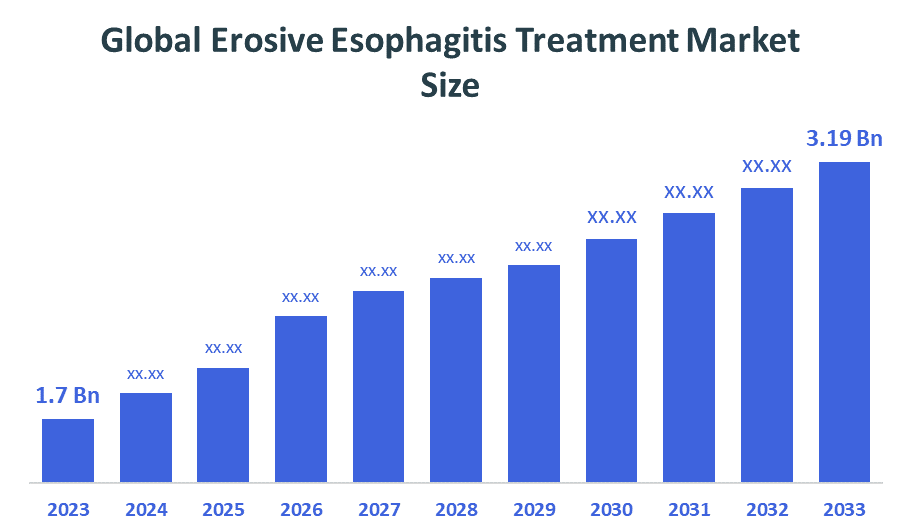
According to Decision Advisors, the global erosive esophagitis treatment market Size is expected to grow from USD 1.7 billion in 2025 to USD 3.19 billion by 2035, at a CAGR of 6.5% during the forecast period 2025-2035. The global erosive esophagitis treatment market is driven by increasing GERD prevalence, rising adoption of PPIs and P-CABs, growing awareness of early diagnosis, expanding healthcare infrastructure in emerging regions, and rising urbanization, disposable incomes, and patient preference for effective, long-term mucosal healing therapies.
Market Overview/ Introduction
The global erosive esophagitis treatment market refers to the commercial sector focused on therapies for managing erosive esophagitis (EE), a condition characterized by inflammation and damage to the oesophageal lining due to acid reflux. This market covers both pharmacological interventions and emerging therapies designed to heal mucosal damage and prevent disease progression. Erosive esophagitis (EE) is a chronic gastrointestinal disorder marked by oesophageal tissue erosion, often associated with gastroesophageal reflux disease (GERD). Key treatments include Proton Pump Inhibitors (PPIs), H2 Receptor Antagonists (H2RAs), antacids, cytoprotective agents, prokinetic agents, and combination therapies. PPIs are widely recognized as first-line therapy due to superior healing efficacy and long-term disease management. The market scope includes segmentation by drug type, stage of therapy, and distribution channel, covering hospitals, clinics, retail pharmacies, online pharmacies, and specialty clinics across North America, Europe, Asia-Pacific, South America, and the Middle East & Africa. North America dominates due to its advanced healthcare infrastructure, while Asia-Pacific shows the fastest growth driven by increasing awareness, rising urbanization, and expanding healthcare access. Future opportunities lie in emerging P-CAB therapies, fast-acting agents, long-term mucosal healing strategies, and telemedicine expansion, alongside localized treatment programs in emerging regions to enhance patient access and adherence.
- The U.S. Food and Drug Administration (FDA) has issued an official draft guidance for industry titled “Erosive Esophagitis: Developing Drugs for Treatment.” This document provides regulatory recommendations on clinical trial design, efficacy endpoints, and safety assessments specifically for novel therapies targeting EE.
- In South Korea, the National Health Insurance (NHI) system establishes reimbursement criteria that directly govern coverage and permissible dosing for acid?suppressive medications, including PPIs and related therapies for GERD and erosive reflux disease.
- In Taiwan, the National Health Insurance (NHI) program explicitly covers endoscopic procedures used in the diagnosis and classification of GERD and erosive esophagitis as part of routine care. The wide coverage of upper endoscopy under the NHI scheme facilitates accurate diagnosis, disease staging (including detection of EE), and subsequent management decisions.
Notable Insights: -
- North America holds the largest regional market share, approximately 38%, in the global erosive esophagitis treatment market.
- Asia-Pacific is the fastest-growing region, accounting for approximately 20% of the global erosive esophagitis treatment market.
- Europe holds the third-largest regional market share, approximately 30%, in the global erosive esophagitis treatment market.
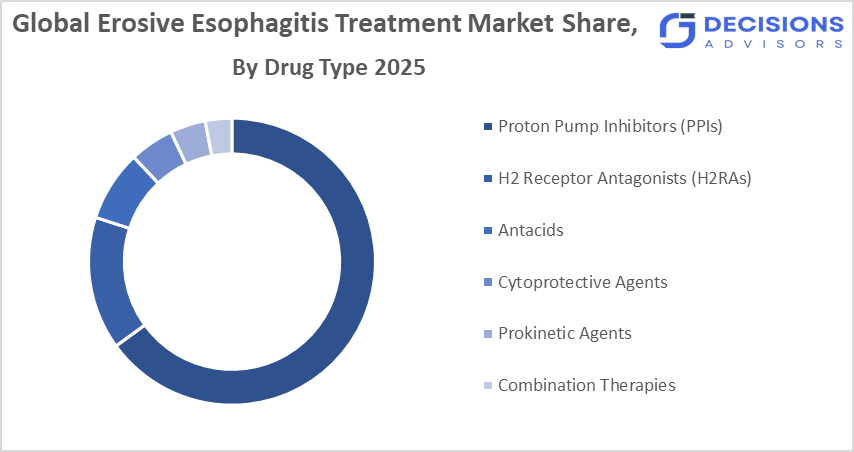
- By drug type, the Proton Pump Inhibitors (PPIs) segment held a dominant position with approximately 65% in terms of market share in 2025.
- By stage of therapy, the first-line therapy segment dominated, accounting for approximately 68% of the global market share in 2025.
- By distribution channel, hospitals & clinics segment is dominating, accounting for around 50% of the global market share in 2025.
- The compound annual growth rate of the global erosive esophagitis treatment market is 6.5%.
- The market is likely to achieve a valuation of USD 3.19 billion by 2035.
What is role of technology in grooming the market?
Technology is playing a crucial role in shaping the global erosive esophagitis treatment market by enhancing drug development, improving supply chain efficiency, and supporting digital healthcare platforms. Artificial intelligence and data analytics help pharmaceutical companies optimize clinical trial designs, predict patient response, and streamline drug manufacturing. Automation and IoT-enabled monitoring systems improve production consistency and reduce operational costs. Additionally, electronic health records (EHRs) and telemedicine platforms facilitate better patient adherence and engagement. Advanced diagnostic technologies and endoscopic tools also allow earlier detection and targeted treatment of erosive esophagitis, expanding the patient pool and accelerating market growth.
How is Recent Developments Helping the Market?
Recent developments such as the approval of P-CABs like vonoprazan and fexuprazan, alongside new fast-acting agents, are strengthening the global erosive esophagitis treatment market. Clinical advancements focusing on mucosal healing, maintenance therapy, and refractory case management are increasing treatment adoption. Regulatory approvals and inclusion of updated clinical guidelines are supporting wider access to novel therapies. Expansion of digital prescription platforms and telemedicine services further facilitates patient access, while strategic partnerships and pipeline innovations ensure consistent product availability. These initiatives collectively enhance market penetration and drive overall growth.
Market Drivers
The global erosive esophagitis treatment market is driven by increasing disease prevalence, rising awareness of GERD and erosive esophagitis, and the growing preference for effective therapies like PPIs and P-CABs. Adoption of first-line and maintenance therapies is increasing due to their proven efficacy in mucosal healing. Rising healthcare expenditure, improved access to treatment in emerging regions, and supportive reimbursement policies are contributing to market growth. Additionally, the demand for fast-acting, long-term therapeutic solutions, particularly in North America, Europe, and Asia-Pacific, is further propelling expansion.
Restrain
The global erosive esophagitis treatment market is restrained by stringent regulatory requirements, high treatment costs, and limited patient adherence to long-term therapy. Competition from generic PPIs, disparities in healthcare infrastructure, and restricted access in emerging regions further limit growth. Supply chain challenges, including raw material shortages and manufacturing constraints, also pose significant hurdles, impacting overall market penetration and adoption.
Competitive Analysis:
The report offers the appropriate analysis of the key organizations/companies involved within the global erosive esophagitis treatment market, along with a comparative evaluation primarily based on their product of offering, business overviews, geographic presence, enterprise strategies, segment market share, and SWOT analysis. The report also provides an elaborative analysis focusing on the current news and developments of the companies, which includes product development, innovations, joint ventures, partnerships, mergers & acquisitions, strategic alliances, and others. This allows for the evaluation of the overall competition within the market.
Top Companies in Global Erosive Esophagitis Treatment Market
- Phathom Pharmaceuticals, Inc.
- Sun Pharmaceutical Industries Ltd.
- Sebela Pharmaceuticals
- Takeda Pharmaceutical Company Limited
- Cinclus Pharma
- AstraZeneca plc
- Pfizer Inc.
- GlaxoSmithKline plc
- Johnson & Johnson
- Merck & Co., Inc.
Government Initiatives
|
Country |
Key Government Initiatives |
|
US |
FDA approval of VOQUEZNA (vonoprazan) for treating all grades of erosive esophagitis and relief of associated heartburn, expanding treatment options beyond traditional PPIs. |
|
Japan |
Ministry of Health, Labour and Welfare (MHLW) approval of vonoprazan (TAKECAB) as an early P?CAB therapy for erosive esophagitis and acid?related disorders (first approved in mid?2010s). |
|
India |
CDSCO approval of fexuprazan hydrochloride (40?mg) marketed locally as a P?CAB therapy for the treatment of erosive esophagitis, improving local therapeutic access. |
Market Segmentation
The global erosive esophagitis treatment market share is classified into drug type, stage of therapy, and distribution channel.
- The Proton Pump Inhibitors (PPIs) segment dominated the market in 2025, accounting for approximately 65% of the total share, and is projected to maintain leadership during the forecast period.
Based on drug type, the global erosive esophagitis treatment market is divided into proton pump inhibitors (PPIS), H2 receptor antagonists (H2RAS), antacids, cytoprotective agents, prokinetic agents, and combination therapies. Among these, the PPIs segment dominated the market and is projected to grow at a substantial CAGR of approximately 65% during the forecast period. This is due to its superior healing rates, first-line therapy preference, and strong clinical adoption. The dominance is further reinforced by its efficacy in mucosal healing and long-term disease management, making it the preferred choice for physicians worldwide. Asia Pacific acts as a major driver for overall treatment consumption, supported by rising healthcare awareness, increasing access to prescription medications, and expanding medical infrastructure.
- The first-line therapy segment accounted for the largest share in 2025, approximately 68%, and is anticipated to grow at a significant CAGR during the forecast period.
Based on stage of therapy, the global erosive esophagitis treatment market is divided into first-line therapy, second-line therapy, and rescue therapy. Among these, the first-line therapy segment dominated the market in 2025, and is projected to grow at a substantial CAGR of approximately 68% during the forecast period. This is primarily due to the widespread use of PPIs as the standard initial treatment. The segment’s dominance is driven by clinical guidelines recommending early intervention to prevent disease progression, reduce complications, and improve patient quality of life.
- The hospitals & clinics segment held the largest share in 2025, around 50%, and is projected to grow at a substantial CAGR during the forecast period.
Based on distribution channel, the global erosive esophagitis treatment market is divided into hospitals & clinics, retail pharmacies, online pharmacies, specialty clinics, and others. Among these, hospitals & clinics dominated the market in 2025, and is projected to grow at a substantial CAGR of approximately 50% during the forecast period. This is because the treatment requires prescriptions, physician supervision, and ongoing monitoring for optimal outcomes. These settings also provide higher accessibility for chronic patients, structured treatment plans, and adherence programs, which collectively drive higher market penetration.
What is the Reason of the Region Dominance?
The dominance of certain regions in the global erosive esophagitis treatment market is primarily driven by high disease prevalence, advanced healthcare infrastructure, and widespread adoption of effective therapies like PPIs and P-CABs. North America leads due to strong clinical awareness, well-established reimbursement systems, and robust access to advanced treatment options. Europe maintains a significant share through mature healthcare systems, high treatment adherence, and the presence of key pharmaceutical manufacturers. Asia Pacific is the fastest-growing region, supported by rising GERD awareness, expanding healthcare access, and increasing urban populations in countries like China and India, where the prevalence of erosive esophagitis is steadily increasing.
Strategies to Implement for Growth of the Market in Non-Leading Regions
Growth in emerging or non-leading regions can be supported through strategic healthcare investments, increasing availability of standard-of-care therapies, and improving distribution networks to hospitals, clinics, and retail pharmacies. Market penetration can be enhanced by introducing cost-effective treatment options and local formulations suitable for regional patient populations. Expanding telemedicine and e-prescription channels can improve patient access and adherence. Collaborations with local hospitals, clinics, and gastroenterology societies can boost awareness and education about EE treatment protocols. Investment in training healthcare professionals and raising patient awareness about early diagnosis and treatment benefits will further accelerate market growth.
Regional Segment Analysis of the Erosive Esophagitis Treatment Market
- North America (U.S., Canada, Mexico)
- Europe (Germany, France, U.K., Italy, Spain, Rest of Europe)
- Asia-Pacific (China, Japan, India, Rest of APAC)
- South America (Brazil and the Rest of South America)
- The Middle East and Africa (UAE, South Africa, Rest of MEA)
North America is expected to hold the largest share of the global erosive esophagitis treatment market over the forecast period. North America is expected to hold the largest share of the global Erosive Esophagitis Treatment market over the forecast period. This market is accounting for approximately 38% of the total market share, the dominance of this market is driven by high disease prevalence, advanced healthcare infrastructure, high treatment uptake, and strong adoption of innovative therapies. The US itself contributes significantly to regional revenue due to the demand for prescription therapies, widespread physician awareness, and well-established reimbursement systems.
Asia Pacific is anticipated to hold the fastest growth in the global erosive esophagitis treatment market over the predicted timeframe. This market is accounting for approximately 20% of the total market share, the growth of this market is driven by rising urbanization, increasing awareness of GERD and erosive esophagitis, expanding access to treatment in countries like China, India, and Southeast Asia, and the growing healthcare infrastructure. Countries such as China and India have very large populations that drive significant Erosive Esophagitis Treatment consumption. In particular, China is emerging as a key contributor to the global Erosive Esophagitis Treatment market due to high prevalence of GERD and strong adoption of therapies like Proton Pump Inhibitors and H2 Receptor Antagonists.
Europe is anticipated to hold the third-largest share of the global erosive esophagitis treatment market over the predicted timeframe. This market is accounting for approximately 30% of the total market share, the dominance of this market is driven by mature healthcare systems, high treatment uptake, and well-established pharmaceutical access. Countries such as Germany, France, and the UK have strong adoption of Proton Pump Inhibitors, H2 Receptor Antagonists, and combination therapies, supporting consistent market growth.
Future Market Trends in Global Erosive Esophagitis Treatment Market: -
- Dominance of P-CABs (Potassium-Competitive Acid Blockers)
The Erosive Esophagitis Treatment market is shifting toward P-CABs such as vonoprazan, which provide faster, stronger, and longer-lasting acid suppression. These drugs are particularly effective for patients unresponsive to PPIs and severe LA Grade C/D cases.
- Pipeline Focus on Fast-Acting Agents
Emerging treatments like Tegoprazan and Linaprazan glurate target moderate-to-severe GERD and erosive esophagitis. These fast-acting agents aim to improve patient outcomes by providing rapid symptom relief while addressing the limitations of existing therapies in refractory or chronic cases.
- Focus on Long-Term Mucosal Healing and Maintenance
Future strategies prioritize durable mucosal healing alongside symptom relief. With 80%–90% of patients experiencing relapse without continuous treatment, emphasis is placed on maintenance therapies to prevent recurrence, improve long-term outcomes, and reduce the overall disease burden.
Recent Development
- January 2026, Sebela Pharmaceuticals submitted an NDA for tegoprazan to the FDA for three indications: non-erosive reflux disease (NERD), erosive esophagitis (EE) healing, and EE maintenance. This represents a major pipeline event for EE treatment.
- April 2025, Sebela Pharmaceuticals reported positive topline results from its Phase III TRIUMpH program for tegoprazan, demonstrating faster and more effective healing of EE compared to PPIs.
- February 2025, CDSCO in India approved fexuprazan hydrochloride (40?mg) for EE treatment. Sun Pharma introduced Fexuprazan (FEXUCLUE) tablets in India as a new potassium?competitive acid blocker indicated for all grades of erosive esophagitis, reflecting regulatory progress in a key emerging market.
- July 2024, Phathom Pharmaceuticals received FDA approval for VOQUEZNA (vonoprazan) for EE. The FDA did approve VOQUEZNA® (vonoprazan) for the treatment of erosive GERD/erosive esophagitis (healing and maintenance, relief of heartburn), marking the first major innovation in acid?suppressing therapy in decades.
Market Segment
This study forecasts revenue at global, regional, and country levels from 2020 to 2035. Decision Advisor has segmented the global erosive esophagitis treatment market based on the below-mentioned segments:
Global Erosive Esophagitis Treatment Market, By Drug Type
- Proton Pump Inhibitors (PPIs)
- H2 Receptor Antagonists (H2RAs)
- Antacids
- Cytoprotective Agents
- Prokinetic Agents
- Combination Therapies
Global Erosive Esophagitis Treatment Market, By Stage of Therapy
- First-Line Therapy
- Second-Line Therapy
- Rescue Therapy
Global Erosive Esophagitis Treatment Market, By Distribution Channel
- Hospitals & Clinics
- Retail Pharmacies
- Online Pharmacies
- Specialty Clinics
- Others
Global Erosive Esophagitis Treatment Market, By Regional Analysis
- North America
- US
- Canada
- Mexico
- Europe
- Germany
- UK
- France
- Italy
- Spain
- Russia
- Rest of Europe
- Asia Pacific
- China
- Japan
- India
- South Korea
- Australia
- Rest of Asia Pacific
- South America
- Brazil
- Argentina
- Rest of South America
- Middle East & Africa
- UAE
- Saudi Arabia
- Qatar
- South Africa
- Rest of the Middle East & Africa
Frequently Asked Questions (FAQ)
Q. What emerging nutritional interventions are being explored to support erosive esophagitis management?
A: Researchers are investigating specific diets, probiotics, and functional foods to potentially reduce acid exposure, support mucosal healing, and complement pharmacological treatments, although these approaches remain experimental.
Q. How might wearable health monitoring devices influence patient outcomes in erosive esophagitis?
A: Wearables could track lifestyle triggers like meal timing, sleep patterns, and physical activity, providing real-time insights to help patients modify behaviors and improve disease management.
Q. What potential role could personalized genetic testing play in treatment selection for erosive esophagitis?
A: Genetic testing may help identify patients likely to respond to specific acid-suppressive therapies or predict risk for severe disease, enabling precision medicine approaches in the future.
Q. Are there any non-drug interventions being studied to prevent erosive esophagitis recurrence?
A: Non-drug approaches such as posture modification, oesophageal protective devices, and behavioural therapy are being evaluated to reduce relapse rates, offering complementary options alongside standard pharmacotherapy.
Check Licence
Choose the plan that fits you best: Single User, Multi-User, or Enterprise solutions tailored for your needs.
We Have You Covered
- 24/7 Analyst Support
- Clients Across the Globe
- Tailored Insights
- Technology Tracking
- Competitive Intelligence
- Custom Research
- Syndicated Market Studies
- Market Overview
- Market Segmentation
- Growth Drivers
- Market Opportunities
- Regulatory Insights
- Innovation & Sustainability
Report Details
| Scope | Global |
| Pages | 240 |
| Delivery | PDF & Excel via Email |
| Language | English |
| Release | Apr 2026 |
| Access | Download from this page |