
Global Facial Aesthetics Market
 |
Author:
David J
|
Pages:
210
|
Author:
David J
|
Pages:
210
Facial Aesthetics Market Size, Share, By Product Type (Dermal Fillers, Botulinum Toxin, Chemical Peels, Microdermabrasion, Laser & Energy-Based Devices), By Application (Wrinkle Reduction & Anti-Aging, Facial Line Correction, Lip Enhancement, Acne & Scar Treatment, Skin Rejuvenation), By End User (Dermatology Clinics, Hospitals, Medical Spas (MedSpas), Cosmetic Surgery Centers), By Region (North America, Europe, Asia-Pacific, Latin America, Middle East & Africa), Analysis and Forecast 2026-2035
CAGR
11.5%
REVENUE 2025
USD Billion 7.95
FORECAST 2035
USD Billion 23.62
REPORT COVERAGE
Global
Facial Aesthetics Market Size, Share, By Product Type (Dermal Fillers, Botulinum Toxin, Chemical Peels, Microdermabrasion, Laser & Energy-Based Devices), By Application (Wrinkle Reduction & Anti-Aging, Facial Line Correction, Lip Enhancement, Acne & Scar Treatment, Skin Rejuvenation), By End User (Dermatology Clinics, Hospitals, Medical Spas (MedSpas), Cosmetic Surgery Centers), By Region (North America, Europe, Asia-Pacific, Latin America, Middle East & Africa), Analysis and Forecast 2026-2035.
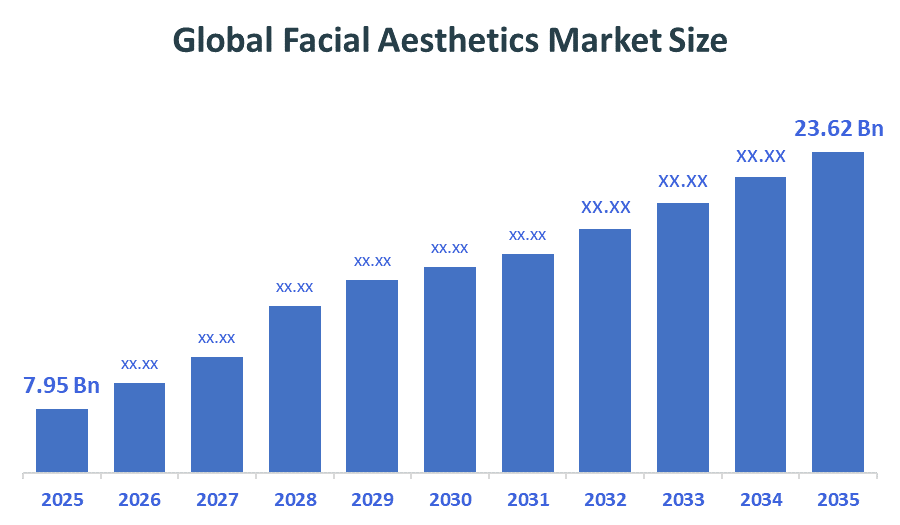
The Global Facial Aesthetics Market Size is foreseen to grow from USD 7.95 Billion in 2025 and is govern to reach around USD 23.62 Billion by 2035. According to Decision Advisors, a detailed research report on the global facial aesthetics market is boosted by the decisive shift toward natural-looking results and minimally invasive procedures, accounting for nearly 70-80% share of the total share worldwide. AbbVie (Allergan Aesthetics) is the prime player in the market with approximately USD 4.86 Billion in annual turnover and a 30-35% market share, positioning it as the primary driver of the global facial aesthetics market.
Market Snapshot
- Global Facial Aesthetics Market Size (2025): USD 7.95 Billion
- Projected Global Facial Aesthetics Market Size (2035): USD 23.62 Billion
- Global Facial Aesthetics Market Compound Annual Growth Rate (CAGR): 11.5%
- Largest Growing Region: North America
- Fastest Regional Market: Asia Pacific
- 3rd Largest Region: Europe
- Base Year: 2025
- Historical Period: 2021–2024
- Forecast Period: 2026–2035
Market Overview/ Introduction
The global facial aesthetics market is defined as the sector specialising in non-surgical and minimally invasive procedures, such as botulinum toxins and dermal fillers, that rejuvenate facial features and diminish signs of ageing. The facial aesthetics market is much more than just a collection of medical procedures, it’s a fast-moving industry dedicated to helping people feel like the best version of themselves through subtle, non-surgical enhancements. At its core, the market is distinguished by treatments like Botox and dermal fillers that smooth fine lines and restore a youthful glow without the need for traditional surgery. Today, big names like Allergan and Galderma are leading the way by moving beyond the clinic and into the digital space, launching apps that use AI to show patients their potential results before they even sit in the chair. At the same time, governments are stepping up to make these treatments safer and more accessible, for instance, India’s Heal in India initiative is making the country a global hotspot for high-quality, affordable cosmetic care. Looking ahead, the biggest opportunities lie in prejuvenation, where younger people start small treatments early to prevent ageing, and a massive surge in men seeking grooming solutions.
- Government of India continued to support the facial aesthetics ecosystem through the Production Linked Incentive (PLI) Scheme for Medical Devices, which provides financial incentives on incremental sales to boost domestic manufacturing of high-end medical and aesthetic devices, thereby reducing import dependency and strengthening local production capacity.
- Government of Japan supported the facial aesthetics market through its Pharmaceuticals and Medical Devices Act (PMD Act) regulatory framework, which ensures strict approval standards for injectables, dermal fillers, and aesthetic devices, thereby enhancing product safety, quality, and market credibility
Notable Insights: -
- North America is anticipated to hold approximately 37% share of the global facial aesthetics market over the predicted timeframe.
- Asia Pacific is the fastest-growing region in the global facial aesthetics market during the forecast period, holding approximately 29% share.
- By product type, the dermal fillers segment dominated the market and holds approximately 40% share in 2025 and is projected to grow at a substantial CAGR during the forecast period.
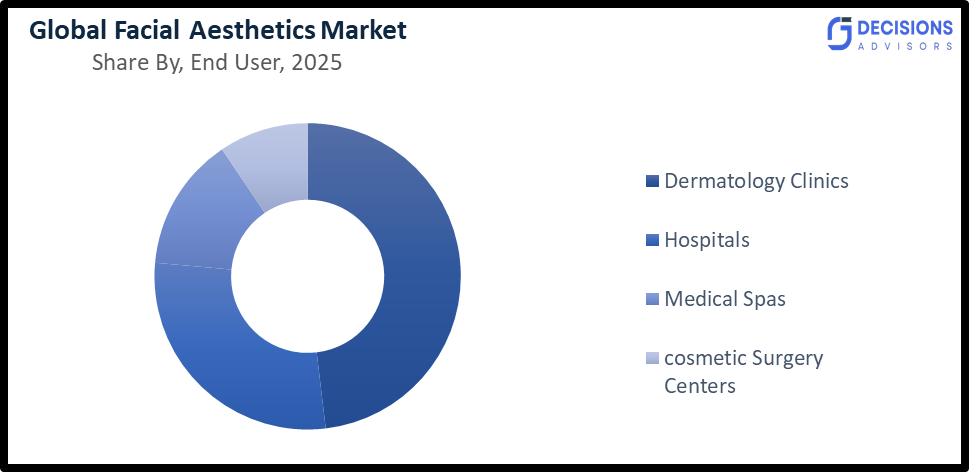
- By end user, the dermatology clinics segment dominated the market and holds approximately 50% share in 2025 and is projected to grow at a substantial CAGR during the forecast period.
- The compound annual growth rate of the global facial aesthetics market is 11.5%.
6. The market is likely to achieve a valuation of USD 23.62 Billion by 2035.
What is the role of technology in grooming the market?
Technology plays a crucial role in shaping the facial aesthetics market by enhancing precision, safety, and treatment outcomes. Advanced tools such as AI-powered facial analysis, laser-based skin treatments, and improved dermal filler formulations allow practitioners to deliver highly personalised and minimally invasive procedures. These innovations reduce recovery time and improve patient satisfaction. For example, Allergan Aesthetics (AbbVie) introduced AI-driven imaging systems that help doctors simulate post-treatment results before performing procedures like Botox or dermal fillers, enabling better decision-making and increasing patient confidence.
Market Drivers
The boom in facial aesthetics is really about a shift in how we view self-care and ageing. Much of this is fueled by our digital lives, between social media and constant video calls, we’re seeing ourselves more often, which has made tweaks a normal part of a grooming routine. There’s a huge move toward procedures that are quick and subtle, things you can do on a lunch break and head right back to work feeling refreshed, not done. We’re also seeing a younger crowd start early with prejuvenation to keep their skin looking its best for longer, while men are joining in more than ever to stay sharp and confident. Even lifestyle changes, like the recent wave of medical weight loss, have played a role, as consumers look to fillers to bring back the natural volume in their faces. Ultimately, with better tech formulating results safer and more predictable, it’s become less about changing how we look and more about feeling like the best version of ourselves.
Restrain
One of the key restraints in the facial aesthetics market is the high cost of procedures and advanced technologies, which limits accessibility, especially in price-sensitive regions. Treatments such as dermal fillers, botulinum toxin injections, and laser therapies often require repeated sessions, increasing overall expenses for consumers. Additionally, concerns regarding potential side effects, lack of skilled professionals in some regions, and varying regulatory standards can further hinder market growth and slow adoption rates.
Competitive Analysis:
The report offers the appropriate analysis of the key organisations/companies involved within the global facial aesthetics market, along with a comparative evaluation primarily based on their product of offering, business overviews, geographic presence, enterprise strategies, segment market share, and SWOT analysis. The report also provides an elaborate analysis focusing on the current news and developments of the companies, which includes product development, innovations, joint ventures, partnerships, mergers & acquisitions, strategic alliances, and others. This allows for the evaluation of the overall competition within the market.
Top Companies in the Global Facial Aesthetics Market
- Allergan Aesthetics (AbbVie Inc.)
- Galderma S.A.
- Merz Aesthetics (Merz Pharma GmbH & Co. KGaA)
- Johnson & Johnson (Aesthetic & MedTech division)
- Bausch Health Companies Inc. (Solta Medical)
- Cynosure LLC
- Cutera, Inc.
- Alma Lasers Ltd.
- Revance Therapeutics, Inc.
- Candela Corporation
Government Initiatives
|
Country |
Key Government Initiatives |
|
Australia |
Regulation of Injectables: The Australian Health Practitioner Regulation Agency (AHPRA) implemented the Health Practitioner Regulation National Law (NSW) Amendment Regulation 2024, requiring practitioners administering injectables to have extensive, specialized training (4+ years equivalent) and specific qualifications to ensure safety. |
|
India |
Safety & Regulation: Governments (e.g., in India and China) are focusing on creating strict regulatory frameworks for devices and training, aiming to ensure safety and quality in the rapidly expanding sector. |
|
Saudi Arabia |
Saudi Arabia's Vision 2030: The initiative includes transforming the healthcare sector, promoting domestic manufacturing of medical devices, and driving high-tech aesthetic investments. |
Study on the Supply, Demand, Distribution, and Market Environment of the Global Facial Aesthetics Market
The global facial aesthetics market operates within a strong supply-demand ecosystem, where demand is driven by the rising preference for non-invasive procedures around 64% of consumers prefer minimally invasive treatments, with injectables accounting for nearly 47% of total procedures globally. On the supply side, major pharmaceutical and device companies ensure continuous product availability through clinics, hospitals, and medspas, which together contribute nearly 95% of service delivery globally. Distribution is largely concentrated in dermatology clinics and medspas, which alone generate about 48.9% of total market revenue. The market environment is competitive and moderately regulated, with growing clinic networks and digital consultation platforms enhancing accessibility and patient reach worldwide.
Price Analysis and Consumer Behaviour Analysis
The facial aesthetics market reflects a premium pricing structure, with procedures such as botulinum toxin injections typically costing USD 200–800 per session and dermal fillers ranging from USD 600–2,000, depending on product type and region. This leads to moderate price sensitivity, especially in emerging markets. From a consumer behaviour perspective, individuals prioritise safety, natural-looking results, and minimal downtime, with nearly 70% of patients opting for non-invasive or minimally invasive treatments. Additionally, repeat procedures are common due to temporary effects, indicating strong customer retention and a growing trend toward preventive aesthetics among younger populations.
Market Segmentation
The Global Facial Aesthetics Market is classified into product type, application, and end user.
- The dermal fillers segment dominated the market and holds approximately 40% share in 2025 and is projected to grow at a substantial CAGR during the forecast period.
Based on the product type, the global facial aesthetics market is divided into dermal fillers, botulinum toxin, chemical peels, microdermabrasion, and laser & energy-based devices. Among these, the dermal fillers segment dominated the market and holds approximately 40% share in 2025 and is projected to grow at a substantial CAGR during the forecast period. This dominance is attributed to their effectiveness in restoring facial volume, reducing wrinkles, and enhancing facial contours with immediate and natural-looking results. These treatments are widely used in aesthetic clinics and medspas due to their minimally invasive nature and quick recovery time. For instance, advanced hyaluronic acid-based fillers offered by leading companies are increasingly preferred for lip enhancement and facial contouring, supporting segment growth.
- The wrinkle reduction & anti-ageing segment accounted for the largest share of approximately 45% in 2025 and is anticipated to grow at a significant CAGR during the forecast period.
Based on the application, the global facial aesthetics market is divided into wrinkle reduction & anti-ageing, facial line correction, lip enhancement, acne & scar treatment, and skin rejuvenation. Among these, the wrinkle reduction & anti-ageing segment accounted for the largest share of approximately 45% in 2025 and is anticipated to grow at a significant CAGR during the forecast period. This is primarily due to the increasing ageing population and rising demand for youthful appearance. Procedures such as botulinum toxin injections and dermal fillers are extensively used to reduce fine lines and wrinkles. For example, non-invasive anti-ageing treatments are widely adopted across dermatology clinics for quick and effective results, significantly boosting demand in this segment.
- The dermatology clinics segment dominated the market and holds approximately 50% share in 2025 and is projected to grow at a substantial CAGR during the forecast period.
Based on the end user, the global facial aesthetics market is divided into dermatology clinics, hospitals, medical spas (medspas), and cosmetic surgery centers. Among these, the dermatology clinics segment dominated the market and holds approximately 50% share in 2025 and is projected to grow at a substantial CAGR during the forecast period, owing to the availability of specialised professionals, advanced aesthetic technologies, and increasing patient preference for outpatient procedures. Dermatology clinics are the primary providers of non-invasive treatments such as injectables and laser therapies. Additionally, the growing number of aesthetic clinics globally further supports segment growth, as they offer personalised treatment solutions and shorter procedure times.
Strategies to Implement for Growth of the Market in Non-Leading Regions
To drive growth in non-leading regions, companies in the facial aesthetics market should focus on affordability and accessibility of treatments by introducing cost-effective products and flexible pricing models. Strategic partnerships with local dermatology clinics, hospitals, and distributors can improve market penetration and service availability. Additionally, investing in training programs for practitioners is essential to address the shortage of skilled professionals. Increasing awareness through digital marketing and social media campaigns can further boost adoption, while expanding medspa networks and offering minimally invasive procedures will attract a broader consumer base in emerging markets.
Regional Segment Analysis of the Global Facial Aesthetics Market
- North America (U.S., Canada, Mexico)
- Europe (Germany, France, U.K., Italy, Spain, Rest of Europe)
- Asia-Pacific (China, Japan, India, Rest of APAC)
- South America (Brazil and the Rest of South America)
- The Middle East and Africa (UAE, South Africa, Rest of MEA)
North America is anticipated to hold approximately 37% share of the global facial aesthetics market over the predicted timeframe.
North America is anticipated to hold approximately 37% share of the global facial aesthetics market over the predicted timeframe. It maintains a dominant market position due to high awareness regarding cosmetic procedures, strong purchasing power, and the presence of leading market players. The United States is the key contributor, supported by the growing demand for minimally invasive aesthetic treatments and increasing spending on personal care. For instance, dermatology clinics across the U.S. widely perform procedures such as botulinum toxin injections and dermal fillers for wrinkle reduction and facial enhancement. Additionally, continuous product innovations and rising adoption of advanced aesthetic technologies are further strengthening the region’s leadership.
Asia Pacific is the fastest-growing region in the global facial aesthetics market during the forecast period, holding approximately 29% share.
Asia Pacific is the fastest-growing region in the global facial aesthetics market during the forecast period, holding approximately 29% share. This growth is driven by rising disposable income, increasing beauty consciousness, and the growing influence of social media in countries such as China, India, South Korea, and Japan. The region is witnessing strong adoption of non-invasive aesthetic procedures, particularly among younger populations. For example, aesthetic clinics in South Korea and India are increasingly offering treatments such as skin rejuvenation, laser therapy, and facial contouring procedures. Additionally, the expansion of medical tourism and the increasing number of aesthetic clinics are accelerating market growth.
Europe is expected to hold approximately 21% share and is the third-largest region in the global facial aesthetics market during the forecast period.
Europe is expected to hold approximately 21% share and is the third-largest region in the global facial aesthetics market during the forecast period. The region’s growth is supported by increasing demand for anti-ageing treatments, well-established healthcare systems, and strong regulatory standards ensuring product safety. Countries such as Germany, France, and the United Kingdom are leading the market due to the rising adoption of non-invasive cosmetic procedures. For instance, dermatology and aesthetic clinics across Europe are increasingly utilising dermal fillers, botulinum toxin, and laser-based devices to enhance facial appearance. Additionally, ongoing advancements in aesthetic technologies and growing consumer preference for minimally invasive treatments are contributing to market expansion.
Future Market Trends in the Global Facial Aesthetics Market:
1. Rising Adoption of AI and Personalised Aesthetic Treatments
The facial aesthetics market is increasingly shifting toward AI-driven and personalised treatment approaches, where technologies such as facial analysis, 3D imaging, and predictive algorithms enable customised treatment planning. These innovations improve patient outcomes and satisfaction by offering tailored solutions based on individual facial structure and skin conditions. Additionally, AI is being widely used for consultation simulations and product recommendations, enhancing decision-making and trust.
2. Growing Demand for Minimally Invasive and Injectable Procedures
There is a strong shift toward non-invasive and minimally invasive treatments, such as dermal fillers and botulinum toxin, due to benefits like reduced downtime and natural-looking results. The increasing preference for quick, outpatient procedures is driving the expansion of injectables, which are among the fastest-growing segments in the market. This trend is further supported by continuous product innovations and broader treatment indications.
3. Expansion of Regenerative and Preventive Aesthetics
The market is evolving from traditional cosmetic enhancement toward regenerative and preventive aesthetics, focusing on stimulating the body’s natural healing processes. Treatments such as biostimulators, platelet-rich plasma (PRP), and collagen-stimulating injectables are gaining popularity for long-term skin improvement. Additionally, younger consumers are increasingly adopting preventive treatments (prejuvenation) to delay ageing signs, significantly expanding the target patient base.
Recent Development
- In March 2026, Galderma showcased expanded applications of Sculptra (poly-L-lactic acid biostimulator) for facial and body rejuvenation, including improved skin firmness and contouring benefits, reflecting growing demand for regenerative aesthetic treatments beyond traditional fillers.
- In January 2026, Allergan Aesthetics (AbbVie) expanded its facial injectable portfolio by presenting new clinical data for its next-generation neuromodulator TrenibotulinumtoxinE (TrenibotE) along with hyaluronic acid fillers and biostimulatory injectables at IMCAS 2026, highlighting faster onset results and improved patient satisfaction in facial line correction treatments.
- In January 2026, Allergan Aesthetics (AbbVie) expanded its collaborative ecosystem with clinical research partners and aesthetic medicine experts during IMCAS 2026, focusing on joint development of next-generation neuromodulators and biostimulatory fillers such as TrenibotulinumtoxinE, supporting a multimodal approach to facial rejuvenation therapies
- In January 2026, Galderma introduced updated clinical findings supporting its Relfydess (relabotulinumtoxinA) ready-to-use liquid neuromodulator, designed to eliminate reconstitution steps and ensure consistent dosing, with rapid visible effects from day one and sustained outcomes up to six months.
- In December 2025, LOreal strengthened its strategic partnership with Galderma by increasing its stake to 20%, reinforcing collaboration in dermatology and injectable aesthetics, with a focus on co-developing skin biology research, expanding medical aesthetics clinics, and accelerating innovation in facial injectable treatments.
Market Segment
This study forecasts revenue at global, regional, and country levels from 2020 to 2035. Decision Advisors has segmented the Global Facial Aesthetics Market based on the below-mentioned segments:
Global Facial Aesthetics Market, By Product Type
- Dermal Fillers
- Botulinum Toxin
- Chemical Peels
- Microdermabrasion
- Laser & Energy-Based Devices
Global Facial Aesthetics Market, By Application
- Wrinkle Reduction & Anti-Aging
- Facial Line Correction
- Lip Enhancement
- Acne & Scar Treatment
- Skin Rejuvenation
Global Facial Aesthetics Market, By End User
- Dermatology Clinics
- Hospitals
- Medical Spas (MedSpas)
- Cosmetic Surgery Centers
Global Facial Aesthetics Market, By Regional Analysis
- North America
- US
- Canada
- Mexico
- Europe
- Germany
- UK
- France
- Italy
- Spain
- Russia
- Rest of Europe
- Asia Pacific
- China
- Japan
- India
- South Korea
- Australia
- Rest of Asia Pacific
- South America
- Brazil
- Argentina
- Rest of South America
- Middle East & Africa
- UAE
- Saudi Arabia
- Qatar
- South Africa
- Rest of the Middle East & Africa
Frequently Asked Questions (FAQ)
Q1. How long do results from facial aesthetic treatments typically last?
A. The duration varies by treatment type; for example, botulinum toxin lasts around 3–6 months, while dermal fillers can last 6–18 months, depending on the formulation and treatment area.
Q2. What qualifications are required for practitioners to perform facial aesthetic procedures?
A. Practitioners typically require medical training in dermatology or cosmetic surgery, along with specialised certifications in aesthetic procedures and injectables.
Q3. Are facial aesthetic treatments safe for all skin types?
A. Most treatments are safe for various skin types when performed by qualified professionals, but certain procedures may require customisation based on skin sensitivity and pigmentation.
Q4. How does medical tourism impact the facial aesthetics market?
A. Medical tourism significantly boosts market growth, as patients travel to countries offering high-quality treatments at lower costs, particularly in regions like the Asia-Pacific and Latin America.
Q5. What role do social media influencers play in the growth of the facial aesthetics market?
A. Social media influencers increase awareness and acceptance of aesthetic procedures, shaping consumer preferences and driving demand, especially among younger demographics.
Check Licence
Choose the plan that fits you best: Single User, Multi-User, or Enterprise solutions tailored for your needs.
We Have You Covered
- 24/7 Analyst Support
- Clients Across the Globe
- Tailored Insights
- Technology Tracking
- Competitive Intelligence
- Custom Research
- Syndicated Market Studies
- Market Overview
- Market Segmentation
- Growth Drivers
- Market Opportunities
- Regulatory Insights
- Innovation & Sustainability
Report Details
| Scope | Global |
| Pages | 210 |
| Delivery | PDF & Excel via Email |
| Language | English |
| Release | Apr 2026 |
| Access | Download from this page |