
Global Fallopian Tube Cancer Market
 |
Pages:
240
|
Pages:
240
Global Fallopian Tube Cancer Market Size, Share, By Type (Serous Adenocarcinomas, Endometrioid Adenocarcinomas), By Treatment Type (Surgery, Chemotherapy, Targeted Therapy, Hormone Therapy, and Adjuvant Therapy), By End User (Hospitals, Diagnostic Centers, and Home Healthcare), and By Region (North America, Europe, Asia-Pacific, Latin America, Middle East, and Africa), Analysis and Forecast 2025-2035.
REPORT COVERAGE
Global
Market Snapshot
- Market Size (2025): USD 49.57Billion
- Projected Market Size (2035): USD 72.64Billion
- Compound Annual Growth Rate (CAGR): 7.62%
- Largest Regional Market: North America
- Fastest Growing Region: Asia Pacific
- 2nd Largest Region: Europe
- Base Year: 2025
- Historical Period: 2021–2024
- Forecast Period: 2025–2035
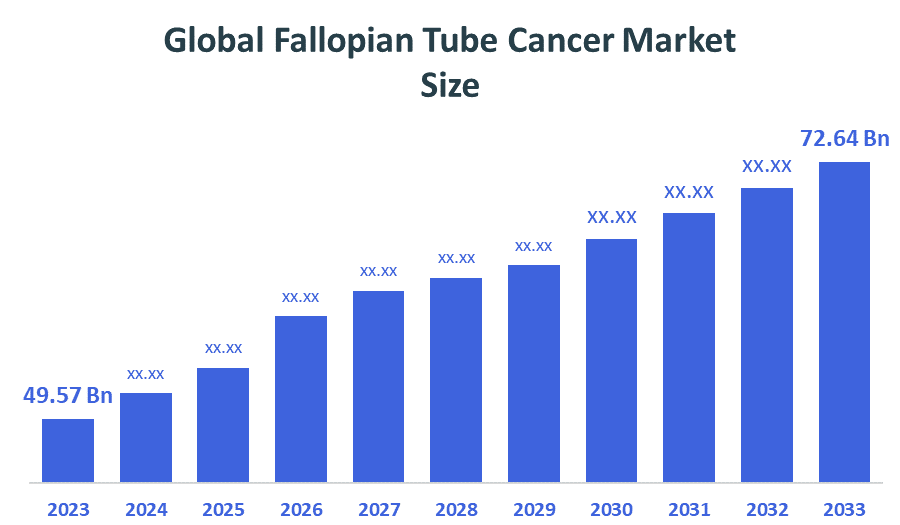
According to Decision Advisors, the Global Fallopian Tube Cancer Market Size is expected to grow at a CAGR of 7.62% during the forecast period 2025-2035. The global fallopian tube cancer market is projected to grow significantly over the next decade, as the rising prevalence of genetic predisposition resulting from specific gene mutations, which are mainly inherited from a parent, and the increasing incidences of various risk factors, including early or late onset of menstruation, infertility, advancing age, family history, etc., are also bolstering the market growth.
Market Overview/ Introduction
The fallopian tube cancer market refers to the global industry involved in the diagnosis, treatment, and management of cancer originating in the fallopian tubes (a rare type of gynecologic cancer). The market includes all businesses that produce drugs and diagnostic equipment and provide medical services through hospitals, research facilities and healthcare organizations. Fallopian tube cancer refers to the development of malignant (cancerous) cells within the fallopian tubes, which are thin, muscular ducts that connect the ovaries to the uterus in the female reproductive system.
The development of specific biomarkers will create new treatment methods which provide earlier diagnosis, better treatment accuracy and reduced treatment toxicity. The Asia-Pacific and Latin America regions present business opportunities through their need for expanded BRCA genetic testing and diagnostic services. Pharmaceutical companies and research institutions work together to conduct clinical trials and develop new therapies. The use of diagnostic tests to find patients who will most benefit from targeted therapies helps to enhance patient classification.
The Food and Drug Administration granted approval for relacorilant, a glucocorticoid receptor antagonist, on March 2026. The approval allows the drug to be used together with nab-paclitaxel to treat adult patients with platinum-resistant epithelial ovarian cancer and fallopian tube cancer and primary peritoneal cancer who have undergone one to three previous treatment cycles that included bevacizumab.
- In May 2025, the FDA approved the AVMAPKI FAKZYNJA combination therapy as the first-ever treatment for adult patients with KRAS-mutated recurrent low-grade serous ovarian cancer.
- Clovis Oncology's revenue growth in 2025 for their fallopian tube cancer treatment, Rubraca (rucaparib), with a 26% increase in global revenue, driven by high demand.
- The Office on Women’s Health (part of HHS) and the National Institute of Environmental Health Sciences have launched global campaigns like "Women’s Health Awareness Day" to improve early diagnosis rates
Notable Insights: -
- North America holds the largest regional market share, approximately 45% in the global Allergic Rhino Conjunctivitis market.
- Asia Pacific is the fastest-growing region in the global Fallopian Tube Cancer market.
- By stages, the plaque growth segment held a dominant position of over 38% in terms of market share in 2025.
- By diagnosis, the electrocardiogram segment is the dominating one, accounting for over 70% of the global market share in 2025.
- The compound annual growth rate of the global Fallopian Tube Cancer market is 7.62%.
What is the role of technology in grooming the market?
Technology is playing a transformative role in shaping the fallopian tube cancer market, as the process of developing better methods for detecting medical conditions will lead to improved treatment accuracy and better patient results. The use of advanced imaging technologies together with high-resolution MRI and AI-assisted diagnostics enables doctors to identify conditions at an earlier stage while achieving higher diagnostic accuracy, which results in a 20-30% survival rate increase for patients with early-stage diseases. The use of genomic sequencing and biomarker testing specifically for BRCA mutation analysis has led to the implementation of targeted therapies, which include PARP inhibitors that decrease disease progression risk in specific patients by up to 70%. The digital health tools, with tele-oncology platforms, receive support from Roche and Pfizer to create better systems for remote patient monitoring and treatment compliance. The process of AI-based drug discovery helps to decrease drug development times by 30 to 40%, which results in faster delivery of new medical treatments. The combination of precision medicine with data analytics will drive market growth at approximately a 7 to 8% compound annual growth rate until 2035, which demonstrates the essential role of technology in promoting market growth.
Market Drivers
The global fallopian tube cancer market is driven by the market growth, which receives support from both expanding healthcare facilities and increased funding for oncology research. AstraZeneca and Roche are important market players who develop new treatment options through their product launches which include PARP inhibitors and immunotherapy treatments. The recent product launches work to enhance patient survival rates while developing customized treatment methods. The market outlook improves because pharmaceutical companies conduct clinical trials and regulatory agencies grant approvals for new treatment options, which help patients worldwide.
Restrain
The main restraints on the global fallopian tube cancer market include the fact that healthcare providers fail to recognise their duty to educate patients about their medical conditions, which leads to problems in patient diagnosis and results in negative effects on patient health. The number of clinical trials that investigate fallopian tube cancer as a distinct disease remains limited because researchers conduct their studies within the wider scope of ovarian cancer research.
Competitive Analysis:
The report offers the appropriate analysis of the key organizations/companies involved within the fallopian tube cancer market, along with a comparative evaluation primarily based on their product of offering, business overviews, geographic presence, enterprise strategies, segment market share, and SWOT analysis. The report also provides an elaborative analysis focusing on the current news and developments of the companies, which includes product development, innovations, joint ventures, partnerships, mergers & acquisitions, strategic alliances, and others. This allows for the evaluation of the overall competition within the market.
Top Companies in Global Fallopian Tube Cancer Market
- AstraZeneca
- Pfizer
- F. Hoffmann-La Roche
- GlaxoSmithKline
- Merck & Co.
- AbbVie
- Bristol-Myers Squibb
- Novartis
- Eli Lilly and Company
- Boehringer Ingelheim
Government Initiatives
|
Country |
Key Government Initiatives |
|
US |
Led by the National Cancer Institute, which funds large-scale cancer research and clinical trials. Programs like the PLCO Cancer Screening Trial include fallopian tube cancer under ovarian cancer screening efforts. Strong federal funding and early screening initiatives improve diagnosis and treatment access. |
|
UK |
The National Health Service supports cancer care through subsidized treatment. Government-backed Cancer Drugs Fund enables patient access to innovative oncology drugs. Public awareness campaigns and funding for research accelerate early diagnosis. |
|
Europe |
The European Medicines Agency accelerates approval of innovative cancer drugs (e.g., PRIME scheme). Strong government-funded healthcare systems ensure wide access to treatment. High investment in immunotherapy and targeted therapy research |
|
India |
Initiatives by Ministry of Health and Family Welfare promote cancer screening and awareness programs. Expansion of low-cost generics and biosimilars improves treatment accessibility. Growing public-private partnerships and oncology infrastructure investments. |
Market Segmentation
The fallopian tube cancer market share is classified into stages, diagnosis, and end user.
- The serous adenocarcinomas segment dominated the market in 2025, and is projected to grow at a substantial CAGR during the forecast period.
Based on the type, the fallopian tube cancer market is divided into serous adenocarcinomas, endometrioid adenocarcinomas. Among these, the serous adenocarcinomas segment dominated the market in 2025 and is projected to grow at a substantial CAGR during the forecast period. The growth of the segment is driven by the higher frequency of endometrioid types together with their strong relationship to high-grade tumors and their resemblance to ovarian cancer. Their market share and clinical practice usage continue to grow because of rising research interest and the development of specific treatments and improved diagnostic methods.
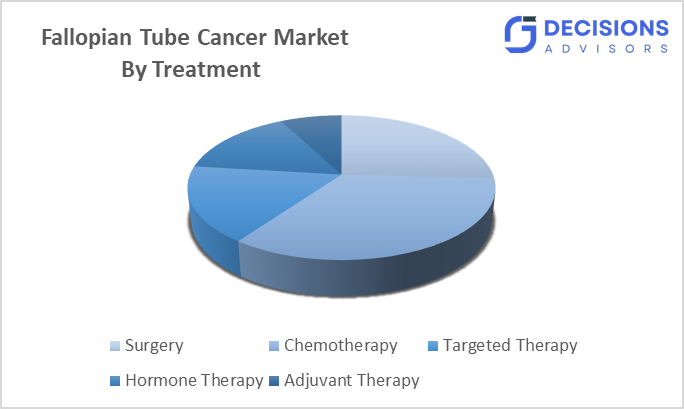
- The chemotherapy segment accounted for the largest share in 2025, and is anticipated to grow at a significant CAGR of approximately 45% during the forecast period.
Based on the treatment, the fallopian tube cancer market is divided into surgery, chemotherapy, targeted therapy, hormone therapy, and adjuvant therapy. Among these, the chemotherapy segment accounted for the largest share in 2025 and is anticipated to grow at a significant CAGR of approximately 45% during the forecast period. The treatment maintains its dominant position because it serves as the standard first-line treatment, which hospitals use before and after surgical procedures and which doctors have proven to work in treatment anywhere in the world. Its combination use with other therapies further strengthens its dominance across both early and advanced-stage patients.
- The hospitals segment dominated the market in 2025, and is projected to grow at a substantial CAGR of approximately 65% during the forecast period.
Based on the diagnosis, the fallopian tube cancer market is divided into hospitals, diagnostic centers, and home healthcare. Among these, the hospitals segment dominated the market in 2025 and is projected to grow at a substantial CAGR of approximately 6% during the forecast period. Hospitals function as main treatment facilities because people seek medical assessment, surgical procedures, chemotherapy and advanced cancer treatment. The hospital system maintains its dominant market position because patients continue to arrive at their facilities while hospitals offer complete medical treatment solutions.
Regional Segment Analysis of the Fallopian Tube Cancer Market
- North America (U.S., Canada, Mexico)
- Europe (Germany, France, U.K., Italy, Spain, Rest of Europe)
- Asia-Pacific (China, Japan, India, Rest of APAC)
- South America (Brazil and the Rest of South America)
- The Middle East and Africa (UAE, South Africa, Rest of MEA)
North America is anticipated to hold the largest share of the fallopian tube cancer market over the predicted timeframe.
North America is anticipated to hold the largest share of the fallopian tube cancer market over the predicted timeframe. This market is accounting about approximately 40% of the total market share. This dominance is driven primarily by the fact that the United States maintains an advanced healthcare system, which supports its extensive oncology research capabilities. The area demonstrates two main advantages through its widespread use of targeted therapies and immunotherapies, with its complete access to genetic testing for BRCA mutations and its early diagnostic capabilities. The National Cancer Institute, with other government agencies, provides research funding that enables clinical trials to progress. The presence of major pharmaceutical companies like Pfizer and F. Hoffmann-La Roche creates an environment that supports both innovation and drug distribution. North America leads all regions in market development because of its high healthcare expenditures, which surpass USD 4.5 trillion each year.
Asia Pacific is expected to grow at a rapid CAGR in the Fallopian Tube Cancer market during the forecast period. Asia-Pacific is projected to register the highest growth, with a CAGR of approximately 18–20% during the forecast period, significantly higher than the global average of around 7–10%. The rapid growth of this industry occurs because multiple factors are driving its expansion. The increasing demand for cancer treatment in the region results from its growing patient population, which includes many people from countries such as India and China. The combination of rising healthcare spending, better oncology facilities, and government awareness initiatives has led to faster diagnosis and treatment progress. The healthcare system now achieves better patient access because medical professionals use more targeted therapies, clinical trials, and affordable generics and biosimilars. The combination of these factors establishes Asia-Pacific as the most rapidly growing regional market, which displays the highest market expansion.
Europe is the 3rd largest region to grow in the fallopian tube cancer market during the period. Europe is the second-largest market for Fallopian Tube Cancer treatments, holding around 30% of the global market share. The region’s growth is driven by well-established healthcare systems, strong reimbursement policies, and high adoption of advanced therapies such as targeted treatments and immunotherapy. Additionally, increasing awareness of gynecologic cancers and the presence of leading research institutions support steady expansion.
Strategies to Implement for Growth of the Market in Non-Leading Regions
Non-leading regions need a multi-faceted approach which will help them to establish access points and maintain affordable services, and create public awareness programs to grow their fallopian tube cancer treatment market. The public sector and private organizations need to finance healthcare system development through the construction of oncology treatment centers and diagnostic testing facilities, which will support early cancer identification. The implementation of awareness initiatives about gynecologic cancers will lead to improved rates of screening and earlier detection of the disease. The partnership with AstraZeneca and Roche will allow our organization to obtain advanced therapies through licensing and distribution agreements. The promotion of affordable generic drugs and biosimilar medications will result in better access to medical treatments for people living in developing countries. The expansion of clinical trials in developing markets will enable better access to new medical treatments while creating essential regional research data. The approval process for new medications needs governments to establish programs that offer financial reimbursement and provide critical regulatory assistance.
Future Market Trends in Global Fallopian Tube Cancer Market: -
1. Shift Toward Personalized & Genomic Medicine
The shift toward personalized and genomic medicine is transforming fallopian tube cancer treatment by enabling therapies based on individual genetic profiles, such as BRCA mutations. This approach improves treatment effectiveness, reduces adverse effects, and supports targeted drug development, driving better patient outcomes and accelerating innovation in precision oncology within the global market.
2. Expansion of Targeted Therapies & Immunotherapy
Expansion of targeted therapies and immunotherapy is transforming the fallopian tube cancer market. Treatments such as PARP inhibitors and immune checkpoint inhibitors improve survival and reduce recurrence. Increasing clinical trials and approvals are accelerating adoption, while precision medicine enables personalized care, driving market growth and improving patient outcomes globally.
3. Adoption of Minimally Invasive & Robotic Surgeries
The adoption of minimally invasive and robotic surgeries is transforming fallopian tube cancer treatment by improving precision, reducing complications, and shortening recovery time. Advanced robotic-assisted procedures enable better tumor removal and patient outcomes. Increasing hospital investments and surgeon training are accelerating adoption, making these techniques a preferred option in modern oncology care.
Recent Development
In February 2026, the Food and Drug Administration approved pembrolizumab as well as pembrolizumab and berahyaluronidase alfa-pmph in combination with paclitaxel, with or without bevacizumab, for adult patients with platinum-resistant epithelial ovarian, fallopian tube, or primary peritoneal carcinoma whose tumors express PD-L1 as determined by an FDA-authorized test, and who have received one or two prior systemic treatment regimens.
In September 2025, AbbeVie announced that it will launch its ovarian cancer drug ELAHERE in the United Kingdom at a list price equivalent to that in the United States, the company’s strategy to ensure that developed nations recognize the value of its innovation.
In August 2025, UK pharma major GSK India arm announced the launch of its two leading endometrial and ovarian cancer drugs, Jemperli and Zejula, in India. Zejula is an oral PARP inhibitor approved as first-line monotherapy maintenance for all biomkaers types in advanced ovarian cancers.
How is Recent Developments Helping the Market?
Recent developments are significantly boosting the global fallopian tube cancer market through innovation in targeted therapies and increased R&D investments. The adoption of PARP inhibitors, such as olaparib and rucaparib, has improved treatment outcomes and expanded therapeutic options. The global PARP inhibitor market alone is valued at USD 7.4 billion in 2026 and is projected to reach USD 17.1 billion by 2036 (CAGR 8.7%), reflecting strong growth in related cancer treatments. Additionally, the fallopian tube cancer market is expected to grow at a 7.15% CAGR (2025–2035), driven by immunotherapy, precision medicine, and rising clinical trials. These advancements are accelerating early diagnosis and personalized treatment adoption.
Market Segment
This study forecasts revenue at global, regional, and country levels from 2020 to 2035. Decision Advisors has segmented the fallopian tube cancer market based on the below-mentioned segments:
Global Fallopian Tube Cancer Market, By Type
- Serous Adenocarcinomas
- Endometrioid Adenocarcinomas
Global Fallopian Tube Cancer Market, By Treatment Type
- Surgery
- Chemotherapy
- Targeted Therapy
- Hormone Therapy
- Adjuvant Therapy
Global Fallopian Tube Cancer Market, By End User
- Hospitals
- Diagnostic Centers
- Home Healthcare
Global Fallopian Tube Cancer Market, By Regional Analysis
- North America
- US
- Canada
- Mexico
- Europe
- Germany
- UK
- France
- Italy
- Spain
- Russia
- Rest of Europe
- Asia Pacific
- China
- Japan
- India
- South Korea
- Australia
- Rest of Asia Pacific
- South America
- Brazil
- Argentina
- Rest of South America
- Middle East & Africa
- UAE
- Saudi Arabia
- Qatar
- South Africa
- Rest of the Middle East & Africa
Frequently Asked Questions (FAQ).
Q: What are the main treatment options available?
A: Treatment options include surgery, chemotherapy, targeted therapy, and, in some cases, radiation therapy. Targeted therapies such as PARP inhibitors are increasingly used. Treatment choice depends on cancer stage and patient condition, with combination therapies improving survival rates and becoming a standard approach in advanced cases.
Q: Why is early diagnosis important in this market?
A: Early diagnosis significantly improves survival rates and treatment effectiveness. However, fallopian tube cancer is often diagnosed at later stages due to non-specific symptoms. Increasing use of genetic testing and imaging technologies is helping detect cases earlier, thereby boosting demand for diagnostic solutions within the market.
Q: How does this market relate to ovarian cancer?
A: Fallopian tube cancer is closely linked to ovarian cancer, sharing similar biology and treatment protocols. Many therapies approved for ovarian cancer are also used for fallopian tube cancer. As a result, advancements in ovarian cancer research directly influence innovation and growth in this market segment.
Q: What role do clinical trials play in market growth?
A: Clinical trials are critical for developing new therapies and expanding treatment options. Increased participation in trials, especially in emerging regions, supports innovation and regulatory approvals. They also provide patients access to advanced treatments, driving both scientific progress and market expansion globally.
Q: What are the future trends in the market?
A: Future trends include increased adoption of personalized medicine, growth in immunotherapy and targeted therapies, and rising use of companion diagnostics. Advancements in minimally invasive surgeries and early detection technologies are also shaping the market, improving patient outcomes and driving steady growth over the forecast period globally.
Check Licence
Choose the plan that fits you best: Single User, Multi-User, or Enterprise solutions tailored for your needs.
We Have You Covered
- 24/7 Analyst Support
- Clients Across the Globe
- Tailored Insights
- Technology Tracking
- Competitive Intelligence
- Custom Research
- Syndicated Market Studies
- Market Overview
- Market Segmentation
- Growth Drivers
- Market Opportunities
- Regulatory Insights
- Innovation & Sustainability
Report Details
| Scope | Global |
| Pages | 240 |
| Delivery | PDF & Excel via Email |
| Language | English |
| Release | Mar 2026 |
| Access | Download from this page |