
Global Female Contraceptives Market
 |
Pages:
210
|
Pages:
210
Global Female contraceptives Market Size, Share, By Product Type (Contraceptive Drugs, and Contraceptive Devices), By Hormone Type (Oestrogen-only contraceptives, Progesterone-only contraceptives, and Combined (Estrogen + Progesterone)) By Duration Of Action (Short-acting methods, and Long-acting reversible contraceptives (LARC)) By End User (Personal / home use, Hospitals, and Clinics / healthcare centres), and By Region (North America, Europe, Asia-Pacific, Latin America, Middle East, and Africa), Analysis and Forecast 2026-2035
REPORT COVERAGE
Global
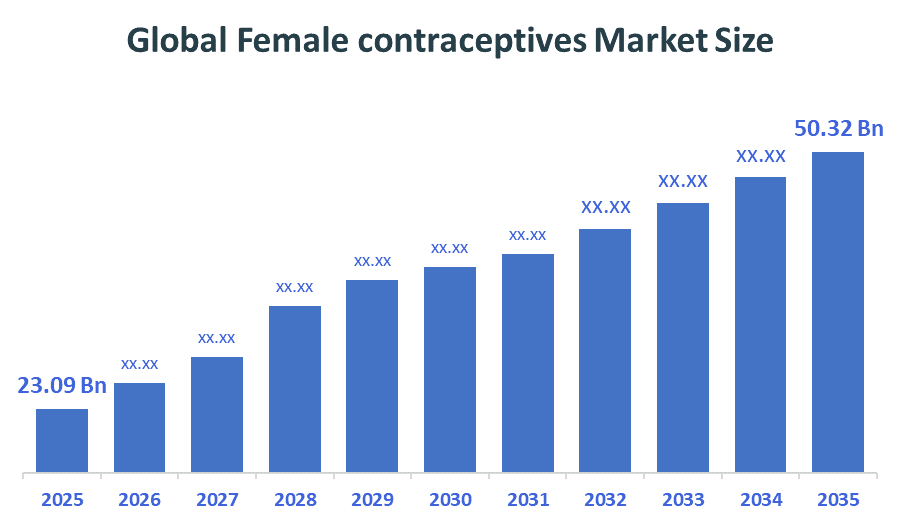
The Global Female Contraceptives Market Size is projected USD 23.09 Billion in 2025 and is forecasted to reach around USD 50.32 Billion by 2035. According to Decision Advisors, a detailed report on analysis of the Global Female contraceptives Market indicates that the Rising Adoption of Long-Acting Reversible Contraceptives (LARCs) trend dominates the market, accounting for approx. 65%–70% of the total global demand worldwide. Bayer AG dominates the Global Female contraceptives Market, supported by revenue of approx. USD 3.5–4.5 billion, due to strong global presence, leading IUD portfolio, and leadership in long-acting reversible contraceptives segment worldwide.
Market Snapshot
- Global Female contraceptives Market Size (2025): USD 23.09 Billion
- Projected Global Female Contraceptives Market Size (2035): USD 50.32 Billion
- Global Female Contraceptives Compound Annual Growth Rate (CAGR): 8.1%
- Largest Regional Market: Asia pacific
- Fastest Growing Region: North America
- 3rd Largest Region: Europe
- Base Year: 2025
- Historical Period: 2021–2024
- Forecast Period: 2026–2035
Market Overview/ Introduction
Global Female Contraceptives Market involves the business sector comprising products and procedures intended specifically for women to avoid accidental pregnancies and reproductive health maintenance. Some of the forms of contraceptives available on the market include hormonal and non-hormonal types. They can be in form of tablets, intrauterine devices, injectables, implants, patches, vaginal rings, and barrier contraceptives. Women take contraceptives for various purposes such as spacing their pregnancies, birth control, and hormonal issues like irregular menstrual cycles and polycystic ovary syndrome. Contraceptive methods are medications or devices that inhibit fertilization and implantation processes in the uterus. Contraceptives are instrumental in minimizing maternal deaths, slowing down population growth rates, and giving women reproductive rights. An increase in the number of consumers seeking contraception is among the major forces boosting the growth of this market segment. There are several trends driving this market, including greater knowledge about reproductive health issues, more females joining the workforce, and the popularity of modern contraceptives. Modern technology has advanced to produce highly efficient contraceptives that are long-lasting and hormone-free without side effects. The development of advanced methods for delivering drugs, including low-dose hormonal pills and biodegradable implants, is also playing a significant role in making the process more convenient and safer for the users. Moreover, the efforts of governments and various programs launched by international bodies such as WHO and UNFPA are encouraging family planning and reducing costs.
- In January 2025: Mission Parivar Vikas campaign expanded contraceptive access in high-fertility districts through awareness drives and service delivery initiatives.
- In April 2024: U.S. Food and Drug Administration enabled OTC launch of Opill, expanding contraceptive access and reducing prescription barriers across the United States.
- In March 2025: England expands free contraception via NHS pharmacies, while France provides free contraceptives to women under 26, improving access and affordability across Europe.
Notable Insights: -
- Asia-Pacific holds the largest regional market share approximately 7.7% in the global Female contraceptives market.
- North America is the fastest growing region market share approximately 7% in the global Female contraceptives market.
- By product type, the contraceptive devices segment held a dominant position with 69% in terms of market share in 2025.
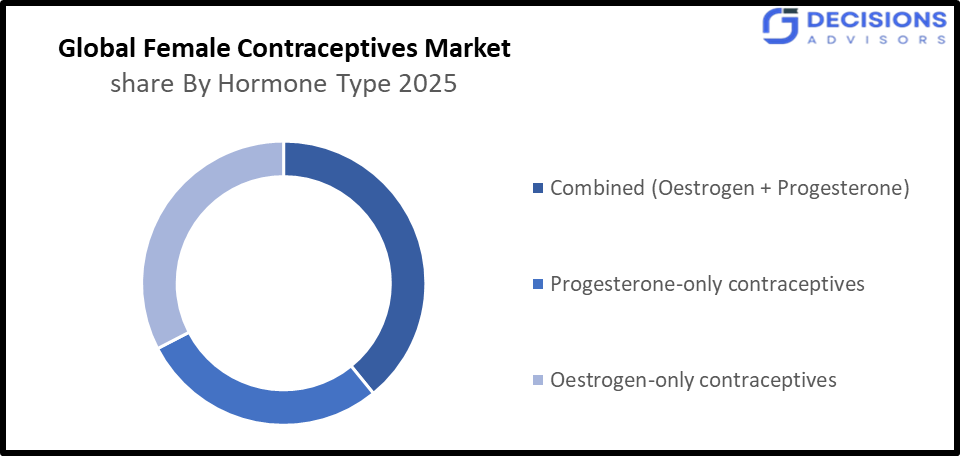
- By hormone type, combined (oestrogen + progesterone) contraceptives segment is the dominating accounting for market is approximately 54%.
- By end user, personal / home use segment held a dominant position market is approximately 58%.
- By duration of action, long-acting reversible contraceptives (LARC) segment held a dominant position market is approximately 68%.
- The market is likely to achieve a valuation of USD 50.32 Billion by 2035.
What is role of technology in grooming the market?
The application of technology is essential in promoting the development of the market for female contraceptives by increasing effectiveness, safety, and convenience for users. Some of the technological developments that can be seen in this industry include the emergence of long-acting reversible contraceptives (LARCs) and other advanced technologies, which have been proven to be effective for more than 99 percent of the time and require little effort from users. The use of digital technologies and applications, such as Clue and Flo, helps women monitor their fertility levels and use contraceptives effectively.
How is Recent Developments Helping the Market?
Emerging trends are playing a major role in driving the Female Contraceptives Market due to their impact on making these contraceptives more effective and safer. Examples of innovative technologies include the introduction of intrauterine devices that release hormones, biodegradable implants, and extended-release vaginal rings. Companies including Bayer AG and Organon & Co are launching new Long-Acting Reversible Contraceptive (LARC) solutions. Thanks to increased funding for R&D, lower dosage and even non-hormonal solutions have been made available to minimize the side effects.
Market Drivers
Drivers of Female Contraceptives Market include increased knowledge about reproductive health and the need for contraception. Increasing global population and the need to avoid unintended pregnancy are contributing to market growth. Campaigns initiated by government agencies along with campaigns conducted by various organizations such as WHO and UNFPA are working toward promoting the use of contraception, mainly in developing nations. Increasing number of women joining the workforce is another reason for delayed pregnancy and an increase in the number of people using contraception. Technological innovations related to long-acting reversible contraception have increased market opportunities owing to their effectiveness and ease of use. Other drivers that can be identified include increased healthcare service penetration, rise in the use of online pharmacies, and easy availability of OTC contraceptives. Increasing incidence of hormonal disorder and the need for treatment of menstruation related issues is also driving the market forward. Apart from that, favourable government policies and subsidies are expected to provide growth opportunities for market players moving forward.
Restrain
The Female Contraceptive Market is facing restrictions because of some negative effects of hormonal-based contraceptives such as weight gain and mood swings. Lack of knowledge in some parts of the world and religion or cultural reasons have made these products less popular. Moreover, the price of some new contraceptives and non-availability in rural areas are creating obstacles for this market to grow.
Competitive Analysis:
The report offers the appropriate analysis of the key organizations/companies involved within the Female contraceptives market, along with a comparative evaluation primarily based on their Product of offering, business overviews, geographic presence, enterprise strategies, segment market share, and SWOT analysis. The report also provides an elaborative analysis focusing on the current news and developments of the companies, which includes Product development, innovations, joint ventures, partnerships, mergers & acquisitions, strategic alliances, and Others. This allows for the evaluation of the overall competition within the market.
Top Companies in Global Female contraceptives Market
- Bayer AG
- Organon & Co.
- Pfizer Inc.
- Johnson & Johnson
- Abbott Laboratories
- Merck & Co., Inc.
- Teva Pharmaceutical Industries Ltd.
- Church & Dwight Co., Inc.
- Reckitt Benckiser Group plc
- Cipla Limited
Government Initiatives
|
Country |
Key Government Initiatives |
|
France
|
In March 2025: France continues free contraception for women under 25, boosting access, while broader European policies expand affordability initiatives supporting reproductive healthcare access. |
|
US |
October 2024: Biden-Harris administration proposed expanding Affordable Care Act coverage to include free OTC contraceptives, aiming to improve access for 52 million women across the United States. |
|
Africa |
In June 2024: FP2030 commitments and initiatives like Merck for Mothers, reaching 8.3 million African women, are expanding contraceptive access across Africa and MENA. |
Study on the Supply, Demand, Distribution, and Market Environment of Female contraceptives Market
Market Environment of the Female Contraceptives Market reflects an equilibrium-oriented demand-supply condition as a result of growing health awareness and the need for family planning. On one hand, demand is generated through the processes of urbanization, postponement of childbirth, and various government programs. Supply is facilitated through big companies such as Bayer AG and Organon & Co., thus providing for a diverse range of products. As far as distribution channels are concerned, these encompass hospitals, retail drug stores, and the Internet, which adds to the market potential for female contraceptives.
Price Analysis and Consumer Behaviour Analysis
Pricing for the market of female contraceptives varies depending on the type of contraceptive, the duration of usage, and its technological sophistication. Pills and other short-term female contraceptives are inexpensive in terms of price; however, long-term contraceptives (implants and IUDs) are more expensive initially but highly efficient in the long run. Purchasing decisions made by consumers may depend on various factors, including the availability of money, level of awareness about contraception, convenience, and efficacy. Women often prefer LARCs, which require little effort to maintain and guarantee efficiency in preventing pregnancy.
Market Segmentation
The Female contraceptives market share is classified into mounting product type, hormone type, duration of action, and end user
- The product type segment dominated the market in 2025, and is projected to grow at a substantial CAGR of approximately 8.5% during the forecast period.
Based on the product type, the female contraceptives market is divided into contraceptive drugs, and contraceptive devices. Among these, contraceptive devices segment dominates the Female Contraceptives Market due to high adoption of long-acting reversible contraceptives (LARCs) like IUDs and implants. This segment accounts for approximately 65–70% of total market revenue in 2025 and is projected to grow at a CAGR of approximately 8–9%. Its dominance is driven by superior effectiveness (>99%), long-term protection, and reduced user dependency compared to contraceptive drugs, making it the preferred choice globally.
Top of Form
- The hormone type segment accounted for the largest share in 2025, and is anticipated to grow at a significant CAGR of approximately 6.8% during the forecast period.
Based on the hormone type, the female contraceptives market is divided into oestrogen-only contraceptives, progesterone-only contraceptives, and combined (oestrogen + progesterone). Among these, combined (oestrogen + progesterone) contraceptives segment dominates the Female Contraceptives Market due to its high effectiveness, cycle regulation benefits, and widespread use in oral pills. This segment holds approximately 50–55% of total market revenue in 2025 and is expected to grow at a CAGR of approximately 6–7%. Its dominance is driven by strong physician preference, easy availability, and additional health benefits such as reduced menstrual pain and improved hormonal balance, making it the most commonly prescribed option globally.
Bottom of Form
- The end user segment dominated the market in 2025, and is projected to grow at a substantial CAGR of approximately 6.7% during the forecast period.
Based on the end user, the female contraceptives market is divided into Personal / home use, Hospitals, and Clinics / healthcare centres. Among these, personal/home use segment dominates the Female Contraceptives Market due to the high adoption of oral pills, condoms, and self-administered methods. This segment accounts for approximately 55–60% of total market revenue in 2025 and is projected to grow at a CAGR of approximately 6–7%. Its dominance is driven by convenience, privacy, easy availability through pharmacies and online platforms, and increasing awareness, making it the most preferred end-user segment globally.
- The duration of action segment dominated the market in 2025, and is projected to grow at a substantial CAGR of approximately 8.8% during the forecast period.
Based on the duration of action, the female contraceptives market is divided into short-acting methods, and long-acting reversible contraceptives (LARC). Among these, long-acting reversible contraceptives (LARC) segment dominates the Female Contraceptives Market due to its superior effectiveness and long-term protection. It holds approximately 65–70% of total market revenue in 2025 and is projected to grow at a CAGR of approximately 8–9%. Its dominance is driven by minimal user dependency, reduced risk of unintended pregnancies, and increasing recommendation by healthcare providers, making LARCs the most reliable and preferred contraceptive option globally.
Top of Form
Bottom of Form
Strategies to Implement for Growth of the Market in Non-Leading Regions
In order to spur growth in underdeveloped regions of the Female Contraceptives Market, a combination of various approaches must be pursued. Raising awareness levels by means of targeted education campaigns conducted alongside such global institutions as World Health Organization and United Nations Population Fund becomes indispensable for removing any cultural hurdles and misconceptions. Providing easier access to affordable contraception through various forms of support such as subsidies, generic products at reduced prices, as well as publicly-funded healthcare systems is another key factor. Enhancing delivery networks by utilizing existing clinics, pharmacies, and mobile health centres would promote increased outreach to remote areas. Collaboration between companies, governments, and nonprofit organizations would lead to the implementation of comprehensive family planning programs on a large scale. In addition, companies can benefit from localized manufacturing, which would help to lower their operational expenses and maintain an uninterrupted flow of goods. Finally, implementing digital healthcare and telemedicine systems would also be beneficial for raising awareness levels among patients, providing professional consultation services, and facilitating easier access to products.
Regional Segment Analysis of the Female contraceptives Market
- North America (U.S., Canada, Mexico)
- Europe (Germany, France, U.K., Italy, Spain, Rest of Europe)
- Asia-Pacific (China, Japan, India, Rest of APAC)
- South America (Brazil and the Rest of South America)
- The Middle East and Africa (UAE, South Africa, Rest of MEA)
Asia pacific is anticipated to hold the largest share of the female contraceptives market over the predicted timeframe.
Asia Pacific is expected to dominate the Female Contraceptives Market due to its large population base, especially in China and India, along with strong government family planning initiatives. The region generated around USD 10.5 billion in revenue and growing at a CAGR of approximately 7.7%. Rising awareness, improving healthcare infrastructure, and increasing female workforce participation further drive demand, making Asia Pacific the leading regional market.
North America is expected to grow at a rapid CAGR in the female contraceptives market during the forecast period. North America is projected to grow at a rapid pace in the Female Contraceptives Market, driven by high awareness, advanced healthcare systems, and strong product adoption in the United States. The region generated approximately USD 7.8 billion and is expected to grow at a CAGR of approximately 6.5–7% during the forecast period. Growth is supported by increasing use of long-acting contraceptives, favorable reimbursement policies, and continuous innovation by leading pharmaceutical companies.
Top of Form
Bottom of Form
Europe is the 3rd largest region to grow in the female contraceptives market during the region. Europe is the third-largest region in the Female Contraceptives Market, driven by strong healthcare systems and high awareness in countries like Germany and United Kingdom. The region generated around USD 5.5–6.0 billion in revenue and is expected to grow at a CAGR of approximately 5.5–6%. Growth is supported by government-funded family planning programs, increased adoption of long-acting contraceptives, and rising focus on women’s reproductive health and preventive care.
Future Market Trends in Global Female contraceptives Market: -
- Growing Adoption of Long-Acting Reversible Contraceptives (LARCs)
LARCs such as intrauterine devices and implants are gaining strong traction due to their high effectiveness and long-term protection. Women increasingly prefer these methods because they require minimal maintenance and reduce the risk of user error. Healthcare providers and governments are also promoting LARCs as cost-effective solutions. This trend is expected to dominate future demand, especially in developing regions where access to regular healthcare may be limited.
2. Shift Toward Non-Hormonal and Low-Dose Contraceptives
There is a rising demand for non-hormonal and low-dose contraceptive options due to concerns over side effects of traditional hormonal methods. Innovations in this segment are focusing on improving safety and user comfort. Women are becoming more health-conscious and prefer solutions with fewer long-term impacts. This shift is encouraging pharmaceutical companies to invest in research and development, leading to safer, more personalized contraceptive choices in the global market.
- Digital Health Integration and Telemedicine Expansion
Digital platforms and telemedicine are transforming how contraceptives are accessed and managed. Mobile apps like Flo and Clue help women track fertility, reminders, and health patterns. Online consultations and e-pharmacies improve accessibility, especially in remote areas. This trend enhances awareness, convenience, and personalized care, making contraceptive solutions more accessible and user-friendly worldwide.
Recent Development
In March 2025: Femasys Inc. secured CE mark approval for FemBloc, enabling launch of a non-surgical permanent birth control solution across select European markets.
In July 2024: FDA approved Femlyv, the first dissolvable birth control pill, improving contraceptive access for individuals with swallowing difficulties and enhancing user-friendly options in women’s healthcare.
In October 2023: Xiromed launched EnilloRing, a generic NuvaRing contraceptive, expanding affordable female contraceptive options and improving access to long-acting vaginal ring birth control in global markets.
Market Segment
This study forecasts revenue at global, regional, and country levels from 2021 to 2035. Decision Advisors has segmented the Female contraceptives market based on the below-mentioned segments:
Global Female contraceptives Market, By Product Type
- Contraceptive Drugs
- Contraceptive Devices
Global Female contraceptives Market, By Hormone Type
- Oestrogen-only contraceptives
- Progesterone-only contraceptives
- Combined (Oestrogen + Progesterone)
Global Female contraceptives Market, By Duration of Action
- Short-acting methods
- Long-acting reversible contraceptives (LARC)
Global Female contraceptives Market, By End User
- Personal / home use
- Hospitals
- Clinics / healthcare centres
Global Female contraceptives Market, By Regional Analysis
- North America
- US
- Canada
- Mexico
- Europe
- Germany
- UK
- France
- Italy
- Spain
- Russia
- Rest of Europe
- Asia Pacific
- China
- Japan
- India
- South Korea
- Australia
- Rest of Asia Pacific
- South America
- Brazil
- Argentina
- Rest of South America
- Middle East & Africa
- UAE
- Saudi Arabia
- Qatar
- South Africa
- Rest of the Middle East & Africa
Frequently Asked Questions (FAQ)
Q1. What is the primary objective of female contraceptive use beyond pregnancy prevention?
Female contraceptives also support hormonal regulation, reduce the risk of certain reproductive health disorders, and help in managing menstrual cycle-related complications under medical supervision.
Q2. Why do healthcare providers often recommend personalized contraceptive choices?
Because individual health conditions, age, hormonal balance, and lifestyle factors significantly influence effectiveness, safety, and side-effect profiles of different contraceptive methods.
Q3. How do socio-economic factors influence contraceptive adoption globally?
Income levels, education, healthcare accessibility, and cultural acceptance play a crucial role in determining awareness, affordability, and willingness to adopt modern contraceptive solutions.
Q4. What challenges do pharmaceutical companies face in expanding contraceptive adoption?
They face challenges such as regulatory approval delays, product safety concerns, market acceptance variability, and ethical or cultural resistance in certain regions.
Q5. How does preventive healthcare policy indirectly impact contraceptive demand?
Preventive healthcare policies encourage early health interventions and family planning awareness, which increases demand for reliable and long-term contraceptive solutions over time.
Check Licence
Choose the plan that fits you best: Single User, Multi-User, or Enterprise solutions tailored for your needs.
We Have You Covered
- 24/7 Analyst Support
- Clients Across the Globe
- Tailored Insights
- Technology Tracking
- Competitive Intelligence
- Custom Research
- Syndicated Market Studies
- Market Overview
- Market Segmentation
- Growth Drivers
- Market Opportunities
- Regulatory Insights
- Innovation & Sustainability
Report Details
| Scope | Global |
| Pages | 210 |
| Delivery | PDF & Excel via Email |
| Language | English |
| Release | Apr 2026 |
| Access | Download from this page |