
Global Flow Diverter Market
 |
Pages:
250
|
Pages:
250
Global Flow Diverter Market Size, Share, and COVID-19 Impact Analysis, By Product Type (Pipeline Embolization Device (PED), Silk, Flow Re-direction Endoluminal Device (FRED), p64 Flow-Modulation Device, Surpass Flow-Diverter, and Others), By Material (Cobalt-Chromium, Nitinol-Platinum, and Cobalt-Chromium-Platinum), By Application (Intracranial Aneurysm, Aortic Aneurysm, and Others), and By Region (North America, Europe, Asia-Pacific, Latin America, Middle East, and Africa), Analysis and Forecast 2025-2035
REPORT COVERAGE
Global
Global Flow Diverter Market Size Insights Forecasts to 2035
- The Global Flow Diverter Market Size Was Estimated at USD 425.34 Million in 2024
- The Market Size is Expected to Grow at a CAGR of around 13.06 % from 2025 to 2035
- The Worldwide Flow Diverter Market Size is Expected to Reach USD 1641.42 Million by 2035
- North America is expected to grow the fastest during the forecast period.
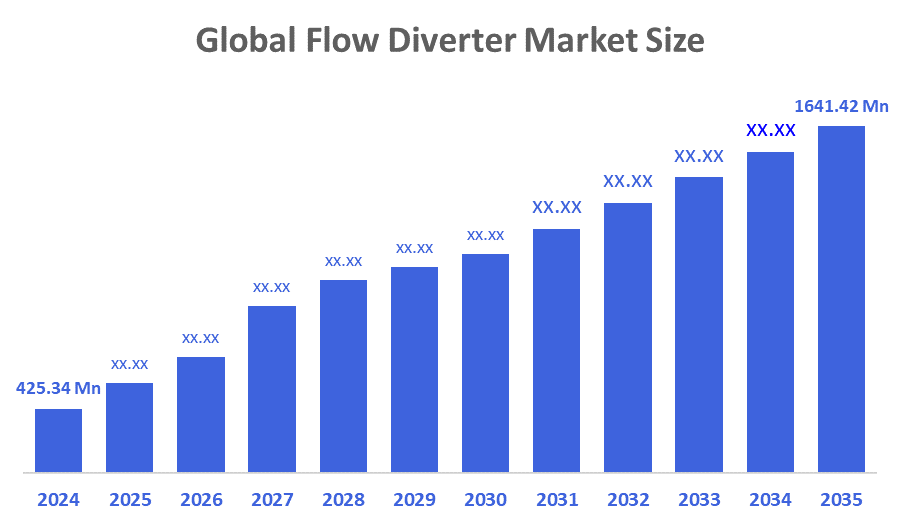
According to a research report published by Decisions Advisors and Consulting, The Global Flow Diverter Market Size Was Worth Around USD 425.34 Million In 2024 And Is Predicted To Grow To Around USD 1641.42 Million By 2035 With A Compound Annual Growth Rate (CAGR) Of 13.06 % From 2025 To 2035. The growing awareness of cerebrovascular illnesses, an increase in the prevalence of neurological conditions, and technological developments in product design are the main factors driving market expansion. More patients and medical professionals are choosing flow diverters as a dependable treatment option as a result of increased knowledge about brain aneurysms and advances in medical technology. As a result, this increase in demand is driving the market's future growth.
Market Overview
The flow diverter market is a specific area of the neurovascular devices market that focuses on minimally invasive ways to treat complicated intracranial aneurysms. Because flow diversion technology can restore parent arteries and promote aneurysm occlusion without direct sac intervention, it is becoming more and more popular, according to flow diverters market analysis. Growing clinical confidence is highlighted in the flow diverters industry report as a result of better device designs, increased metal coverage, and improved deployment strategies. According to flow diverters market dynamics, hospitals and neuro-interventional facilities are in high demand for long-term, long-lasting treatment results. Technological advancements, growing indications for large, wide-neck, and complex aneurysms, and procedural volumes all influence the size of the flow diverters market. The continued use of these devices in conventional neurovascular therapy procedures is reflected in the flow diverters market.
Report Coverage
This research report categorizes the flow diverter market based on various segments and regions, forecasts revenue growth, and analyzes trends in each submarket. The report analyses the key growth drivers, opportunities, and challenges influencing the flow diverter market. Recent market developments and competitive strategies, such as expansion, product launch, development, partnership, merger, and acquisition, have been included to draw the competitive landscape in the market. The report strategically identifies and profiles the key market players and analyzes their core competencies in each sub-segment of the flow diverter market.
Driving Factors
The flow diverters market is witnessing a significant shift, and this is attributed to the progress in medical technology and the rising occurrence of vascular diseases. As medical facilities worldwide place more emphasis on minimally invasive procedures, the flow diverters market is expected to increase in demand. Additionally, this market is expected to improve due to ongoing research and developmental activities, which may result in the application of flow diverters in various medical fields. The flow diverters market is also influenced by the rising awareness among patients and medical practitioners concerning vascular diseases. This may increase diagnosis and subsequent treatment, owing to ongoing educational activities and access to healthcare facilities. This may also encourage collaboration between medical facilities and flow diverter manufacturers, leading to the production and marketing of new and innovative flow diverters to cater to patient needs.
MicroVention has received FDA Premarket Approval for its new flow diverter to treat brain aneurysms. This device redirects blood flow away from aneurysms, promoting vessel healing and reducing rupture risk. The approval underscores strong safety and efficacy data, positioning MicroVention as a key competitor in advanced neurovascular solutions.
Restraining Factors
The high cost of the processes is a significant obstacle to the market expansion for flow diverters. The market for flow diverters faces severe obstacles despite the potential for large expansion, mainly due to the high costs of these therapies. Many patients face difficulties due to the high costs of the necessary surgical procedures and equipment, particularly those who live in places with limited healthcare resources or inadequate insurance.
Market Segmentation
The flow diverter market share is classified into product type, material and application.
- The pipeline embolization device (PED) segment accounted for the largest market share in 2024 and is anticipated to grow at a substantial CAGR during the forecast period.
Based on the product type, the flow diverter market is divided into pipeline embolization device (PED), silk, flow re-direction endoluminal device (FRED), p64 flow-modulation device, surpass flow-diverter, and others. Among these, the pipeline embolization device (PED) segment accounted for the largest market share in 2024 and is anticipated to grow at a substantial CAGR during the forecast period. This is due to its shown effectiveness in treating complex cerebral aneurysms; the PED, a self-expanding, stent-like device that reroutes blood flow away from an aneurysm, has become widely used. Large, wide-necked aneurysms that cannot be treated with traditional techniques are the reason this device is preferred.
Medtronic launched the Pipeline™ Vantage Embolization Device with Shield Technology™ in India for the endovascular treatment of brain aneurysms. This fourth-generation flow diverter features enhanced design improvements to both the delivery system and implant, aiming to improve procedural efficiency and patient outcomes.
- The nitinol-platinum segment accounted for the largest market share in 2024 and is anticipated to grow at a notable CAGR during the forecast period.
Based on the material, the flow diverter market is divided into cobalt-chromium, nitinol-platinum, and cobalt-chromium-platinum. Among these, the nitinol-platinum segment accounted for the largest market share in 2024 and is anticipated to grow at a notable CAGR during the forecast period. This is due to its exceptional flexibility, biocompatibility, and deployment simplicity. Nitinol is a perfect material for flow diverters, especially in difficult anatomical sites, because of its special qualities, such as its capacity to revert to a pre-set shape when heated, and it is widely used in clinical practice. They are preferred because they can adapt to vascular architecture without causing harm or difficulties.
A nitinol-wrapped platinum flow diverter called the Kylin Flow Diverter received approval in March 2024 from China’s National Medical Products Administration (NMPA) and is entering commercial rollout in that market.
- The intracranial aneurysm segment accounted for the highest market share in 2024 and is anticipated to grow at a substantial CAGR during the forecast period.
Based on the application, the flow diverter market is divided into intracranial aneurysms, aortic aneurysms, and others. Among these, the intracranial aneurysm segment accounted for the highest market share in 2024 and is anticipated to grow at a substantial CAGR during the forecast period. This is because intracranial aneurysms are so common and flow diverters help treat them; this sector has the biggest market share. The need for flow diverters has increased due to growing knowledge of intracranial aneurysms, which are a major cause of stroke, and improvements in minimally invasive treatments.
As of February 2026, Pedro Vega (Hospital Universitario Central de Asturias, Oviedo, Spain) has used the Avenir Pico coil system in a handful of brain aneurysm cases. Despite the limited sample size, he highlighted several favourable characteristics compared to other coiling technologies, including exceptional ultra-soft finishing, excellent conformability, and impressive packing density. Vega noted that the device is particularly well-suited for smaller and more fragile aneurysms.

Regional Segment Analysis of the Flow Diverter Market
- North America (U.S., Canada, Mexico)
- Europe (Germany, France, U.K., Italy, Spain, Rest of Europe)
- Asia-Pacific (China, Japan, India, Rest of APAC)
- South America (Brazil and the Rest of South America)
- The Middle East and Africa (UAE, South Africa, Rest of MEA)
Asia Pacific is anticipated to hold the largest share of the flow diverter market over the predicted timeframe.
Asia Pacific is anticipated to hold the largest share of the flow diverter market over the predicted timeframe. This is driven by an increase in the prevalence of cerebrovascular illnesses, growing healthcare awareness, and quick improvements in healthcare infrastructure. Countries like South Korea, China, Japan, and India are enhancing access to cutting-edge treatments like flow diverters by developing their medical capacities. Minimally invasive procedures are becoming more common, especially in cities with better-equipped medical facilities. Asia Pacific is a major development region for the flow diverters market because of the increasing number of patients with intracranial aneurysms and other cerebrovascular disorders, which is driving demand for cutting-edge medical devices. The growth of the regional industry is also being aided by the expansion of health insurance coverage in developing nations.
Medtronic launched new technology in India to treat brain aneurysms, expanding access to advanced neurovascular care. The innovation aims to improve minimally invasive treatment options, reduce risks, and enhance patient outcomes. This move strengthens Medtronic’s presence in India’s neurovascular market, addressing rising demand for cutting-edge aneurysm therapies.
North America is expected to grow at a rapid CAGR in the flow diverter market during the forecast period. The market for flow diverters is dominated by North America, mainly because of the region's sophisticated healthcare system, high incidence of cerebrovascular illnesses, and robust uptake of cutting-edge medical technologies. Due to its well-established healthcare system, considerable demand for minimally invasive therapies, and substantial medical device research and development, the US, in particular, plays a significant role in this domination. The area also gains from a high degree of awareness about diseases like cerebral aneurysms, as well as from the existence of significant market participants and top hospitals that encourage the use of flow diverters.
Stryker has launched the first 64-wire cobalt chromium flow diverter in the U.S. for treating brain aneurysms. This innovation enhances strength, flexibility, and precision in redirecting blood flow, promoting vessel healing while reducing rupture risks. The launch positions Stryker at the forefront of next-generation neurovascular solutions, competing with Medtronic and MicroVention in advanced aneurysm care.
Competitive Analysis:
The report offers the appropriate analysis of the key organisations/companies involved within the flow diverter market, along with a comparative evaluation primarily based on their product offering, business overviews, geographic presence, enterprise strategies, segment market share, and SWOT analysis. The report also provides an elaborative analysis focusing on the current news and developments of the companies, which includes product development, innovations, joint ventures, partnerships, mergers & acquisitions, strategic alliances, and others. This allows for the evaluation of the overall competition within the market.
List of Key Companies
- Abbott Laboratories
- Asahi Intecc
- Balt Extrusion
- Cook Medical
- EndoMed Systems
- Endospan
- Johnson & Johnson (via its subsidiary, Neurovascular)
- Medtronic
- Neuroform
- Penumbra, Inc.
- Stryker Corporation
- Terumo Corporation
- Others
Key Target Audience
- Market Players
- Investors
- End-users
- Government Authorities
- Consulting and Research Firm
- Venture capitalists
- Value-Added Resellers (VARs)
Recent Development
- In July 2025, Stryker launched the Surpass Elite Flow Diverter in the U.S., South Korea, and Europe, expanding global access to advanced aneurysm treatment. Featuring a 64-wire cobalt chromium design, the device enhances flexibility and vessel healing, positioning Stryker as a leader in next-generation neurovascular solutions and strengthening its competitive presence across major healthcare markets.
- In March 2024, MicroPort NeuroTech completed the first commercial implantation of the Tubridge Flow Diverter in Argentina, marking a significant milestone in expanding advanced neurovascular solutions to Latin America. The device is designed to treat complex brain aneurysms by redirecting blood flow and promoting vessel healing, strengthening MicroPort’s global footprint in minimally invasive neurovascular care.
Market Segment
This study forecasts revenue at global, regional, and country levels from 2020 to 2035. Decisions Advisors has segmented the flow diverter market based on the below-mentioned segments:
Global Flow Diverter Market, By Product Type
- Pipeline Embolization Device (PED)
- Silk
- Flow Re-direction Endoluminal Device (FRED)
- p64 Flow-Modulation Device
- Surpass Flow-Diverter, and Others
Global Flow Diverter Market, By Material
- Cobalt-Chromium
- Nitinol-Platinum
- Cobalt-Chromium-Platinum
Global Flow Diverter Market, By Application
- Intracranial Aneurysm
- Aortic Aneurysm
- Others
Global Flow Diverter Market, By Regional Analysis
- North America
- US
- Canada
- Mexico
- Europe
- Germany
- UK
- France
- Italy
- Spain
- Russia
- Rest of Europe
- Asia Pacific
- China
- Japan
- India
- South Korea
- Australia
- Rest of Asia Pacific
- South America
- Brazil
- Argentina
- Rest of South America
- Middle East & Africa
- UAE
- Saudi Arabia
- Qatar
- South Africa
- Rest of the Middle East & Africa
Frequently Asked Questions (FAQ)
- How does reimbursement policy impact the adoption of flow diverters across different regions?
Reimbursement policies significantly influence the adoption rate of flow diverters. In developed regions such as North America and Western Europe, favourable reimbursement frameworks and insurance coverage for minimally invasive neurovascular procedures support higher procedural volumes. Conversely, in emerging economies, limited reimbursement and high out-of-pocket expenses can restrict patient access, thereby slowing adoption despite rising disease prevalence.
- What role does artificial intelligence (AI) play in the future of the flow diverter market?
AI is expected to play a growing role in pre-procedural planning and post-procedural monitoring. AI-powered imaging software can assist in detecting aneurysms earlier, evaluating aneurysm morphology, and predicting treatment outcomes. This may enhance physician confidence in selecting flow diversion therapy and improve patient outcomes, indirectly boosting market growth.
- How are regulatory pathways influencing innovation in flow diverter devices?
Stringent regulatory requirements, particularly in the U.S. and Europe, ensure high safety and efficacy standards but may lengthen product approval timelines. However, accelerated pathways such as FDA Breakthrough Device designation can fast-track innovative neurovascular solutions. Emerging markets in Asia-Pacific and Latin America may offer faster commercialisation opportunities for newer entrants.
- What are the major risks or complications associated with flow diverter procedures?
Potential complications include thromboembolic events, in-stent stenosis, delayed aneurysm rupture, and device migration. The need for prolonged dual antiplatelet therapy can also increase bleeding risks. Continuous product innovation, including surface modification technologies, aims to reduce thrombogenicity and improve safety outcomes.
- How is competition shaping pricing strategies in the global flow diverter market?
As more companies enter the market with advanced materials and improved designs (e.g., higher wire counts, enhanced flexibility), competitive pricing strategies are becoming more prominent. Established players focus on premium pricing backed by strong clinical evidence, while newer entrants may adopt competitive pricing to gain market share, especially in price-sensitive regions.
- What opportunities exist for market expansion beyond intracranial aneurysm treatment?
Although intracranial aneurysm remains the dominant application, future opportunities may include expanded indications in peripheral vascular diseases, complex aortic aneurysms, and pediatric neurovascular conditions. Ongoing R&D may broaden therapeutic applications, creating new revenue streams for manufacturers.
- How is the growing geriatric population influencing the flow diverter market?
The global increase in the elderly population is contributing to higher incidences of cerebrovascular disorders, including aneurysms. Ageing-related vascular degeneration raises the likelihood of aneurysm formation, thereby increasing the demand for minimally invasive treatments such as flow diversion, particularly in developed regions with ageing demographics.
Check Licence
Choose the plan that fits you best: Single User, Multi-User, or Enterprise solutions tailored for your needs.
We Have You Covered
- 24/7 Analyst Support
- Clients Across the Globe
- Tailored Insights
- Technology Tracking
- Competitive Intelligence
- Custom Research
- Syndicated Market Studies
- Market Overview
- Market Segmentation
- Growth Drivers
- Market Opportunities
- Regulatory Insights
- Innovation & Sustainability
Report Details
| Scope | Global |
| Pages | 250 |
| Delivery | PDF & Excel via Email |
| Language | English |
| Release | Mar 2026 |
| Access | Download from this page |