
Global Genitourinary Therapeutics Market
 |
Author:
David J
|
Pages:
210
|
Author:
David J
|
Pages:
210
Global Genitourinary Therapeutics Market Size, Share By Therapy Type (Hormonal Therapy, Chemotherapy, Immunotherapy, Targeted Therapy, Antimicrobial Therapy and Others), By Indication (Urinary Tract Infections (UTIs), Kidney Diseases, Bladder Disorders, Prostate Disorders, Urethral Disorders, Cancers, Sexual Dysfunction and Others), By Route of Administration (Oral, Injectable, Topical and Others), By End-User (Hospitals & Clinics, Specialty Urology Centers, Diagnostic Centers, Research & Academic Institutes, Homecare Settings and Others)and By Region (North America, Europe, Asia-Pacific, Latin America, Middle East & Africa), Analysis and Forecast 2026?2035
CAGR
3.93%
REVENUE 2025
USD Billion 39.6
FORECAST 2035
USD Billion 58.23
REPORT COVERAGE
Global
Market Snapshot
- Market Size (2025): USD 39.60 Billion
- Projected Market Size (2035): USD 58.23 Billion
- Compound Annual Growth Rate (CAGR): 3.93%
- Largest Regional Market: North America
- Fastest Growing Region: Asia-Pacific
- 3rd Largest Region: Europe
- Base Year: 2025
- Historical Period: 2021–2024
- Forecast Period: 2026–2035
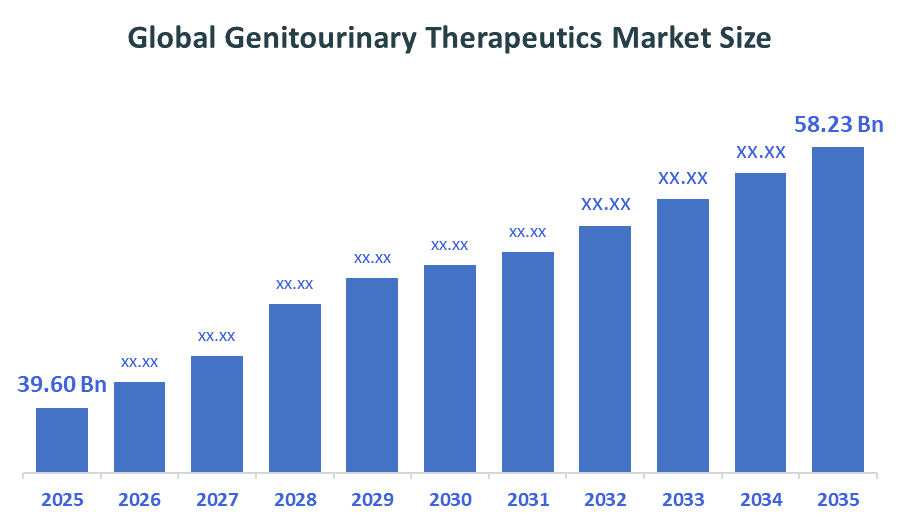
According to Decision Advisors, the Global Genitourinary Therapeutics Market Size is expected to grow from USD 39.60 billion in 2025 to USD 58.23billion by 2035, at a CAGR of 3.93% during the forecast period 2026-2035. The global genitourinary therapeutics market is projected to grow significantly over the next decade, fuelled by an aging population, rising prevalence of chronic kidney diseases, prostate cancers, rising prevalence of urological disorders like incontinence, advancements in therapeutics, increased healthcare spending & demand for effective treatments, and growth in R&D.
Market Overview/ Introduction
The global genitourinary therapeutics market refers to the development and sale of medical treatments for all diseases that impact the urinary and reproductive systems. This market includes products that treat infections, cancers, and kidney disorders, and sexual health problems through medications, biological products, and advanced therapeutic methods. Genitourinary therapeutics refers to all medical treatments that healthcare professionals use to treat and cure diseases that affect the urinary system and reproductive system, which include kidney disorders and urinary tract infections, prostate diseases, and cancers. It includes all medications and biological products, and cutting-edge treatment methods that help patients achieve better health results and enhance their daily activities. The genitourinary therapeutics market experiences growth because more people develop urinary and reproductive system disorders, which include infections, cancers, and kidney diseases. The worldwide population keeps aging, which results in more people developing different types of diseases. Targeted therapies and immunotherapies, together with their development, have resulted in improved treatment outcomes. The demand for medical services increases because healthcare spending rises and organizations expand service access while people become more knowledgeable about early diagnosis and treatment. The pharmaceutical industry sustains market growth through its continuous investment in research and development activities.
- The scheme had been integrated with AB-PMJAY, providing insurance up to 5 lakh (2.5 lakh for renal transplant). It had included comprehensive genitourinary care across 34 specialties, covering surgical oncology, nephrology, dialysis, and pre- and post-treatment diagnostics.
- Medicare had provided federal health insurance for people who were 65 or older, certain younger individuals with disabilities, and those with End-Stage Renal Disease requiring dialysis or a transplant, ensuring essential coverage and access.
Notable Insights: -
- North America is anticipated to hold the largest share of approximately 49.5% the Genitourinary Therapeutics Market over the forecast period.
- Asia Pacific is expected to grow at a rapid CAGR of approximately 7.5% in the Genitourinary Therapeutics Market during the forecast period.
- The hormonal therapy segment dominated the market in 2025 and is anticipated to grow at a significant CAGR of approximately 6.5% during the forecast period.
- The urinary tract infections (UTIs) segment accounted for the largest share in 2025, contributing approximately 28% during the forecast period.
- The oral segment dominated the market in 2025, accounting for approximately 42% of The Global Genitourinary Therapeutics Market during the forecast period.
- The hospitals & clinics segment dominated the market in 2025, accounting for approximately 46% of the Global Genitourinary Therapeutics Market during the forecast period.
- The compound annual growth rate of the Global Genitourinary Therapeutics Market is 3.93%.
- The market is likely to achieve a valuation of USD 58.23 billion by 2035.
What is role of technology in grooming the market?
Technology plays a crucial role in shaping the global genitourinary therapeutics market by enhancing diagnosis, treatment, and patient management. Advanced tools such as genomic sequencing, biomarker identification, and AI-driven analytics enable early detection and precise, personalized therapies. Innovations in drug delivery systems and minimally invasive procedures improve treatment effectiveness and patient comfort. Digital health platforms, telemedicine, and remote monitoring support continuous care and better adherence, especially in remote regions. Additionally, technological advancements accelerate clinical trials, data analysis, and drug development processes. Collaborations with organizations like the World Health Organization further promote adoption, improving accessibility, efficiency, and overall healthcare outcomes globally.
Market Drivers
The global genitourinary therapeutics market is primarily driven by the rising prevalence of disorders such as benign prostatic hyperplasia (BPH), urinary incontinence, and erectile dysfunction (ED), which significantly boost treatment demand. An expanding aging population further increases vulnerability to urological, reproductive, and gynaecological cancers, accelerating market growth. Advancements in immunotherapy and targeted therapies for prostate and bladder cancers are transforming treatment approaches and improving clinical outcomes. Additionally, growing investments in healthcare infrastructure and the increasing demand for advanced and effective treatment options, particularly in regions like the GCC, are supporting expansion. Pharmaceutical companies are also focusing on innovative drug formulations for enhanced disease management.
Restrain
The global genitourinary therapeutics market faces restraints due to high treatment costs, limited access in developing regions, and stringent regulatory approvals. Side effects of advanced therapies and low awareness in underserved populations hinder adoption. Additionally, reimbursement challenges and infrastructure gaps restrict timely diagnosis and effective treatment delivery.
Competitive Analysis:
The report offers the appropriate analysis of the key organizations/companies involved within the global genitourinary therapeutics market, along with a comparative evaluation primarily based on their product of offering, business overviews, geographic presence, enterprise strategies, segment market share, and SWOT analysis. The report also provides an elaborative analysis focusing on the current news and developments of the companies, which includes product development, innovations, joint ventures, partnerships, mergers & acquisitions, strategic alliances, and others. This allows for the evaluation of the overall competition within the market.
Top Companies in Global Genitourinary Therapeutics Market
- Pfizer
- GlaxoSmithKline
- Astellas Pharma
- Bayer AG
- Merck & Co.
- Novartis AG
- AstraZeneca
- AbbVie Inc.
- Bristol-Myers Squibb
- Johnson & Johnson
- Eli Lilly and Company
- F. Hoffmann-La Roche
Government Initiatives
|
Country |
Key Government Initiatives |
|
UK |
The ‘2-week wait’ rule had been implemented to guarantee that suspected cancer patients were seen and fully diagnosed in the shortest possible time, as early diagnosis had offered a better chance of cure. |
|
US |
The US Government, FDA Fast Track approvals, and tax credits accelerate biotech innovation, including novel drugs and therapies for urological cancers and conditions, making treatments available faster and encouraging investment. |
|
India |
The Government of India had announced waivers for several drugs approved from select countries, and the Central Government had specified five categories of new drugs considered for the Indian market, streamlining approvals and enhancing therapeutic access. |
Study on the Supply, Demand, Distribution, and Market Environment of Genitourinary Therapeutics Market
The global genitourinary therapeutics market demonstrates a dynamic interplay of supply, demand, distribution, and market environment factors. Supply is driven by strong pharmaceutical pipelines, increasing R&D investments, and innovations from companies such as Pfizer and Roche, ensuring the availability of advanced therapies. Demand is rising due to the increasing prevalence of prostate, bladder, and kidney cancers, aging populations, and growing awareness of early diagnosis. Distribution channels, including hospital pharmacies, retail pharmacies, and online platforms, are expanding to improve accessibility, especially in emerging regions. The market environment is influenced by regulatory frameworks, reimbursement policies, and support from organizations like the World Health Organization, fostering innovation, affordability, and broader adoption of genitourinary treatments globally.
Price Analysis and Consumer Behaviour Analysis
Price analysis in the global genitourinary therapeutics market is influenced by high costs of advanced therapies such as biologics and immunotherapies, driven by R&D investments and regulatory requirements. However, increasing availability of generics and biosimilars is helping reduce treatment costs in emerging markets. Consumer behavior reflects a growing preference for effective, targeted, and minimally invasive treatments, even at premium prices, particularly in developed regions. Patients are also becoming more proactive, seeking early diagnosis and personalized care. Additionally, reimbursement policies and support programs from organizations like the World Health Organization influence affordability and treatment adoption, shaping overall demand patterns and market growth.
Market Segmentation
The Genitourinary Therapeutics Market share is classified into therapy type, indication, route of administration, and end-user
- The hormonal therapy segment dominated the market in 2025 and is anticipated to grow at a significant CAGR of approximately 6.5% during the forecast period.
Based on the therapy type, the genitourinary therapeutics market is divided into hormonal therapy, chemotherapy, immunotherapy, targeted therapy, antimicrobial therapy, and others. Among these, the hormonal therapy segment dominated the market in 2025 and is anticipated to grow at a significant CAGR of approximately 6.5% during the forecast period. Due to rising prostate cancer prevalence, proven clinical efficacy, established treatment protocols, and strong adoption supported by favourable reimbursement and ongoing R&D advancements
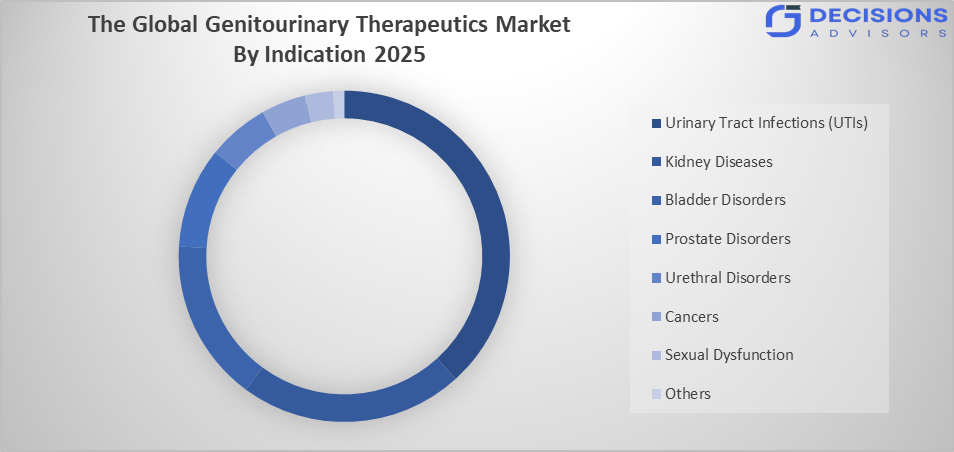
- The urinary tract infections (UTIs) segment accounted for the largest share in 2025, contributing approximately 28% during the forecast period.
Based on the indication, the genitourinary therapeutics market is divided into urinary tract infections (UTIs), kidney diseases, bladder disorders, prostate disorders, urethral disorders, cancers, sexual dysfunction, and others. Among these, the urinary tract infections (UTIs) segment accounted for the largest share in 2025, contributing approximately 28% during the forecast period. Due to their high global prevalence, recurrent nature, rising antimicrobial resistance, improved diagnostics, and consistent demand for effective therapeutic interventions across diverse patient populations.
- The oral segment dominated the market in 2025, accounting for approximately 42% of the global pertussis vaccine market during the forecast period.
Based on the route of administration, the genitourinary therapeutics market is divided into oral, injectable, topical, and others. Among these, the oral segment dominated the market in 2025, accounting for approximately 42% of the global pertussis vaccine market during the forecast period. The growth of the oral segment is growing due to ease of administration, high patient compliance, cost-effectiveness, widespread availability, and strong adoption in treating urinary tract infections and prostate disorders.
- The hospitals & clinics segment dominated the market in 2025, accounting for approximately 46% of the global pertussis vaccine market during the forecast period.
Based on the end-user, the genitourinary therapeutics market is divided into hospitals & clinics, specialty urology centers, diagnostic centers, research & academic institutes, homecare settings, and others. Among these, the hospitals & clinics segment dominated the market in 2025, accounting for approximately 46% of the global pertussis vaccine market during the forecast period. The growth of the hospitals & clinics segment is growing due to high patient inflow for complex genitourinary conditions, availability of advanced diagnostic technologies, specialized medical expertise, integration with reimbursement systems, and preference for hospital-based care in managing renal and urological disorders.
Strategies to Implement for Growth of the Market in Non-Leading Regions
Strategies to drive growth in non-leading regions of the genitourinary therapeutics market should focus on improving healthcare infrastructure, increasing awareness of early cancer screening, and expanding access to affordable treatments. Governments and private players can collaborate to strengthen reimbursement policies and encourage investments in oncology care. Enhancing distribution networks and promoting generic and biosimilar drugs can improve accessibility. Partnerships with global pharmaceutical companies and organizations such as the World Health Organization can support capacity building and training of healthcare professionals. Leveraging telemedicine and digital health platforms can further extend reach in remote areas. Additionally, increasing participation in clinical trials and fostering local research initiatives can accelerate innovation and adoption of advanced therapies.
Regional Segment Analysis of the Genitourinary Therapeutics Market
- North America (U.S., Canada, Mexico)
- Europe (Germany, France, U.K., Italy, Spain, Rest of Europe)
- Asia-Pacific (China, Japan, India, Rest of APAC)
- South America (Brazil and the Rest of South America)
- The Middle East and Africa (UAE, South Africa, Rest of MEA)
North America is anticipated to hold the largest share of approximately 49.5% the genitourinary therapeutics market over the forecast period.
North America is anticipated to hold the largest share of approximately 49.5% the genitourinary therapeutics market over the forecast period. The dominance of this region is primarily driven by advanced healthcare infrastructure, strong R&D investments, rising prevalence of urological diseases, supportive reimbursement policies, and rapid adoption of innovative diagnostic and therapeutic technologies.
Asia Pacific is expected to grow at a rapid CAGR of approximately 7.5% in the genitourinary therapeutics market during the forecast period.
Asia Pacific is expected to grow at a rapid CAGR of approximately 7.5% in the genitourinary therapeutics market during the forecast period. This growth is driven by the rising prevalence of renal and urological diseases, expanding healthcare infrastructure, increasing government initiatives, growing patient awareness, and accelerated adoption of advanced diagnostic and therapeutic technologies.
Europe is the 3rd largest region to grow in the genitourinary therapeutics market during the period.
Europe was the third largest region to grow in the genitourinary therapeutics market during the period, driven by advanced healthcare systems, strong regulatory frameworks, rising prevalence of urological diseases, increasing R&D investments, and supportive reimbursement policies that enhanced access to innovative diagnostics and treatments.
Future Market Trends in Global Genitourinary Therapeutics Market: -
1. Rising adoption of precision and personalized medicine
Rising adoption of precision and personalized medicine in the global genitourinary therapeutics market is driven by increasing use of biomarkers, genomic profiling, and targeted therapies. These approaches improve treatment effectiveness, reduce adverse effects, and enable patient-specific care, supporting better clinical outcomes and accelerating demand for advanced therapeutic solutions.
2. Growth of biologics, immunotherapy, and combination therapies
Growth of biologics, immunotherapy, and combination therapies in the global genitourinary therapeutics market is driven by their ability to enhance treatment efficacy and durability. These approaches target cancer pathways more precisely, improve survival rates, reduce resistance, and are increasingly adopted for advanced and complex genitourinary cancers.
3. Expansion of digital health and telemedicine integration
Expansion of digital health and telemedicine integration in the global genitourinary therapeutics market is driven by the need for improved access, convenience, and continuous patient monitoring. These technologies support remote consultations, early diagnosis, treatment adherence, and data-driven care, especially in underserved and remote regions.
Recent Development
- In March 2026, Research advances in extracellular vesicles improved the diagnosis and treatment of genitourinary cancers, enhanced early detection, enabled targeted drug delivery, supported personalized therapies, and contributed to better clinical outcomes and disease management.
- In May 2025, Diagnostic and therapeutic advances had reshaped genitourinary cancer treatment paradigms, improved outcomes, transformed strategies, and redefined standards through evolving therapies and innovative diagnostic approaches.
- In April 2025, Novartis announced that it had agreed to acquire Regulus Therapeutics for USD 0.8 billion upfront, with a potential USD 0.9 billion milestone payment. Regulus’ lead asset, farabursen, had targeted miR-17 for autosomal dominant polycystic kidney disease (ADPKD) and had completed a Phase 1b trial.
- In February 2025, the development of genitourinary cancers, including bladder, prostate, and kidney cancers, was among the most commonly diagnosed worldwide, with 2.6 million cases annually, accounting for over one in eight diagnoses and nearly 795,000 deaths.
- In February 2025, the expression, regulation, and function of human endogenous retroviruses in genitourinary cancers had been investigated, revealing therapeutic relevance, reshaped paradigms, improved outcomes, and highlighted retroviral elements as promising diagnostic and treatment targets
How is Recent Developments Helping the Market?
Recent developments have significantly supported the growth of the global genitourinary therapeutics market by advancing diagnostic accuracy and treatment effectiveness. Innovations in precision medicine, biomarker-based therapies, and immunotherapies have enabled more targeted and personalized treatment approaches, improving patient outcomes. Increased clinical research activities and drug pipeline expansions by companies such as Pfizer have accelerated the introduction of novel therapies. Additionally, advancements in minimally invasive diagnostics and digital health technologies have enhanced early detection and patient monitoring. Strategic collaborations, regulatory approvals, and growing awareness of genitourinary cancers have further strengthened market expansion, making treatments more accessible and efficient across both developed and emerging regions.
Market Segment
This study forecasts revenue at global, regional, and country levels from 2020 to 2035. Decision Advisors has segmented the genitourinary therapeutics market based on the below-mentioned segments:
Global Genitourinary Therapeutics Market, By Therapy Type
- Hormonal Therapy
- Chemotherapy
- Immunotherapy
- Targeted Therapy
- Antimicrobial Therapy
- Others
Global Genitourinary Therapeutics Market, By Indication
- Urinary Tract Infections (UTIs)
- Kidney Diseases
- Bladder Disorders
- Prostate Disorders
- Urethral Disorders
- Cancers
- Sexual Dysfunction
- Others
Global Genitourinary Therapeutics Market, By Route of Administration
- Oral
- Injectable
- Topical
- Others
Global Genitourinary Therapeutics Market, By End-User
- Hospitals & Clinics
- Specialty Urology Centers
- Diagnostic Centers
- Research & Academic Institutes
- Homecare Settings
- Others
Global Genitourinary Therapeutics Market, By Regional Analysis
- North America
- US
- Canada
- Mexico
- Europe
- Germany
- UK
- France
- Italy
- Spain
- Russia
- Rest of Europe
- Asia Pacific
- China
- Japan
- India
- South Korea
- Australia
- Rest of Asia Pacific
- South America
- Brazil
- Argentina
- Rest of South America
- Middle East & Africa
- UAE
- Saudi Arabia
- Qatar
- South Africa
- Rest of the Middle East & Africa
Frequently Asked Questions (FAQ)
Q How does urbanization impact the growth of the Genitourinary Therapeutics Market?
A. Rapid urbanization increases population density, which can accelerate the spread of Pertussis. This raises the demand for vaccination programs, surveillance systems, and diagnostic tools, thereby supporting market growth, especially in developing economies.
Q. What role do combination vaccines play in the Genitourinary Therapeutics Market?
A. Combination vaccines such as DTaP and Tdap simplify immunization schedules by protecting against multiple diseases in a single dose. This improves patient compliance, reduces healthcare costs, and increases vaccination coverage, thereby boosting overall market demand.
Q. How do global travel and migration influence the Genitourinary Therapeutics Market?
A. Increased international travel and migration contribute to the spread of infectious diseases like pertussis across regions. This drives the need for consistent immunization policies, booster doses, and improved cross-border disease surveillance, positively impacting market expansion.
Q. What is the impact of pediatric healthcare investments on the Genitourinary Therapeutics Market?
A. Rising investments in pediatric healthcare infrastructure enhance access to vaccines and early diagnosis. Improved healthcare facilities, especially in emerging regions, support higher immunization rates and strengthen disease prevention strategies, contributing to sustained market growth.
Introduction
-
- Objectives of the Study
- Market Definition
- Research Scope
- Research Methodology and Assumptions
- Executive Summary
- Premium Insights
- Porter’s Five Forces Analysis
- Value Chain Analysis
- Top Investment Pockets
- Market Attractiveness Analysis By Therapy Type
- Market Attractiveness Analysis By Indication
- Market Attractiveness Analysis By Route of Administration
- Market Attractiveness Analysis By End-User
- Market Attractiveness Analysis By Region
- Industry Trends
- Market Dynamics
- Market Evaluation
- Drivers
- The rising prevalence of disorders such as benign prostatic hyperplasia (BPH)
- Restraints
- Limited access in developing regions and stringent regulatory approval
- Opportunities
- Increased investment in R&D activities by manufacturers
- Challenges
- Infrastructure gaps restrict timely diagnosiss
- Global Genitourinary Therapeutics Market Analysis and Projection, By Therapy Type
- Segment Overview
- Hormonal Therapy
- Chemotherapy
- Immunotherapy
- Targeted Therapy
- Antimicrobial Therapy
- Global Genitourinary Therapeutics Market Analysis and Projection, By Indication
- Segment Overview
- Urinary Tract Infections (UTIs)
- Kidney Diseases
- Bladder Disorders
- Prostate Disorders
- Sexual Dysfunction
- Global Genitourinary Therapeutics Market Analysis and Projection, By Route of Administration
- Segment Overview
- Oral
- Injectable
- Topical
- Others
- Global Genitourinary Therapeutics Market Analysis and Projection, By End-User
- Segment Overview
- Hospitals & Clinics
- Specialty Urology Centers
- Diagnostic Centers
- Research & Academic Institutes
- Homecare Settings
- Global Genitourinary Therapeutics Market Analysis and Projection, By Regional Analysis
- Segment Overview
- North America
- U.S.
- Canada
- Mexico
- Europe
- Germany
- France
- U.K.
- Italy
- Spain
- Asia-Pacific
- Japan
- China
- India
- South America
- Brazil
- Middle East and Africa
- UAE
- South Africa
- Global Genitourinary Therapeutics Market-Competitive Landscape
- Overview
- Market Share of Key Players in the Genitourinary Therapeutics Market
- Global Company Market Share
- North America Company Market Share
- Europe Company Market Share
- APAC Company Market Share
- Competitive Situations and Trends
- Coverage Launches and Developments
- Partnerships, Collaborations, and Agreements
- Mergers & Acquisitions
- Expansions
- Company Profiles
- Pfizer
- Business Overview
- Company Snapshot
- Company Market Share Analysis
- Company Coverage Portfolio
- Recent Developments
- SWOT Analysis
- GlaxoSmithKline
- Business Overview
- Company Snapshot
- Company Market Share Analysis
- Company Coverage Portfolio
- Recent Developments
- SWOT Analysis
- Astellas Pharma
- Business Overview
- Company Snapshot
- Company Market Share Analysis
- Company Coverage Portfolio
- Recent Developments
- SWOT Analysis
- Bayer AG
- Business Overview
- Company Snapshot
- Company Market Share Analysis
- Company Coverage Portfolio
- Recent Developments
- SWOT Analysis
- Merck & Co.
- Business Overview
- Company Snapshot
- Company Market Share Analysis
- Company Coverage Portfolio
- Recent Developments
- SWOT Analysis
- Novartis AG
- Business Overview
- Company Snapshot
- Company Market Share Analysis
- Company Coverage Portfolio
- Recent Developments
- SWOT Analysis
- AstraZeneca
- Business Overview
- Company Snapshot
- Company Market Share Analysis
- Company Coverage Portfolio
- Recent Developments
- SWOT Analysis
- AbbVie Inc.
- Business Overview
- Company Snapshot
- Company Market Share Analysis
- Company Coverage Portfolio
- Recent Developments
- SWOT Analysis
- Bristol-Myers Squibb
- Business Overview
- Company Snapshot
- Company Market Share Analysis
- Company Coverage Portfolio
- Recent Developments
- SWOT Analysis
- Johnson & Johnson
- Business Overview
- Company Snapshot
- Company Market Share Analysis
- Company Coverage Portfolio
- Recent Developments
- SWOT Analysis
- Eli Lilly and Company
- Business Overview
- Company Snapshot
- Company Market Share Analysis
- Company Coverage Portfolio
- Recent Developments
- SWOT Analysis
- F. Hoffmann-La Roche
- Business Overview
- Company Snapshot
- Company Market Share Analysis
- Company Coverage Portfolio
- Recent Developments
- SWOT Analysis
- Pfizer
List of Table
- Global Genitourinary Therapeutics Market, By Therapy Type, 2024-2035(USD Billion)
- Global Hormonal Therapy, Genitourinary Therapeutics Market, By Region, 2024-2035(USD Billion)
- Global Chemotherapy, Genitourinary Therapeutics Market, By Region, 2024-2035(USD Billion)
- Global Immunotherapy, Genitourinary Therapeutics Market, By Region, 2024-2035(USD Billion)
- Global Targeted Therapy, Genitourinary Therapeutics Market, By Region, 2024-2035(USD Billion)
- Global Antimicrobial Therapy, Genitourinary Therapeutics Market, By Region, 2024-2035(USD Billion)
- Global Genitourinary Therapeutics Market, By Indication, 2024-2035(USD Billion)
- Global Urinary Tract Infections (UTIs), Genitourinary Therapeutics Market, By Region, 2024-2035(USD Billion)
- Global Kidney Diseases, Genitourinary Therapeutics Market, By Region, 2024-2035(USD Billion)
- Global Bladder Disorders, Genitourinary Therapeutics Market, By Region, 2024-2035(USD Billion)
- Global Prostate Disorders, Genitourinary Therapeutics Market, By Region, 2024-2035(USD Billion)
- Global Sexual Dysfunction, Genitourinary Therapeutics Market, By Region, 2024-2035(USD Billion)
- Global Genitourinary Therapeutics Market, By Route of Administration, 2024-2035(USD Billion)
- Global Oral, Genitourinary Therapeutics Market, By Region, 2024-2035(USD Billion)
- Global Injectable, Genitourinary Therapeutics Market, By Region, 2024-2035(USD Billion)
- Global Topical, Genitourinary Therapeutics Market, By Region, 2024-2035(USD Billion)
- Global Others, Genitourinary Therapeutics Market, By Region, 2024-2035(USD Billion)
- Global Genitourinary Therapeutics Market, By End-User, 2024-2035(USD Billion)
- Global Hospitals & Clinics, Genitourinary Therapeutics Market, By Region, 2024-2035(USD Billion)
- Global Specialty Urology Centers, Genitourinary Therapeutics Market, By Region, 2024-2035(USD Billion)
- Global Diagnostic Centers, Genitourinary Therapeutics Market, By Region, 2024-2035(USD Billion)
- Global Research & Academic Institutes, Genitourinary Therapeutics Market, By Region, 2024-2035(USD Billion)
- Global Homecare Settings, Genitourinary Therapeutics Market, By Region, 2024-2035(USD Billion)
- North America Genitourinary Therapeutics Market, By Therapy Type, 2024-2035(USD Billion)
- North America Genitourinary Therapeutics Market, By Indication, 2024-2035(USD Billion)
- North America Genitourinary Therapeutics Market, By Route of Administration, 2024-2035(USD Billion)
- North America Genitourinary Therapeutics Market, By End-User, 2024-2035(USD Billion)
- U.S. Genitourinary Therapeutics Market, By Therapy Type, 2024-2035(USD Billion)
- U.S. Genitourinary Therapeutics Market, By Indication, 2024-2035(USD Billion)
- U.S. Genitourinary Therapeutics Market, By Route of Administration, 2024-2035(USD Billion)
- U.S. Genitourinary Therapeutics Market, By End-User, 2024-2035(USD Billion)
- Canada Genitourinary Therapeutics Market, By Therapy Type, 2024-2035(USD Billion)
- Canada Genitourinary Therapeutics Market, By Indication, 2024-2035(USD Billion)
- Canada Genitourinary Therapeutics Market, By Route of Administration, 2024-2035(USD Billion)
- Canada Genitourinary Therapeutics Market, By End-User, 2024-2035(USD Billion)
- Mexico Genitourinary Therapeutics Market, By Therapy Type, 2024-2035(USD Billion)
- Mexico Genitourinary Therapeutics Market, By Indication, 2024-2035(USD Billion)
- Mexico Genitourinary Therapeutics Market, By Route of Administration, 2024-2035(USD Billion)
- Mexico Genitourinary Therapeutics Market, By End-User, 2024-2035(USD Billion)
- Europe Genitourinary Therapeutics Market, By Therapy Type, 2024-2035(USD Billion)
- Europe Genitourinary Therapeutics Market, By Indication, 2024-2035(USD Billion)
- Europe Genitourinary Therapeutics Market, By Route of Administration, 2024-2035(USD Billion)
- Europe Genitourinary Therapeutics Market, By End-User, 2024-2035(USD Billion)
- Germany Genitourinary Therapeutics Market, By Therapy Type, 2024-2035(USD Billion)
- Germany Genitourinary Therapeutics Market, By Indication, 2024-2035(USD Billion)
- Germany Genitourinary Therapeutics Market, By Route of Administration, 2024-2035(USD Billion)
- Germany Genitourinary Therapeutics Market, By End-User, 2024-2035(USD Billion)
- France Genitourinary Therapeutics Market, By Therapy Type, 2024-2035(USD Billion)
- France Genitourinary Therapeutics Market, By Indication, 2024-2035(USD Billion)
- France Genitourinary Therapeutics Market, By Route of Administration, 2024-2035(USD Billion)
- France Genitourinary Therapeutics Market, By End-User, 2024-2035(USD Billion)
- U.K. Genitourinary Therapeutics Market, By Therapy Type, 2024-2035(USD Billion)
- U.K. Genitourinary Therapeutics Market, By Indication, 2024-2035(USD Billion)
- U.K. Genitourinary Therapeutics Market, By Route of Administration, 2024-2035(USD Billion)
- U.K. Genitourinary Therapeutics Market, By End-User, 2024-2035(USD Billion)
- Italy Genitourinary Therapeutics Market, By Therapy Type, 2024-2035(USD Billion)
- Italy Genitourinary Therapeutics Market, By Indication, 2024-2035(USD Billion)
- Italy Genitourinary Therapeutics Market, By Route of Administration, 2024-2035(USD Billion)
- Italy Genitourinary Therapeutics Market, By End-User, 2024-2035(USD Billion)
- Spain Genitourinary Therapeutics Market, By Therapy Type, 2024-2035(USD Billion)
- Spain Genitourinary Therapeutics Market, By Indication, 2024-2035(USD Billion)
- Spain Genitourinary Therapeutics Market, By Route of Administration, 2024-2035(USD Billion)
- Spain Genitourinary Therapeutics Market, By End-User, 2024-2035(USD Billion)
- Asia Pacific Genitourinary Therapeutics Market, By Therapy Type, 2024-2035(USD Billion)
- Asia Pacific Genitourinary Therapeutics Market, By Indication, 2024-2035(USD Billion)
- Asia Pacific Genitourinary Therapeutics Market, By Route of Administration, 2024-2035(USD Billion)
- Asia Pacific Genitourinary Therapeutics Market, By End-User, 2024-2035(USD Billion)
- Japan Genitourinary Therapeutics Market, By Therapy Type, 2024-2035(USD Billion)
- Japan Genitourinary Therapeutics Market, By Indication, 2024-2035(USD Billion)
- Japan Genitourinary Therapeutics Market, By Route of Administration, 2024-2035(USD Billion)
- Japan Genitourinary Therapeutics Market, By End-User, 2024-2035(USD Billion)
- China Genitourinary Therapeutics Market, By Therapy Type, 2024-2035(USD Billion)
- China Genitourinary Therapeutics Market, By Indication, 2024-2035(USD Billion)
- China Genitourinary Therapeutics Market, By Route of Administration, 2024-2035(USD Billion)
- China Genitourinary Therapeutics Market, By End-User, 2024-2035(USD Billion)
- India Genitourinary Therapeutics Market, By Therapy Type, 2024-2035(USD Billion)
- India Genitourinary Therapeutics Market, By Indication, 2024-2035(USD Billion)
- India Genitourinary Therapeutics Market, By Route of Administration, 2024-2035(USD Billion)
- India Genitourinary Therapeutics Market, By End-User, 2024-2035(USD Billion)
- South America Genitourinary Therapeutics Market, By Therapy Type, 2024-2035(USD Billion)
- South America Genitourinary Therapeutics Market, By Indication, 2024-2035(USD Billion)
- South America Genitourinary Therapeutics Market, By Route of Administration, 2024-2035(USD Billion)
- South America Genitourinary Therapeutics Market, By End-User, 2024-2035(USD Billion)
- Brazil Genitourinary Therapeutics Market, By Therapy Type, 2024-2035(USD Billion)
- Brazil Genitourinary Therapeutics Market, By Indication, 2024-2035(USD Billion)
- Brazil Genitourinary Therapeutics Market, By Route of Administration, 2024-2035(USD Billion)
- Brazil Genitourinary Therapeutics Market, By End-User, 2024-2035(USD Billion)
- The Middle East and Africa Genitourinary Therapeutics Market, By Therapy Type, 2024-2035(USD Billion)
- The Middle East and Africa Genitourinary Therapeutics Market, By Indication, 2024-2035(USD Billion)
- The Middle East and Africa Genitourinary Therapeutics Market, By Route of Administration, 2024-2035(USD Billion)
- The Middle East and Africa Genitourinary Therapeutics Market, By End-User, 2024-2035(USD Billion)
- UAE Genitourinary Therapeutics Market, By Therapy Type, 2024-2035(USD Billion)
- UAE Genitourinary Therapeutics Market, By Indication, 2024-2035(USD Billion)
- UAE Genitourinary Therapeutics Market, By Route of Administration, 2024-2035(USD Billion)
- UAE Genitourinary Therapeutics Market, By End-User, 2024-2035(USD Billion)
- South Africa Genitourinary Therapeutics Market, By Therapy Type, 2024-2035(USD Billion)
- South Africa Genitourinary Therapeutics Market, By Indication, 2024-2035(USD Billion)
- South Africa Genitourinary Therapeutics Market, By Route of Administration, 2024-2035(USD Billion)
- South Africa Genitourinary Therapeutics Market, By End-User, 2024-2035(USD Billion)
List of Figures
- Global Genitourinary Therapeutics Market Segmentation
- Genitourinary Therapeutics Market: Research Methodology
- Market Size Estimation Methodology: Bottom-Up Approach
- Market Size Estimation Methodology: Top-down Approach
- Data Triangulation
- Porter’s Five Forces Analysis
- Value Chain Analysis
- Top investment pocket in the Genitourinary Therapeutics Market
- Top Winning Strategies, 2024-2035
- Top Winning Strategies, By Development, 2024-2035(%)
- Top Winning Strategies, By Company, 2024-2035
- Moderate Bargaining power of Buyers
- Moderate Bargaining power of Suppliers
- Moderate Bargaining power of New Entrants
- Low threat of Substitution
- High Competitive Rivalry
- Top Player Positioning, 2024
- Market Share Analysis, 2024
- Restraint and Drivers: Genitourinary Therapeutics Market
- Genitourinary Therapeutics Market Segmentation, By Therapy Type
- Genitourinary Therapeutics Market For Hormonal Therapy, By Region, 2024-2035 ($ Billion)
- Genitourinary Therapeutics Market For Chemotherapy, By Region, 2024-2035 ($ Billion)
- Genitourinary Therapeutics Market For Immunotherapy, By Region, 2024-2035 ($ Billion)
- Genitourinary Therapeutics Market For Targeted Therapy, By Region, 2024-2035 ($ Billion)
- Genitourinary Therapeutics Market For Antimicrobial Therapy, By Region, 2024-2035 ($ Billion)
- Genitourinary Therapeutics Market Segmentation, By Indication
- Genitourinary Therapeutics Market For Urinary Tract Infections (UTIs), By Region, 2024-2035 ($ Billion)
- Genitourinary Therapeutics Market For Kidney Diseases, By Region, 2024-2035 ($ Billion)
- Genitourinary Therapeutics Market For Bladder Disorders, By Region, 2024-2035 ($ Billion)
- Genitourinary Therapeutics Market For Prostate Disorders, By Region, 2024-2035 ($ Billion)
- Genitourinary Therapeutics Market For Sexual Dysfunction, By Region, 2024-2035 ($ Billion)
- Genitourinary Therapeutics Market Segmentation, By Route of Administration
- Genitourinary Therapeutics Market For Oral, By Region, 2024-2035 ($ Billion)
- Genitourinary Therapeutics Market For Injectable, By Region, 2024-2035 ($ Billion)
- Genitourinary Therapeutics Market For Topical, By Region, 2024-2035 ($ Billion)
- Genitourinary Therapeutics Market For Others, By Region, 2024-2035 ($ Billion)
- Genitourinary Therapeutics Market Segmentation, By End-User
- Genitourinary Therapeutics Market For Hospitals & Clinics, By Region, 2024-2035 ($ Billion)
- Genitourinary Therapeutics Market For Specialty Urology Centers, By Region, 2024-2035 ($ Billion)
- Genitourinary Therapeutics Market For Diagnostic Centers, By Region, 2024-2035 ($ Billion)
- Genitourinary Therapeutics Market For Research & Academic Institutes, By Region, 2024-2035 ($ Billion)
- Genitourinary Therapeutics Market For Homecare Settings, By Region, 2024-2035 ($ Billion)
- Pfizer: Net Sales, 2024-2035 ($ Billion)
- Pfizer: Revenue Share, By Segment, 2024 (%)
- Pfizer: Revenue Share, By Region, 2024 (%)
- GlaxoSmithKline: Net Sales, 2024-2035 ($ Billion)
- GlaxoSmithKline: Revenue Share, By Segment, 2024 (%)
- GlaxoSmithKline: Revenue Share, By Region, 2024 (%)
- Astellas Pharma: Net Sales, 2024-2035 ($ Billion)
- Astellas Pharma: Revenue Share, By Segment, 2024 (%)
- Astellas Pharma: Revenue Share, By Region, 2024 (%)
- Bayer AG: Net Sales, 2024-2035 ($ Billion)
- Bayer AG: Revenue Share, By Segment, 2024 (%)
- Bayer AG: Revenue Share, By Region, 2024 (%)
- Merck & Co.: Net Sales, 2024-2035 ($ Billion)
- Merck & Co.: Revenue Share, By Segment, 2024 (%)
- Merck & Co.: Revenue Share, By Region, 2024 (%)
- Novartis AG: Net Sales, 2024-2035 ($ Billion)
- Novartis AG: Revenue Share, By Segment, 2024 (%)
- Novartis AG: Revenue Share, By Region, 2024 (%)
- AstraZeneca: Net Sales, 2024-2035 ($ Billion)
- AstraZeneca: Revenue Share, By Segment, 2024 (%)
- AstraZeneca: Revenue Share, By Region, 2024 (%)
- AbbVie Inc.: Net Sales, 2024-2035 ($ Billion)
- AbbVie Inc.: Revenue Share, By Segment, 2024 (%)
- AbbVie Inc.: Revenue Share, By Region, 2024 (%)
- Bristol-Myers Squibb.: Net Sales, 2024-2035 ($ Billion)
- Bristol-Myers Squibb.: Revenue Share, By Segment, 2024 (%)
- Bristol-Myers Squibb.: Revenue Share, By Region, 2024 (%)
- Johnson & Johnson: Net Sales, 2024-2035 ($ Billion)
- Johnson & Johnson: Revenue Share, By Segment, 2024 (%)
- Johnson & Johnson: Revenue Share, By Region, 2024 (%)
- Eli Lilly and Company: Net Sales, 2024-2035 ($ Billion)
- Eli Lilly and Company: Revenue Share, By Segment, 2024 (%)
- Eli Lilly and Company: Revenue Share, By Region, 2024 (%)
Check Licence
Choose the plan that fits you best: Single User, Multi-User, or Enterprise solutions tailored for your needs.
We Have You Covered
- 24/7 Analyst Support
- Clients Across the Globe
- Tailored Insights
- Technology Tracking
- Competitive Intelligence
- Custom Research
- Syndicated Market Studies
- Market Overview
- Market Segmentation
- Growth Drivers
- Market Opportunities
- Regulatory Insights
- Innovation & Sustainability
Report Details
| Scope | Global |
| Pages | 210 |
| Delivery | PDF & Excel via Email |
| Language | English |
| Release | Apr 2026 |
| Access | Download from this page |