
Germany Chocolate Market
 |
Author:
Anurag B
|
Pages:
145
|
Author:
Anurag B
|
Pages:
145
Germany Chocolate Market Size, Share, and COVID-19 Impact Analysis, By Product Type (White Chocolate, Milk Chocolate, Dark Chocolate, and Others), By Product Form (Molded, Countlines, and Others), and Germany Chocolate Market Insights, Industry Trend, Forecasts to 2035
CAGR
4.06%
REVENUE 2024
USD Billion 11.3
FORECAST 2035
USD Billion 17.5
REPORT COVERAGE
Country
Germany Chocolate Market Size Insights Forecasts to 2035
- The Germany Chocolate Market Size was estimated at USD 11.30 Billion in 2024
- The Market Size is Expected to Grow at a CAGR of around 4.06% from 2025 to 2035
- The Germany Chocolate Market Size is Expected to Reach USD 17.5 Billion by 2035
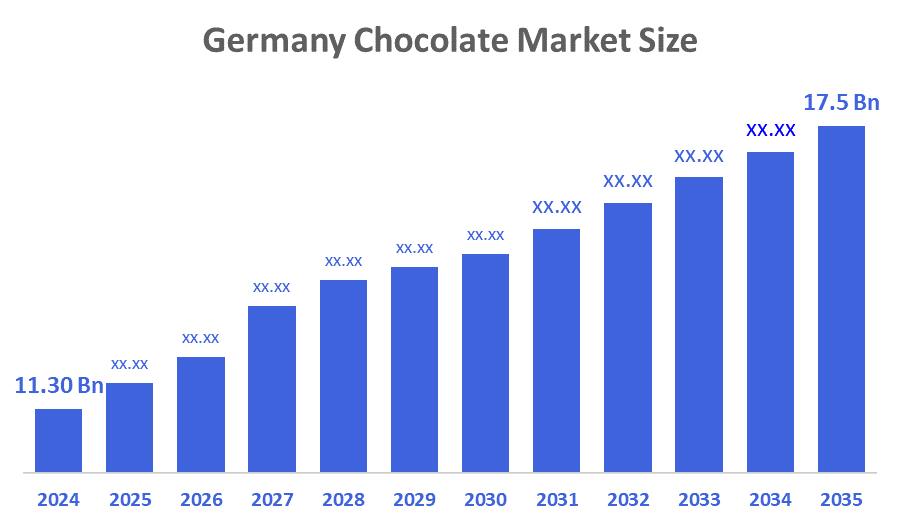
According to a Research Report Published by Decisions Advisors & Consulting, The Germany Chocolate Market Size is anticipated to Reach USD 17.5 Billion by 2035, Growing at a CAGR of 4.06% from 2025 to 2035. The growing demand for upscale and artisanal products, the preference of health-conscious consumers for dark chocolate, the introduction of inventive flavor combinations, and the increasing acceptance of ingredients sourced ethically and sustainably are some of the key factors propelling the market's growth.
Market Overview
The Germany Chocolate Industry is the segment of the economy that produces, makes available to the public and allows purchasing of chocolate products in Germany. Additionally, Germany's chocolate consumption has remained stable over time. The cost of cocoa beans has increased significantly (approximately 50%) due to natural disasters affecting West Africa, rising shipping costs, and greater demand for cocoa in general. In Germany, consumption per person is expected to be nearly 10.0kg in 2023, and chocolate remains popular throughout the holiday season, particularly during premium product sales like Advent calendars and St Nicolas chocolates. In fact, the German confectionery industry produced 1.14 million tonnes of chocolate in 2023, which is a 4.6% increase over 2022. This suggests that consumers have absorbed most of the impact from the increase in cocoa prices. As a result, more small and local chocolatiers are emerging with their own unique flavour combinations to serve a range of tastes. Also, brands have been focusing on creating environmentally friendly or aesthetically pleasing packaging for their premium products in order to enhance customer experience.
Report Coverage
This research report categorizes the market for the Germany chocolate market based on various segments and regions and forecasts revenue growth and analyzes trends in each submarket. The report analyses the key growth drivers, opportunities, and challenges influencing the Germany chocolate market. Recent market developments and competitive strategies such as expansion, product launch, and development, partnership, merger, and acquisition have been included to draw the competitive landscape in the market. The report strategically identifies and profiles the key market players and analyses their core competencies in each sub-segment of the Germany chocolate market.
Driving Factors
The chocolate market in Germany is still growing as consumers look for both healthier options and luxurious, decadent experiences. Dark chocolate's perceived health benefits have led to a rise in its popularity, and innovative flavors like fruit infusions, nut blends, and exotic spices have expanded its appeal to consumers. Additionally, the incorporation of fair-trade and sustainably sourced cocoa has increased consumer loyalty and trust, which is consistent with Germany's robust sustainability culture.
Restraining Factors
Rising raw material costs, competition from other confectionery products, and shifting consumer preferences are just a few of the difficulties facing the German chocolate market. Strict laws controlling the manufacture and distribution of chocolate goods also apply to the market.
Market Segmentation
The Germany chocolate market share is classified into product type and product form.
- The milk chocolate segment dominated the market in 2024, approximately 55% and is projected to grow at a substantial CAGR during the forecast period.
The Germany chocolate market is segmented by product type into white chocolate, milk chocolate, dark chocolate, and others. Among these, the milk chocolate segment dominated the market in 2024 and is expected to grow at a significant CAGR during the forecast period. The segmental growth due to a strong consumer preference for its sweet flavor profile and creamy texture, which appeal to people of all ages. Extensive product innovation, such as new flavor combinations, premium offerings, and seasonal varieties that boost customer engagement, benefits the segment. Additionally, milk chocolate's dominance is maintained by its broad availability through supermarkets, hypermarkets, and specialty shops as well as by aggressive marketing campaigns by top brands.
- The molded segment dominated the market in 2024, approximately 40% and is projected to grow at a substantial CAGR during the forecast period.
The Germany chocolate market is segmented by product form into molded, countlines, and others. Among these, the molded segment dominated the market in 2024 and is expected to grow at a significant CAGR during the forecast period. This is driven by high consumer demand for seasonal molded chocolate products like Christmas figures and Easter eggs, as well as traditional chocolate tablets and pralines. This market is further supported by Germany's gift-giving culture and preference for artisanal, high-end chocolates, while ongoing product innovation in flavors, packaging, and sustainable sourcing increases consumer appeal. The extensive availability of molded chocolates in supermarkets, hypermarkets, and specialty shops, along with marketing initiatives by top brands, guarantees steady demand and establishes molded goods as the leading form in the nation's chocolate market.
Competitive Analysis:
The report offers the appropriate analysis of the key organizations/companies involved within the Germany chocolate market along with a comparative evaluation primarily based on their product offering, business overviews, geographic presence, enterprise strategies, segment market share, and SWOT analysis. The report also provides an elaborative analysis focusing on the current news and developments of the companies, which includes product development, innovations, joint ventures, partnerships, mergers & acquisitions, strategic alliances, and others. This allows for the evaluation of the overall competition within the market.
List of Key Companies
- Lindt & Sprüngli
- August Storck KG
- Ritter Sport (Alfred Ritter GmbH & Co. KG)
- Halloren Schokoladenfabrik AG
- Hachez Chocolade GmbH & Co. KG
- Others
Recent Developments:
- In June 2024, Mars invested €40m ($43.3m) in a German chocolate factory to support its Twix brand production. The four-year project included renovating the Viersen facility and installing a new packaging line for Twix chocolate bars. The investment also improved the ergonomics of the workplace and supported sustainable production.
Key Target Audience
- Market Players
- Investors
- End-users
- Government Authorities
- Consulting and Research Firm
- Venture capitalists
- Value-Added Resellers (VARs)
Market Segment
This study forecasts revenue at Germany, regional, and country levels from 2020 to 2035. Decisions Advisors has segmented the Germany Chocolate Market based on the below-mentioned segments:
Germany Chocolate Market, By Product Type
- White Chocolate
- Milk Chocolate
- Dark Chocolate
- Others
Germany Chocolate Market, By Product Form
- Molded
- Countlines
- Others
FAQ’s
Q: What is the Germany chocolate market size?
A: Germany Chocolate Market is expected to grow from USD 11.30 billion in 2024 to USD 17.5 billion by 2035, growing at a CAGR of 4.06% during the forecast period 2025-2035.
Q: What are the key growth drivers of the market?
A: Growing consumer demand for high-end, handcrafted goods, health-conscious consumers' preference for dark chocolate, creative flavor combinations, and the growing use of ingredients sourced ethically and sustainably are the main drivers of the German chocolate market.
Q: What factors restrain the Germany chocolate market?
A: Rising health concerns, volatile cocoa prices, sustainability issues, regulatory pressures, and growing competition from healthier snack options that affect consumer preferences and purchasing behavior are all factors limiting the German chocolate market.
Q: Who are the key players in the Germany chocolate market?
A: Lindt & Sprüngli, August Storck KG, Ritter Sport (Alfred Ritter GmbH & Co. KG), Halloren Schokoladenfabrik AG, Hachez Chocolade GmbH & Co. KG, Others.
Q: Who are the target audiences for this market report?
A: The report targets market players, investors, end-users, government authorities, consulting and research firms, venture capitalists, and value-added resellers (VARs).
Check Licence
Choose the plan that fits you best: Single User, Multi-User, or Enterprise solutions tailored for your needs.
We Have You Covered
- 24/7 Analyst Support
- Clients Across the Globe
- Tailored Insights
- Technology Tracking
- Competitive Intelligence
- Custom Research
- Syndicated Market Studies
- Market Overview
- Market Segmentation
- Growth Drivers
- Market Opportunities
- Regulatory Insights
- Innovation & Sustainability
Report Details
| Scope | Country |
| Pages | 145 |
| Delivery | PDF & Excel via Email |
| Language | English |
| Release | Nov 2025 |
| Access | Download from this page |