
Germany Fish & Seafood Market
 |
Author:
Sayali T
|
Pages:
198
|
Author:
Sayali T
|
Pages:
198
Germany Fish & Seafood Market Size, Share, and COVID-19 Impact Analysis, By Type (Fresh Seafood, Frozen Seafood, and Canned Seafood), By Distribution Channel (Offline and Online), and Germany Fish & Seafood Market Insights, Industry Trend, Forecasts to 2035.
CAGR
4.17%
REVENUE 2024
USD Billion 15.7
FORECAST 2035
USD Billion 24.6
REPORT COVERAGE
Country
Germany Fish & Seafood Market Insights Forecasts to 2035
- The Germany Fish & Seafood Market Size was estimated at USD 15.7 Billion in 2024
- The Market Size is Expected to Grow at a CAGR of around 4.17% from 2025 to 2035
- The Germany Fish & Seafood Market Size is Expected to Reach USD 24.6 Billion by 2035
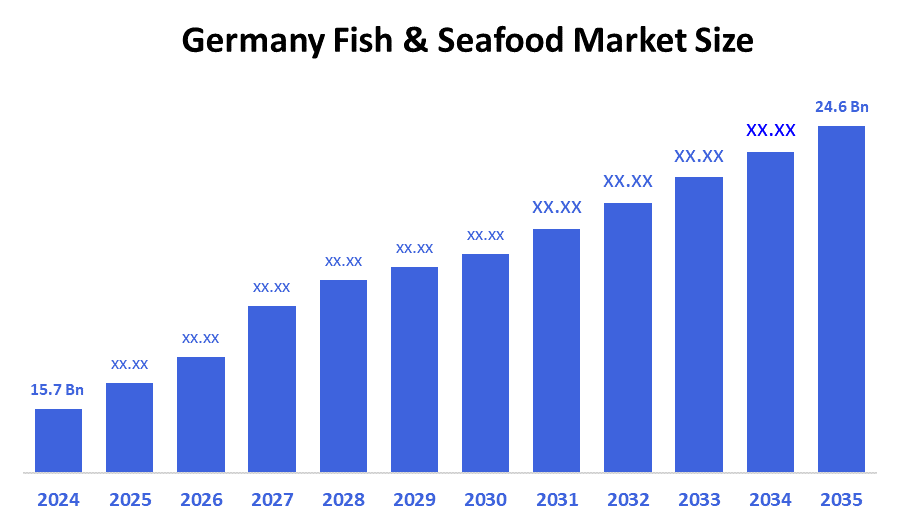
According to a Research Report published by Decision Advisors & Consulting, the Germany Fish & Seafood Market is anticipated to reach USD 24.6 billion by 2035, growing at a CAGR of 4.17% from 2025 to 2035. A favorable market outlook is being created by a number of important factors, including growing consumer preference for convenient and varied seafood products, expanding aquaculture practices, growing health consciousness, growing demand for protein-rich diets, and technological advancements in processing.
Market Overview
Germany’s fish & seafood industry includes all activities involved in getting fish and seafood to consumers. The industry includes fish & seafood produced and/or imported from other countries. Additionally, in Germany, the market for fish and seafood is governed by a number of laws designed to guarantee food safety and sustainable fishing methods. In order to prevent overfishing and safeguard marine ecosystems, the European Union's Common Fisheries Policy establishes fishing quotas and regulations. In order to guarantee the quality and safety of seafood products on the market, Germany also has its own national regulations pertaining to import/export requirements, aquaculture standards, and fishing licenses. Through programs like the Marine Stewardship Council certification for sustainable seafood sourcing, the German government also encourages sustainable fishing methods. In general, German government policies in the fish and seafood industry aim to strike a balance between economic interests and public health and environmental concerns.
Report Coverage
This research report categorizes the market for the Germany fish & seafood market based on various segments and regions and forecasts revenue growth and analyses trends in each submarket. The report analyses the key growth drivers, opportunities, and challenges influencing the Germany fish & seafood market. Recent market developments and competitive strategies such as expansion, product launch, and development, partnership, merger, and acquisition have been included to draw the competitive landscape in the market. The report strategically identifies and profiles the key market players and analyses their core competencies in each sub-segment of the Germany fish & seafood market.
Driving Factors
Germany has many investment possibilities in its fish and seafood sector. First, growing consumer concern about sustainability and the quality of seafood is creating new opportunities for investors. Second, many aquaculture and fish farm companies are looking to improve their sustainability credentials through new methods of aquaculture; this is likely to generate significant returns. Third, technology and innovation are emerging as areas with substantial potential for growth as companies develop solutions to improve seafood traceability systems, as well as packaging methods, to develop new forms of value-added product. Finally, convenience-oriented trends that are causing an increase in the purchase of ready-to-eat seafood may lead to additional investment opportunities for new processing and distribution plants for the German fish and seafood market.
Restraining Factors
The stability of the market is impacted by price fluctuations brought on by things like overfishing, climate change, and geopolitical concerns. The market environment is further complicated by import laws and uncertainties surrounding Brexit, which have an impact on pricing and supply chains. In order to overcome these obstacles, businesses in the German fish and seafood industry must place a high priority on openness, creative sourcing strategies, and consumer education regarding sustainable practices in order to preserve market share and satisfy changing consumer demands.
Market Segmentation
The Germany fish & seafood market share is classified into type and distribution channel.
- The fresh seafood segment dominated the market in 2024, approximately 58% and is projected to grow at a substantial CAGR during the forecast period.
The Germany fish & seafood market is segmented by type into fresh seafood, frozen seafood, and canned seafood. Among these, the fresh seafood segment dominated the market in 2024 and is expected to grow at a significant CAGR during the forecast period. France's rich maritime resources and culinary traditions support the country's strong consumer preference for premium quality, taste, and nutritional value. Consumption has increased due to growing health consciousness and the desire for diets high in protein, while the growth of contemporary retail channels and cold-chain logistics guarantees greater availability and freshness. Sustained demand is also influenced by the growing exports of high-value species and the popularity of seafood in French cuisine.
- The offline segment dominated the market in 2024, approximately 65% and is projected to grow at a substantial CAGR during the forecast period.
The Germany fish & seafood market is segmented by distribution channel into offline and online. Among these, the offline segment dominated the market in 2024 and is expected to grow at a significant CAGR during the forecast period. The segmental growth due to consumers' strong inclination to buy fresh goods through conventional channels like specialty shops, supermarkets, hypermarkets, and fish markets. Customers in France appreciate being able to personally check the freshness and quality of seafood, which strengthens their faith in physical stores. Furthermore, fresh seafood is consistently available throughout the nation due to its well-established cold-chain infrastructure and retail networks.
Competitive Analysis:
The report offers the appropriate analysis of the key organizations/companies involved within the Germany fish & seafood market along with a comparative evaluation primarily based on their product offering, business overviews, geographic presence, enterprise strategies, segment market share, and SWOT analysis. The report also provides an elaborative analysis focusing on the current news and developments of the companies, which includes product development, innovations, joint ventures, partnerships, mergers & acquisitions, strategic alliances, and others. This allows for the evaluation of the overall competition within the market.
List of Key Companies
- Deutsche See GmbH
- Nordsee GmbH
- Stührk Delikatessen Import GmbH & Co. KG
- Frosta AG
- Appel Feinkost GmbH & Co. KG
- Hawesta Feinkost Hans Westphal GmbH & Co. KG
- Rügen Fisch AG
- Others
Recent Developments:
In April 2024, Hamburg, Germany-based startup Bluu Seafood opened the first fish farming pilot plant in Europe. The 2,000-square-meter facility, which grew out of a small lab in Lübeck, was equipped with new fermenters to grow cells of rainbow trout and Atlantic salmon. The initial 65-litre capacity scaled up to 2,000 litres.
Key Target Audience
- Market Players
- Investors
- End-users
- Government Authorities
- Consulting and Research Firm
- Venture capitalists
- Value-Added Resellers (VARs)
Market Segment
This study forecasts revenue at Germany, regional, and country levels from 2020 to 2035. Decision Advisiors has segmented the Germany Fish & Seafood Market based on the below-mentioned segments:
Germany Fish & Seafood Market, By Type
- Fresh Seafood
- Frozen Seafood
- Canned Seafood
Germany Fish & Seafood Market, By Distribution Channel
- Offline
- Online
FAQ’s
Q: What is the Germany fish & seafood market size?
A: Germany Fish & Seafood Market is expected to grow from USD 15.7 billion in 2024 to USD 24.6 billion by 2035, growing at a CAGR of 4.17% during the forecast period 2025-2035.
Q: What are the key growth drivers of the market?
A: Growing health consciousness, the need for a diet high in protein, growing aquaculture practices, processing technology advancements, and consumer preferences for a variety of convenient seafood products are the main drivers of the German fish and seafood market.
Q: What factors restrain the Germany fish & seafood market?
A: High import reliance, price volatility, sustainability issues, stringent EU regulations, limited aquaculture expansion, and changing consumer preferences toward alternative protein sources are all factors limiting Germany's fish and seafood market.
Q: Who are the key players in the Germany fish & seafood market?
A: Deutsche See GmbH, Nordsee GmbH, Stührk Delikatessen Import GmbH & Co. KG, Frosta AG, Appel Feinkost GmbH & Co. KG, Hawesta Feinkost Hans Westphal GmbH & Co. KG, Rügen Fisch AG, Others.
Q: Who are the target audiences for this market report?
A: The report targets market players, investors, end-users, government authorities, consulting and research firms, venture capitalists, and value-added resellers (VARs).
Check Licence
Choose the plan that fits you best: Single User, Multi-User, or Enterprise solutions tailored for your needs.
We Have You Covered
- 24/7 Analyst Support
- Clients Across the Globe
- Tailored Insights
- Technology Tracking
- Competitive Intelligence
- Custom Research
- Syndicated Market Studies
- Market Overview
- Market Segmentation
- Growth Drivers
- Market Opportunities
- Regulatory Insights
- Innovation & Sustainability
Report Details
| Scope | Country |
| Pages | 198 |
| Delivery | PDF & Excel via Email |
| Language | English |
| Release | Dec 2025 |
| Access | Download from this page |