
Germany Health and Fitness Club Market
 |
Pages:
250
|
Pages:
250
Germany Health and Fitness Club Market Size, Share, and COVID-19 Impact Analysis, By Trainer Type (Personal Training, Group Training, and Self-Training), By Facility (Aerobic Classes, Yoga Classes, Swimming Pool, Gym Equipment, and Others), and Germany Health and Fitness Club Market Insights, Industry Trend, Forecasts to 2035
REPORT COVERAGE
Country
Germany Health and Fitness Club Market Insights Forecasts to 2035
- The Germany Health and Fitness Club Market Size was estimated at USD 4.3 Billion in 2024
- The Market Size is Expected to Grow at a CAGR of around 6.39% from 2025 to 2035
- The Germany Health and Fitness Club Market Size is Expected to Reach USD 8.5 Billion by 2035
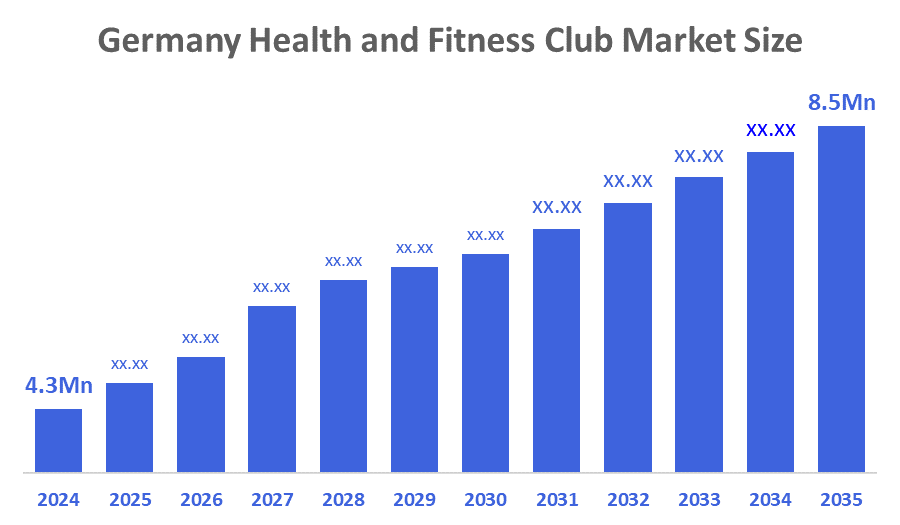
According To a Research Report Published By Decisions Advisors & Consulting, The Germany Health and Fitness Club Market Size Is Anticipated To Reach USD 8.5 Billion By 2035, Growing At a CAGR Of 6.39% from 2025 to 2035. Growing rates of chronic illnesses, urbanization, and rising disposable incomes are driving people of all ages to adopt fitness.
Market Overview
The Germany Health and Fitness Club Market refers to the organized industry of fitness centers, gyms, and wellness clubs across the country that provide structured facilities and services to improve physical health, strength, and overall well-being. Additionally, the majority of Germans are 60 years of age or older, making them among the oldest populations in Europe. Its focus is primarily on remaining physically mobile, reducing healthcare costs, and improving the quality of life in general. Fitness and health clubs are responding by offering age-appropriate programs, such as low-impact exercise, physiotherapy-based programs, and wellness classes designed for seniors. For instance, in October 2023, EVO Fitness opened its second club in Berlin Mitte providing limited membership perks such as two months for free and lower prices. The studio boasts a high-quality boutique-style training gym with flexible timing.
Report Coverage
This research report categorizes the market for the Germany health and fitness club market based on various segments and regions and forecasts revenue growth and analyzes trends in each submarket. The report analyses the key growth drivers, opportunities, and challenges influencing the Germany health and fitness club market. Recent market developments and competitive strategies such as expansion, product launch, and development, partnership, merger, and acquisition have been included to draw the competitive landscape in the market. The report strategically identifies and profiles the key market players and analyses their core competencies in each sub-segment of the Germany health and fitness club market.
Driving Factors
Germany's expanding urban middle class and increasing disposable incomes are driving the Germany health and fitness club market growth. Urban areas like Berlin, Munich, Hamburg, and Frankfurt have increasingly busy middle classes with fast-paced lifestyles and a need for convenient health choices. According to the sources, Basic-Fit, a fitness club, added 12 clubs in Germany in June 2024, increasing its total to 24. This represents an 18-club increase from June 2023, with good growth in urban areas such as Berlin and Frankfurt. Moreover, rising living standards make individuals more willing to pay for gym membership, personal training, and high-end fitness classes. Urban consumers also have a stronger disposition to adopt trends in health and wellness, influenced by global practices and social media.
Restraining Factors
Rising costs associated with staffing, maintaining a facility, and upgrading equipment will restrain operators from achieving profits; whereas regulatory requirements to comply with regulations and Safety Standards add a layer of complexity to operators. The slow adoption of clubs in rural areas results in lower numbers due to less access to club services throughout the country. Fragmentation of the Market in that there are many small, independent clubs that are competing against large chain companies will create pricing pressure and inconsistencies in customer service.
Market Segmentation
The Germany health and fitness club market share is classified into trainer type and facility.
- The group training segment dominated the market in 2024, approximately 40% and is projected to grow at a substantial CAGR during the forecast period.
The Germany health and fitness club market is segmented by trainer type into personal training, group training, and self-training. Among these, the group training segment dominated the market in 2024 and is expected to grow at a significant CAGR during the forecast period. The segmental growth due to consumers' growing desire for community-based fitness programs that promote social interaction, accountability, and motivation. The affordability of group sessions compared to personal training makes them accessible to wider demographics, while the popularity of formats such as yoga, spinning, HIIT, and dance-based workouts continues to attract diverse age groups.
- The gym equipment segment dominated the market in 2024, approximately 60.5% and is projected to grow at a substantial CAGR during the forecast period.
The Germany health and fitness club market is segmented by facility into aerobic classes, yoga classes, swimming pool, gym equipment, and others. Among these, the gym equipment segment dominated the market in 2024 and is expected to grow at a significant CAGR during the forecast period. The segmental growth due to German consumers' growing desire for organized, quantifiable exercise and their growing awareness of health issues. Fitness clubs continue to invest heavily in advanced cardio and strength machines to attract diverse demographics, while the popularity of self-training and hybrid workout models reinforces demand for equipment-based facilities.
Competitive Analysis:
The report offers the appropriate analysis of the key organizations/companies involved within the Germany health and fitness club market along with a comparative evaluation primarily based on their product offering, business overviews, geographic presence, enterprise strategies, segment market share, and SWOT analysis. The report also provides an elaborative analysis focusing on the current news and developments of the companies, which includes product development, innovations, joint ventures, partnerships, mergers & acquisitions, strategic alliances, and others. This allows for the evaluation of the overall competition within the market.
List of Key Companies
- McFIT Global Group GmbH
- Fitness First Germany GmbH
- Clever Fit GmbH
- FitX Deutschland GmbH
- EasyFitness Management GmbH
- Mrs.Sporty GmbH
- John Reed Fitness
- Others
Recent Developments:
- In November 2024, Germany’s LifeFit Group expanded by acquiring four brands from MyLifeStyleClub, added 15 clubs and 30,000 members to its portfolio. The acquired locations were rebranded under the Fitness First RED and BLACK categories. With 165 sites, LifeFit aimed to exceed 250 clubs by 2028.
Key Target Audience
- Market Players
- Investors
- End-users
- Government Authorities
- Consulting and Research Firm
- Venture capitalists
- Value-Added Resellers (VARs)
Market Segment
This study forecasts revenue at Germany, regional, and country levels from 2020 to 2035. Decisions Advisors has segmented the Germany Health and Fitness Club Market based on the below-mentioned segments:
Germany Health and Fitness Club Market, By Trainer Type
- Personal Training
- Group Training
- Self-Training
Germany Health and Fitness Club Market, By Facility
- Aerobic Classes
- Yoga Classes
- Swimming Pool
- Gym Equipment
- Others
FAQ’s
Q: What is the Germany health and fitness club market size?
A: Germany Health and Fitness Club Market is expected to grow from USD 4.3 billion in 2024 to USD 8.5 billion by 2035, growing at a CAGR of 6.39% during the forecast period 2025-2035.
Q: What are the key growth drivers of the market?
A: Growing health consciousness, preventing chronic illnesses, urbanization, rising disposable income, hybrid workout formats, and growing demand for wellness-focused routines across a range of age groups are the main factors driving the German health and fitness club market.
Q: What factors restrain the Germany health and fitness club market?
A: The Germany health and fitness club market is restrained by high membership costs, regional disparities in access, competition from digital fitness apps, time constraints, and inconsistent customer retention across diverse demographics.
Q: Who are the key players in the Germany health and fitness club market?
A: McFIT Global Group GmbH, Fitness First Germany GmbH, Clever Fit GmbH, FitX Deutschland GmbH, EasyFitness Management GmbH, Mrs.Sporty GmbH, John Reed Fitness, Others.
Q: Who are the target audiences for this market report?
A: The report targets market players, investors, end-users, government authorities, consulting and research firms, venture capitalists, and value-added resellers (VARs).
Check Licence
Choose the plan that fits you best: Single User, Multi-User, or Enterprise solutions tailored for your needs.
We Have You Covered
- 24/7 Analyst Support
- Clients Across the Globe
- Tailored Insights
- Technology Tracking
- Competitive Intelligence
- Custom Research
- Syndicated Market Studies
- Market Overview
- Market Segmentation
- Growth Drivers
- Market Opportunities
- Regulatory Insights
- Innovation & Sustainability
Report Details
| Scope | Country |
| Pages | 250 |
| Delivery | PDF & Excel via Email |
| Language | English |
| Release | Dec 2025 |
| Access | Download from this page |