
Germany Ice Cream Market
 |
Author:
Sayali T
|
Pages:
180
|
Author:
Sayali T
|
Pages:
180
Germany Ice Cream Market Size, Share, and COVID-19 Impact Analysis, By Flavor (Vanilla, Chocolate, Fruit, and Others), By Category (Impulse Ice Cream, Take-Home Ice Cream, and Artisanal Ice Cream), and Germany Ice Cream Market Insights, Industry Trend, Forecasts to 2035.
CAGR
3.17%
REVENUE 2024
USD Million 3426.3
FORECAST 2035
USD Million 4829.25
REPORT COVERAGE
Country
Germany Ice Cream Market Insights Forecasts to 2035
- The Germany Ice Cream Market Size was estimated at USD 3426.30 Million in 2024
- The Market Size is Expected to Grow at a CAGR of around 3.17% from 2025 to 2035
- The Germany Ice Cream Market Size is Expected to Reach USD 4829.25 Million by 2035
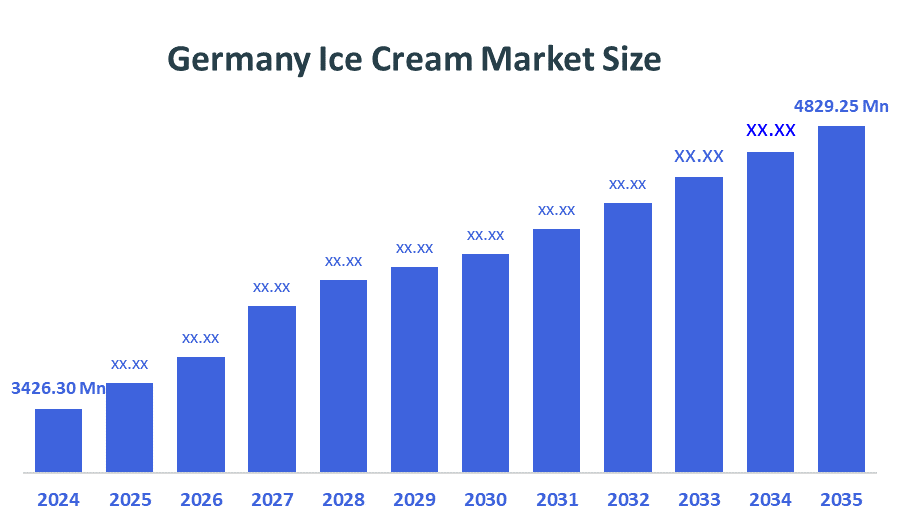
According to a Research Report published by Decision Advisiors & Consulting, The Germany Ice Cream Market is anticipated to reach USD 4829.25 Million by 2035, Growing at a CAGR of 3.17% from 2025 to 2035. The market continues to expand steadily due to rising consumer demand for high-end, sustainable, and health-conscious goods.
Market Overview
The Germany ice cream market refers to the area related to the production, distribution, and consumption of ice cream in Germany. Additionally, The German ice cream market is being greatly impacted by health and wellness trends. Low-calorie, low-fat, sugar-free, and high-protein ice cream substitutes are in greater demand as consumers become more health-conscious. Health-conscious consumers seeking decadent treats without sacrificing their dietary objectives are increasingly drawn to functional ice creams enhanced with vitamins, minerals, or probiotics. Over 35% of German consumers actively seek out low-sugar or health-enhanced frozen desserts, according to a 2024 study, indicating a clear shift toward wellness-oriented indulgence.
Report Coverage
This research report categorizes the market for the Germany ice cream market based on various segments and regions and forecasts revenue growth and analyzes trends in each submarket. The report analyses the key growth drivers, opportunities, and challenges influencing the Germany ice cream market. Recent market developments and competitive strategies such as expansion, product launch, and development, partnership, merger, and acquisition have been included to draw the competitive landscape in the market. The report strategically identifies and profiles the key market players and analyses their core competencies in each sub-segment of the Germany ice cream market. Further, manufacturers are being encouraged to reformulate their products with natural and recognizable ingredients by the clean-label movement, which calls for products with fewer artificial additives and preservatives. Almond, coconut, oat, or soy milk-based plant-based ice cream is also becoming more and more popular among vegans, flexitarians, and lactose intolerant people. Brands are concentrating more on transparency, ingredient sourcing, and nutritional content as dietary and health preferences become more diverse. This is driving innovation and diversification throughout the German ice cream market.
Driving Factors
The German ice cream market is also significantly influenced by advancements in cold-chain logistics and technological innovation. Technological developments in freezing and packaging are assisting producers in maintaining Ice Cream's flavor, texture, and quality for extended periods of time, guaranteeing consistent product performance from the factory to the customer. Additionally, consumers can now buy ice cream year-round, outside of the customary peak seasons, thanks to the growth of e-commerce and online grocery platforms. In order to increase their reach and boost customer engagement, brands are investing in direct-to-consumer delivery models and user-friendly digital platforms. In addition, the creation of eco-friendly and sustainable packaging addresses environmental issues and appeals to German consumers who care about the environment. These developments, along with better infrastructure for transportation and storage, are allowing brands to expand their operations and reach new clientele, which is quickening the growth of the market as a whole.
Restraining Factor
The highly seasonal nature of consumption is one of the most enduring problems in the German ice cream market. Sales of ice cream are highly reliant on warmer weather; demand peaks in the spring and summer and sharply decreases in the winter. Manufacturers, distributors, and retailers find it challenging to maintain steady revenue and inventory flow throughout the year due to this cyclical demand pattern. In order to prevent overproduction or product waste during off-peak times, businesses frequently struggle with supply chain management and production optimization. Smaller companies or artisanal brands that lack the resources or infrastructure to withstand protracted periods of lower sales are also hampered by seasonal sales.
Market Segmentation
The Germany ice cream market share is classified into flavor and category
- The vanilla segment dominated the market in 2024, approximately 28% and is projected to grow at a substantial CAGR during the forecast period.
The Germany ice cream market is segmented by flavor into vanilla, chocolate, fruit, and others. Among these, the vanilla segment dominated the market in 2024 and is expected to grow at a significant CAGR during the forecast period. Driven by its widespread appeal to consumers, adaptability in dessert pairings, and strong inclination for traditional flavors across all age groups. Premiumization trends, such as the growing popularity of artisanal and organic vanilla products and advancements in the sustainable sourcing of vanilla beans, also contribute to growth.
- The impulse ice cream segment dominated the market in 2024, approximately 46% and is projected to grow at a substantial CAGR during the forecast period.
The Germany ice cream market is segmented by category into impulse ice cream, take-home ice cream, and artisanal ice cream. Among these, the impulse ice cream segment held a significant share in 2024 and is expected to grow at a significant CAGR during the forecast period. Driven by a strong consumer preference for single-serve, portable formats that suit people's busy schedules, like bars, sticks, and cones. Summertime is when seasonal demand peaks, and accessibility is guaranteed by broad availability through supermarkets, kiosks, and vending channels. Continuous product innovation, premiumization with decadent flavors, and marketing initiatives by top brands like Langnese and Nestlé Schöller all contribute to growth.
Competitive Analysis:
The report offers the appropriate analysis of the key organizations/companies involved within the Germany ice cream market along with a comparative evaluation primarily based on their product offering, business overviews, geographic presence, enterprise strategies, segment market share, and SWOT analysis. The report also provides an elaborative analysis focusing on the current news and developments of the companies, which includes product development, innovations, joint ventures, partnerships, mergers & acquisitions, strategic alliances, and others. This allows for the evaluation of the overall competition within the market.
List of Key Companies
- DMK Group
- Schöller
- Hydrosol
- Unilever (Langnese)
- Nestlé
- Movenpick
- Others
Recent Developments:
- In July 2024, Ferrero had introduced Nutella Gelato in Germany with hazelnut cream and chocolate lavish layers. The high-end ice cream responded to the increasing demand for premium, high-quality frozen treats in Germany, according to changing consumer trends for artisanal texture and high-end flavor profiles in the competitive and growing German ice cream industry.
Key Target Audience
- Market Players
- Investors
- End-users
- Government Authorities
- Consulting and Research Firm
- Venture capitalists
- Value-Added Resellers (VARs)
Market Segment
This study forecasts revenue at Germany, regional, and country levels from 2020 to 2035. Decision Advisiors has segmented the Germany Ice Cream Market based on the below-mentioned segments:
Germany Ice Cream Market, By Flavor
- Vanilla
- Chocolate
- Fruit
- Others
Germany Ice Cream Market, By Category
- Impulse Ice Cream
- Take-Home Ice Cream
- Artisanal Ice Cream
FAQ’s
Q: What is the Germany ice cream market size?
A: Germany Ice Cream Market is expected to grow from USD 3426.30 million in 2024 to USD 4829.25 million by 2035, growing at a CAGR of 3.17% during the forecast period 2025-2035.
Q: What are the key growth drivers of the market?
A: Rising disposable incomes, the desire for high-end and vegan options, the growth of e-commerce, seasonal consumption patterns, and innovations in flavors, packaging, and sustainable ingredients are some of the major factors propelling the German ice cream market.
Q: What factors restrain the Germany ice cream market?
A: Growing health consciousness, seasonal demand swings, regulatory pressures, competition from frozen desserts, and sustainability issues affecting conventional dairy-based production and packaging methods are some of the factors limiting the German ice cream market.
Q: Who are the key players in the Germany ice cream market?
A: DMK Group, Schöller, Hydrosol, Unilever (Langnese), Nestlé, Movenpick, Others.
Q: Who are the target audiences for this market report?
A: The report targets market players, investors, end-users, government authorities, consulting and research firms, venture capitalists, and value-added resellers (VARs).
Check Licence
Choose the plan that fits you best: Single User, Multi-User, or Enterprise solutions tailored for your needs.
We Have You Covered
- 24/7 Analyst Support
- Clients Across the Globe
- Tailored Insights
- Technology Tracking
- Competitive Intelligence
- Custom Research
- Syndicated Market Studies
- Market Overview
- Market Segmentation
- Growth Drivers
- Market Opportunities
- Regulatory Insights
- Innovation & Sustainability
Report Details
| Scope | Country |
| Pages | 180 |
| Delivery | PDF & Excel via Email |
| Language | English |
| Release | Nov 2025 |
| Access | Download from this page |