
Germany Kombucha Market
 |
Author:
Sayali T
|
Pages:
210
|
Author:
Sayali T
|
Pages:
210
Germany Kombucha Market Size, Share, By Product Type (Conventional Kombucha, Hard Kombucha (alcoholic)), By Nature (Organic, Non-organic), and By Packaging (Glass Bottles, Aluminium Cans, Plastic Bottles), and Analysis and Forecast 2025-2035
CAGR
14.01%
REVENUE 2025
USD Million 194.6
FORECAST 2035
USD Million 722.2
REPORT COVERAGE
country
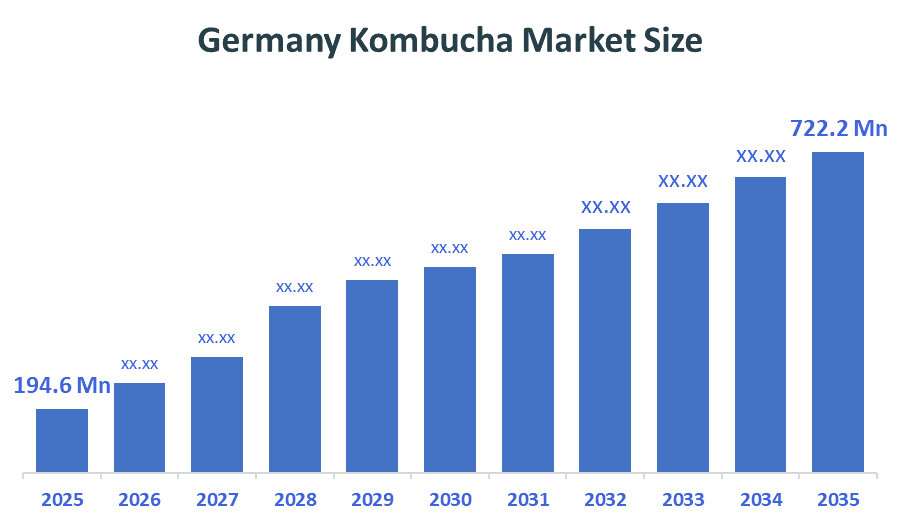
The Germany Kombucha Market Size is anticipated to grow from USD 194.6 million in 2025 and is expected to reach around USD 722.2 million by 2035. According to Decision Advisors, analytical findings highlight health-oriented functional as the dominant trend influencing Germany’s kombucha landscape, holding close to a 62% worldwide share, Voelkel GmbH demonstrates market leadership, reporting nearly USD 180 million in revenue and capturing about 15-18% of Germany’s share, driving market momentum and guiding strategic alignment in Germany.
Market Snapshot
- Germany Kombucha Market Size (2025): USD 194.6 million
- Projected Germany Kombucha Market Size (2035): 722.2 million
- Germany Kombucha Market Compound Annual Growth Rate (CAGR): 14.01%
- Base Year: 2025
- Historical Period: 2021–2024
- Forecast Period: 2026–2035
Market Overview/Introduction
The Germany kombucha market consists of fermented tea beverages which contain low carbonation and use SCOBY cultures to transform sugars into organic acids and probiotics. The drink serves as a health function product which helps maintain digestive system balance, supports immune function, and detoxification needs. The product functions as a high-end non-alcoholic beverage for urban dining establishments and serves as a sophisticated cooking component. The increasing consumer demand for botanical and fruit-infused products drives companies to develop new products which help them attract more health-conscious customers. The innovations such as premium flavor development and its use of adaptogens, superfoods, and its determination to adopt environmentally friendly packaging solutions. The organic variants continue to command premium demand. The future market potential of hard kombucha will develop through its spillover effects and its growing presence in on-trade establishments and its enhanced digital marketing efforts.
- In Germany, backed by SME-focused programs from the Federal Ministry for Economic Affairs and Climate Action, with €2-3 billion annual innovation funding, the kombucha market is expanding through startup growth, product diversification, and rising consumer demand for functional beverages.
Notable Insights: -
- By product type, the conventional kombucha segment held a dominant position with 91.2% in terms of market share in 2025.
- By nature, organic segment is the dominating accounting for over 59.1% of the Germany market share in 2025.
- The compound annual growth rate of the Germany Kombucha Market is 14.01%.
- The market is likely to achieve a valuation of USD 722.2 million by 2035.
What is role of technology in grooming the market?
The Germany kombucha market depends on technological advancements which improve production processes, create uniform products, and enable companies to expand their operations. The advanced fermentation control systems together with the automated brewing technologies establish exact microbial control which matches quality requirements. The digital monitoring along with data analytics technologies enable businesses to develop flavors and extend product shelf life while new packaging solutions enhance product stability and distribution operations.
Market Drivers
The Germany kombucha market is propelled by the consumers want to improve their digestive health, immune system and consume functional foods. The public today understands probiotic advantages which leads people to choose fermented drinks instead of other options. The market demand now increases because of the consumers show a strong preference for organic products that have natural ingredients and clean-label certification. The market demand for low-calorie drinks which include kombucha products rises due to the consumers now avoid sugar-laden soft drinks. The ongoing development of new flavor options together with user-friendly packaging solutions creates market expansion opportunities for products. The combination of vegan product requirements and sustainable consumption trends helps companies grow their market share while establishing premium brand status in the German beverage industry.
Restrain
The Germany kombucha market faces several structural restraints which determine its growth path. The elevated retail prices which result from organic certification, premium ingredients, and specialized packaging solutions restrict mass-market access. The product requires cold-chain logistics because of its perishable nature which results in higher transportation and storage expenses. In the natural fermentation processes create regulatory complexities due to alcohol production beyond legal limits forces producers to meet strict compliance standards.
Strategies to Implement for Growth of the Market
The Germany kombucha market needs its expansion efforts to focus on three specific areas which include affordable pricing, product development, and improved distribution systems. The producers should invest in scalable fermentation technologies to reduce costs while maintaining quality. The introduction of low-sugar and functional product lines will enable companies to reach more consumer groups. Cold-chain logistics and shelf-life stability need to be improved because they will enhance supply chain operations.
Market Segmentation
The Germany kombucha market share is classified into product type, nature, and packaging
- The conventional kombucha segment dominated the market in 2024, and is projected to grow at a substantial CAGR of approximately 13.2% during the forecast period.
Based on the product type, the kombucha market is divided into conventional kombucha, hard kombucha (alcoholic). Among these, the conventional kombucha segment dominated the market in 2024, and is projected to grow at a substantial CAGR of approximately 13.2% during the forecast period. It is due to the strong preference for beverages that do not contain alcohol and promote health benefits. The increasing knowledge of probiotic advantages together with consumer demand for natural functional beverages has established the company as a dominant market force which enables its continuous growth throughout the changing German beverage industry.
- The organic segment accounted for the largest share in 2024, and is anticipated to grow at a significant CAGR of approximately 14.3% during the forecast period.
Based on the nature, the kombucha market is divided into organic, non-organic. Among these, the organic segment accounted for the largest share in 2024, and is anticipated to grow at a significant CAGR of approximately 14.3% during the forecast period. It is dominating because the strong consumer preference for clean-label, chemical-free beverages. Germans maintain their dominant market position in health-focused beverages due to the consumers value sustainability, follow strict food safety regulations, and prefer products that contain natural ingredients.
- The glass bottles segment dominated the market in 2024, and is projected to grow at a substantial CAGR during the forecast period.
Based on the packaging, the kombucha market is divided into glass bottles, aluminium cans, plastic bottles. Among these, the glass bottles segment dominated the market in 2024, and is projected to grow at a substantial CAGR during the forecast period. The strong preference for packaging solutions that meet three criteria, which include premium quality, sustainable design, and non-reactive properties. Glass containers protect probiotic substances and maintain carbonation, while also meeting German environmental regulations and recycling practices, which explains their common use in organic beverages and health-oriented drink products.
Recent Development
- In March 2026, Germany berlin-based ROY Kombucha expanded its organic portfolio with multi-flavor offerings, backed by €5-10 million startup-scale investments, strengthening product innovation and premium positioning within Germany’s rapidly evolving kombucha market.
Competitive Analysis
The report offers the appropriate analysis of the key organisations/companies involved within the Germany kombucha market, along with a comparative evaluation primarily based on their product offering, business overviews, geographic presence, enterprise strategies, segment market share, and SWOT analysis. The report also provides an elaborative analysis focusing on the current news and developments of the companies, which includes product development, innovations, joint ventures, partnerships, mergers & acquisitions, strategic alliances, and others. This allows for the evaluation of the overall competition within the market.
Top Key Companies in Germany Kombucha Market
- Kombuchery
- ROY Kombucha
- Spraga Kombucha
- YO BOOCH Craft Kombucha
- Carpe Diem Kombucha
- Bouche Kombucha
- LikeLouis Kombucha
Key Target Audience
- Market Players
- Investors
- End-users
- Government Authorities
- Consulting and Research Firm
- Venture capitalists
- Value-Added Resellers (VARs)
Market Segment
This study forecasts revenue at the Germany, regional, and country levels from 2020 to 2035. Decision Advisors has segmented the Germany kombucha market based on the below-mentioned segments
Germany Kombucha Market, By Product Type
- Conventional Kombucha
- Hard Kombucha (alcoholic)
Germany Kombucha Market, By Nature
- Organic
- Non-organic
Germany Kombucha Market, By Packaging
- Glass Bottles
- Aluminium Cans
- Plastic Bottles
Frequently Asked Questions (FAQ)
- What macroeconomic factors are shaping the Germany kombucha market?
The Germany kombucha market operates under three main factors which include increased health spending and changing consumer tastes for functional drinks and strong demand for organic products. The combination of economic stability and premiumization trends has led consumers to increase their spending on wellness drinks which drives continuous market growth and product development throughout the beverage industry.
- Why is kombucha gaining traction among younger consumers?
Kombucha has gained popularity with young people because they think it helps their health through digestive assistance and detoxification effects. The consumption patterns of people in Ger have shifted because social media influences and lifestyle branding and rising interest in functional beverages which make kombucha their preferred choice over regular sugary drinks.
- What role does innovation play in market competitiveness?
Innovation remains a critical differentiator, with companies focusing on unique flavors, improved fermentation techniques, and sustainable packaging. Continuous product development enhances consumer engagement, supports premium pricing strategies, and enables brands to maintain competitive advantage in Germany’s evolving kombucha market.
- What future outlook can be expected for the Germany kombucha market?
The market outlook remains positive, driven by continuous innovation, expanding health awareness, and growing functional beverage demand. Increasing investment in product development and distribution networks is expected to strengthen market competitiveness, supporting long-term growth and positioning Germany as a key European kombucha hub
Check Licence
Choose the plan that fits you best: Single User, Multi-User, or Enterprise solutions tailored for your needs.
We Have You Covered
- 24/7 Analyst Support
- Clients Across the Globe
- Tailored Insights
- Technology Tracking
- Competitive Intelligence
- Custom Research
- Syndicated Market Studies
- Market Overview
- Market Segmentation
- Growth Drivers
- Market Opportunities
- Regulatory Insights
- Innovation & Sustainability
Report Details
| Scope | country |
| Pages | 210 |
| Delivery | PDF & Excel via Email |
| Language | English |
| Release | Apr 2026 |
| Access | Download from this page |