
Germany Organic Food Market
 |
Author:
Sayali T
|
Pages:
155
|
Author:
Sayali T
|
Pages:
155
Germany Organic Food Market Size, Share, and COVID-19 Impact Analysis, By Product Type (Organic Fruits and Vegetables, Organic Meat, Poultry and Dairy, Organic Processed Food, Organic Bread and Bakery, Organic Beverages, Organic Cereal and Food Grains, and Others), By Distribution Channel (Supermarkets and Hypermarkets, Specialty Stores, Convenience Stores, Online Stores, and Others), and Germany Organic Food Market Insights, Industry Trend, Forecasts to 2035
CAGR
7.52%
REVENUE 2024
USD Billion 8.11
FORECAST 2035
USD Billion 18.0
REPORT COVERAGE
Country
Germany Organic Food Market Size Insights Forecasts to 2035
- The Germany Organic Food Market Size was estimated at USD 8.11 Billion in 2024
- The Market Size is Expected to Grow at a CAGR of around 7.52% from 2025 to 2035
- The Germany Organic Food Market Size is Expected to Reach USD 18.00 Billion by 2035
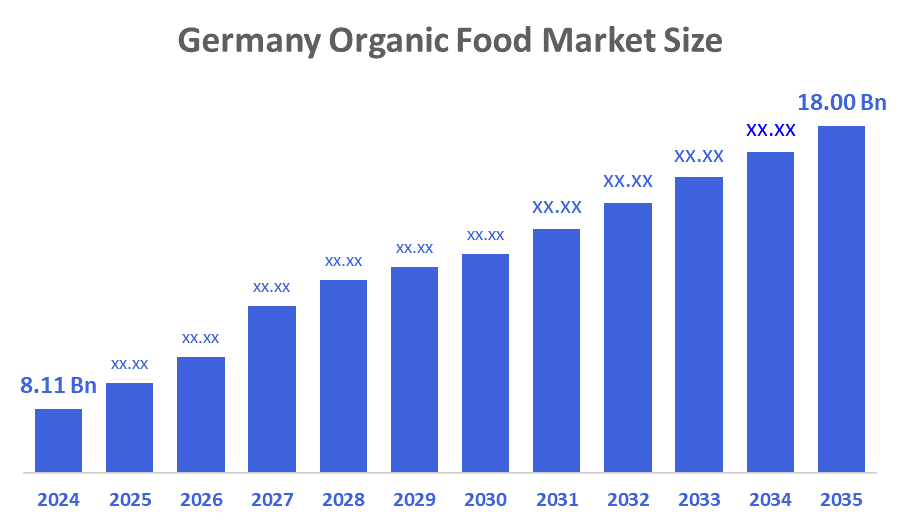
According to a Research Report Published by Decisions Advisors & Consulting, The Germany Organic Food Market Size is anticipated to Reach USD 18.00 Billion by 2035, Growing at a CAGR of 7.52% from 2025 to 2035. The market is expanding significantly, primarily due to rising consumer demand for eco-friendly and healthier food items.
Market Overview
Germany's Organic Food Market is comprised of all varieties of businesses that produce, package, and distribute food products with a certificate indicating that they comply with the National and European Union standards for organic food. Additionally, the development of the organic food industry in Germany is greatly aided by government programs and legal frameworks. Customers can feel secure knowing that the products are safe and authentic because the nation has one of the strictest organic certification programs in the world. Products that adhere to strict guidelines for organic farming and processing are identified by the EU organic logo and Germany's own "Bio-Siegel" label. In its "Organic Strategy 2030," Germany's Federal Ministry of Food and Agriculture (BMEL), headed by Minister CemÖzdemir, committed to achieving 30% organic agricultural land by 2030 through extensive value-chain reforms and supportive policy measures.
Report Coverage
This research report categorizes the market for the Germany organic food market based on various segments and regions and forecasts revenue growth and analyzes trends in each submarket. The report analyses the key growth drivers, opportunities, and challenges influencing the Germany organic food market. Recent market developments and competitive strategies such as expansion, product launch, and development, partnership, merger, and acquisition have been included to draw the competitive landscape in the market. The report strategically identifies and profiles the key market players and analyses their core competencies in each sub-segment of the Germany organic food market.
Driving Factors
Germany is actively supporting organic farming by offering a variety of financial incentives and subsidies intended to encourage sustainable farming practices. These initiatives include grants for converting conventional farms to organic ones, direct payments to organic farmers, and reducing bureaucratic barriers to facilitate the shift. By funding research, offering training programs, and raising consumer and farmer awareness of the benefits of sustainable agriculture, the regulatory body is also promoting organic farming. Germany's broader environmental goals, which include reducing carbon emissions, protecting soil vitality, and preserving ecosystems, align with supportive regulatory frameworks, such as improved pesticide regulations and incentives for agriculture that promotes biodiversity.
Restraining Factors
Germany's supply of organic food is constrained by production and agricultural issues, despite rising consumer demand. Compared to conventional agriculture, organic farming takes more time, labor, and resources, and because it doesn't use artificial fertilizers or chemicals, yields are frequently lower. The scalability of organic production may be constrained by these factors.
Market Segmentation
The Germany organic food market share is classified into product type and distribution channel.
- The organic fruits and vegetables segment dominated the market in 2024, approximately 40% and is projected to grow at a substantial CAGR during the forecast period.
The Germany organic food market is segmented by product type into organic fruits and vegetables, organic meat, poultry and dairy, organic processed food, organic bread and bakery, organic beverages, organic cereal and food grains, and others. Among these, the organic fruits and vegetables segment dominated the market in 2024 and is expected to grow at a significant CAGR during the forecast period. The segmental growth due to growing consumer demand for sustainable farming methods, preferences for produce free of chemicals, and growing health consciousness. Accessibility has been further increased by increasing retail availability through supermarkets, specialty organic stores, and online platforms, and supply chains are strengthened by government initiatives that support organic agriculture.
- The supermarkets and hypermarkets segment dominated the market in 2024, approximately 50% and is projected to grow at a substantial CAGR during the forecast period.
The Germany organic food market is segmented by distribution channel into supermarkets and hypermarkets, specialty stores, convenience stores, online stores, and others. Among these, the supermarkets and hypermarkets segment dominated the market in 2024 and is expected to grow at a significant CAGR during the forecast period. The segmental growth due to consumers' confidence in well-known retail chains, competitive pricing, and the abundance of organic food products. The expansion of organic assortments by major retailers like Edeka and REWE, which provide certified products under one roof, improves customer accessibility and convenience. Furthermore, consumer adoption is strengthened by the incorporation of promotional campaigns, private-label organic brands, and sustainability-focused initiatives.
Competitive Analysis:
The report offers the appropriate analysis of the key organizations/companies involved within the Germany organic food market along with a comparative evaluation primarily based on their product offering, business overviews, geographic presence, enterprise strategies, segment market share, and SWOT analysis. The report also provides an elaborative analysis focusing on the current news and developments of the companies, which includes product development, innovations, joint ventures, partnerships, mergers & acquisitions, strategic alliances, and others. This allows for the evaluation of the overall competition within the market.
List of Key Companies
- Edeka
- Tegut
- Döhler Group
- Dennree GmbH
- Alnatura
- Others
Recent Developments:
- In February 2025, BIOFACH 2025, the biggest global trade exhibition for organic food and farming, took place in Nuremberg, Germany, from February 11–14. The event showcased innovations in vegan agriculture, sustainable packaging, and ethical products, including Biocyclic Vegan Farming and compostable packaging solutions from Bio4Pack.
Key Target Audience
- Market Players
- Investors
- End-users
- Government Authorities
- Consulting and Research Firm
- Venture capitalists
- Value-Added Resellers (VARs)
Market Segment
This study forecasts revenue at Germany, regional, and country levels from 2020 to 2035. Decisions Advisors has segmented the Germany Organic Food Market based on the below-mentioned segments:
Germany Organic Food Market, By Product Type
- Organic Fruits and Vegetables
- Organic Meat, Poultry and Dairy
- Organic Processed Food
- Organic Bread and Bakery
- Organic Beverages
- Organic Cereal and Food Grains
- Others
Germany Organic Food Market, By Distribution Channel
- Supermarkets and Hypermarkets
- Specialty Stores
- Convenience Stores
- Online Stores
- Others
FAQ’s
Q: What is the Germany organic food market size?
A: Germany Organic Food Market is expected to grow from USD 8.11 billion in 2024 to USD 18.00 billion by 2035, growing at a CAGR of 7.52% during the forecast period 2025-2035.
Q: What are the key growth drivers of the market?
A: Growing health consciousness, sustainability concerns, government support, growing retail channels, growing vegan demand, and consumer preference for certified, eco-friendly, and transparently sourced goods are the driving forces behind the organic food market in Germany.
Q: What factors restrain the Germany organic food market?
A: High product costs, constrained supply chains, complicated certification procedures, price sensitivity among consumers, competition from conventional foods, and difficulties in expanding sustainable farming methods across the country all limit the organic food market in Germany.
Q: Who are the key players in the Germany organic food market?
A: Edeka, Tegut, Döhler Group, Dennree GmbH, Alnatura, Others.
Q: Who are the target audiences for this market report?
A: The report targets market players, investors, end-users, government authorities, consulting and research firms, venture capitalists, and value-added resellers (VARs).
Check Licence
Choose the plan that fits you best: Single User, Multi-User, or Enterprise solutions tailored for your needs.
We Have You Covered
- 24/7 Analyst Support
- Clients Across the Globe
- Tailored Insights
- Technology Tracking
- Competitive Intelligence
- Custom Research
- Syndicated Market Studies
- Market Overview
- Market Segmentation
- Growth Drivers
- Market Opportunities
- Regulatory Insights
- Innovation & Sustainability
Report Details
| Scope | Country |
| Pages | 155 |
| Delivery | PDF & Excel via Email |
| Language | English |
| Release | Nov 2025 |
| Access | Download from this page |