
Global Gynecology Medical Lasers Market
 |
Author:
David J
|
Pages:
210
|
Author:
David J
|
Pages:
210
Gynecology Medical Lasers Market Size, Share, By Product Type (CO? Lasers, Nd:YAG Lasers, Diode Lasers, Er:YAG Lasers, Others), By Application (Vaginal Rejuvenation, Endometriosis Treatment, Cervical Dysplasia, Uterine Fibroids, Others), By End User (Hospitals, Gynecology Clinics, Ambulatory Surgical Centers), By Region (North America, Europe, Asia-Pacific, Latin America, Middle East & Africa), Analysis and Forecast 2026-2035
CAGR
40.06%
REVENUE 2025
USD Million 640.1
FORECAST 2035
USD Million 18599.8
REPORT COVERAGE
Global
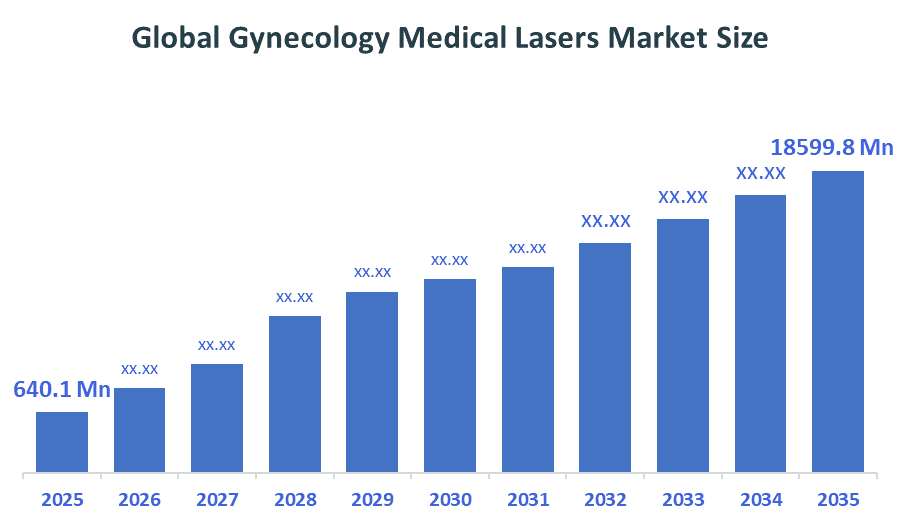
The Global Gynecology Medical Lasers Market Size is foreseen to grow from USD 640.1 Million in 2025 and is govern to reach around USD 18599.8 Million by 2035. According to Decision Advisors, a detailed research report on the Global Gynecology Medical Lasers Market is boosted by Rising Adoption of Minimally Invasive Procedures, accounting for nearly 30-35% share of the total share worldwide. Boston Scientific Corporation is the prime player in the market with approximately USD 20.07 Billion in annual turnover and a 30-40% market share, positioning it as the primary driver of the Global Gynecology Medical Lasers Market.
Market Snapshot
- Global Gynecology Medical Lasers Market Size (2025): USD 640.1 Million
- Projected Global Gynecology Medical Lasers Market Size (2035): USD 18599.8 Million
- Global Gynecology Medical Lasers Market Compound Annual Growth Rate (CAGR): 40.06%
- Largest Growing Region: North America
- Fastest Regional Market: Asia Pacific
- 3rd Largest Region: Europe
- Base Year: 2025
- Historical Period: 2021–2024
- Forecast Period: 2026–2035
Market Overview/ Introduction
The global market for gynecological medical lasers is essentially the high-tech heart of modern women’s healthcare. It’s a field focused on using precise light energy via tools like CO2 or Diode lasers to treat reproductive health issues with far less trauma than traditional surgery. Currently, this market is seeing a massive surge. The real driver here isn’t just the technology itself, but a change in how we approach recovery. Both doctors and patients are moving away from open surgeries in favor of minimally invasive SOP. These laser treatments permits for much smaller incisions (or none at all), meaning less pain, fewer scars, and a much faster return to daily life. While these tools are vital for treating serious conditions like endometriosis or fibroids, there is also a propelling interest in wellness and aesthetic treatments, such as vaginal rejuvenation and therapies for bladder control. While North America currently leads the way in using these gadgets, the Asia-Pacific region is catching up fast as more people gain access to advanced medical care.
Notable Insights: -
- North America is anticipated to hold approximately 40% share of the Global Gynecology Medical Lasers Market over the predicted timeframe.
- Asia Pacific is the fastest-growing region in the Global Gynecology Medical Lasers Market during the forecast period, holding approximately 29% share.
- By product type, the CO? lasers segment dominated the market and holds approximately 37% share in 2025 and is projected to grow at a substantial CAGR during the forecast period.
- By end user, the hospitals segment dominated the market and holds approximately 53% share in 2025 and is projected to grow at a substantial CAGR during the forecast period.
- The compound annual growth rate of the Global Gynecology Medical Lasers Market is 40.06%.
- The market is likely to achieve a valuation of USD 18599.8 Million by 2035.
What is the role of technology in grooming the market?
Technology plays a pivotal role in advancing the gynecology medical lasers market by enhancing precision, safety, and treatment outcomes. Advanced laser systems such as fractional CO? and Er:YAG lasers enable minimally invasive procedures with reduced downtime and improved patient comfort. Integration of real-time imaging and automated energy control has increased procedural accuracy by approximately 27%, while minimally invasive laser-based gynecological procedures have grown by over 35% adoption in developed regions. These innovations are significantly driving demand and expanding clinical applications across both therapeutic and aesthetic gynecology.
Market Drivers
This market is growing because we’re finally focusing on treatments that don't put a woman’s life on hold. The gaint driver is the universal desire for gentler healing. Patients are choosing laser SOPs because they want to avoid the long, painful recoveries that come with traditional surgery. It’s about being able to treat serious issues like endometriosis or fibroids and get back to work or family in days rather than weeks. There’s also a much louder, more open talk happening globally about women’s wellness. This has sparked a massive demand for quality of life treatments, things like fixing bladder leaks or vaginal health that were once going through in silence but are now easily addressed in a quick clinic visit. When you mix that cultural move with smarter teq. (like lasers that use AI to be incredibly precise), you get a medical field that is becoming more accessible, less scary, and much more focused on the patient's actual lifestyle.
Restrain
The gynecology medical lasers market faces key restraints primarily due to the high cost of advanced laser systems and treatment procedures, which limits adoption in price-sensitive and developing regions. Additionally, the requirement for skilled professionals and specialized training to operate these devices creates an operational barrier for smaller clinics. Regulatory scrutiny around safety and efficacy, particularly in aesthetic gynecology procedures, can also delay product approvals and market entry, thereby slowing overall market growth.
Competitive Analysis:
The report offers the appropriate analysis of the key organisations/companies involved within the global gynecology medical lasers market, along with a comparative evaluation primarily based on their product of offering, business overviews, geographic presence, enterprise strategies, segment market share, and SWOT analysis. The report also provides an elaborate analysis focusing on the current news and developments of the companies, which includes product development, innovations, joint ventures, partnerships, mergers & acquisitions, strategic alliances, and others. This allows for the evaluation of the overall competition within the market.
Top Companies in the Global Gynecology Medical Lasers Market
- Lumenis Ltd.
- Cynosure LLC
- Alma Lasers Ltd.
- Fotona d.o.o.
- Cutera Inc.
- El.En. S.p.A.
- Sciton Inc.
- Hologic Inc.
- Boston Scientific Corporation
- Quanta System S.p.A.
Government Initiatives
|
Country |
Key Government Initiatives |
|
India |
National Medical Devices Policy (2023): Targets industry growth from USD 11B to USD 50B by 2030. PLI Scheme: ?3,420 crore approved to incentivise domestic surgical device production, including lasers. SMDI Scheme (2024–27): ?500 crore for MedTech clusters and clinical validation. Medical Device Parks: 4 approved with ?400 crore each for infrastructure and testing. |
|
US |
FDA Breakthrough Device Program: Accelerates approval of advanced gynecological laser systems. NIH & BARDA Funding (~USD 48B annually): Supports R&D in medical lasers and biomaterials. Medicare/Medicaid Expansion: Expands access to minimally invasive gynecological procedures. |
|
Japan |
PMDA Fast-Track Approvals: Encourages adoption of innovative gynecological laser technologies. Government R&D Incentives: Multi-billion yen funding for minimally invasive surgical technologies. Universal Healthcare System: Sustains steady demand for gynecological consumables. |
Study on the Supply, Demand, Distribution, and Market Environment of the Global Gynecology Medical Lasers Market
The global gynecology medical lasers market operates within a specialized healthcare ecosystem where demand is driven by the rising prevalence of gynecological disorders and increasing preference for minimally invasive procedures, accounting for approximately 43% of gynecological treatments in developed regions. Supply is concentrated among key medical device manufacturers with strong R&D and global distribution capabilities, ensuring consistent availability across hospitals and specialty clinics. Distribution is primarily dominated by hospitals, contributing around 50–55% of total demand, while emerging markets are witnessing growing penetration through private clinics. The market environment remains highly regulated, with compliance standards influencing product approvals, safety, and adoption rates worldwide.
Price Analysis and Consumer Behaviour Analysis
Price analysis in the gynecology medical lasers market reflects a premium-cost structure, with treatment procedures such as CO? laser therapy costing over USD 500 per session and requiring multiple sessions, m’aking affordability a key concern in developing regions. From a consumer behavior perspective, hospitals and specialty clinics remain the primary buyers, driven by clinical effectiveness and long-term patient outcomes, while rising preference for minimally invasive procedures accounting for a significant share of surgical treatments globally, has increased willingness to invest despite higher upfront costs. Additionally, growing demand for outpatient and aesthetic gynecology procedures is shifting consumer focus toward faster recovery and improved comfort, further influencing purchasing decisions.
Market Segmentation
The Global Gynecology Medical Lasers Market is classified into product type, application, and end user.
- The CO? lasers segment dominated the market and holds approximately 37% share in 2025 and is projected to grow at a substantial CAGR during the forecast period.
Based on the product type, the global gynecology medical lasers market is divided into CO? lasers, Nd:YAG lasers, diode lasers, Er:YAG lasers, and others. Among these, the CO? lasers segment dominated the market and holds approximately 37% share in 2025 and is projected to grow at a substantial CAGR during the forecast period. This dominance is attributed to their high precision, controlled tissue ablation, and effectiveness in soft tissue procedures, making them highly suitable for gynecological treatments such as vaginal rejuvenation and cervical procedures. These systems are widely used in hospitals and specialty clinics due to their proven clinical outcomes and safety profile. For instance, advanced fractional CO? laser systems are increasingly adopted for minimally invasive gynecological therapies, supporting segment growth.
- The vaginal rejuvenation segment accounted for the largest share of approximately 43% in 2025 and is anticipated to grow at a significant CAGR during the forecast period.
Based on the application, the global gynecology medical lasers market is divided into vaginal rejuvenation, endometriosis treatment, cervical dysplasia, uterine fibroids, and others. Among these, the vaginal rejuvenation segment accounted for the largest share of approximately 43% in 2025 and is anticipated to grow at a significant CAGR during the forecast period. This is primarily due to the rising demand for aesthetic gynecology procedures, increasing awareness about women’s health, and preference for minimally invasive treatments. Gynecology medical lasers are extensively used for procedures that improve vaginal elasticity, treat dryness, and enhance overall vaginal health. For example, laser-based vaginal therapies are increasingly utilised in outpatient settings due to shorter recovery time and improved patient comfort, significantly boosting demand in this segment.
- The hospitals segment dominated the market and holds approximately 53% share in 2025 and is projected to grow at a substantial CAGR during the forecast period.
Based on the end user, the global gynecology medical lasers market is divided into hospitals, ambulatory surgical centers, and gynecology clinics. Among these, the hospitals segment dominated the market and holds approximately 53% share in 2025 and is projected to grow at a substantial CAGR during the forecast period, owing to the availability of advanced infrastructure, skilled professionals, and higher patient inflow for gynecological procedures. Hospitals are the primary adopters of gynecology medical laser systems due to their capacity to invest in high-cost equipment and perform complex treatments. Additionally, the increasing number of minimally invasive gynecological procedures performed in hospital settings further supports segment growth. For instance, large multi-speciality hospitals globally are integrating advanced laser technologies to enhance treatment precision and patient outcomes.
Strategies to Implement for Growth of the Market in Non-Leading Regions
To drive growth in non-leading regions, companies in the gynecology medical lasers market should focus on developing cost-effective and portable laser systems, as high device costs limit adoption in nearly 60% of emerging healthcare facilities. Strategic partnerships with local hospitals, distributors, and government bodies can improve accessibility and market penetration. Expanding clinician training programs is critical, as the lack of skilled professionals remains a key barrier in developing regions. Additionally, increasing awareness of minimally invasive gynecological procedures growing at over 14% annually in emerging markets and offering flexible financing or leasing models can significantly accelerate adoption and market expansion.
Regional Segment Analysis of the Global Gynecology Medical Lasers Market
- North America (U.S., Canada, Mexico)
- Europe (Germany, France, U.K., Italy, Spain, Rest of Europe)
- Asia-Pacific (China, Japan, India, Rest of APAC)
- South America (Brazil and the Rest of South America)
- The Middle East and Africa (UAE, South Africa, Rest of MEA)
North America is anticipated to hold approximately 40% share of the global gynecology medical lasers market over the predicted timeframe.
North America is anticipated to hold approximately 40% share of the global gynecology medical lasers market over the predicted timeframe. It maintains a dominant market position due to advanced healthcare infrastructure, high adoption of minimally invasive gynecological procedures, and the strong presence of key market players. The United States is the key contributor, supported by the rising prevalence of gynecological conditions such as uterine fibroids and cervical disorders, along with high healthcare expenditure. For instance, hospitals and specialty clinics across the U.S. widely use laser-based systems for procedures such as vaginal rejuvenation and cervical treatments. Additionally, continuous technological advancements and product innovations by leading companies are further strengthening the region’s leadership.
Asia Pacific is the fastest-growing region in the global gynecology medical lasers market during the forecast period, holding approximately 29% share.
Asia Pacific is the fastest-growing region in the global gynecology medical lasers market during the forecast period, holding approximately 29% share. This growth is driven by rising healthcare investments, increasing female patient population, and growing awareness of minimally invasive gynecological procedures in countries such as China, India, and Japan. The region is witnessing strong adoption of laser-based gynecological treatments for both therapeutic and aesthetic applications. For example, hospitals and private clinics in India and China are increasingly adopting gynecology medical laser systems for outpatient procedures. Additionally, government initiatives to improve women’s healthcare services and expand access to advanced medical technologies are accelerating market growth.
Europe is expected to hold approximately 24% share and is the third-largest region in the global gynecology medical lasers market during the forecast period.
Europe is expected to hold approximately 24% share and is the third-largest region in the global gynecology medical lasers market during the forecast period. The region’s growth is supported by strong regulatory frameworks, increasing adoption of minimally invasive treatments, and growing investments in women’s health and medical technology innovation. Countries such as Germany, France, and the United Kingdom are leading the market due to rising demand for advanced gynecological treatment solutions. For instance, healthcare facilities across Europe are increasingly integrating laser-based technologies to improve treatment precision and patient outcomes. Additionally, ongoing research and product innovation by key medical device companies are contributing to market expansion.
Future Market Trends in the Global Gynecology Medical Lasers Market:
1. Rising Adoption of Minimally Invasive and Outpatient Procedures
The market is witnessing a strong shift toward minimally invasive laser-based gynecological procedures due to benefits such as reduced recovery time, minimal scarring, and lower complication rates. These procedures are increasingly preferred in outpatient settings, with minimally invasive treatments contributing to a significant share of gynecological interventions globally. This trend is expected to accelerate market growth as patient preference shifts toward faster and safer treatment options.
2. Technological Advancements in Laser Systems
Continuous innovation in laser technologies, including fractional CO?, Er:YAG, and diode lasers, is enhancing precision, safety, and clinical outcomes. Advanced features such as improved energy control, higher accuracy, and multifunctional platforms are expanding the scope of applications in gynecology. These advancements are a key factor driving the market’s projected growth at a steady CAGR of approximately 9% during the forecast period.
3. Growing Demand for Aesthetic Gynecology Procedures
There is a notable rise in demand for cosmetic gynecology treatments such as vaginal rejuvenation, driven by increasing awareness, rising disposable income, and changing lifestyle preferences. This segment is emerging as a high-growth area within the market, contributing significantly to overall revenue expansion. Additionally, the increasing focus on women’s health and wellness is further boosting demand for advanced laser-based aesthetic treatments.
Recent Development
- In April 2026, Alma Lasers was highlighted among key players driving innovation in the surgical lasers industry, with increasing focus on advanced minimally invasive laser technologies and expanded clinical applications.
- In February 2025, Fotona unveiled advanced laser systems such as Dynamis Max and StarWalker PICO Pro at IMCAS 2025, enhancing precision and expanding applications in aesthetic and gynecological treatments.
- In September 2023, Cutera Inc. launched a novel aesthetic laser platform, supporting advancements in minimally invasive treatments, including gynecological applications.
- In July 2023, Alma Lasers completed the acquisition of a long-term Chinese distributor, strengthening its supply chain and expanding access to laser technologies in emerging markets.
Market Segment
This study forecasts revenue at global, regional, and country levels from 2020 to 2035. Decision Advisors has segmented the Global Gynecology Medical Lasers Market based on the below-mentioned segments:
Global Gynecology Medical Lasers Market, By Product Type
- CO? Lasers
- Nd:YAG Lasers
- Diode Lasers
- Er:YAG Lasers
- Others
Global Gynecology Medical Lasers Market, By Application
- Vaginal Rejuvenation
- Endometriosis Treatment
- Cervical Dysplasia
- Uterine Fibroids
- Others
Global Gynecology Medical Lasers Market, By End User
- Hospitals
- Ambulatory Surgical Centers
- Gynecology Clinics
Global Gynecology Medical Lasers Market, By Regional Analysis
- North America
- US
- Canada
- Mexico
- Europe
- Germany
- UK
- France
- Italy
- Spain
- Russia
- Rest of Europe
- Asia Pacific
- China
- Japan
- India
- South Korea
- Australia
- Rest of Asia Pacific
- South America
- Brazil
- Argentina
- Rest of South America
- Middle East & Africa
- UAE
- Saudi Arabia
- Qatar
- South Africa
- Rest of the Middle East & Africa
Frequently Asked Questions (FAQ)
Q1. What is the average cost per gynecology laser procedure for patients?
A. The cost typically ranges between USD 300 to USD 1,500 per session, depending on the procedure type, technology used, and geographic location.
Q2. What is the average lifespan of gynecology medical laser devices?
A. Most gynecology laser systems have a lifespan of 7–10 years, depending on usage frequency, maintenance, and technological upgrades.
Q3. What level of training is required for healthcare professionals to operate these laser systems?
A. Physicians usually require specialized certification and hands-on training, which can range from a few days to several weeks, depending on the complexity of the system.
Q4. Are gynecology laser procedures covered under insurance or reimbursement policies?
A. Coverage varies by country and procedure type; therapeutic treatments may be covered, while aesthetic procedures are often not reimbursed.
Q5. What are the key maintenance requirements for gynecology laser devices?
A. These systems require regular calibration, software updates, component replacement, and adherence to safety protocols, often supported through annual maintenance contracts.
Check Licence
Choose the plan that fits you best: Single User, Multi-User, or Enterprise solutions tailored for your needs.
We Have You Covered
- 24/7 Analyst Support
- Clients Across the Globe
- Tailored Insights
- Technology Tracking
- Competitive Intelligence
- Custom Research
- Syndicated Market Studies
- Market Overview
- Market Segmentation
- Growth Drivers
- Market Opportunities
- Regulatory Insights
- Innovation & Sustainability
Report Details
| Scope | Global |
| Pages | 210 |
| Delivery | PDF & Excel via Email |
| Language | English |
| Release | May 2026 |
| Access | Download from this page |