
Global Hairy Cell Leukemia Market
 |
Pages:
240
|
Pages:
240
Global Hairy Cell Leukemia Market Size, Share, and COVID-19 Impact Analysis, By Treatment Type (Chemotherapy, Radiation Therapy, Immunotherapy, Targeted Therapy, and Stem Cell Transplant), By Therapeutic Approach (Single Agent Therapy, Combination Therapy, and Maintenance Therapy), By Line of Therapy (First Line, Second Line, and Third Line or Later), and By Region (North America, Europe, Asia-Pacific, Latin America, Middle East, and Africa), Analysis and Forecast 2025-2035
REPORT COVERAGE
Global
Global Hairy Cell Leukemia Market Size Insights Forecasts to 2035
- The Global Hairy Cell Leukemia Market Size Was Estimated at USD 40.36 Billion in 2024
- The Market Size is Expected to Grow at a CAGR of around 4.31 % from 2025 to 2035
- The Worldwide Hairy Cell Leukemia Market Size is Expected to Reach USD 64.21 Billion by 2035
- North America is expected to grow the fastest during the forecast period.
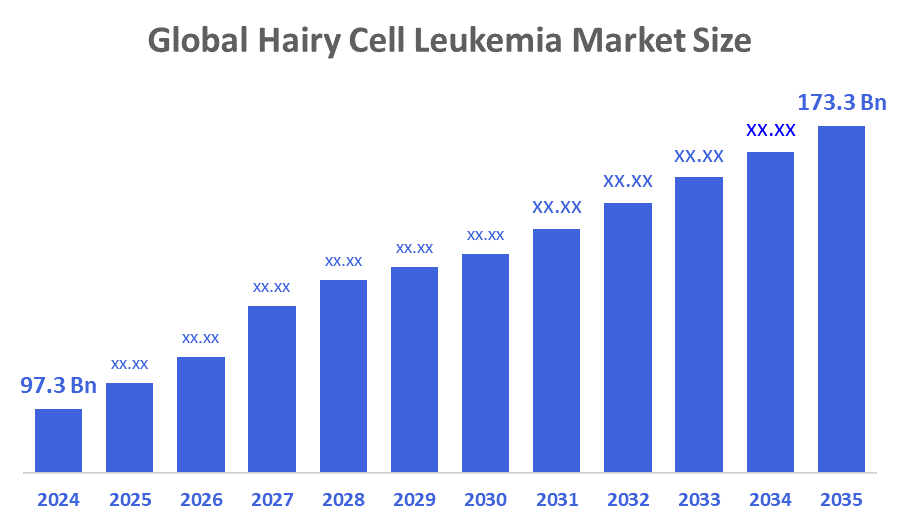
According to a research report published by Decisions Advisors and Consulting, The Global Hairy Cell Leukemia Market Size Was Worth Around USD 40.36 Billion In 2024 And Is Predicted To Grow To Around USD 64.21 Billion By 2035 With A Compound Annual Growth Rate (CAGR) Of 4.31 % From 2025 To 2035. Rising incidence rates of blood-related cancers, improvements in detection and treatment options for rare diseases, and new oncology treatments that target this uncommon type of leukemia are some of the causes driving the market's rapid expansion.
Market Overview
Hairy cell leukemia is an uncommon blood cancer that affects both blood and bone marrow. The disease causes B cells to develop into hairy cells, which multiply in the bone marrow space and block normal blood cell production. The microscopic examination of hairy cells reveals their distinctive appearance, which shows hair-like structures that extend from their body. The condition causes people to experience abdominal fullness together with symptoms that include fatigue, easy bruising, recurring infections, weakness, and unexplained weight loss. The other common symptoms of this disease include night sweats, fever, shortness of breath, and painless lumps in the neck, groin, underarm, or stomach. Doctors use medical history and clinical symptoms together with physical examination results to establish a diagnosis of hairy cell leukemia. The healthcare provider may perform various diagnostic procedures and tests, including peripheral blood smear and complete blood count (CBC), computed tomography (CT) scan, flow cytometry and bone marrow aspiration and biopsy, among patients, to validate the exact cause of the underlying indications.
More than 560,000 people died from blood malignancies in 2022, including leukemia, multiple myeloma, and non-Hodgkin lymphoma. These diseases accounted for over 1.3 million new cases globally. These numbers highlight how serious these illnesses are on a worldwide scale.
In December 2025, Orum Therapeutics, a biotech company, declared pioneering degrader-antibody conjugates (DACs) that combine the targeting ability of antibody-drug conjugates (ADCs) with the protein-degrading power of molecular degraders, secured $100 million in funding.
Report Coverage
This research report categorizes the hairy cell leukemia market based on various segments and regions, forecasts revenue growth, and analyzes trends in each submarket. The report analyses the key growth drivers, opportunities, and challenges influencing the hairy cell leukemia market. Recent market developments and competitive strategies, such as expansion, product launch, development, partnership, merger, and acquisition, have been included to draw the competitive landscape in the market. The report strategically identifies and profiles the key market players and analyzes their core competencies in each sub-segment of the hairy cell leukemia market.
Driving Factors
The hairy cell leukemia market experiences expansion because genetic disorders from gene mutations, DNA abnormalities, and chromosomal alterations continue to rise. The market shows positive development because multiple risk factors, such as advanced age, family history and certain chemical and toxin exposure, continue to increase. The market expands because doctors now widely use recombinant interferon alpha-2b to treat this disease, which stops cancer cell reproduction and tumour growth. Research and development investments allow major companies to create effective new treatments that provide better bioavailability, combined with reduced side effects and enhanced gastrointestinal absorption. The resulting phenomena function as a primary element that drives business development. The hairy cell leukemia market will experience growth during the upcoming years because targeted therapies, which use vemurafenib and ibrutinib to halt cancer progression through BRAF gene disruption, show increasing usage among patients.
The Leukemia & Lymphoma Society (LLS) has announced new Laboratory and Clinical Research Grants dedicated to advancing treatments for Hairy Cell Leukemia (HCL). These worldwide grants aim to support innovative projects that deepen understanding of HCL biology, explore novel therapies, and accelerate progress toward improved patient outcomes and potential cures.
Restraining Factors
Hairy cell due to its rarity, small patient base, high treatment costs, and reliance on specialised medicines, leukemia is a disease with limited market potential. Adoption is further hindered by low knowledge and slow diagnosis rates, which lower commercial feasibility in comparison to larger hematologic malignancy markets.
Market Segmentation
The hairy cell leukemia market share is classified into treatment type, therapeutic approach, and line of therapy.
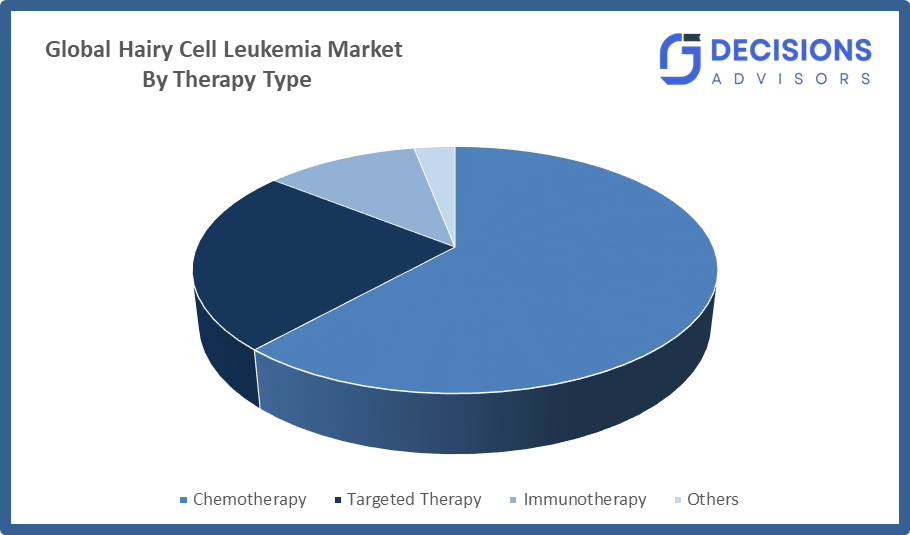
- The chemotherapy segment accounted for the largest share in 2024 and is anticipated to grow at a significant CAGR during the forecast period.
Based on the treatment type, the hairy cell leukemia market is divided into chemotherapy, radiation therapy, immunotherapy, targeted therapy, and stem cell transplant. Among these, the chemotherapy segment accounted for the largest share in 2024 and is anticipated to grow at a significant CAGR during the forecast period. The segment growth contributed to the market development through extending patient survival and lowering leukemic cell numbers with strong efficacy. It uses several substances that target and kill cancer cells selectively, but they can also harm healthy cells, which can have negative effects.
For instance, A new therapeutic approach combining low-dose vemurafenib with rituximab is showing promise in Hairy Cell Leukemia (HCL). Early clinical studies report that this chemotherapy-free regimen delivers durable complete responses in relapsed or refractory patients, while reducing toxicity compared to traditional purine analogues.
- The combination therapy segment accounted for the largest market share in 2024 and is anticipated to grow at a substantial CAGR over the forecast period.
Based on the therapeutic approach, the hairy cell leukemia market is divided into single agent therapy, combination therapy, and maintenance therapy. Among these, the combination therapy segment accounted for the largest market share in 2024 and is anticipated to grow at a substantial CAGR over the forecast period. It improves efficacy and patient adherence by combining various therapy methods in a synergistic way. Healthcare practitioners like this strategy since it not only increases response rates but also reduces the likelihood of resistance.
For instance, Combination strategies with rituximab or MEK inhibitors are under investigation to enhance efficacy and reduce resistance.
- The first line segment accounted for the highest market revenue in 2024 and is anticipated to grow at a remarkable CAGR over the forecast period.
Based on the line of therapy, the hairy cell leukemia market is divided into first line, second line, third line or later. Among these, the first line segment accounted for the highest market revenue in 2024 and is anticipated to grow at a remarkable CAGR over the forecast period. This is due to their widespread clinical acceptance and proven efficacy. This section contains treatments that are the recommended option for beginning treatment since they have undergone substantial clinical validation. Moreover, their positive results and reduced toxicity profiles have a solid foundation of clinical backing and patient adherence, which helps them dominate the market.
Regional Segment Analysis of the Hairy Cell Leukemia Market
- North America (U.S., Canada, Mexico)
- Europe (Germany, France, U.K., Italy, Spain, Rest of Europe)
- Asia-Pacific (China, Japan, India, Rest of APAC)
- South America (Brazil and the Rest of South America)
- The Middle East and Africa (UAE, South Africa, Rest of MEA)
Asia Pacific is anticipated to hold the largest share of the hairy cell leukemia market over the predicted timeframe.
Asia Pacific is anticipated to hold the largest share of the hairy cell leukemia market over the predicted timeframe. The market experiences growth because of three factors, which include increasing healthcare spending, growing public knowledge about blood cancers and better treatment accessibility. The rising number of hairy cell leukemia cases in China and India creates a need for effective treatment solutions and appropriate medical guidelines. The region's largest market belongs to China, which is followed by Japan and India. The competitive environment is changing because local businesses and international companies both attempt to gain market presence. The collaboration between pharmaceutical companies and healthcare organisations results in better access to treatments, which helps patients receive better care and achieve better results.
Leading hematology specialists from throughout the Asia-Pacific area came together for the 2nd APLC Summit Meeting in Chiang Mai, Thailand, on November 2-3, 2024. Novel medicines for AML, ALL immunotherapy studies, changing approaches in CLL, and treatment-free remission in CML were among the topics of discussion on advancements in leukemia care. Standardised MRD procedures, regional cooperation, and fair access to cutting-edge treatments were highlighted at the conference, which also announced that the next APLC conference will take place in Penang, Malaysia, in 2025.
North America is expected to grow at a rapid CAGR in the hairy cell leukemia market during the forecast period. The region benefits from advanced healthcare infrastructure, high R&D investments, and a growing prevalence of the disease. FDA regulatory agencies provide essential support, which enables faster development of new treatments for market expansion. The increasing awareness and early diagnosis of hairy cell leukemia further contribute to the rising demand for effective treatments. The United States operates as the main market force, while Canada makes important market contributions. The major pharmaceutical companies Bristol-Myers Squibb, Gilead Sciences and AbbVie work together to create new treatment options. The competitive landscape is characterised by a focus on targeted therapies and immunotherapies, which provide patients with more treatment choices. The presence of these major players ensures a robust pipeline of new drugs, which will drive market growth forward.
The only nonprofit organisation in the US devoted to Hairy Cell Leukemia (HCL), the Hairy Cell Leukemia Foundation (HCLF), is commemorating 40 years of advancements in promoting the creation and uptake of successful HCL therapies. By bringing patients, physicians, and researchers together around a common goal, the HCLF has contributed to a significant improvement in quality of life throughout that time.
Competitive Analysis:
The report offers the appropriate analysis of the key organizations/companies involved within the hairy cell leukemia market, along with a comparative evaluation primarily based on their product offering, business overviews, geographic presence, enterprise strategies, segment market share, and SWOT analysis. The report also provides an elaborative analysis focusing on the current news and developments of the companies, which includes product development, innovations, joint ventures, partnerships, mergers & acquisitions, strategic alliances, and others. This allows for the evaluation of the overall competition within the market.
List of Key Companies
- Amgen Inc.
- Astellas Pharma Inc.
- AstraZeneca plc
- F. Hoffmann-La Roche Ltd.
- Gilead Sciences, Inc.
- Johnson & Johnson
- Merck KGaA
- Novartis AG
- Pfizer Inc.
- Takeda Pharmaceutical Company Limited
- Others
Key Target Audience
- Market Players
- Investors
- End-users
- Government Authorities
- Consulting and Research Firm
- Venture capitalists
- Value-Added Resellers (VARs)
Market Segment
This study forecasts revenue at global, regional, and country levels from 2020 to 2035. Decisions Advisors has segmented the hairy cell leukemia market based on the below-mentioned segments:
Global Hairy Cell Leukemia Market, By Treatment Type
- Chemotherapy
- Radiation Therapy
- Immunotherapy
- Targeted Therapy
- Stem Cell Transplant
Global Hairy Cell Leukemia Market, By Therapeutic Approach
- Single Agent Therapy
- Combination Therapy
- Maintenance Therapy
Global Hairy Cell Leukemia Market, By Application
- First Line
- Second Line
- Third Line or Later
Global Hairy Cell Leukemia Market, By Regional Analysis
- North America
- US
- Canada
- Mexico
- Europe
- Germany
- UK
- France
- Italy
- Spain
- Russia
- Rest of Europe
- Asia Pacific
- China
- Japan
- India
- South Korea
- Australia
- Rest of Asia Pacific
- South America
- Brazil
- Argentina
- Rest of South America
- Middle East & Africa
- UAE
- Saudi Arabia
- Qatar
- South Africa
- Rest of the Middle East & Africa
Frequently Asked Questions (FAQ)
1. How is precision medicine influencing the global Hairy Cell Leukemia market?
Precision medicine is transforming the treatment landscape of Hairy Cell Leukemia by enabling biomarker-driven therapies. Identification of mutations such as BRAF V600E has led to the development of targeted inhibitors, improving treatment personalisation, minimising toxicity, and enhancing long-term remission rates. This trend is expected to significantly influence future market growth.
2. What role do orphan drug designations play in the Hairy Cell Leukemia market?
Since Hairy Cell Leukemia is classified as a rare disease, many therapies receive orphan drug designation from regulatory authorities such as the U.S. Food and Drug Administration and the European Medicines Agency. These designations provide benefits, including market exclusivity, tax credits, and accelerated approvals, thereby encouraging pharmaceutical innovation and investment.
3. How are clinical trial activities shaping competitive dynamics in this market?
Ongoing clinical trials focusing on next-generation targeted agents, immune-based therapies, and minimal residual disease (MRD) monitoring are intensifying competition. Companies with strong oncology pipelines are leveraging early-stage trial success to strengthen their market positioning and expand their hematologic oncology portfolios.
4. What impact does reimbursement policy have on market penetration?
Reimbursement frameworks significantly influence therapy adoption, particularly for high-cost targeted treatments and biologics. Favourable reimbursement policies in developed markets improve patient access, while limited coverage in emerging economies may restrict treatment uptake and slow market expansion.
5. How is digital health integration affecting disease management in Hairy Cell Leukemia?
Digital tools such as tele-oncology consultations, electronic health records (EHRs), and AI-based diagnostic support systems are improving early detection and treatment monitoring. These advancements enhance patient management efficiency and may indirectly boost demand for advanced therapeutic solutions.
6. What opportunities exist in emerging markets for Hairy Cell Leukemia treatment providers?
Emerging markets in Asia-Pacific and Latin America present growth opportunities due to improving diagnostic infrastructure, expanding oncology centres, increasing healthcare investments, and government initiatives supporting rare disease treatment access. Strategic partnerships with regional healthcare institutions are expected to accelerate expansion.
7. How does consolidation among pharmaceutical companies influence market competitiveness?
Mergers, acquisitions, and strategic collaborations among major oncology-focused companies are enabling portfolio diversification and pipeline strengthening. Consolidation enhances R&D capabilities, speeds up drug commercialisation, and increases global distribution reach, ultimately shaping long-term competitive positioning in the Hairy Cell Leukemia market.
Check Licence
Choose the plan that fits you best: Single User, Multi-User, or Enterprise solutions tailored for your needs.
We Have You Covered
- 24/7 Analyst Support
- Clients Across the Globe
- Tailored Insights
- Technology Tracking
- Competitive Intelligence
- Custom Research
- Syndicated Market Studies
- Market Overview
- Market Segmentation
- Growth Drivers
- Market Opportunities
- Regulatory Insights
- Innovation & Sustainability
Report Details
| Scope | Global |
| Pages | 240 |
| Delivery | PDF & Excel via Email |
| Language | English |
| Release | Feb 2026 |
| Access | Download from this page |