
Global Heavy Metal Poisoning Market
 |
Author:
Disha B
|
Pages:
230
|
Author:
Disha B
|
Pages:
230
Global Heavy Metal Poisoning Market Size, Share, and COVID-19 Impact Analysis, By Product Type (Chelation Agents, Diagnostic Kits, Supportive Care Products), By Application (Lead Poisoning, Mercury Poisoning, Arsenic Poisoning), and By Region (North America, Europe, Asia-Pacific, Latin America, Middle East, and Africa), Analysis and Forecast 2025-2035
CAGR
6.67%
REVENUE 2024
USD Billion 2.35
FORECAST 2035
USD Billion 4.78
REPORT COVERAGE
Global
Global Heavy Metal Poisoning Market Size Insights Forecasts to 2035
- The Global Heavy Metal Poisoning Market Size Was Estimated at USD 2.35 Billion in 2024
- The Market Size is Expected to Grow at a CAGR of around 6.67 % from 2025 to 2035
- The Worldwide Heavy Metal Poisoning Market Size is Expected to Reach USD 4.78 Billion by 2035
- Europe is expected to grow the fastest during the forecast period.
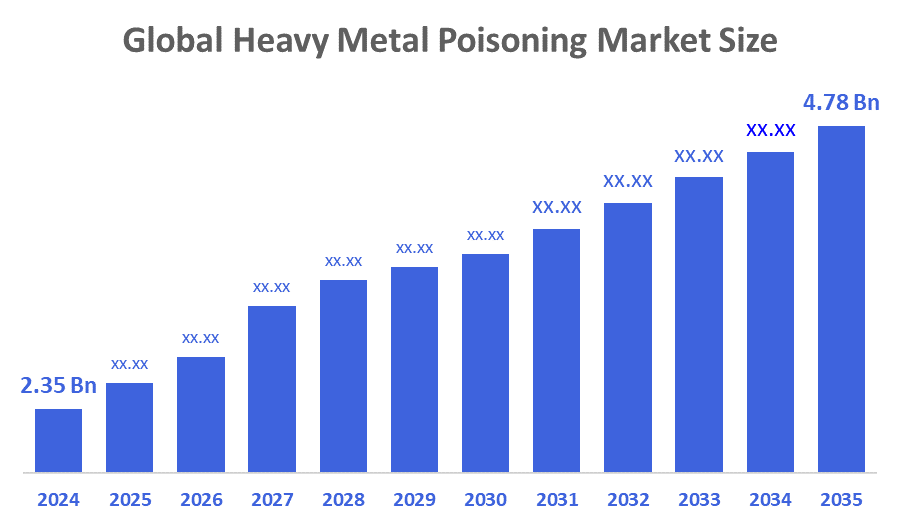
According to a research report published by Decisions Advisors and Consulting, The Global Heavy Metal Poisoning Market Size Was Worth Around USD 2.35 Billion In 2024 And Is Predicted To Grow To Around USD 4.78 Billion By 2035 With A Compound Annual Growth Rate (CAGR) Of 6.67 % From 2025 To 2035. The integration of digital health solutions and telemedicine is also enabling timely interventions, which improve patient outcomes. As a result, healthcare stakeholders are increasingly investing in research and development to create new products and services designed to fight heavy metal poisoning.
Market Overview
The worldwide heavy metal poisoning market refers to the industry focused on diagnosing, treating, and managing toxic exposure to heavy metals like lead, mercury, arsenic, and cadmium. It includes therapeutic drugs, known as chelating agents, diagnostic tools, and supportive care solutions that aim to reduce toxicity, prevent complications, and improve patient outcomes. Market growth is driven by increasing industrial exposure, occupational risks, improvements in chelation therapy, and new diagnostic technologies. Heavy metal poisoning happens when harmful levels of metals such as lead, mercury, cadmium, and arsenic build up in the body. This often results from environmental exposure, occupational hazards, or contaminated food and water. These metals can disrupt cellular functions, causing various serious health issues. Symptoms may differ depending on the specific metal involved and can include abdominal pain, neurological deficits, and organ damage. Diagnosing heavy metal poisoning requires a detailed medical history, a physical examination, and specific laboratory tests. Clinicians usually look into possible sources of exposure and symptoms to guide their testing. Blood and urine tests are commonly used to check the levels of different metals in the body. Imaging studies may also be done to assess organ damage. Because symptoms can be nonspecific, diagnosing heavy metal poisoning can be tough. It requires a strong suspicion, especially in individuals with known exposure risks.
MetaLead secured CHF 1 million to advance its work on therapies tackling metal poisoning. This funding supports the development of innovative solutions aimed at addressing toxic metal exposure, a serious global health challenge with limited effective treatments.
MicroGen Biotech raised $3.8 million in Series A funding to advance its mission of removing heavy metals from food. The company focuses on soil microbiome solutions that reduce toxic metal uptake in crops, addressing a critical global food safety challenge.
Report Coverage
This research report categorises the heavy metal poisoning market based on various segments and regions, forecasts revenue growth, and analyzes trends in each submarket. The report analyses the key growth drivers, opportunities, and challenges influencing the heavy metal poisoning market. Recent market developments and competitive strategies, such as expansion, product launch, development, partnership, merger, and acquisition, have been included to draw the competitive landscape in the market. The report strategically identifies and profiles the key market players and analyses their core competencies in each sub-segment of the heavy metal poisoning market.
Driving Factors
The heavy metal poisoning market is growing due to increased exposure from industry and the environment, workplace risks, and improper waste disposal. More awareness, supportive government rules, and screening programs are improving diagnosis rates. Developments in chelation therapy, new detoxification treatments, and quick diagnostic technologies are improving clinical management. These factors together boost the need for effective treatment options, widen the patient base, and propel global market growth. The heavy metal poisoning market is changing with innovations in diagnostics, sustainable practices, and digital health solutions. AI tools enhance accuracy and speed. Eco-friendly methods lessen environmental effects. Telemedicine and wearables improve access. Together, these advancements improve patient care and drive market growth.
Restraining Factors
The heavy metal poisoning market deals with supply chain issues and regulatory challenges that slow its growth. Limited availability of raw materials, trade restrictions, and strict FDA/EMA approval processes raise costs, delay innovation, and make it harder to enter global markets.
Market Segmentation
The heavy metal poisoning market share is classified into product type and application.
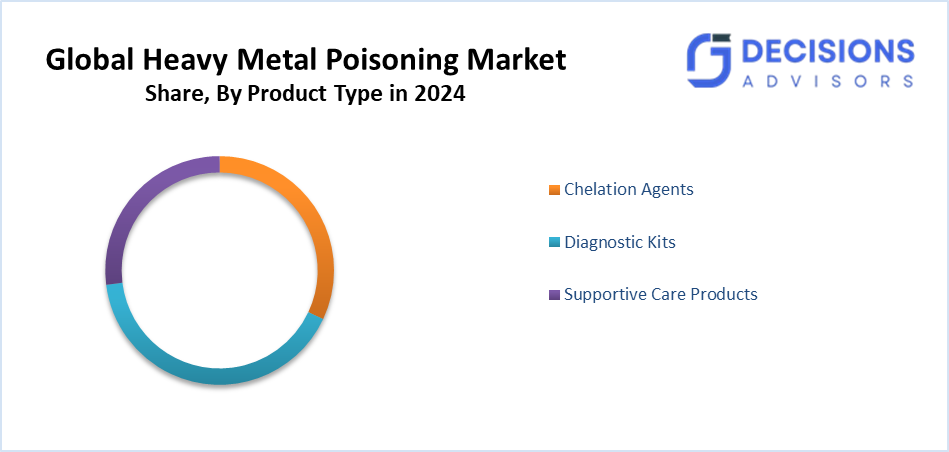
- The diagnostic kits segment accounted for the largest market share in 2024 and is projected to grow at a notable CAGR over the forecast period.
Based on the product type, the heavy metal poisoning market is divided into chelation agents, diagnostic kits, and supportive care products. Among these, the diagnostic kits segment accounted for the largest market share in 2024 and is projected to grow at a notable CAGR over the forecast period. The growth of this segment is driven by the rising demand for quick and reliable testing methods to identify heavy metal exposure. The use of new diagnostic technologies, like mass spectrometry and portable testing devices, is also boosting this segment's growth.
- The lead poisoning segment accounted for the highest market share in 2024 and is anticipated to grow at a significant CAGR during the forecast period.
Based on the application, the heavy metal poisoning market is divided into lead poisoning, mercury poisoning, arsenic poisoning, and others. Among these, the lead poisoning segment accounted for the highest market share in 2024 and is anticipated to grow at a significant CAGR during the forecast period. This segment makes up a large part of the heavy metal poisoning market because of its common use in industries and serious health risks. Lead poisoning occurs in both developed and developing countries, especially among children. Recent data show that about 0.6% of children around the world have high blood lead levels.
Regional Segment Analysis of the Heavy Metal Poisoning Market
- North America (U.S., Canada, Mexico)
- Europe (Germany, France, U.K., Italy, Spain, Rest of Europe)
- Asia-Pacific (China, Japan, India, Rest of APAC)
- South America (Brazil and the Rest of South America)
- The Middle East and Africa (UAE, South Africa, Rest of MEA)
Asia Pacific is anticipated to hold the largest share of the heavy metal poisoning market over the predicted timeframe.
Asia Pacific is anticipated to hold the largest share of the heavy metal poisoning market over the predicted timeframe. Asia Pacific is experiencing notable growth in the heavy metal poisoning market due to fast industrial development and urban expansion. China and India lead in this area, facing issues with heavy metal pollution from industrial operations and poor waste management. Government efforts to improve environmental rules and raise public health awareness should boost market growth in the coming years. For instance, India's National Clean Air Programme aims to lower pollution levels and reduce health risks linked to heavy metal exposure.
Europe is expected to grow at a rapid CAGR in the heavy metal poisoning market during the forecast period. The region's strict regulatory standards and focus on environmental sustainability are boosting demand for new diagnostic and treatment options. Countries like Germany and the United Kingdom lead the way in policies to reduce heavy metal exposure. The EU's REACH regulation requires the registration and evaluation of chemical substances, including heavy metals, to ensure safety and lower risks to human health and the environment. This regulatory climate is promoting the development of new technologies and solutions in the market.
A French study examined 1,100 children and 2,500 adults, finding nearly universal exposure to 27 heavy metals, including arsenic, cadmium, chromium, copper, and mercury. These exposures pose carcinogenic and neurotoxic risks, affecting bones, kidneys, and cardiovascular health.
Competitive Analysis:
The report offers the appropriate analysis of the key organisations/companies involved within the heavy metal poisoning market, along with a comparative evaluation primarily based on their product offering, business overviews, geographic presence, enterprise strategies, segment market share, and SWOT analysis. The report also provides an elaborate analysis focusing on the current news and developments of the companies, which includes product development, innovations, joint ventures, partnerships, mergers & acquisitions, strategic alliances, and others. This allows for the evaluation of the overall competition within the market.
List of Key Companies
- Apotex Inc.
- Bayer AG
- Cipla Ltd.
- Dr Reddy’s Laboratories Ltd.
- Fresenius SE & Co. KGaA
- Lupin Limited
- Mylan N.V. (Viatris)
- Novartis AG
- Pfizer Inc.
- Sanofi S.A.
- Sun Pharmaceutical Industries Ltd.
- Takeda Pharmaceutical Company Ltd.
- Teva Pharmaceutical Industries Ltd.
- Zydus Lifesciences Ltd.
- Others
Key Target Audience
- Market Players
- Investors
- End-users
- Government Authorities
- Consulting and Research Firm
- Venture capitalists
- Value-Added Resellers (VARs)
Market Segment
This study forecasts revenue at global, regional, and country levels from 2020 to 2035. Decisions Advisors has segmented the heavy metal poisoning market based on the below-mentioned segments:
Global Heavy Metal Poisoning Market, By Product Type
- Chelation Agents
- Diagnostic Kits
- Supportive Care Products
Global Heavy Metal Poisoning Market, By Application
- Lead Poisoning
- Mercury Poisoning
- Arsenic Poisoning
- Others
Global Heavy Metal Poisoning Market, By Regional Analysis
- North America
- US
- Canada
- Mexico
- Europe
- Germany
- UK
- France
- Italy
- Spain
- Russia
- Rest of Europe
- Asia Pacific
- China
- Japan
- India
- South Korea
- Australia
- Rest of Asia Pacific
- South America
- Brazil
- Argentina
- Rest of South America
- Middle East & Africa
- UAE
- Saudi Arabia
- Qatar
- South Africa
- Rest of the Middle East & Africa
Frequently Asked Questions (FAQ)
- What is the projected size of the Global Heavy Metal Poisoning Market by 2035?
The market is expected to reach USD 4.78 billion by 2035, growing from USD 2.35 billion in 2024 at a CAGR of 6.67% during 2025-2035.
- Which product type holds the largest market share?
Diagnostic kits accounted for the largest share in 2024 and are projected to grow at a notable CAGR, driven by demand for quick testing methods like mass spectrometry and portable devices.
- What application segment dominates the market?
Lead poisoning held the highest market share in 2024 and is anticipated to grow at a significant CAGR, due to widespread industrial exposure and risks to children globally (e.g., 0.6% of children have high blood lead levels).
- Which region is expected to have the largest market share?
Asia-Pacific is anticipated to hold the largest share, fueled by rapid industrialisation in China and India, pollution issues, and initiatives like India's National Clean Air Programme.
- Which region will grow the fastest?
Europe is expected to grow at the fastest CAGR, supported by strict regulations like the EU's REACH and a focus on sustainability in countries such as Germany and the UK.
- What are the main drivers of market growth?
Key drivers include rising industrial and environmental exposure, improved awareness, government screening programs, advancements in chelation therapy, and digital health tools like AI diagnostics and telemedicine.
- What challenges restrain the market?
Supply chain disruptions, raw material shortages, trade restrictions, and stringent FDA/EMA approvals increase costs and delay innovation.
- Who are the key players in the market?
Major companies include Apotex Inc., Bayer AG, Cipla Ltd., Dr Reddy’s Laboratories Ltd., Fresenius SE & Co. KGaA, Lupin Limited, Mylan N.V. (Viatris), Novartis AG, Pfizer Inc., Sanofi S.A., Sun Pharmaceutical Industries Ltd., Takeda Pharmaceutical Company Ltd., Teva Pharmaceutical Industries Ltd., and Zydus Lifesciences Ltd.
Check Licence
Choose the plan that fits you best: Single User, Multi-User, or Enterprise solutions tailored for your needs.
We Have You Covered
- 24/7 Analyst Support
- Clients Across the Globe
- Tailored Insights
- Technology Tracking
- Competitive Intelligence
- Custom Research
- Syndicated Market Studies
- Market Overview
- Market Segmentation
- Growth Drivers
- Market Opportunities
- Regulatory Insights
- Innovation & Sustainability
Report Details
| Scope | Global |
| Pages | 230 |
| Delivery | PDF & Excel via Email |
| Language | English |
| Release | Feb 2026 |
| Access | Download from this page |