
Global Hemoglobinopathy Market
 |
Pages:
210
|
Pages:
210
Global Hemoglobinopathy Market Size, Share, By Disorder Type (Sickle Cell Disease, Beta-Thalassemia), By Therapy Type (Pharmacological Agents, Gene Therapy), By End User (Hospitals, Specialty Clinics), and By Region (North America, Europe, Asia-Pacific, Latin America, Middle East & Africa), Analysis and Forecast 2026?2035
REPORT COVERAGE
Global
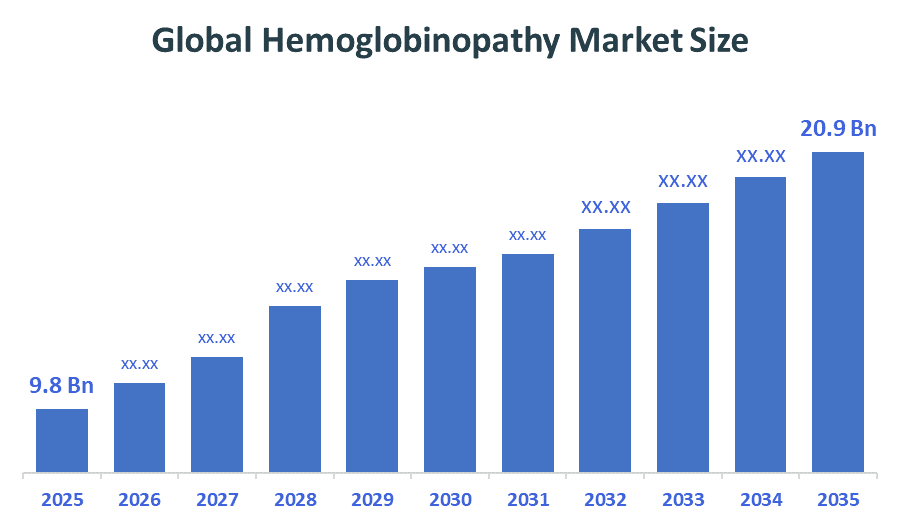
The Global Hemoglobinopathy Market Size is forecast to grow from USD 9.8 Billion in 2025 to approximately USD 20.9 Billion by 2035. According to Decision Advisors, a detailed research report on the hemoglobinopathy market indicates that gene therapy in hemoglobinopathy treatment dominates the market, accounting for approximately 41-45% of the total share globally. Bluebird bio the market with an estimated 12-15% global market share. The company reported a 2025 revenue of approximately USD 250-300 million, making it one of the most influential forces shaping industry trends and overall market growth.
Market Snapshot
- Global Hemoglobinopathy Market Size (2025): USD 9.8 Billion
- Projected Global Hemoglobinopathy Market Size (2035): USD 20.9 Billion
- Global Hemoglobinopathy Market Compound Annual Growth Rate (CAGR): 7.87%
- Largest Regional Market: North America
- Fastest Growing Region: Asia-Pacific
- 2nd Largest Region: Europe
- Base Year: 2025
- Historical Period: 2021–2024
- Forecast Period: 2026–2035
Market Overview/ Introduction
The global hemoglobinopathy market refers to the arena that is responsible for the detection, diagnosis, management, and treatment of these genetic blood disorders in hemoglobin. The genetic blood disorders, where either the structure of hemoglobin or its production is defective and result in anemia and its consequences are collectively called hemoglobinopathies, these include blood disorders such as Thalassemia and Sickle Cell Disease. The rising incidence of these disorders, coupled with the expanding diagnostic screening practices and growth in sophisticated therapeutic advancements like gene therapy and novel pharmacotherapies are responsible for the expansion of this market. With the future looking at the prospects of curing these diseases and increased access to healthcare in developing economies, research and development investment is expected to grow with favorable government policies, effective diagnostics, and better awareness globally.
- The National Institutes of Health launched the Cure Sickle Cell Initiative to accelerate development of gene therapies for sickle cell disease. It funds clinical trials, supports research collaborations, and builds data infrastructure to enable curative treatments. The program focuses on translating genetic discoveries into scalable therapies for global patient populations.
- A joint program between the National Institutes of Health and Bill & Melinda Gates Foundation invests over $200 million to develop affordable gene-based cures for sickle cell disease globally. The initiative targets accessibility in low- and middle-income countries, especially in Africa, ensuring advanced therapies reach high-burden regions.
Notable Insights: -
- North America is anticipated to hold the largest share of approximately 41% in the hemoglobinopathy market over the forecast period.
- Asia Pacific is expected to grow at a rapid CAGR of approximately 9.5% in the hemoglobinopathy market during the forecast period.
- The sickle cell disease segment dominated the market in 2025, approximately 39.3%, and is projected to grow at a substantial CAGR during the forecast period.
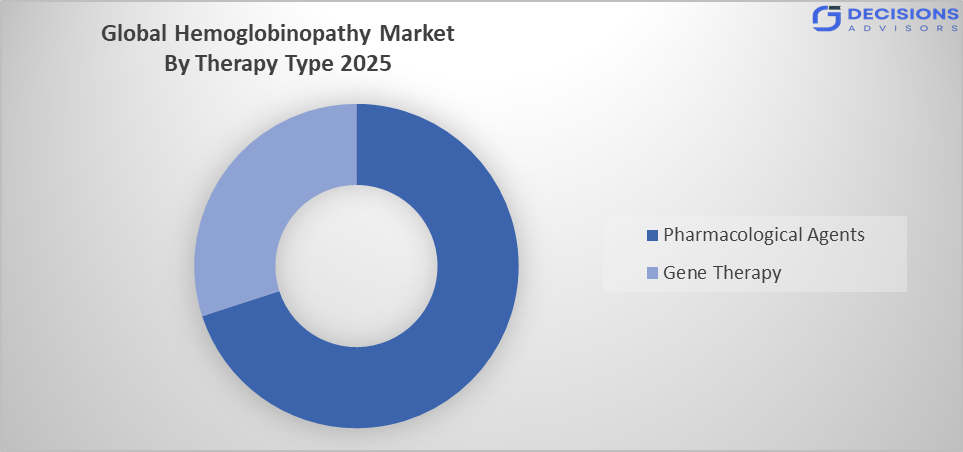
- The pharmacological agents segment dominated the market in 2025, approximately 40.2%, and is projected to grow at a substantial CAGR during the forecast period.
- The hospitals segment dominated the market in 2025, approximately 48%, and is projected to grow at a substantial CAGR during the forecast period.
- The compound annual growth rate of the Global Hemoglobinopathy Market is 7.87%.
- The market is likely to achieve a valuation of USD 20.9 Billion by 2035.
What is role of technology in grooming the market?
Technology plays a crucial role in strengthening global government schemes for the hemoglobinopathy market by improving early diagnosis, treatment access, and disease monitoring. Programs led by organizations such as National Institutes of Health and Centers for Disease Control and Prevention integrate advanced tools like genetic screening, AI-based diagnostics, and digital health records to enhance patient identification and care delivery. Telemedicine platforms expand access in remote and underserved regions, while data analytics supports policy planning and resource allocation. Additionally, technologies such as CRISPR gene editing are being supported through public funding initiatives, accelerating curative treatment development. Overall, technology enables governments to implement more efficient, scalable, and patient-centric programs, driving growth in the global hemoglobinopathy market.
Market Drivers
The global hemoglobinopathy market is driven by the rising prevalence of genetic blood disorders such as Sickle Cell Disease and Thalassemia, particularly in developing regions. Increasing awareness, expanding newborn screening programs, and improved diagnostic technologies are enabling early detection and treatment. Growing adoption of advanced therapies, including gene therapy and disease-modifying drugs, further supports market expansion. Additionally, strong investments in research and development, supportive government initiatives, and improved healthcare infrastructure are enhancing patient access to care. Rising healthcare expenditure and the presence of key pharmaceutical companies are also contributing significantly to sustained market growth.
Restrain
The global hemoglobinopathy market faces restraints due to the high cost of advanced therapies, including gene treatments, limiting accessibility in low- and middle-income regions. Inadequate healthcare infrastructure and limited screening in rural areas further hinder growth. Additionally, complications associated with treatments for Sickle Cell Disease and Thalassemia pose challenges.
Competitive Analysis:
The report offers the appropriate analysis of the key organizations/companies involved within the global hemoglobinopathy market, along with a comparative evaluation primarily based on their product offerings, business overviews, geographic presence, enterprise strategies, segment market share, and SWOT analysis. The report also provides an elaborative analysis focusing on the current news and developments of the companies, which includes product development, innovations, joint ventures, partnerships, mergers & acquisitions, strategic alliances, and others. This allows for the evaluation of the overall competition within the market.
Top Companies in Global Hemoglobinopathy Market
- Novartis AG
- Pfizer Inc.
- Bluebird Bio, Inc.
- Vertex Pharmaceuticals Incorporated
- CRISPR Therapeutics AG
- Bristol Myers Squibb Company
- Sangamo Therapeutics, Inc.
- Emmaus Life Sciences, Inc.
- Global Blood Therapeutics, Inc.
- Agios Pharmaceuticals, Inc.
Government Initiatives
|
Country |
Key Government Initiatives |
|
United States |
Federal and state programs have mandated universal newborn screening for SCD in all 50 states, a policy credited with a 90% decrease in childhood mortality. The NIH's Cure Sickle Cell Initiative continues to fund the development of curative gene therapies that modify hematopoietic stem cells. |
|
United Kingdom |
NHS England has commissioned a network of Haemoglobinopathy Coordinating Centres (HCCs) and a National Haemoglobinopathy Panel (NHP) to standardize high-quality care and provide expert advice on complex clinical cases across the country. |
|
India |
The National Sickle Cell Anaemia Elimination Mission targets the eradication of SCD by 2047. The government aims to screen 70 million individuals under age 40 by FY 2025–26. Additionally, a ?10-crore prize (Bhagwan Birsa Munda Prize) was announced in June 2025 to incentivize the development of new drugs for the disease. |
Study on the Supply, Demand, Distribution, and Market Environment of the Hemoglobinopathy Market
The global hemoglobinopathy market is shaped by a complex interplay of supply, demand, distribution, and market environment factors. On the supply side, leading pharmaceutical and biotechnology firms such as Novartis AG and Vertex Pharmaceuticals Incorporated are expanding production of advanced therapies, including gene-based treatments and iron chelation drugs. Demand is rising due to the increasing prevalence of genetic disorders like Sickle Cell Disease and Thalassemia, particularly in emerging regions. Distribution is supported by hospital networks, specialty clinics, and improving healthcare infrastructure, though access remains uneven in low-income areas. The market environment is influenced by regulatory approvals, government initiatives, pricing pressures, and growing investments in research, collectively driving innovation and global market expansion.
Price Analysis and Consumer Behaviour Analysis
Price analysis in the global hemoglobinopathy market shows significant cost variability driven by treatment type, with advanced therapies and chronic management creating a high economic burden. For instance, annual treatment costs for Sickle Cell Disease patients can exceed $27,000, largely due to hospitalizations and long-term care. While drugs like Hydroxyurea are cost-effective and reduce acute care expenses, overall costs remain substantial due to monitoring and adjunct therapies. Consumer behavior is influenced by affordability, access to reimbursement, and treatment awareness, with adherence often low due to high costs and chronic treatment burden. Patients increasingly prefer effective, long-term solutions, including curative therapies, despite higher upfront costs.
Market Segmentation
The Hemoglobinopathy Market share is classified into disorder type, therapy type, and end-user.
- The sickle cell disease segment dominated the market in 2025, approximately 39.3%, and is projected to grow at a substantial CAGR during the forecast period.
Based on the disorder type, the hemoglobinopathy market is divided into sickle cell disease and beta-thalassemia. Among these, the sickle cell disease segment dominated the market in 2025, approximately 39.3%, and is projected to grow at a substantial CAGR during the forecast period. The growth of the sickle cell disease segment is driven by its high global prevalence, especially in Africa, India, and the Middle East. Increased diagnosis rates, rising awareness, and strong adoption of advanced therapies such as gene therapy and disease-modifying drugs have driven demand, supporting its significant market share and growth trajectory.
- The pharmacological agents segment dominated the market in 2025, approximately 40.2%, and is projected to grow at a substantial CAGR during the forecast period.
Based on the therapy type, the hemoglobinopathy market is divided into pharmacological agents and gene therapy. Among these, the pharmacological agents segment dominated the market in 2025, approximately 40.2%, and is projected to grow at a substantial CAGR during the forecast period. The pharmacological agents segment dominated due to widespread use of drugs such as Hydroxyurea and Deferasirox, which effectively manage symptoms and complications. Strong clinical adoption, affordability compared to advanced therapies, and continuous drug development have driven high demand, supporting its leading market share and sustained growth.
- The hospitals segment dominated the market in 2025, approximately 48%, and is projected to grow at a substantial CAGR during the forecast period.
Based on the end-user, the hemoglobinopathy market is divided into hospitals and specialty clinics. Among these, the hospitals segment dominated the market in 2025, approximately 48%, and is projected to grow at a substantial CAGR during the forecast period. The growth of the hospitals segment is due to the availability of advanced diagnostic facilities, specialized treatment infrastructure, and access to multidisciplinary care. Hospitals are primary centers for blood transfusions, iron chelation therapy, and management of complications, driving higher patient preference and supporting their leading market share and growth.
Strategies to Implement for Growth of the Market in Non-Leading Regions
Growth in non-leading regions of the global hemoglobinopathy market can be accelerated through targeted strategies focused on access, awareness, and affordability. Governments and healthcare organizations should expand screening programs for conditions like Sickle Cell Disease and Thalassemia to enable early diagnosis. Strengthening healthcare infrastructure and training professionals in rural and underserved areas is essential. Public–private partnerships can improve the availability of cost-effective treatments, including generics and essential drugs. Increasing awareness through education campaigns will encourage timely treatment adoption. Additionally, implementing favorable reimbursement policies and subsidies can reduce financial barriers. Investment in local manufacturing and supply chains will enhance distribution efficiency, while collaboration with global organizations can facilitate technology transfer and innovation, supporting sustainable market growth.
Regional Segment Analysis of the Hemoglobinopathy Market
- North America (U.S., Canada, Mexico)
- Europe (Germany, France, U.K., Italy, Spain, Rest of Europe)
- Asia-Pacific (China, Japan, India, Rest of APAC)
- South America (Brazil and the Rest of South America)
- The Middle East and Africa (UAE, South Africa, Rest of MEA)
North America is anticipated to hold the largest share of approximately 41% the hemoglobinopathy market over the forecast period.
North America is anticipated to hold the largest share of approximately 41% the hemoglobinopathy market over the forecast period. The dominance of this region is primarily driven by its advanced healthcare infrastructure, high awareness, and strong presence of leading pharmaceutical and biotechnology companies. Widespread adoption of innovative therapies, including gene treatments, favorable reimbursement policies, and significant investments in research and development further support the region’s largest market share.
Asia Pacific is expected to grow at a rapid CAGR of approximately 9.5% in the hemoglobinopathy market during the forecast period.
Asia Pacific is expected to grow at a rapid CAGR of approximately 9.5% in the hemoglobinopathy market during the forecast period. This growth is driven by its high disease burden, particularly in countries like India and China. Improving healthcare infrastructure, rising awareness, increasing screening programs, and growing government initiatives to manage genetic disorders are driving demand for effective diagnosis and treatment, supporting strong market expansion.
Europe is the 2nd largest region to grow in the hemoglobinopathy market during the period.
Europe holds the second-largest position in the global hemoglobinopathy market due to its well-established healthcare systems, strong government support, and widespread screening programs. The region benefits from early diagnosis initiatives, increasing adoption of advanced therapies, and active research by organizations such as European Medicines Agency, driving steady market growth.
Future Market Trends in Global Hemoglobinopathy Market: -
1. Rising Adoption of Gene and Cell Therapies
One of the most significant trends in the global hemoglobinopathy market is the rapid adoption of gene and cell-based therapies. Innovations such as CRISPR-based treatments are offering potential one-time cures rather than lifelong management. Increasing regulatory approvals and strong investment in research are accelerating commercialization, making these therapies a major growth driver.
2. Expansion of Newborn and Genetic Screening Programs
There is a growing global focus on early diagnosis through newborn and genetic screening programs. Governments and healthcare organizations are implementing large-scale screening initiatives to detect conditions early and reduce complications. This trend improves patient outcomes and increases treatment demand, significantly contributing to market expansion, especially in high-prevalence regions.
3. Integration of Advanced Diagnostics and AI Technologies
Advanced diagnostic tools, including AI-based screening and molecular testing, are transforming disease detection and management. These technologies enable faster, accurate diagnosis and support personalized treatment approaches. Increasing adoption of low-cost, AI-enabled screening platforms is also improving accessibility in developing regions, thereby expanding the patient pool and boosting overall market growth.
Recent Development
- In June 2024, Agios Pharmaceuticals announced positive topline results from its Phase 3 ENERGIZE-T study evaluating mitapivat in patients with transfusion-dependent alpha- or beta-thalassemia. The study met its primary endpoint, demonstrating a statistically significant reduction in blood transfusion burden, with many patients showing reduced dependence on transfusions compared to placebo.
- December 2023 to January 2024, the U.S. Food and Drug Administration approved CASGEVY (exagamglogene autotemcel), developed by Vertex Pharmaceuticals and CRISPR Therapeutics, marking a historic breakthrough in the global hemoglobinopathy market. The therapy became the world’s first approved treatment using CRISPR/Cas9 gene-editing technology for patients with sickle cell disease (SCD), with subsequent approval for transfusion-dependent beta-thalassemia (TDT).
- In December 2023, Bluebird Bio announced that the U.S. Food and Drug Administration (FDA) had approved LYFGENIA (lovotibeglogene autotemcel), marking a major advancement in the global hemoglobinopathy market. The therapy was introduced as a one-time gene therapy for sickle cell disease (SCD), utilizing a lentiviral vector to insert functional hemoglobin genes into patients’ hematopoietic stem cells. This enables the production of anti-sickling hemoglobin, reducing vaso-occlusive events and disease severity.
How is Recent Developments Helping the Market?
Recent developments are significantly accelerating growth in the global hemoglobinopathy market by transforming treatment outcomes and expanding accessibility. Breakthrough innovations such as CRISPR-based gene therapies and stem cell approaches are shifting care from symptom management to potential cures, improving patient outcomes and long-term demand. The approval and clinical success of gene-editing therapies, including those targeting sickle cell disease and beta-thalassemia, have strengthened confidence among healthcare providers and investors. Additionally, the launch of new drugs and improved treatment protocols is enhancing disease management and reducing complications. Expanding newborn screening programs and diagnostic technologies are also increasing early detection rates, thereby enlarging the treated patient population and supporting sustained market expansion globally.
Market Segment
This study forecasts revenue at global, regional, and country levels from 2020 to 2035. Decision Advisors has segmented the Hemoglobinopathy Market based on the below-mentioned segments:
Global Hemoglobinopathy Market, By Disorder Type
- Sickle Cell Disease
- Beta-Thalassemia
Global Hemoglobinopathy Market, By Therapy Type
- Pharmacological Agents
- Gene Therapy
Global Hemoglobinopathy Market, By End-User
- Hospitals
- Specialty Clinics
Global Hemoglobinopathy Market, By Regional Analysis
- North America
- US
- Canada
- Mexico
- Europe
- Germany
- UK
- France
- Italy
- Spain
- Russia
- Rest of Europe
- Asia Pacific
- China
- Japan
- India
- South Korea
- Australia
- Rest of Asia Pacific
- South America
- Brazil
- Argentina
- Rest of South America
- Middle East & Africa
- UAE
- Saudi Arabia
- Qatar
- South Africa
- Rest of the Middle East & Africa
Frequently Asked Questions (FAQ)
Q. What is driving the growth of the global hemoglobinopathy market?
A. The market is primarily driven by the rising prevalence of genetic blood disorders such as sickle cell disease and beta-thalassemia, especially in developing regions. Increasing awareness, expansion of newborn screening programs, and advancements in diagnostic technologies are enabling early detection. Additionally, growing adoption of gene therapies and disease-modifying drugs, along with strong R&D investments and supportive government initiatives, are accelerating market growth globally.
Q. Which segment dominates the global hemoglobinopathy market by therapy type?
A. The pharmacological agents segment dominates the market, accounting for approximately 40.2% in 2025. This is due to the widespread use of drugs like hydroxyurea and iron chelation therapies, which effectively manage symptoms and complications. Their affordability compared to advanced gene therapies and strong clinical adoption contribute to their leading market position.
Q. Which region holds the largest share in the hemoglobinopathy market and why?
A. North America holds the largest share of around 41% in the global hemoglobinopathy market. This dominance is driven by advanced healthcare infrastructure, high disease awareness, and strong presence of key companies such as Novartis AG and Pfizer Inc. Additionally, favorable reimbursement policies and high adoption of innovative therapies further support regional growth.
Q. How are recent technological advancements influencing the hemoglobinopathy market?
A. Technological advancements are significantly transforming the market through innovations such as CRISPR-based gene editing, AI-driven diagnostics, and digital health platforms. These technologies improve early diagnosis, enable personalized treatment, and enhance patient monitoring. Government-supported initiatives and collaborations are also accelerating the development of curative therapies, making treatment more effective and accessible worldwide.
Check Licence
Choose the plan that fits you best: Single User, Multi-User, or Enterprise solutions tailored for your needs.
We Have You Covered
- 24/7 Analyst Support
- Clients Across the Globe
- Tailored Insights
- Technology Tracking
- Competitive Intelligence
- Custom Research
- Syndicated Market Studies
- Market Overview
- Market Segmentation
- Growth Drivers
- Market Opportunities
- Regulatory Insights
- Innovation & Sustainability
Report Details
| Scope | Global |
| Pages | 210 |
| Delivery | PDF & Excel via Email |
| Language | English |
| Release | Apr 2026 |
| Access | Download from this page |